Shop on Lazada
Semir products
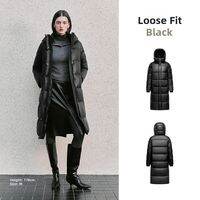
Semir | Goose Down Womens Winter Jacket
₱14,563.39
Buy on Lazada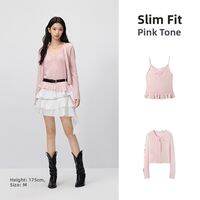
Semir | Flirty Ruffled Knitted Sweater Cardigan Set
₱3,376.36
Buy on Lazada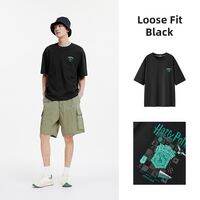
Semir | Cooling Glow In Dark Print Summer American Style T Shirt
₱601.87₱1,767.65
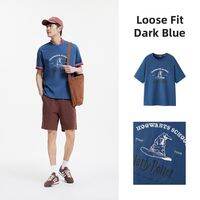
Semir | Co-branded Artistic Print Comfortable Cotton Summer T-shirt
₱551.92₱1,555.70
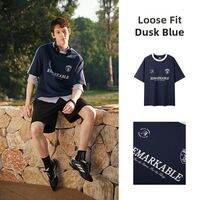
Semir | Cotton Sporty T-Shirt
₱1,537.63
Buy on Lazada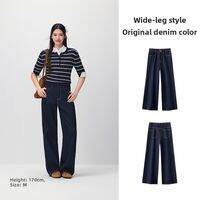
Semir | Spring/Summer Original Color Lyocell High Waist Long Jeans Slim Leg
₱1,884.32₱3,530.24
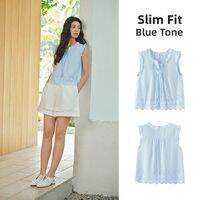
Semir | Bow Detail Cotton Short Sleeve Blouse
₱2,120.57
Buy on Lazada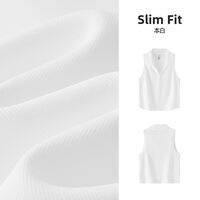
Semir | Summer Short Style Polo Collar Slim Fit Polo Shirt for Women
₱1,195.27₱1,298.08
About Semir
Overview
Semir (Chinese: 森马; pinyin: Sēnmǎ) is a prominent Chinese fashion and apparel brand established in 1996 in Wenzhou, Zhejiang. It serves as the flagship adult-fashion label of Semir Group / Zhejiang Semir Garment Co., Ltd., a publicly listed apparel corporation. The brand primarily caters to young consumers seeking affordable casual and lifestyle clothing.1
Unlike luxury fashion houses that emphasize exclusivity and high price points, Semir operates as a mass-market retailer. Its business model combines contemporary designs with accessible pricing and an extensive retail and franchise network. The company currently positions Semir as a daily lifestyle brand focused on quality, comfort, and accessibility for everyday scenarios.2
| Category | Information |
|---|---|
| Chinese name | 森马 |
| English name | Semir |
| Founded | December 18, 1996 |
| Origin | Wenzhou, Zhejiang, China |
| Industry | Fashion / Apparel / Retail |
| Parent company | Zhejiang Semir Garment Co., Ltd. / Semir Group |
| Main segment | Casual & lifestyle clothing |
| Core demographic | Young adults; historically 18–35 |
| Main market | China |
| International presence | Expanding across Asia, Middle East and other markets |
| Public company | Zhejiang Semir Garment Co., Ltd., Shenzhen Stock Exchange |
| Stock code | 002563.SZ |
| Major sister brand | balabala |
| Brand slogan/spirit | “穿什么 就是什么” — roughly, “You are what you wear” |
| Price positioning | Mass market / affordable fashion |
| Official site | Semir |
Brand Name and Identity
The Chinese brand name 森马 (Sēnmǎ) comprises two characters: 森 (sēn), meaning “forest,” and 马 (mǎ), meaning “horse.” While the literal translation is “Forest Horse,” the name functions primarily as a distinctive brand identifier rather than a descriptive term. Internationally, the brand uses the romanized name SEMIR.
A central tenet of the brand’s identity is the slogan “穿什么 就是什么”, which translates approximately to “You are what you wear.” This concept posits that clothing serves as an expression of personality and lifestyle. Modern branding efforts have expanded this philosophy to encompass self-expression, confidence, comfort, and individuality, aiming to provide approachable clothing for diverse life scenarios.16
History
Foundation and Early Growth
Semir was founded on December 18, 1996, in Wenzhou, Zhejiang, initially operating from a rented office in the Qinfen residential area.3 Wenzhou has long been recognized as a significant commercial and manufacturing hub within China’s private-enterprise economy, particularly for apparel and footwear.
In March 1997, the first Semir-branded store opened in Xuzhou, Jiangsu, marking the brand’s formal entry into the casual-wear market and the beginning of its retail network.4 By 1998, the company implemented a Corporate Identity System (CIS) strategy, shifting its focus from simple garment sales to comprehensive brand building and marketing.5
Multi-Brand Expansion and Marketing
A pivotal moment in the company’s history occurred in 2002 with the creation of balabala, a dedicated children’s clothing brand. This development transformed Semir from a single-brand casualwear company into a multi-brand apparel group. Today, balabala stands alongside Semir as one of the company’s most significant business units.6
Throughout the 2000s, Semir leveraged celebrity endorsements to solidify its youth-oriented image. In 2003, pop star Nicholas Tse became a spokesperson, promoting the “You are what you wear” concept.7 Subsequent campaigns featured entertainment figures such as Show Lo, SJ-M, and Lee Min-ho, helping to associate the brand with Asian youth culture.8 By 2006, Semir had received the Chinese government’s former “China Top Brand” and “Well-known Trademark in China” designations.9
Public Listing and Digital Transformation
To professionalize management systems amidst expansion, Semir formed a strategic partnership with McKinsey & Company in 2009. On March 11, 2011, parent company Zhejiang Semir Garment Co., Ltd. was listed on the Shenzhen Stock Exchange under the stock code 002563, transitioning from a private enterprise to a publicly traded corporation.10
Recognizing the shift in consumer behavior, Semir established a dedicated e-commerce company in 2012, which later became integral to its omnichannel retail strategy.11 From 2013 onward, the brand began experimenting with international markets through direct retail, franchising, joint ventures, and cross-border e-commerce.12
Corporate Structure and Brands
It is necessary to distinguish between Semir as a specific adult fashion brand and Semir Group (Zhejiang Semir Garment Co., Ltd.) as the corporate entity. The group operates as a multi-brand apparel enterprise with two primary pillars:13
- Semir: Adult casual and lifestyle fashion.
- balabala: Children’s fashion.
While Semir remains the original flagship brand, balabala has grown to become a dominant force in the children’s wear category. The distinction between the two brands is outlined below:
| Feature | Semir | balabala |
|---|---|---|
| Founded | 1996 | 2002 |
| Main Market | Adult fashion | Children’s fashion |
| Core Positioning | Casual/lifestyle | Children’s fashion |
| Target Customers | Young adults / families | Children and parents |
| Age Demographic | Primarily 18–35 (historically) | 0–14 |
| Strategic Role | Flagship adult brand | Major growth engine |
| Parent Company | Semir Group | Semir Group |
Products and Design Philosophy
Semir is primarily a ready-to-wear fashion brand focused on everyday wear rather than formal or luxury attire. Its design identity emphasizes casual, youthful, comfortable, and fashionable aesthetics suitable for mass-market consumers. The company aims to translate contemporary trends into practical clothing for daily use.14
Product Assortment
Clothing
* T-shirts, shirts, and polo shirts
* Sweatshirts and hoodies
* Jackets, coats, and outerwear
* Knitwear
* Jeans, casual trousers, and shorts
* Dresses and skirts
Accessories
* Bags and hats
* Socks and shoes
* Other fashion accessories
Market Positioning
Semir occupies the mass-market / affordable fashion segment. It is distinct from both ultra-fast fashion retailers and premium or luxury brands. The brand’s core value proposition is making fashionable everyday clothing available to a broad consumer base at accessible prices.
According to the company’s 2025 annual report, the Semir brand’s primary product characteristic is defined as “大众休闲” (mass-market casual), with a stated price range of approximately RMB 100–800 across its product offering.15
Target Demographic
Historically, the core target audience has been 18–35-year-old consumers, including university students, young professionals, and young families. More recently, the company has broadened its positioning to focus on lifestyles, interests, and everyday scenarios rather than strictly adhering to age brackets.
Retail and Supply Chain Model
Distribution Network
Semir’s competitive advantage lies in its extensive distribution network, which combines company-operated stores, franchises, department store counters, shopping mall locations, and online marketplaces. International franchise materials describe the group as having 7,000+ stores, comprising over 2,400 SEMIR stores and 4,600+ balabala stores.15 This heavy reliance on franchising and partnerships allows for widespread coverage without direct ownership of every retail location.
Asset-Light Manufacturing
The company operates on a “virtual operating” or asset-light model. Rather than manufacturing garments internally, Semir coordinates a vast supply chain encompassing design, product development, sourcing, manufacturing, logistics, and retail. By integrating external production resources and concentrating on brand management, supply-chain coordination, and distribution, Semir can scale rapidly without significant capital investment in manufacturing capacity.
International Expansion
Although fundamentally a Chinese brand, Semir has actively pursued international growth. The group utilizes various market entry models, including direct retail, franchising, agency arrangements, and e-commerce. Key international markets for the Semir brand include Saudi Arabia, Indonesia, Laos, Nepal, Mongolia, Vietnam, and Malaysia.17
The company’s international e-commerce platform lists shipping availability for numerous countries, including the Philippines, Malaysia, Japan, Thailand, Indonesia, Vietnam, Singapore, the United States, Canada, Germany, France, Italy, and Spain.18 This expansion reflects a strategic transition from a domestic national brand to a recognizable international Chinese fashion label.
Financial Performance and Strategy
Business Scale
For the fiscal year 2025, Zhejiang Semir Garment reported the following financial results:
- Revenue: RMB 15.09 billion (Year-on-year growth: 3.17%)
- Net profit attributable to shareholders: RMB 892 million (Year-on-year change: −21.54%)
- Apparel revenue: Approximately RMB 14.86 billion
Notably, within the apparel revenue, children’s clothing accounted for approximately RMB 10.80 billion, while casual clothing (Semir brand) accounted for approximately RMB 4.05 billion.19 This highlights the significant contribution of the balabala brand to the group’s overall financial health.
Strategic Direction (2025–2026)
Recent strategic themes identified by the group include:
- Brand Upgrading: Enhancing brand distinctiveness beyond price competition.
- Retail Transformation: Integrating physical retail networks more closely with digital commerce.
- Globalization: Seeking growth opportunities outside mainland China.
- Digitalization: Leveraging data and digitally integrated retail.
- Multi-brand Development: Building a portfolio targeting diverse consumer groups.
The 2025 management report articulates this strategy as focusing on “dual main forces, dual potential forces and globalization,” alongside retail and digital transformation initiatives.20
Corporate Culture and Social Responsibility
Mission and Values
Semir’s corporate mission is “Create a better life for customers and employees” (“为客户和员工创造美好生活”), with a vision to “Become a respected fashion service company” (“成为一家令人尊敬的时尚服务企业”). Core values include integrity, enthusiasm, respect, collaboration, and innovation.
The company’s management philosophy is encapsulated in the phrase “小河有水大河满” (“When the small rivers have water, the big river is full”), serving as a metaphor for mutually beneficial relationships among employees, partners, suppliers, and the broader business ecosystem.21
Philanthropy
Semir engages in various social responsibility initiatives, including disaster relief, education, poverty alleviation, and community programs. Notable contributions include:
- A donation of RMB 20 million to the Wenzhou World Young Scientists Growth Foundation in November 2021.
- Provision of over RMB 3 million in materials for flood relief in Henan in July 2021.22
- Funding the construction of Wenzhou Semir School with an investment of RMB 300 million, donated to the local government in 2016.23
Industry Context and Challenges
Significance in Chinese Fashion
Semir represents the first generation of large-scale national fashion brands in China. Emerging during the country’s rapid economic development in the late 1990s, it helped establish the viability of domestic branded retail. The brand’s evolution mirrors the broader trajectory of China’s apparel industry: from local businesses to national retailers, then to multi-brand corporations, and finally to omnichannel companies attempting international expansion.28
Current Strengths and Challenges
Strengths
* Brand Recognition: Decades of consumer awareness and established retail presence in China.
* Scale: Billions of RMB in annual revenue and thousands of stores.24
* Supply Chain: An asset-light model enabling significant product and distribution scale.
* Multi-brand Capability: Experience operating both adult and children’s apparel businesses.
Challenges
* Competition: Intense competition from domestic brands and international players like Uniqlo, H&M, Zara, and Nike.
* Consumer Shifts: Young consumers increasingly seek niche brands and differentiated cultural identities.
* Retail Pressure: Traditional physical stores face ongoing pressure from e-commerce and social commerce.
* Margin Compression: The mass-market segment often necessitates promotions and discounts.
* International Barriers: Building brand awareness overseas is significantly more complex than domestic expansion.
The tension between growth and profitability was evident in the 2025 results, where revenue increased by 3.17% but attributable net profit declined by 21.54%.25
Frequently Asked Questions
Is Semir a luxury brand?
No. Semir is fundamentally a mass-market, affordable fashion brand. It does not compete in the luxury sector occupied by brands such as Louis Vuitton or Gucci. Its selling proposition focuses on fashion, comfort, accessibility, variety, and scale rather than exclusivity.
Is Semir a fast-fashion brand?
While Semir shares some characteristics with fast fashion—such as frequent collections and trend responsiveness—it is more accurately described as a mass-market casual/lifestyle brand. The company officially positions itself as a provider of daily lifestyle essentials rather than solely a producer of rapidly changing trend items.26
Timeline
- 1996: Semir founded in Wenzhou.
- 1997: First Semir store opens in Xuzhou.
- 1998: Formal brand/CIS strategy introduced.
- 2002: balabala children’s brand created.
- 2003: Nicholas Tse becomes spokesperson.
- 2006: Receives major national brand recognitions.
- 2009: Strategic partnership with McKinsey.
- 2011: Zhejiang Semir Garment IPO on Shenzhen Stock Exchange.
- 2012: E-commerce company established.
- 2013+: International and multi-brand expansion begins.
- 2016: 20th anniversary; Wenzhou Semir School completed.
- 2023–24: Increased organizational focus on international business.
- 2025: Group revenue reaches RMB 15.09 billion; continued globalization and digital transformation.
- 2026: Semir enters its 30th anniversary year.27
References
- Semir
- Semir
- Semir
- 森马集团
- 浙江森马服饰股份有限公司
- Semir
- Step Out – How Semir Garment Explored Its Internationalization | ケースを探す | Case Center Japan|NUCB Business School
- 浙江森马服饰股份有限公司
- 森马集团
- Franchise Business Page – Semir
- 浙江森马服饰股份有限公司2022 年年度报告全文
- Semir Group International | LinkedIn
- Shipping and Delivery – Semir
- 公益事业 – 社会责任 – 关于森马 – 森马集团
- 森马服饰(002563)_公司公告_森马服饰:2025年度财务决算报告_公司公告_爱股网
- China International Service Center
- A New Story of a National Clothing Brand’s Global Expansion: Pioneers in the Global Market Wave
- SEMIR 森马-CATWALK/PRESENTATION-SHFW
- Transformation Heroes in Greater China
- semir.com
- 森马集团
- 森马集团
- 投资者关系 – 森马集团
- 就业先锋 – 社会责任 – 关于森马 – 森马集团
- 投资者关系 – 森马集团
- 浙江森马服饰股份有限公司
- 森马集团
- Brand story – Semir