Shop on Lazada
Sephora products
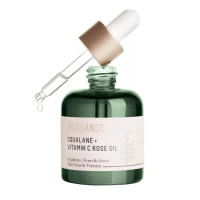
Biossance Squalane + Vitamin C Rose Oil 30ml / Copper Peptide Rapid Plumping Serum 50ml
₱1,161.87₱1,350.00
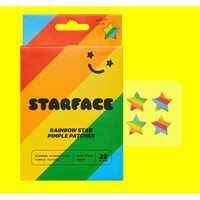
🇺🇸 STARFACE Hydro-Stars Hydrocolloid Pimple Patches Case - Yellow Rainbow Black Salicylic
₱1,100.00
Buy on Lazada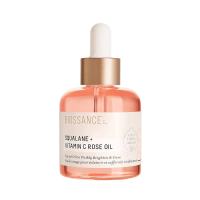
Biossance Squalane + Vitamin C Rose Oil 30Ml
₱767.00₱2,682.74
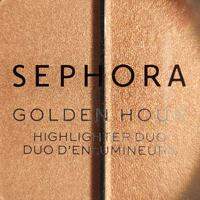
Sephora Golden Hour Highlighter (Duo)
₱750.00₱950.00
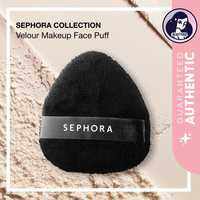
SEPHORA COLLECTION Velour Makeup Face Puff
₱450.00₱599.00
About Sephora
Sephora is a French multinational prestige beauty retailer specializing in cosmetics, skincare, fragrance, haircare, and related beauty products. Founded in France in 1969 by Dominique Mandonnaud, Sephora became known for challenging the traditional department-store model of beauty retail through its open, self-service stores, broad brand selection, beauty advisers, and emphasis on allowing customers to test products.1
Today, Sephora is owned by LVMH Moët Hennessy Louis Vuitton (LVMH) and operates as part of LVMH’s Selective Retailing division. LVMH acquired Sephora in 1997, after which the company accelerated its international expansion, particularly into North America and other global markets.2
Sephora has grown from a French perfume and cosmetics retailer into one of the world’s most prominent omnichannel prestige-beauty platforms, combining physical stores, e-commerce, mobile applications, loyalty programs, beauty services, and social and digital communities. As of 2026, Sephora’s newsroom describes the company as having more than 3,400 stores, 55,000 employees, operations in 37 markets, and a portfolio of nearly 500 brands, alongside its own Sephora Collection label.3
Company profile
| Category | Information |
|---|---|
| Name | Sephora |
| Industry | Beauty retail / prestige cosmetics |
| Founded | 1969 |
| Founder | Dominique Mandonnaud |
| Origin | Limoges, France |
| Parent company | LVMH Moët Hennessy Louis Vuitton |
| Acquired by LVMH | 1997 |
| Headquarters | Neuilly-sur-Seine, France |
| CEO | Guillaume Motte |
| Core business | Prestige beauty retail |
| Major categories | Makeup, skincare, fragrance, haircare, bath & body |
| Own brand | Sephora Collection |
| Scale | 3,400+ stores; 37 markets; 55,000 employees |
| Positioning | Prestige / premium beauty |
| Business model | Physical retail + e-commerce + digital/omnichannel |
| Parent group | LVMH |
The current LVMH corporate profile identifies Guillaume Motte as Sephora’s CEO and lists its headquarters at 41, rue Ybry, 92200 Neuilly-sur-Seine, France.4
History
Origins: 1969
Sephora’s history begins in 1969 in Limoges, France, when entrepreneur Dominique Mandonnaud founded the business that would eventually become Sephora. The company developed around a different philosophy of selling beauty products: instead of placing products behind traditional counters where customers had to ask salespeople for assistance, Sephora promoted an open-sell environment in which shoppers could browse and interact directly with products.5
This approach was particularly significant because traditional prestige beauty retail historically relied heavily on department-store counters, sales representatives, and relatively formal shopping experiences. Sephora’s concept made beauty shopping more interactive, exploratory, and accessible.
Expansion in France
During the 1970s and subsequent decades, Sephora expanded its presence in France and developed its identity as a specialist retailer of perfume and cosmetics. The company increasingly differentiated itself through a large assortment of beauty products, multiple brands under one roof, open-access product displays, beauty advisers, product testing, an energetic modern store environment, and a combination of prestige and emerging brands. This retail philosophy became one of the foundations of Sephora’s later global expansion.
LVMH acquisition — 1997
A major turning point came in 1997, when Sephora became part of LVMH.6 LVMH is one of the world’s largest luxury-goods groups, with a portfolio spanning fashion, leather goods, perfumes and cosmetics, watches and jewelry, wines and spirits, and selective retailing. Sephora therefore became strategically important within LVMH because it gave the group a major multibrand distribution platform for prestige beauty.
International expansion
Following its acquisition by LVMH, Sephora accelerated its international development. One particularly important step was its entry into the United States in 1999, with its first U.S. store opening in New York City. Sephora’s American model challenged the conventional department-store beauty-counter system by allowing customers to explore products more independently and by offering a broad range of brands in one location.
Over time, Sephora expanded across North America, Europe, Asia, the Middle East, Australia and New Zealand, and Latin America. Its current international network includes markets such as Malaysia, Singapore, Thailand, Indonesia, India, China, South Korea, Australia, New Zealand, the United Kingdom, France, Germany, Italy, Spain, Canada, the United States, Mexico and Brazil, among others.7
Business model
Sephora is fundamentally a multibrand beauty retailer, rather than primarily a manufacturer of beauty products. Its role is to curate products from many beauty companies and make them available through a unified retail experience. This means a Sephora store might contain products from luxury beauty houses, established cosmetics companies, independent beauty brands, emerging brands, celebrity-founded brands, digital-native brands, and Sephora’s own private-label products. The company’s current corporate description emphasizes a curated assortment of nearly 500 brands, in addition to Sephora Collection.6
Why this model is powerful
Instead of customers visiting numerous individual brand stores, Sephora allows them to compare many brands in the same environment. For example, someone shopping for foundation could potentially compare products across multiple brands, test different formulas and shades, receive advice, and purchase everything through one retailer. This makes Sephora both a retailer and a discovery platform.
Product categories
Sephora’s assortment covers most major areas of prestige beauty. The exact assortment varies by country, but these categories form a central part of Sephora’s global business.8
Makeup
Includes foundation, concealer, powder, blush, bronzer, highlighter, eyeshadow, eyeliner, mascara, lip products, and makeup tools and brushes.
Skincare
Includes cleansers, toners, serums, moisturizers, sunscreen, face masks, eye care, exfoliators, and treatments.
Fragrance
Sephora sells a broad selection of eau de parfum, eau de toilette, perfume, body fragrances, fragrance sets, men’s fragrances, and niche and luxury fragrances.
Haircare
Includes shampoo, conditioner, hair treatments, styling products, hair tools, and hair accessories.
Bath & body
Products include body lotions, body washes, hand care, body treatments, and bath products.
Sephora Collection
One of the most important elements of Sephora’s business is Sephora Collection, its own-brand range. Sephora Collection allows the company to develop products under the Sephora name rather than relying exclusively on third-party brands. The range covers areas such as makeup, skincare, tools, brushes, accessories, bath and body, and beauty essentials.
One notable example is the Cream Lip Stain, introduced in 2011. LVMH identifies it as one of Sephora Collection’s iconic products and describes it as a major global bestseller.9
The private-label business is strategically important because it gives Sephora greater control over product development, branding, pricing, distribution, and customer experience.
Store concept
Perhaps Sephora’s greatest contribution to beauty retail is its store design and shopping philosophy. Traditional prestige cosmetics retail historically placed products behind counters. Sephora instead popularized an environment where customers can freely browse products. The concept is built around exploring, testing, comparing, discovering, and purchasing. Customers can generally pick up products, examine packaging, compare shades, test textures or fragrances where permitted, and consult beauty advisers. This makes the store feel closer to a beauty playground or laboratory than a conventional department-store counter.
LVMH describes Sephora’s approach as an impartial and experiential beauty experience, with customers encouraged to explore products and receive personalized services.10
Visual identity
Sephora has developed one of the most recognizable visual identities in beauty retail. Its stores are strongly associated with black-and-white striped patterns, black storefronts, bold typography, bright modern interiors, and highly visible product displays. The black-and-white stripe has become an important part of Sephora’s global brand recognition. LVMH specifically describes the pattern as a distinctive brand signature that has become recognizable internationally.11
The visual identity communicates several ideas simultaneously: modern, premium, energetic, fashion-oriented, and accessible. This is somewhat different from the traditional visual language of luxury beauty, which often emphasizes gold, cream, ornate decoration, or highly exclusive environments.
Beauty advisers
Another major component of Sephora’s business is its beauty advisers. Rather than simply functioning as cashiers, Sephora’s advisers are intended to help customers navigate a very large assortment of products. They can assist with finding foundation shades, choosing skincare, understanding ingredients, selecting fragrances, creating makeup looks, discovering new brands, and comparing products.
LVMH currently reports more than 39,000 beauty advisers within Sephora’s global organization.12 This human component is important because Sephora’s value proposition is not simply selling beauty products, but helping customers discover which beauty products are right for them.
Digital transformation
Sephora has also become a major digital beauty retailer. Its digital ecosystem includes e-commerce, mobile applications, online product reviews, digital beauty tools, personalized recommendations, loyalty accounts, online tutorials and content, social media, online beauty communities, and store-to-online integration.
This is known as an omnichannel strategy: the customer experience is not divided completely between the physical store and website. Instead, customers can move between social media, the website, the app, the physical store, online purchases, and the loyalty program with their Sephora relationship continuing across those channels. LVMH describes Sephora as an omnichannel retailer combining stores, e-commerce, digital platforms, mobile applications and beauty advisers.13
Beauty Insider loyalty program
In the United States, Sephora operates its well-known Beauty Insider loyalty program. The program is designed to encourage repeat purchases and create a continuing relationship between Sephora and its customers. Members can receive benefits including rewards, birthday benefits, promotional offers, member experiences, personalized shopping features, and access to the Rewards Bazaar.8
Sephora describes loyalty as an important component of its customer ecosystem; its global corporate profile currently reports more than 70 million loyal members.14 The program is particularly important because beauty is a category with naturally high repeat-purchase frequency. A customer who buys cleanser, moisturizer, mascara, perfume or shampoo may return repeatedly throughout the year.
Beauty communities
Sephora has deliberately positioned itself as more than a shop. Its corporate messaging describes Sephora as a beauty community, with a focus on inspiration, discovery, inclusion and self-expression.15 This is reflected in its use of beauty content, tutorials, influencers, product reviews, social media, events, brand launches, in-store experiences, and beauty education.
The strategy is particularly effective for younger consumers because purchasing beauty products can also be a form of identity, creativity and self-expression.
Relationship with brands
Sephora occupies an interesting position between brands and consumers. For beauty brands, being stocked at Sephora can provide international exposure, access to millions of consumers, physical retail distribution, e-commerce distribution, brand credibility, product discovery, marketing opportunities, and customer feedback. For consumers, Sephora provides the opposite side of that relationship: many brands available through one retailer for easier comparison and discovery.
This makes Sephora a powerful gatekeeper and trend-discovery platform within prestige beauty. The company specifically emphasizes its mixture of established prestige brands, independent brands and emerging favorites.16
Relationship with LVMH
Sephora is a subsidiary of LVMH, which gives it a particularly interesting position in the luxury industry. LVMH owns or controls numerous major luxury and beauty brands, while Sephora operates as a multibrand retailer. This creates a distinction between brand ownership, where LVMH owns individual luxury brands, and retail distribution, where Sephora sells products from many different companies, including brands outside LVMH. Therefore, Sephora is not simply an LVMH-brand store. It functions as a multibrand platform that brings together products from across the beauty industry.
Major competitive advantages
Sephora’s success can be explained by several interconnected advantages:
- Extremely broad assortment: Customers can discover hundreds of brands in one place.
- Strong physical retail experience: The stores encourage exploration and product testing.
- Powerful brand recognition: The black-and-white visual identity is immediately recognizable.
- Omnichannel ecosystem: Stores, websites, apps and loyalty programs work together.
- Beauty expertise: Beauty advisers provide personalized assistance.
- Trend discovery: Sephora frequently serves as a launchpad for emerging beauty brands and trends.
- Private label: Sephora Collection provides products that are exclusive to Sephora.
- Community: The company has built a large customer community around beauty discovery rather than treating shopping as a purely transactional activity.
Position in the beauty industry
Sephora is best understood as a prestige beauty platform rather than merely a cosmetics shop. Its significance comes from the fact that it sits at the intersection of luxury, beauty, retail, technology and community. Traditional luxury brands generally focus on controlling their own brand environment, while mass retailers generally focus on convenience and price. Sephora occupies a middle space: it offers prestige products in a comparatively open, exploratory and accessible environment. That model helped change how consumers shop for cosmetics.
Global scale
Sephora’s scale is substantial. According to its current 2026 newsroom profile, the company has 55,000 employees, operates in 37 markets, maintains more than 3,400 stores and flagship locations, carries nearly 500 brands, counts more than 70 million loyal members, and employs more than 39,000 beauty advisers according to LVMH’s corporate profile.17
Sephora also operates dedicated international websites across North America, South America, Europe, Asia, Australia and New Zealand. Its international network currently includes a dedicated Malaysia market.5
Note: Corporate figures can differ slightly between Sephora and LVMH pages because they are updated at different times and may use different definitions of markets, stores or employees. The figures above use the latest Sephora newsroom figures where available.
Brand philosophy
The company’s modern positioning centers heavily on inclusivity and self-expression. Its stated mission is to champion a world of inspiration and inclusion where everyone can celebrate their beauty.18 This represents a significant evolution from the older concept of beauty retail. Instead of communicating a prescriptive standard of beauty, Sephora’s modern philosophy encourages customers to explore beauty and decide how they want to express themselves. That positioning has helped the company appeal to a wide variety of consumers, from first-time makeup buyers to professional beauty enthusiasts.
Importance to modern beauty retail
From a business-history perspective, Sephora is important because it helped popularize several concepts that are now common in beauty retail:
- Open-sell cosmetics stores
- Multibrand beauty discovery
- In-store product testing
- Beauty advisers rather than conventional sales counters
- Experiential retail
- Private-label prestige beauty
- Digital beauty communities
- Omnichannel shopping
- Retail-driven discovery of emerging brands
- Beauty as self-expression rather than simply cosmetics
Its influence therefore extends beyond its own stores. The Sephora model has contributed to a broader shift in how prestige beauty is marketed and sold.
Summary
Sephora is essentially a giant multibrand beauty platform. It brings hundreds of cosmetics, skincare, fragrance and haircare brands together under one retail ecosystem, allowing consumers to discover, compare and purchase products through physical stores and digital channels. Founded in France in 1969 by Dominique Mandonnaud and acquired by LVMH in 1997, Sephora transformed traditional beauty shopping by replacing the conventional closed department-store counter with a more open, interactive and experiential model. Today, it is one of the world’s most influential prestige beauty retailers, combining retail, technology, beauty education, community and brand discovery.19
References
- Sephora – LVMH
- About Us | Sephora
- Our Culture
- Media Kit – Sephora Newsroom
- International Websites | Sephora
- Sephora Brands List | Sephora
- Sephora Shanghai, next-generation retail – LVMH
- Beauty Insider | Sephora
- CDI – Responsable Relations Presse & Influence (F/H/X) Détails du poste | Sephora
- Intern, Merchandising Job Details | Sephora
- Care Education Expert – Sephora – 285968 – LVMH
- Intern, Category Management Job Details | Sephora
- Manager, Merchandising Excellence – Sephora – 283052 – LVMH
- Regional Retail Manager (South Region) – Sephora -… – LVMH
- Senior Executive, Ecommerce Growth – Sephora – 290149 – LVMH
- Senior Creative Designer, Retail Design – Sephora … – LVMH
- Head of Corporate Communications – Sephora – 288933 – LVMH
- Senior Executive, Merchandising – Sephora – 285967 – LVMH
- CRM and Loyalty Director – Sephora – 273276 – LVMH