Shop on Lazada
Shan products
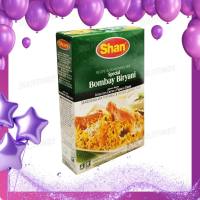
Special Bombay Biryani Masala (Seasoning Mix)
₱75.00
Buy on Lazada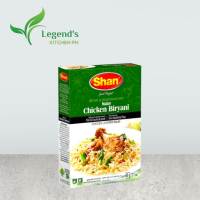
SHAN Malay Chicken Biryani| Seasoning Mix for Chicken Layered Piliaf (55g)
₱69.00₱85.00
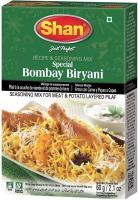
Shan Special Bombay Biryani Mix
₱95.00₱110.00
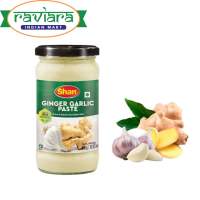
Shan Ginger Garlic Paste 300G Taste the Authentic Indian style
₱195.00₱300.00
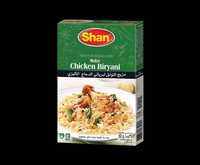
Shan Chicken Biryani 60 Grams - Imported from India
₱80.00₱200.00
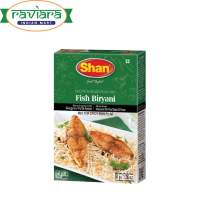
Shan Mutton Bombay Biryani Powder 60G from India green packaging spice mix for cooking biryani suitable for preparing mutton biryani dish.
₱85.00₱120.00
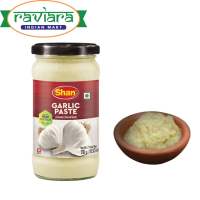
Shan Garlic Paste 310G
₱195.00₱299.00
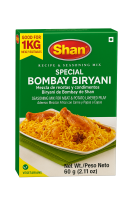
Shan Special Bombay Biryani Masala – Authentic Indian Spice Mix for 1kg Meat or Veg | Premium Biryani Seasoning Mix
₱89.00₱99.00
About Shan
Overview
Shan Foods is a Pakistani multinational food company and consumer brand specializing in packaged foods, spices, recipe mixes, cooking pastes, condiments, desserts, rice, salt, and instant noodles. Founded in 1981 in Karachi, Pakistan, by Sikander Sultan, the company began as a small, single-room spice operation before developing into an international food business.1
Shan is particularly associated with South Asian cuisine and is known for making traditional dishes easier to prepare through pre-mixed spices and recipe solutions. According to the company, its products are now available in more than 70 countries across five continents, making it one of Pakistan’s prominent internationally distributed food brands.1
| Category | Information |
|---|---|
| Brand name | Shan |
| Company | Shan Foods (Pvt.) Ltd. |
| Industry | Food processing / FMCG |
| Founded | 1981 |
| Founder | Sikander Sultan |
| Origin | Karachi, Pakistan |
| Headquarters | Karachi, Sindh, Pakistan |
| Ownership | Privately held |
| Core business | Packaged foods and culinary products |
| Best known for | Spice mixes and recipe mixes |
| International presence | 70+ countries, according to Shan |
| Major categories | Recipe mixes, spices, pastes, accompaniments, rice, salt, desserts, lentils, frozen foods, cooking sauces and instant noodles |
History
Foundation
Shan Foods traces its origins to 1981, when entrepreneur Sikander Sultan began producing spice and recipe mixes on a small scale in Karachi. According to Shan’s own account, the business initially operated from a single room. Recipe mixes that were first shared within the extended family gradually became popular among friends, acquaintances, and ordinary consumers. This growing demand led Sultan to establish the commercial Shan brand.1
The original concept was relatively simple: provide consumers with convenient mixtures of spices that could reproduce familiar South Asian dishes without requiring them to measure and combine numerous individual ingredients. This approach helped Shan turn traditional cooking knowledge into standardized packaged products.
Expansion
After establishing itself in Pakistan, Shan expanded into international markets, particularly those with South Asian and Pakistani communities. The company’s products became increasingly available in the Middle East, Europe, North America, and other regions.
The international expansion was important to Shan’s development because its products served both local consumers interested in South Asian cuisine and members of the South Asian diaspora seeking familiar flavors. Historical accounts describe Shan’s early products reaching Pakistanis living in countries including those in the Gulf, Europe, the United States, and Canada.
Over subsequent decades, the company expanded beyond traditional spice mixes into a broader packaged-food portfolio.
Products
Although Shan became famous primarily for masala and recipe mixes, its current portfolio is considerably broader.
Major product categories include:
- Recipe mixes — packaged spice blends designed for dishes such as biryani, karahi, nihari, tikka, and other South Asian foods.
- Plain spices — individual spices and basic seasoning ingredients.
- Cooking pastes — prepared culinary pastes intended to simplify cooking.
- Accompaniments — pickles, chutneys, relishes, and related condiments.
- Salt — packaged culinary salt products.
- Rice — rice products for everyday cooking and specific dishes.
- Desserts — traditional and contemporary dessert mixes.
- Lentils — packaged pulses and lentil products.
- Frozen foods — prepared and frozen food products.
- Cooking sauces — sauces intended for convenient meal preparation.
- Instant noodles — sold under the company’s Shoop brand.1
This diversification has allowed Shan to evolve from a specialist spice company into a broader FMCG food brand.
Brand Identity
Shan’s central brand proposition is built around authentic South Asian taste combined with convenience. Rather than requiring consumers to purchase and measure numerous individual spices, Shan’s recipe mixes package the intended combination into a standardized product.
The company describes its promise as delivering quality ingredients and authentic flavors, while its stated long-term vision is for Shan to become an iconic culinary brand used around the world.1
The brand has historically used the “Taste Happiness” positioning, connecting food preparation and sharing with positive family and social experiences. In 2025, Shan Foods also announced a new corporate identity under the name “Shan Shares,” reflecting a broader evolution of its corporate branding.1
Manufacturing and Quality
Quality control has been an important part of Shan’s positioning. The company states that its quality-control processes cover stages ranging from research and development to packaging and distribution.
Shan has also highlighted technological approaches to spice processing. One example is cryogenic grinding, which uses liquid nitrogen during grinding to help preserve heat-sensitive components and aroma. The company also describes its V-Lock packaging system, using food-grade nitrogen and aluminum-foil packaging to help protect product freshness.1
The company reports certifications and quality-management systems including ISO 9001:2015, FSMS 22000, and the BRC Global Standard for Food Safety.1
Research and Development
Shan operates a dedicated research-and-development function involving culinary specialists and food scientists. Its R&D activities include developing new recipes, evaluating ingredients, testing products, and adapting food products to changing consumer preferences.
The company says its R&D facilities include commercial kitchen equipment and sensory-evaluation capabilities used to assess characteristics such as flavor, aroma, and other product qualities.1
International Presence
From its origins in Karachi, Shan developed an extensive international distribution network. The company currently describes itself as operating in more than 70 countries across five continents. Some company and industry materials have cited a figure of 75 or more countries, so the exact number can vary according to the date and source.1
Shan’s international business is particularly significant in markets with large South Asian communities, including parts of the Middle East, North America, Europe, Africa, and Asia-Pacific.
Its internationalization also reflects a broader trend in which South Asian food brands have moved from primarily serving diaspora communities toward introducing South Asian cuisine to wider international audiences.
Corporate Development
Shan Foods remains a privately held company headquartered in Karachi. The business has continued to expand its product portfolio and manufacturing capabilities while investing in international markets and food innovation.3
In 2023, Shan Foods announced a strategic partnership with Symrise, a global flavor, nutrition, and health company, as part of its efforts toward food innovation. The company subsequently announced an international-standard production facility connected with this partnership.1
The company has also emphasized agricultural and community initiatives. In 2025, for example, Shan announced initiatives in Kunri, an important chilli-growing region of Pakistan, involving farmer training, quality assurance, testing facilities, and agricultural development.1
Cultural Significance
Shan’s significance extends beyond its commercial role. The brand has become closely associated with the globalization of Pakistani and broader South Asian home cooking.
Traditional South Asian cooking can involve complex combinations of spices and lengthy preparation. Shan’s packaged recipe mixes effectively convert some of this culinary knowledge into a standardized, shelf-stable, and relatively convenient format.
For members of the Pakistani and South Asian diaspora, products such as Shan masala mixes have also served as a way of maintaining familiar food traditions while living abroad. At the same time, the brand’s international distribution has helped introduce South Asian dishes to consumers who may not have grown up with the cuisine.
Business Model
Shan’s business model combines several elements:
- Packaged culinary convenience — simplifying traditional recipes.
- Brand standardization — attempting to provide a consistent flavor profile across markets.
- Mass-market distribution — selling through supermarkets, grocery stores, and international food retailers.
- Diaspora marketing — serving consumers seeking familiar South Asian flavors abroad.
- Cuisine globalization — positioning South Asian dishes as accessible to consumers outside the region.
- Product diversification — expanding from spice mixes into a larger range of everyday food products.
This evolution transformed Shan from a small spice operation into a diversified packaged-food company.
Founder
Sikander Sultan is the founder and chairman associated with Shan Foods. He established the company in 1981 after identifying an opportunity to provide consumers with convenient solutions for preparing traditional foods. Under his leadership, the business grew from a single-room operation into an internationally recognized Pakistani food company.1
The company’s history emphasizes Sultan’s focus on product consistency, quality, and innovation as important factors in Shan’s expansion.
Shan Today
Today, Shan Foods positions itself as a global culinary brand originating from Pakistan, rather than solely as a spice company. Its product range covers multiple stages of meal preparation—from individual spices and recipe mixes to pastes, sauces, accompaniments, rice, desserts, and instant foods.1
Its core competitive identity remains closely connected to South Asian flavors, especially Pakistani and Indian-style cuisine, while its international strategy increasingly treats South Asian food as a global culinary category.
In Popular Understanding
When people refer to “Shan” in the context of food, they are generally referring to Shan Foods or Shan Masala, rather than to a particular spice. The brand is particularly recognizable for its brightly packaged recipe-mix products, which commonly provide the spice blend needed for a named dish.
The name should not be confused with unrelated uses of “Shan,” including the Shan ethnic group and language of Myanmar, geographical names such as Shan State, or various Chinese names and terms.