Shop on Lazada
Shiseido products
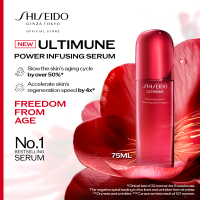
Shiseido Ultimune Power Infusing Serum 75ml
₱7,750.00
Buy on Lazada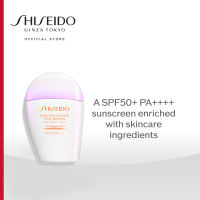
Shiseido Urban Environment Triple Beauty Suncare Emulsion SPF 50+ 30ml
₱2,700.00
Buy on Lazada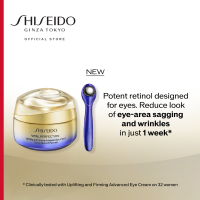
SHISEIDO Vital Perfection Uplifting and Firming Advanced Eye Cream 15ml
₱5,050.00
Buy on Lazada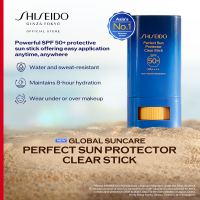
Shiseido Global Suncare Perfect Sun Protector Clear Stick
₱2,350.00
Buy on Lazada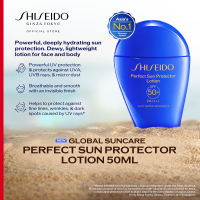
Shiseido Global Suncare Perfect Sun Protector Lotion 50ml
₱3,550.00
Buy on Lazada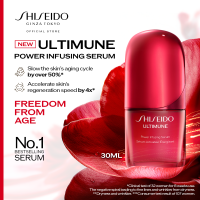
Shiseido Ultimune Power Infusing Serum 30ml
₱4,450.00
Buy on Lazada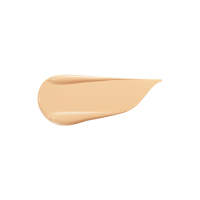
Shiseido Revitalessence Skin Matte Foundation
₱3,350.00
Buy on Lazada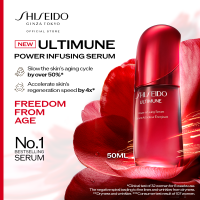
Shiseido Ultimune Power Infusing Serum 50ml
₱6,450.00
Buy on LazadaAbout Shiseido
Shiseido Company, Limited (Japanese: 株式会社資生堂, Kabushiki-gaisha Shiseidō) is a prominent Japanese multinational corporation specialising in beauty and cosmetics, with its global headquarters located in Ginza, Tokyo, Japan. Established in 1872, the company originally opened as Japan’s first private Western-style pharmacy before evolving into one of the world’s most recognised prestige beauty groups. Today, Shiseido maintains operations in approximately 120 countries and regions, offering an extensive portfolio that encompasses skincare, makeup, fragrances, and other beauty-related products.1
Basic Information
| Category | Information |
|---|---|
| Company | Shiseido Company, Limited |
| Japanese Name | 株式会社資生堂 |
| Founded | 1872 |
| Incorporated as Shiseido Co., Ltd. | 1927 |
| Founder | Arinobu Fukuhara |
| Headquarters | Ginza, Tokyo, Japan |
| Industry | Beauty / Cosmetics |
| Main Categories | Skincare, makeup, fragrance, beauty products |
| Stock Code | 4911 (Tokyo Stock Exchange) |
| Current President & CEO | Kentaro Fujiwara |
| FY2024 Consolidated Sales | ¥990 billion |
| Employees | 27,908 full-time employees (as of 31 Dec 2024) |
| Group Subsidiaries | 74 (as of 31 Dec 2024) |
Although the business was founded in 1872, it was legally incorporated in its modern corporate structure in 1927.2
Understanding Shiseido
The term “Shiseido” refers to two distinct but related entities within the beauty industry:
- SHISEIDO: The flagship prestige brand focusing on skincare, makeup, and beauty.
- Shiseido Company, Limited: The multinational corporation that owns and manages a diverse portfolio of beauty brands.
The corporate group oversees numerous labels, including SHISEIDO, Clé de Peau Beauté, NARS, IPSA, Drunk Elephant, Dr. Dennis Gross Skincare, THE GINZA, and BENEFIQUE.3 Consequently, while SHISEIDO serves as the primary consumer-facing label, Shiseido Company functions as the overarching group managing these and other assets.
Origins and History
Foundation in 1872
Shiseido’s history began in 1872 in Ginza, Tokyo. Its founder, Arinobu Fukuhara, was a pharmacist who had previously served as chief pharmacist at a naval hospital. During an era when traditional herbal medicine dominated Japan, Fukuhara established what is recognised as Japan’s first private Western-style pharmacy.4
Crucially, the original enterprise was not a cosmetics manufacturer but a pharmacy grounded in Western pharmaceutical knowledge. This foundation explains the company’s enduring emphasis on combining science, technology, and beauty.
Etymology
The name Shiseido (資生堂) derives from a passage in the Yijing (I Ching / Book of Changes), a classical Chinese text. The company interprets the name as expressing the concept of the virtues of the earth giving birth to and nurturing all things.5 This philosophical origin reflects Fukuhara’s aspiration to create value for people’s lives and has historically informed the company’s approach to connecting beauty with health, culture, lifestyle, and quality of life.
Transition to Cosmetics
The shift towards beauty occurred gradually. In 1897, Shiseido entered the cosmetics market with Eudermine, a skin lotion formulated using Western pharmaceutical expertise. Eudermine remains part of the company’s historical heritage and marked a pivotal transition from pure pharmacy to skincare and cosmetics.6 This trajectory established the scientific rigour that continues to characterise Shiseido’s product development.
Establishment of Beauty and Design (1916–1927)
In 1916, Shiseido formally established a dedicated cosmetics business, opening a store separate from the original pharmacy. Simultaneously, it created a Design Department, testing laboratories, and specialised production facilities.7 This move signified that design and cosmetics were treated as inseparable elements of the business.
The company further cemented its cultural credentials by establishing the Shiseido Gallery in 1919, which is described as the oldest existing art gallery in Japan.8 This initiative reinforced the philosophy that beauty products should be aesthetically significant objects, influencing everything from packaging and typography to advertising and store interiors.
In 1915, the company adopted the Hanatsubaki (花椿), or camellia, as its trademark.9 The camellia became a visual shorthand for Shiseido’s Japanese heritage, appearing across logos, packaging, and membership programmes.
By 1927, the business transformed from a limited partnership into Shiseido Co., Ltd., with Shinzo Fukuhara, the founder’s son, serving as its first president.10 Shinzo’s background in pharmacy, photography, art, and international affairs helped define the company’s distinctive character.
Building a Lifestyle Culture
Shiseido historically sought to cultivate a comprehensive beauty culture rather than merely selling products. Key initiatives included:
- Shiseido Parlour: Originating from a soda fountain opened in the Ginza pharmacy in 1902, this evolved into a renowned dining and confectionery institution.11
- Beauty Consultants: In 1934, the “Miss Shiseido” promotional programme was introduced, serving as a precursor to the modern beauty consultant system.12
- Hanatsubaki-kai: Established in 1937, this Camellia Club fostered long-term relationships with customers.13
These activities demonstrate that Shiseido viewed beauty as an integral part of culture and lifestyle.
International Expansion
Shiseido began its international expansion earlier than many contemporaries. In 1931, the company exported Rose Cosmetics to Southeast Asian countries, marking the start of substantial overseas business.14
Following World War II, global growth accelerated across Asia, Europe, North America, Latin America, the Middle East, and travel retail sectors. Today, the company operates in approximately 120 countries and regions.
Corporate Philosophy and Science
Mission
Shiseido’s current corporate mission is “BEAUTY INNOVATIONS FOR A BETTER WORLD”. The company aims to use beauty innovation to generate new value and contribute to human happiness.15 Its philosophy integrates science, beauty, art, Japanese aesthetics, innovation, and human experience.
Research and Development
Despite its luxury image, R&D remains fundamental to Shiseido. The company invests heavily in skin biology, dermatology, cosmetic chemistry, formulation technology, sensory science, aging, skin barrier function, pigmentation, biotechnology, and beauty technology. Its modern research philosophy, termed “DYNAMIC HARMONY,” seeks to combine diverse scientific approaches.16 This scientific depth allows Shiseido to position its prestige skincare between luxury and clinical efficacy.
Brand Portfolio
The Shiseido Group operates as a multi-brand beauty company. Key brands include:
- SHISEIDO: The flagship brand known for advanced skincare, anti-aging solutions, sunscreens, makeup, and beauty technology.
- Clé de Peau Beauté: An ultra-premium luxury brand emphasising sophisticated skincare science.
- NARS: A prestige makeup brand founded by François Nars, famous for foundations, blushes, and lip products.
- IPSA: A Japanese prestige brand focusing on personalised beauty and consultation.
- Drunk Elephant: A U.S.-origin skincare brand acquired in 2019, now a key component of the global portfolio.17
- Dr. Dennis Gross Skincare: A U.S. skincare brand acquired in 2024, strengthening the group’s position in advanced skincare.
Current strategy prioritises SHISEIDO, Clé de Peau Beauté, NARS, IPSA, and Drunk Elephant as core prestige brands.18
Brand Identity
The SHISEIDO brand occupies the prestige segment of the beauty market, defined by five pillars:
- Japanese Heritage: Reflects attention to detail, craftsmanship, hospitality, and aesthetics.
- Skincare Science: Emphasises rigorous research and advanced formulations.
- Luxury: Positioned above mass-market cosmetics, competing with global prestige houses.
- Art and Design: Places unusual importance on packaging, advertising, photography, and visual identity.
- Innovation: Consistently introduces new technologies, textures, and consumer experiences.
Corporate Structure and Scale
Shiseido organises its business across major geographic regions: Japan, China, Asia Pacific, Americas, Europe, Middle East & Africa, and Travel Retail. Headquarters remain in Tokyo.19
As of July 1, 2026, Kentaro Fujiwara serves as President and CEO.20
According to corporate data for the end of 2024:
* Consolidated net sales: ¥990 billion
* Full-time employees: 27,908
* Group subsidiaries: 74
* Capital: ¥64.5 billion
Shares are traded on the Tokyo Stock Exchange under securities code 4911.21 The company publishes annual securities reports and integrated reports for investors, with the latest covering FY2025.22
Timeline
| Year | Event |
|---|---|
| 1872 | Arinobu Fukuhara establishes Shiseido pharmacy in Ginza |
| 1897 | Launches Eudermine and enters cosmetics |
| 1902 | Opens a soda fountain, later associated with Shiseido Parlour |
| 1915 | Adopts the Hanatsubaki/camellia trademark |
| 1916 | Establishes cosmetics business and Design Department |
| 1919 | Shiseido Gallery established |
| 1927 | Shiseido Co., Ltd. established |
| 1928 | Shiseido Parlour develops |
| 1931 | Begins substantial export business in Southeast Asia |
| 1934 | “Miss Shiseido” begins |
| 1937 | Hanatsubaki-kai/Camellia Club established |
| 1949 | Listed on the Tokyo Stock Exchange |
| 1950s onward | International expansion accelerates |
| 2019 | Acquires Drunk Elephant |
| 2021 | Divests personal-care business |
| 2024 | Acquires Dr. Dennis Gross Skincare |
| 2026 | Continues as a global prestige beauty group |
References
- The History of Shiseido in Five Minutes | History | ABOUT US | Shiseido Company
- ABOUT US | Shiseido Company
- Corporate Information | ABOUT US | Shiseido Company
- INVESTORS | Shiseido Company
- BRANDS | Shiseido Company
- History | ABOUT US | Shiseido Company
- OUR FOUNDERS | History | ABOUT US | Shiseido Company
- Evolution of Value Creation Sources | Integrated Report 2021 | Shiseido Company
- 2011 December Shiseido Develops Global Initiat
- The Fiscal Year Ended Dec. 31, 2025
- BRANDS | Shiseido Company
- Global Leadership | ABOUT US | Shiseido Company
- Annual Securities Report | IR Library | INVESTORS | Shiseido Company
- Shiseido Company | Shiseido Company
- History | ABOUT US | Shiseido Company
- Integrated Report | IR Library | INVESTORS | Shiseido Company
- BRANDS | Shiseido Company
- Integrated Report | IR Library | INVESTORS | Shiseido Company
- Integrated Report | IR Library | INVESTORS | Shiseido Company
- INVESTORS | Shiseido Company
- Shiseido Company | Shiseido Company
- ABOUT US | Shiseido Company
- Business Overview | ABOUT US | Shiseido Company