Shop on Lazada
SIRUI products
Sony A1 MarkII Mirrorless Camera
₱385,999.00
Buy on Lazada
Sirui CT-3204 Explorer Series Carbon Fiber Tripod with CH-20 Gimbal Head
₱37,997.00
Buy on Lazada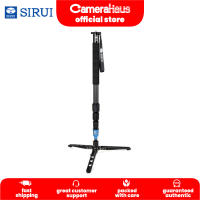
Sirui P-324X Carbon Fiber Monopod
₱12,500.00
Buy on Lazada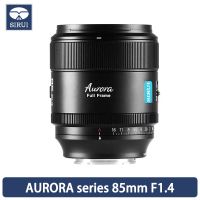
SIRUI AURORA Series 85mm F1.4 Full Frame Large Aperture Golden Portrait Focal Length Autofocus Lens
₱31,819.20₱38,000.00
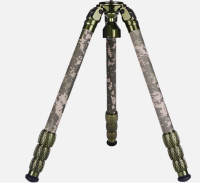
Sirui CT-3204 Pro Carbon 4-Step Tripod Legs Only Green Digi Camo Flat/75mm Bowl
₱22,681.68₱27,275.00
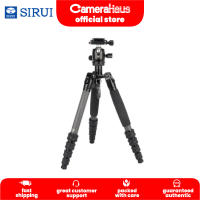
Sirui Traveler 5AX/5CX Travel Tripod
₱6,497.00
Buy on Lazada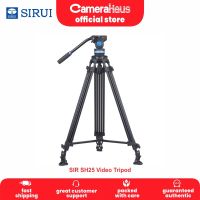
SIRUI SH25 Video Tripod
₱10,995.00
Buy on Lazada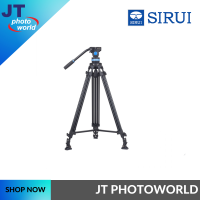
Sirui SH25 Aluminum Video Tripod with Fluid Head Video Tripod
₱9,592.00₱11,990.00
About SIRUI
SIRUI is a Chinese optical and photographic equipment brand best known today for camera lenses—particularly anamorphic lenses—as well as tripods, video heads, lighting equipment, and other camera support products. The company behind the brand is Guangdong SIRUI Optical Co., Ltd., headquartered in Zhongshan, Guangdong, China. SIRUI states it was founded in 2001 and originally built its reputation through photographic support equipment before expanding substantially into optical products and cinema-oriented lenses.1
Its brand slogan is “SIRUI, Capturing Your Imagination.”2
In the current camera industry, SIRUI occupies a distinct position by combining the manufacturing scale and pricing typical of Chinese equipment manufacturers with increasingly sophisticated cinema optics, autofocus lenses, anamorphic designs, carbon-fibre support systems, and LED lighting.
Quick facts
| Category | Information |
|---|---|
| Brand | SIRUI |
| Company | Guangdong SIRUI Optical Co., Ltd. |
| Founded | 2001 |
| Origin | China |
| Headquarters | Zhongshan, Guangdong, China |
| Industry | Photography, cinematography, optics, camera accessories |
| Major products | Lenses, anamorphic lenses, tripods, monopods, video heads, lighting, filters, accessories |
| Best known for | Affordable anamorphic lenses and carbon-fibre camera support |
| Major markets | Global |
| Official slogan | “Capturing Your Imagination” |
| Official website | SIRUI Official Website |
| Official store | SIRUI Global Store |
SIRUI states that it operates a production facility of more than 30,000 m² and employs over 500 trained workers. Its international sales network has expanded across Europe, North America, Japan, Southeast Asia, the Middle East, and other markets.3
Business scope
SIRUI is not solely a lens manufacturer. Historically, its business has covered several related categories:
- Camera tripods
- Ball heads
- Fluid video heads
- Monopods
- Gimbal heads
- Camera accessories
- Optical lenses
- Anamorphic cinema lenses
- Filters
- Mobile phone lenses
- Stabilisers
- Humidity-control cabinets
- Lighting equipment
- Other optoelectronic products
The company’s product catalogue reflects this breadth, ranging from professional R-series tripods and K-series ball heads to filters, mobile accessories, stabilisers, and other photographic equipment.4
Over time, SIRUI’s identity has shifted considerably. While the brand was previously associated primarily with being a good-quality Chinese tripod and support manufacturer, it is now increasingly recognised for affordable cinema optics, especially anamorphic lenses.
History
2001: Establishment
SIRUI was founded in 2001 in Zhongshan, Guangdong Province, located in China’s Pearl River Delta manufacturing region.5 This location is significant as Guangdong is one of China’s major centres for manufacturing, electronics, and optics production. From its inception, SIRUI positioned itself as a manufacturer rather than merely an importer or reseller.
2006: Maturation of camera support business
According to the company’s history, SIRUI’s tripod and head production line had matured by 2006.6 This period established the foundation for camera support, which remains one of SIRUI’s best-known product categories. Tripods, monopods, ball heads, and video heads continued to be central to the business even after the company entered the lens market.
2015: Expansion into cine and anamorphic optics
A pivotal milestone occurred in 2015 when SIRUI established production bases for anamorphic and cinema lenses.7 Rather than competing exclusively with traditional photography brands on conventional lenses, the company identified a niche in affordable anamorphic optics, which became crucial to its modern identity.
2018: Design recognition
In 2018, the SIRUI R-3213X tripod won both the Red Dot Design Award (Best of the Best) and the German Design Award.8 These accolades demonstrated that industrial design and mechanical engineering were becoming integral parts of the brand, moving beyond a purely low-cost positioning.
Anamorphic lenses
The development of anamorphic optics is arguably the most significant chapter in SIRUI’s modern history. An anamorphic lens optically compresses the image horizontally during recording; the footage is subsequently de-squeezed during monitoring or post-production. This process yields characteristics associated with cinematic anamorphic photography, including a wider horizontal field of view, oval bokeh, horizontal flares, characteristic perspective, widescreen compositions, and distinctive cinematic rendering.
Historically, anamorphic lenses were expensive, large, and primarily associated with professional cinema. SIRUI identified an opportunity to make this technology more accessible.
First affordable generation
SIRUI gained prominence among independent filmmakers for its 1.33× APS-C/MFT anamorphic lenses, offered in focal lengths such as 24mm, 35mm, and 50mm depending on the generation and mount. The appeal lay in providing genuine anamorphic optics at a price point significantly lower than traditional cinema solutions. Reviews have noted these lenses as part of an effort to produce budget-friendly anamorphic options while maintaining compactness, build quality, and distinct image character.9 This marked the brand’s transition from a camera accessory manufacturer to a serious cinema optics brand.
Factors driving popularity
Several factors contributed to the adoption of SIRUI anamorphic lenses:
- Price: Traditional anamorphic cinema lenses are often prohibitively expensive. SIRUI made the format accessible to YouTubers, independent filmmakers, film students, small production companies, enthusiast cinematographers, and hybrid shooters, effectively democratising anamorphic shooting.
- Compactness: SIRUI lenses are generally much smaller than many traditional cinema anamorphics.
- Distinctive rendering: The lenses retain optical characteristics such as horizontal flares, oval bokeh, distortion, focus breathing, and anamorphic stretching, rather than pursuing clinical perfection. These traits are often desirable in cinematic contexts.
- Broad compatibility: SIRUI supports numerous major camera mounts, including Sony E, Canon RF, Nikon Z, Fujifilm X, Leica/Panasonic L, Micro Four Thirds, DJI DL, and PL. Current listings show extensive compatibility across these systems.10
Venus series
The Venus line represented a significant step upward, bringing full-frame 1.6× anamorphic optics into a relatively accessible price bracket. Full-frame anamorphic lenses are traditionally large, heavy, expensive, and mechanically complex; SIRUI attempted to make them more practical for independent filmmakers. The Venus family includes focal lengths such as 35mm, 50mm, and 75mm.
Saturn series
The Saturn series advanced the concept further with full-frame 1.6× anamorphic lenses constructed from lightweight carbon fibre. The initial 35mm, 50mm, and 75mm models were designed around T2.9 aperture, 1.6× squeeze, full-frame coverage, and low weight. Independent testing highlighted the unusually compact size of the Saturn lenses, with weights reported in the 400–500 g range, approximately half that of comparable Venus lenses.11 CineD also noted that with a 3:2 sensor, a 1.6× de-squeeze produces a 2.4:1 final image, while 16:9 capture yields an even wider aspect ratio.12 This makes the Saturn series particularly suitable for full-frame mirrorless cameras, compact cinema cameras, gimbal rigs, drone cinematography, and lightweight filmmaking.
Transition to autofocus
SIRUI has moved beyond traditional manual-focus cinema lenses to include autofocus models, including autofocus anamorphic designs. Testing of the SIRUI 40mm 1.33× autofocus anamorphic lens revealed features such as AF/MF switching, an assignable AFL button, USB-C firmware updating, weather sealing, and a relatively compact construction weighing just over 600 g.13 This represents a strategic shift from serving specialist users with manual focus controlled filmmaking tools to targeting hybrid shooters, creators, and independent filmmakers with anamorphic aesthetics combined with autofocus convenience.
Current lens portfolio
SIRUI’s current catalogue extends well beyond its original anamorphic lineup. Key lens families include:
- Saturn: Full-frame anamorphic lenses notable for their 1.6× squeeze and lightweight construction.
- Astra: A newer anamorphic family featuring 1.33× autofocus anamorphic lenses.
- Venus: Full-frame anamorphic cinema lenses.
- Night Walker: Fast cinema-oriented lenses designed for low-light shooting and cinematic rendering.
- Aurora: Autofocus photographic lenses, including fast-aperture full-frame options.
- Sniper: Autofocus lenses aimed at hybrid photography and video creators.
- Vision Prime: Cinema-oriented prime lenses.
- Jupiter: A modern optical series within the expanding lineup.
The official store lists these families alongside the company’s tripods and lighting products.14
Although anamorphic lenses receive the most attention, SIRUI is increasingly positioning itself as a general-purpose lens manufacturer. Its current mount compatibility includes:
| Mount | Major ecosystem |
|---|---|
| Sony E | Sony |
| Canon RF | Canon |
| Nikon Z | Nikon |
| Fujifilm X | Fujifilm |
| L-Mount | Leica / Panasonic / Sigma |
| MFT | Panasonic / OM System / Blackmagic |
| PL | Cinema cameras |
| DJI DL | DJI |
This broad compatibility allows SIRUI to serve both photography and cinematography markets rather than remaining a niche anamorphic manufacturer.15
Camera support and lighting
Tripods
Before gaining fame for lenses, tripods were one of SIRUI’s core strengths. The current range includes traveller tripods, carbon-fibre tripods, aluminium tripods, professional studio tripods, video tripods, tabletop tripods, monopods, wildlife-oriented systems, and compact travel systems. The official catalogue organises these into numerous families, including the SR, A, N-S, T-0S, T-S, ET, W, R, and R-X series.16 The consistent philosophy across these products is high mechanical quality, relatively low weight, and competitive pricing.
Carbon fibre is particularly important to SIRUI’s support gear. Many higher-end tripods and newer cinema products utilise carbon fibre to reduce weight while maintaining rigidity, aligning with the company’s strategy of delivering professional performance without unnecessarily bulky equipment.
Video heads
SIRUI produces professional video heads, including fluid heads, pan/tilt heads, professional cinema heads, gimbal heads, ball heads, and rapid-system heads. The current lineup includes products such as the VHS-10 professional fluid head and various video tripod systems.17 This capability allows SIRUI to provide an entire camera support ecosystem, an advantage it holds over pure lens manufacturers.
Lighting
More recently, SIRUI has expanded into LED lighting. The current range encompasses COB lights, panel lights, portable lights, RGB lights, light sticks, and video lighting accessories. Products such as the C300X II, C150X, C60X, and Dragon series lights are currently categorised in the official store.18 This expansion signals SIRUI’s transformation from a tripod company into a broader creator-equipment ecosystem.
Other products
Historically, SIRUI has also produced a variety of other imaging accessories:
- Filters: Including UV, ND, graduated ND, CPL, square filters, and filter holders.
- Mobile photography: Smartphone lenses (wide-angle, macro, fisheye), phone cases, and lens adapters.
- Stabilisation: Handheld stabilisers and smartphone/camera stabilisation products.
- Storage and humidity control: Intelligent and conventional dehumidifying cabinets for equipment storage, which are particularly relevant in humid climates.19
Engineering and manufacturing
SIRUI describes itself as an optical and photoelectronic manufacturer with an emphasis on product development, optical engineering, industrial design, manufacturing, quality control, intellectual property, and R&D. The company states its operations include modern equipment and dedicated engineering capabilities.20 SIRUI presents itself as a vertically integrated manufacturer with its own development and production capacities, rather than a branding company that simply rebrands generic products.
A key competitive advantage is China’s manufacturing ecosystem, which allows SIRUI to combine optical engineering, CNC machining, carbon-fibre manufacturing, electronics, assembly, and global distribution within a cost-efficient environment. This helps explain how the company can offer sophisticated products at prices below many established Japanese, German, and American competitors.
Market positioning
SIRUI occupies a middle ground in the imaging market. Traditional premium brands such as ZEISS, Leica, ARRI, Canon, Sony, and Nikon emphasise mature optical systems, established professional ecosystems, and premium pricing. Conversely, many budget Chinese manufacturers compete primarily on low price. SIRUI attempts to bridge this gap by offering Chinese manufacturing combined with proprietary optical and mechanical engineering, unusual features, and aggressive pricing. This approach is particularly evident in its anamorphic lens lineup.
For independent filmmakers, SIRUI makes anamorphic filmmaking accessible to those who could not previously afford it. Instead of spending thousands of dollars on a traditional anamorphic system, users can build a relatively compact kit using SIRUI lenses. Reviews have repeatedly emphasised this price-to-performance proposition.21
However, affordability does not imply equivalence to high-end cinema lenses. Depending on the model, reviewers have noted characteristics such as distortion, minimum-focus limitations, focus breathing, less uniform optical performance, pronounced anamorphic artefacts, and mechanical quirks.22 In cinematic contexts, some of these optical imperfections are considered desirable aesthetic characteristics rather than flaws.
Optical characteristics
There is no single universal “SIRUI look” given the diversity of its lens range, but its anamorphic products are particularly associated with specific traits:
- Oval bokeh: The 1.33× and 1.6× designs produce elongated bokeh characteristic of anamorphic optics.
- Horizontal flares: Bright light sources generate horizontal streaks.
- Anamorphic distortion: Straight lines may distort, particularly towards the edges.
- Cinematic compression: Subjects and backgrounds exhibit the distinctive geometry of anamorphic lenses.
- Vintage/organic rendering: Some lenses intentionally avoid the clinical rendering of modern photographic lenses.
These characteristics contribute to SIRUI’s popularity with filmmakers. The Saturn series exemplifies the brand’s product philosophy: taking a category traditionally defined by large, heavy, and expensive optics and redesigning it around portability and affordability. Independent testing has specifically highlighted the Saturn’s small size and low weight compared to the Venus family.23
Awards and recognition
One of SIRUI’s most notable design achievements was the R-3213X tripod, which received the Red Dot Design Award (Best of the Best) and the German Design Award in 2018.24 The company has also emphasised intellectual property development, industrial design, and technology-centre recognition in China.25
Global distribution
SIRUI is no longer a China-only brand. The company states it has expanded internationally, with products sold across Europe, the United States, Canada, Japan, Southeast Asia, the Middle East, and other markets. It claims to have developed a global customer-service network with over 300 sales outlets and terminal showrooms.26 International distribution is critical for camera equipment buyers who prioritise warranty, spare parts, mount availability, firmware updates, dealer support, and replacement products.
Unlike traditional Japanese camera brands such as Sony, Canon, or Nikon that manufacture both cameras and extensive native lens ecosystems, SIRUI acts as an independent optical and accessory manufacturer. Its cross-platform approach allows its lenses to be used with cameras from multiple manufacturers. While SIRUI increasingly enters territory occupied by companies like Sigma and Tamron, it differentiates itself through anamorphic lenses, cinema optics, unusual designs, creator-oriented products, tripods, and lighting. Its identity is closer to a lens, cinema, and creator ecosystem than to a purely photographic lens manufacturer.
Competitive advantages and limitations
SIRUI’s primary competitive advantage is its feature-to-price ratio. The company repeatedly takes products historically reserved for the professional market and makes them accessible to enthusiasts. Examples include making full-frame anamorphic lenses smaller and cheaper, offering carbon-fibre professional tripods below traditional premium pricing, introducing autofocus anamorphic lenses to mainstream hybrid workflows, and packaging portable professional lighting for individual creators.
Conversely, SIRUI is a relatively young brand compared to Canon, Nikon, Sony, Leica, ZEISS, and ARRI, lacking decades of reputation in professional cinema. Its rapidly evolving lineup means product generations change quickly. Additionally, aggressive pricing may necessitate compromises in optical consistency, autofocus refinement, mechanical finishing, firmware maturity, distortion control, and ergonomics. The exact trade-offs depend heavily on the specific product.
Target audience
SIRUI’s audience can be broadly categorised into five groups:
- Independent filmmakers: Particularly those seeking anamorphic cinematography without Hollywood-level budgets.
- YouTubers and content creators: The combination of autofocus, compact lenses, lighting, tripods, and monopods makes SIRUI relevant to vloggers and creators.27
- Hybrid photographers: Users who shoot both stills and video can integrate SIRUI’s newer autofocus lenses with their existing camera systems.
- Film students and enthusiasts: SIRUI provides an affordable entry point for experimenting with cinema equipment.
- Professional filmmakers: Some professionals use SIRUI selectively where specific lens characteristics, size, or price offer distinct advantages.
Evolution and brand philosophy
SIRUI’s evolution is reflected in its shifting product focus. The early milestones are documented by the company, while later developments are evident in its current catalogue and recent releases.28 Originally focused on tripods, heads, and accessories, the brand transitioned through a middle era of adding affordable anamorphic lenses. Today, SIRUI encompasses lenses, anamorphic cinema optics, autofocus, tripods, video heads, lighting, and creator equipment, attempting to become a complete imaging-equipment brand rather than a single-category manufacturer. Its official store now positions the company around camera lenses, tripods, and lighting rather than tripods alone.29
The brand philosophy can be summarised as bringing professional-grade optical and mechanical technology to a broader audience through aggressive pricing, compact designs, and high feature density. Rather than asking how to create the most expensive anamorphic lens, SIRUI’s approach focuses on making anamorphic technology small, usable, and affordable enough for ordinary filmmakers.
Assessment
Strengths
- Value: One of the company’s strongest selling points.
- Anamorphic innovation: Arguably its most distinctive area.
- Product breadth: Lenses, tripods, heads, lighting, and accessories create a broad ecosystem.
- Mechanical engineering: Particularly notable in tripods and compact cinema equipment.
- Mount compatibility: Strong support across multiple camera platforms.
- Innovation: Repeatedly entering categories that were traditionally expensive or specialised.
Limitations
- Brand heritage: Much younger than traditional optical giants.
- Consistency: Different product generations can vary considerably.
- Autofocus maturity: Newer AF products are promising, but lack the decades of development possessed by major camera manufacturers.
- Professional ecosystem: Does not possess the extensive cinema infrastructure of ARRI, Sony, Canon, or similar established manufacturers.
Summary
SIRUI is one of the more interesting Chinese imaging brands to emerge into the international mainstream. Founded in 2001 in Zhongshan as a photographic equipment manufacturer, camera support products formed an important foundation for the company.30 Its major transformation came through anamorphic and cinema optics, where it established a strong niche by offering products significantly more affordable and portable than traditional alternatives.
The 1.33× anamorphic lenses established its reputation among budget-conscious filmmakers, while the later Venus and Saturn full-frame 1.6× families pushed the company further into serious cinema territory. Independent reviews have praised the compactness and price proposition of these products while noting the inherent optical compromises.31 Today, SIRUI is moving beyond this niche, with a portfolio increasingly covering autofocus lenses, cinema lenses, anamorphics, tripods, video heads, monopods, and professional creator lighting.32
If ZEISS represents optical tradition, ARRI represents high-end cinema infrastructure, and Sigma represents aggressive independent lens engineering, SIRUI’s emerging identity can be summarised as affordable innovation for modern filmmakers and creators. This positioning explains why SIRUI has become considerably more significant than its original reputation as merely a tripod brand.
References
- About – SIRUI Optical Co., Ltd.
- About SIRUI
- SIRUI Products – Guangdong SIRUI Optical Co., Ltd.
- Our Story – SIRUI®Official Store
- Panasonic G100 and SIRUI 35mm Anamorphic Lens Review – Budget Anamorphic Solution | CineD
- lens & tripods – SIRUI®Official Store
- Buy Camera Lenses for Sony, Canon, Nikon, Fujifilm & More Mount Types – SIRUI®Official Store
- The smallest full-frame anamorphic ever – SIRUI Saturn review
- SIRUI Saturn 50mm and 75mm T2.9 1.6x Anamorphic Review – with Sample Footage Shot on Nikon Z 9 | CineD
- SIRUI 40mm Autofocus Anamorphic Lens Review – T1.8, 1.33x, S35 for an Affordable Price | CineD
- Series – SIRUI®Official Store
- Tripods & Lighting – SIRUI®Official Store
- Camera Gear for Vlogging: Best Vlogging Lenses & Accessories – SIRUI®Official Store
- Shop Camera Lenses, Anamorphic, Autofocus & Cine Lenses – SIRUI®Official Store
- SIRUI Saturn 1.6x Review: The Lightest Full Frame Anamorphic Lens – SIRUI®Official Store
- Test du SIRUI Saturn 1.6x : L’objectif anamorphique plein format le pl – SIRUI®Official Store
- SIRUI Saturn 1.6x Anmeldelse: Det Letteste Full Frame Anamorfe Objekti – SIRUI®Official Store
- SIRUI Saturn Lens Review By Christopher Frost – SIRUI®Official Store
- SIRUI Astra 1.33x Lens Review By Jason Morris – SIRUI®Official Store
- 思锐光学:2025年年度报告-新三板—东方财富网
- SIRUI Astra 1.33x Anamorphic Series Discussed – Autofocus Full-Frame Lenses for Solo Shooters | CineD
- SIRUI Saturn 35mm T2.9 1.6x Carbon Fiber Anamorphic L-mount… half price. Any good? – Cameras – EOSHD Forum
- SIRUI S35 40mm T1.8 Autofocus Anamorphic 1.33X (E, Z, L, X, MFT) Review | Radozhiva
- Sony Alpha Blog : Sirui 35mm F1.4 Aurora
- Sirui Aurora 35mm f/1.4: Budget Prime Worth the Buy? | Fstoppers
- Sirui – Camera-wiki.org – The free camera encyclopedia
- SIRUI Aurora IronStar PressRelease – SIRUI®Official Store
- Sirui Aurora 85mm f/1.4 Review: G Master Vibes at a Fraction of the Price | PetaPixel
- Best camera for video recording with anamorphic lenses in the year 202 – SIRUI Optical GmbH
- Review: Sirui 85mm 1.4 Aurora – phillipreeve.net
- LensVid Talk – NAB 2025 RoundUp – Cameras, Lenses And Software (Episode 35)
- SIRUI 20mm S35 autofocus anamorphic: A compact cinematic powerhouse