Shop on Lazada
Soundcraft products
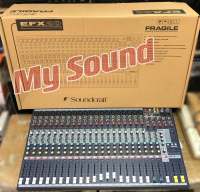
Soundcraft EFX8/12/16/20 channel mixing console low cost high performance Lexicon effects with Built-in 24 bit Lexicon digital effects processor/TESTED BEFORE SHIP OUT
₱11,888.00₱16,999.00
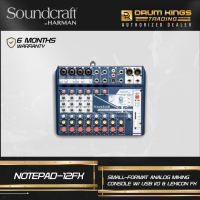
Soundcraft Notepad-12FX Small-format Analog Mixing Console with USB I/O and Lexicon Effects
₱14,200.00
Buy on Lazada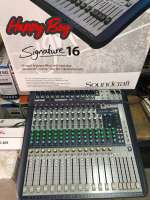
Original SOUNDCRAFT Signature 16 mixer 16 channel analogue mixer with effects with mount bracket included/TESTED BEFORE SHIP OUT
₱11,798.00₱18,999.00
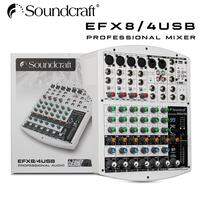
Soundcraft EFX8/4USB 4-channel mixer 99 DSP reverb effects supports Bluetooth and USB connections suitable for stages parties conferences bars etc KTV
₱2,999.00₱8,999.00
About Soundcraft
Overview
Soundcraft is a British professional audio brand best known for its mixing consoles, particularly equipment used in live sound, touring, theatre, broadcast, recording studios, houses of worship, and installed audio systems. Founded in 1973 by British audio engineers Phil Dudderidge and Graham Blyth, Soundcraft became one of the influential names in the development of modern live-sound mixing consoles. Today, Soundcraft operates as part of HARMAN Professional Solutions, itself a wholly owned subsidiary of Samsung Electronics.1
| Attribute | Details |
|---|---|
| Brand | Soundcraft |
| Industry | Professional audio |
| Founded | 1973 |
| Founders | Phil Dudderidge and Graham Blyth |
| Country of origin | United Kingdom |
| Best known for | Analog and digital mixing consoles |
| Major markets | Live sound, touring, theatre, broadcast, recording, installation |
| Parent company | HARMAN International |
| Ultimate parent | Samsung Electronics |
| Notable identity | “British Sound” / British console design |
| Current product focus | Digital, analog and hybrid mixing systems |
Soundcraft describes itself as having led mixing innovation since 1973, with products ranging from flagship digital consoles to portable analog mixers. Its current portfolio covers applications from relatively small systems to sophisticated large-format consoles with well over 100 inputs.2
History
Foundation — 1973
Soundcraft was established in 1973 by Phil Dudderidge and Graham Blyth, two British audio engineers who wanted to build mixing equipment around the practical requirements of working sound engineers. Their objective was not simply to manufacture audio electronics, but to develop consoles that made real-world mixing more effective.
The company’s early development coincided with a major transformation in live music. Concerts were becoming larger, sound systems were becoming more sophisticated, and engineers increasingly needed dedicated mixing positions rather than controlling audio from equipment integrated into amplifier systems.
Series 1 — 1974
One of Soundcraft’s most important early products was the Series 1, introduced in 1974. It is historically significant because Soundcraft describes it as the first mixing console built into a flight case. It was offered in 12- and 16-channel versions and incorporated a multicore and stagebox-oriented approach suited to touring.2
This design helped establish a now-familiar concept in live sound: separating the mixing console from the amplification system and placing the console at a front-of-house (FOH) position where the engineer could hear a representation of what the audience was hearing. This was an important development in live-sound engineering, and Soundcraft became closely associated with the emerging professional touring-console market.
Growth during the 1970s and 1980s
Soundcraft continued expanding its console range throughout the late 1970s and 1980s. Among its historically important products was the 1624, launched in 1979 as a 16/24-track recording console. It used a split-format design, allowing the engineer and producer to work simultaneously with different sections of the console.
The Series 2400, introduced in 1981, developed this recording-console philosophy further. It was designed as an upgrade to the 1624 and became commercially successful, including through its association with Soundcraft’s multitrack recording equipment. The 800B, meanwhile, helped establish Soundcraft as a major supplier to the professional PA-hire and theatre markets. It offered substantially more bussing and auxiliary capability than earlier designs, reflecting the increasing complexity of live productions.
Acquisition by HARMAN
A major corporate milestone came in 1988, when HARMAN acquired Soundcraft. Soundcraft subsequently became part of HARMAN’s expanding portfolio of professional audio brands. This gave Soundcraft access to the resources and international infrastructure of a much larger professional-audio organisation while allowing the Soundcraft brand to continue developing its own console technologies and identity.
The “British Sound”
One of Soundcraft’s most recognisable concepts is its association with the “British Sound.” This generally refers not to one specific technical specification, but to the company’s approach to console design, microphone preamps, equalisation and overall sonic character. Soundcraft’s own product literature associates this identity with technologies such as its Ghost microphone preamps and Sapphyre British EQ.
The company’s reputation consequently developed around several characteristics:
- Musical and flexible equalisation
- High-quality microphone preamps
- Practical channel layouts
- Strong live-sound ergonomics
- Robust construction
- A balance between technical functionality and intuitive operation
The “British Sound” concept became an important part of Soundcraft’s brand identity, particularly among live-sound engineers.
Product evolution
Soundcraft’s history can broadly be divided into several generations.
Analog era
During its early decades, Soundcraft concentrated heavily on analog mixing consoles for touring, theatre, recording, broadcast, PA rental and installed sound. Its consoles became increasingly sophisticated as productions demanded more inputs, auxiliary sends, subgroups, monitoring options and routing flexibility.
1990s: Modularity and accessibility
The 1990s introduced a new phase in Soundcraft’s development. The company introduced console families including the Delta, Spirit, and Ghost ranges. Soundcraft describes this period as one characterised by increased modularity, industrial-design development, workflow improvements and greater affordability. The Spirit brand in particular helped bring Soundcraft-derived console design to a broader range of musicians, project studios and smaller professional applications.
Digital transformation
Like virtually every major professional-console manufacturer, Soundcraft eventually shifted heavily toward digital mixing. The company developed a range of digital technologies and consoles aimed at increasingly complex live productions.
Vi Series
The Soundcraft Vi Series is a large-format digital mixing-console family designed for demanding professional applications. The series has been used in concert touring, performing-arts venues, stadiums, houses of worship, live broadcast and large-scale events. HARMAN has highlighted Vi systems capable of handling up to 128 inputs and 32 auxiliary buses, depending on the configuration.2 The Vi range became particularly notable for combining large-scale digital-console capabilities with a workflow intended to remain familiar to engineers accustomed to traditional mixing desks.
Other major Soundcraft product families
Soundcraft has developed products across virtually every level of professional mixing.
Notepad
The Notepad family targets smaller-scale applications, including home/project recording, small live systems and musicians who need compact mixing and USB connectivity.
Signature
The Signature Series occupies an important middle ground between conventional analog mixing and modern computer-based workflows. Features associated with the range include USB recording/playback, Soundcraft microphone preamps, British-style EQ, Hi-Z inputs, phantom power, flexible routing and integrated effects on applicable models. Soundcraft positions the Signature range around its traditional analog-console sound while adding modern connectivity.
Ui Series
The Ui Series represents Soundcraft’s move toward surface-less digital mixing, where the physical console surface is minimised or eliminated and mixing can be performed through network-connected devices. This concept is particularly useful for smaller live productions where portability and remote control are important.
Si Series
The Si family brought digital mixing into a variety of touring, theatre, installation and live-production environments.
Together, these families illustrate Soundcraft’s strategy of covering a broad range of applications, from compact analog mixers to large-format digital consoles. HARMAN describes Soundcraft’s overall range as extending from eight-input analog mixers to sophisticated digital consoles exceeding 100 inputs.2
Technology and design philosophy
A defining characteristic of Soundcraft is its emphasis on engineer-oriented workflow. Rather than treating a mixing console purely as an audio-processing device, Soundcraft historically approached the console as the engineer’s primary working environment. Important design priorities have included ergonomics, signal routing, equalisation, preamplification and digital processing.
Controls are generally organised so that an engineer can quickly identify channels, routing, EQ, auxiliary sends and monitoring functions. Professional Soundcraft consoles have traditionally offered extensive routing options, reflecting the needs of complex live productions. The company’s British-style EQ philosophy has been a recurring part of its identity, and microphone preamps are treated as critical first stages of signal entry.
Modern Soundcraft digital consoles integrate functions such as equalisation, dynamics processing, reverb, delay, routing, scene management and digital networking, depending on the model. HARMAN emphasises these integrated processing capabilities as part of Soundcraft’s modern digital-console offering.2
Soundcraft in live sound
Soundcraft’s strongest historical association is arguably live sound. Its consoles have been used in environments ranging from small performances to major touring productions. The brand’s importance to live audio comes partly from its early contribution to the separation of the mixing console from amplification and its development of dedicated touring-oriented equipment.2
The company’s consoles are used across concert tours, festivals, theatres, stadiums, houses of worship, corporate events, educational institutions, broadcast productions and fixed installations. HARMAN’s own descriptions place Soundcraft across live sound, recording and broadcast applications.2
Soundcraft and recording
Although Soundcraft became particularly famous for live sound, it has also had a substantial recording-console history. Its analog recording consoles, including the 1624 and 2400, were designed around multitrack recording workflows.1 Later products such as the Ghost series became associated with project and professional studios. Soundcraft subsequently incorporated computer connectivity and hybrid workflows into products such as the Signature range, allowing engineers to combine traditional analog mixing with digital recording.2
Soundcraft and broadcast
Modern Soundcraft consoles are also used in broadcast and production environments, where engineers need extensive routing, monitoring and processing capabilities. Digital systems are particularly valuable in broadcast because a single console can handle many independent signal paths and complex routing configurations without requiring the physical wiring associated with equivalent analog systems. The Vi family, for example, has been marketed for live broadcast as well as touring, theatres, stadiums and houses of worship.2
Ownership and HARMAN
Today, Soundcraft is part of HARMAN Professional Solutions. HARMAN’s professional portfolio includes brands such as JBL Professional, AKG, Crown, dbx, Lexicon, BSS, Martin, Soundcraft and Studer.1 HARMAN itself is a wholly owned subsidiary of Samsung Electronics. This gives Soundcraft a place within a very large professional-technology ecosystem. For example, a professional installation can potentially combine Soundcraft mixing with JBL loudspeakers, Crown amplification and processing/control technologies from other HARMAN brands.
Relationship with other HARMAN brands
An interesting aspect of Soundcraft’s position within HARMAN is that it is primarily a mixing and control brand rather than a loudspeaker or amplifier brand. A typical HARMAN professional-audio system might therefore involve microphones feeding a Soundcraft console, followed by processing, Crown amplification and JBL loudspeakers. Depending on the system, other HARMAN technologies can also be incorporated. HARMAN explicitly promotes integrated ecosystems combining brands such as Soundcraft, JBL Professional, Crown, BSS and others.2 This makes Soundcraft particularly important as the mixing/control centre of many professional audio systems.
Market position
Soundcraft occupies a distinctive position in professional audio. It is neither exclusively a high-end touring-console manufacturer nor simply a consumer-oriented mixer company. Instead, its product range historically spans a large portion of the market.
| Segment | Typical Soundcraft positioning |
|---|---|
| Small musicians | Compact analog mixers |
| Project studios | Analog/hybrid mixers |
| Small live sound | Compact digital/analog systems |
| Touring | Professional digital consoles |
| Theatre | Large-format digital and analog consoles |
| Broadcast | Digital mixing/routing systems |
| Houses of worship | Digital live-production consoles |
| Stadiums/large venues | Large-format Vi systems |
| Installation | Digital and configurable console systems |
This breadth is one of the reasons HARMAN describes Soundcraft as offering one of the widest ranges of mixing consoles in the professional-audio industry.2
Important historical milestones
- 1973 — Soundcraft founded by Phil Dudderidge and Graham Blyth.
- 1974 — Series 1 introduced; Soundcraft’s touring-console design becomes historically significant.2
- Late 1970s — Expansion into increasingly sophisticated live and recording consoles.
- 1979 — Series 1624 introduced for multitrack recording.
- 1981 — Series 2400 introduced.
- 1980s — Soundcraft establishes a strong position in professional PA, theatre and touring.
- 1988 — HARMAN acquires Soundcraft.
- 1990s — Delta, Spirit and Ghost families expand the company’s range and accessibility.
- 2000s onward — Increasing emphasis on digital mixing.
- 2010s — Vi, Si, Ui and other digital platforms expand Soundcraft’s presence in professional live production.
- Today — Soundcraft remains a HARMAN professional-audio brand covering analog, digital and hybrid mixing applications.2
Brand identity
Soundcraft’s identity can essentially be summarised around four ideas:
- British engineering. The company originated in the UK and built its reputation around British console engineering and the concept of the “British Sound.”
- Professional workflow. Soundcraft has historically designed equipment around the needs of working engineers rather than simply maximising specifications.
- Live-sound heritage. Its early touring consoles played a significant role in the development of modern live-sound practice.
- Analog-to-digital continuity. Rather than abandoning its analog heritage, Soundcraft has carried concepts such as familiar channel layouts, EQ philosophies and engineer-focused operation into its digital products.
Significance in audio history
Soundcraft’s historical importance extends beyond the individual mixers it produced. The Series 1’s flight-case design and touring-oriented configuration arrived at an important point in the development of modern concert sound. It helped establish the idea of a dedicated, transportable mixing console positioned away from the stage and amplification equipment.2 That development contributed to the modern FOH engineer workflow that is now standard at concerts and other large live events. In that sense, Soundcraft is not merely a company that manufactures mixers; it is one of the brands that helped shape the physical and operational architecture of modern live sound.
Soundcraft today
As of 2026, Soundcraft remains part of HARMAN Professional Solutions and continues to manufacture and support professional mixing systems for live sound, recording, broadcast and installation applications. Its portfolio encompasses everything from compact analog mixers to large-format digital consoles.1 Its continuing relevance comes from combining a long analog heritage with contemporary digital technologies, while maintaining a strong emphasis on the practical workflow of audio engineers.
Soundcraft is a British professional-audio brand founded in 1973 that helped define modern live mixing-console design and evolved from pioneering analog touring desks into a broad manufacturer of analog, digital and hybrid professional mixing systems. Today it operates under HARMAN, where it forms part of a wider professional-audio ecosystem alongside brands such as JBL Professional, Crown, AKG and Lexicon.1