Shop on Lazada
specialized products
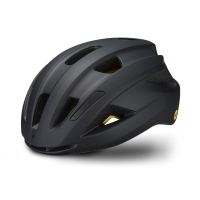
SPECIALIZED Lightning ALIGN II MIPS Cycling Helmet for Mountain Road and Leisure Commuting Use
₱3,899.00₱6,999.00
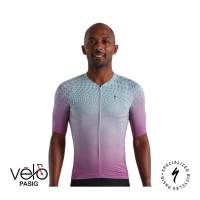
Velo Pasig - Specialized Mens SL Bicycledelics Jersey Ice Papaya Pro Blue
₱2,449.00₱4,895.00
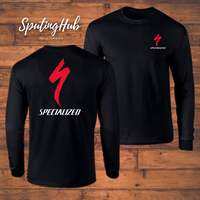
Specialized MTB Bikers Longsleeve
₱550.00
Buy on Lazada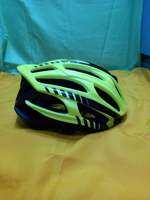
Specialized Prevail Helmet Color: Black Lime Green Black/ Lime green. light blue/white Size Medium
₱680.00
Buy on Lazada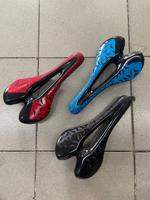
Specialized Saddle Assorted Colors
₱299.00
Buy on LazadaAbout specialized
Specialized, officially Specialized Bicycle Components, Inc., is an American bicycle company best known for designing and marketing high-performance bicycles, components, equipment, apparel, and cycling technology. Founded in 1974 by Mike Sinyard, Specialized grew from a small importer of European bicycle components into one of the world’s most recognizable premium cycling brands. Its headquarters are in Morgan Hill, California, and the company operates through a large international dealer and distribution network.1
As of 2026, Specialized describes itself as a rider-focused company with more than 50 years of innovation and a global network of 8,000+ stores.2
Infobox
| Field | Information |
|---|---|
| Official name | Specialized Bicycle Components, Inc. |
| Brand name | Specialized |
| Founded | 1974 |
| Founder | Mike Sinyard |
| Headquarters | Morgan Hill, California, United States |
| Industry | Bicycle and cycling equipment |
| Products | Road bikes, mountain bikes, gravel bikes, e-bikes, urban/fitness bikes, kids’ bikes, components, wheels, helmets, shoes, apparel and accessories |
| Major sub-brands | S-Works, Roval |
| Famous model families | Stumpjumper, Tarmac, Roubaix, Epic, Allez, Diverge, Turbo |
| Notable technology | FACT carbon, Body Geometry, Retül, Roval wheels, Turbo e-bike systems |
| Business model | Premium bicycle brand with specialized retail/dealer network |
| Founder/ownership history | Founded and historically controlled by Mike Sinyard; Merida became a major minority investor |
| Motto/positioning | “Made for riders, by riders.” |
Note: Specialized is privately held, so detailed current financial information is not publicly disclosed.
Origins
The story of Specialized begins with Mike Sinyard, an American cycling enthusiast. In the early 1970s, Sinyard sold his Volkswagen bus and travelled to Europe by bicycle. While in Italy, he encountered high-quality bicycle components that were difficult to obtain in the United States. Recognizing an opportunity, he began importing these European components for American cyclists, which became the foundation of the company.
Although Specialized’s own historical material describes Sinyard’s 1973 European trip as the inspiration for the business, the company officially dates its beginning to 1974.3 Sinyard’s original philosophy was not simply to sell bicycles but to identify unmet needs among cyclists and develop technically advanced products that provided a meaningful performance advantage. This philosophy remains central to the identity of Specialized today.4
First products
Initially, Specialized concentrated on bicycle components and accessories, particularly products imported from Europe. In 1976, the company introduced the Specialized Touring Tire, its first major internally developed product. Specialized describes it as the result of two years of research and development and as an early high-performance clincher tire.5
This product established a pattern that would characterize the company for decades: identifying a problem experienced by riders, engineering a better solution, and selling it through specialty bicycle retailers. Following this success, Specialized gradually expanded from components into complete bicycles.
Entry into complete bicycles
In 1981, Specialized introduced its first major complete bicycles:
- Sequoia — a sport-touring bicycle
- Allez — a road/racing bicycle
- Stumpjumper — a mountain bike
The Stumpjumper became the most historically significant of the three. Specialized describes the Stumpjumper as the world’s first production mountain bike, developed when mountain biking was still an emerging discipline rather than the massive global category it is today.6 The original Stumpjumper helped establish Specialized as more than a component company; it became a bicycle manufacturer and, importantly, an engineering-driven bicycle brand.
The Stumpjumper and modern mountain biking
The Stumpjumper is arguably the single most important bicycle in the history of Specialized. Before mass-produced mountain bikes became common, riders modified ordinary bicycles to handle rough terrain. Specialized recognized that mountain biking represented a distinct category deserving purpose-built equipment and developed a production mountain bike around the specific needs of these riders.
The Stumpjumper eventually became a permanent product family. More than four decades later, Specialized still sells Stumpjumper models, including the current Stumpjumper and Stumpjumper EVO lines.7 This continuity is unusual in the bicycle industry and underscores the model’s enduring significance.
Expansion during the 1980s
During the 1980s, Specialized expanded internationally and broadened its bicycle portfolio. The company increasingly positioned itself as a specialty bicycle brand rather than a mass-market manufacturer. This distinction became vital to its identity, as products were intended to be sold and supported by dedicated bicycle shops where customers could receive professional fitting, technical advice, maintenance, repairs, test rides, and specialized product knowledge. Specialized continues to emphasize this retail model, stating that its worldwide network provides sales, service, demos, and bike fitting.8
The 1990s: Technology becomes central
The 1990s marked a pivotal period in the development of Specialized. As mountain biking went mainstream and road cycling became increasingly technology-focused, the company responded by developing technologies centred on frame materials, suspension, aerodynamics, rider ergonomics, bicycle geometry, cycling biomechanics, and lightweight construction. The company’s own history summarizes this decade as the period when mountain bikes came of age, while Specialized simultaneously expanded its road-bike development and introduced its Body Geometry approach.9
Body Geometry
Body Geometry became one of the signature concepts of Specialized. Rather than treating a bicycle as an isolated machine, the company studied the interaction between the rider, bicycle, body position, and biomechanics. This philosophy eventually extended beyond frames to saddles, shoes, handlebars, and other contact points, helping establish Specialized as a company interested in optimizing the entire riding experience rather than merely making bicycles lighter or faster.
Mid-1990s challenges
The history of Specialized was not an uninterrupted success story. In the mid-1990s, the company experimented with Full Force, a lower-priced mountain-bike brand intended for sporting-goods and discount retail channels. This strategy created tension with traditional specialty-bike-shop dealers. The Full Force experiment was eventually discontinued, and Specialized suffered a significant commercial setback, with contemporary histories describing the company as having come extremely close to bankruptcy during this period.10
This episode reinforced a crucial lesson: the strength of Specialized lay in its premium, specialty-retail identity. Rather than competing primarily as a low-cost mass-market brand, the company increasingly concentrated on performance, engineering, and premium positioning.
Merida investment
In 2001, Taiwanese bicycle manufacturer Merida Industry Co., Ltd. invested in Specialized. The transaction has historically been reported as approximately 49% of Specialized for around US$30 million, although reporting on the exact percentage has varied.11 This investment provided capital for product development, sales expansion, European growth, research and development, and strengthening relationships with specialty retailers.
Importantly, Specialized remained a distinct American brand rather than becoming a Merida-branded bicycle company.12 The relationship reflected the increasingly global structure of the bicycle industry, allowing Specialized to concentrate on product design, engineering, branding, and marketing while manufacturing was carried out through an international supply chain.
The 2000s: Becoming a road-bike leader
Specialized entered the 2000s with an increasingly sophisticated road-bike portfolio, a period the company characterizes as “Coming of Age as a Leader in Road.”13 Several important product families became associated with its road-bike identity during this era.
Tarmac
The Tarmac became the principal lightweight race-bike platform for Specialized. Developed around the demands of professional road racing, it combined low weight, stiffness, aerodynamics, handling, and climbing performance. Today, Specialized continues to position the Tarmac as its flagship race-oriented road bicycle.14
Roubaix
The Roubaix took a different approach. Rather than focusing exclusively on minimum weight and maximum stiffness, Specialized developed it around the challenge of riding extremely rough roads while maintaining high performance. This made the Roubaix particularly associated with endurance road riding and races such as Paris–Roubaix.
Allez
The Allez remained an important aluminum road-bike platform and became one of the most accessible performance road models from Specialized.
Professional racing
Professional racing has been a major part of the brand identity of Specialized, serving as a real-world development environment for bicycles, components, and equipment. Its modern racing presence spans road racing, mountain biking, gravel, cyclocross, triathlon, and other disciplines. Current racing coverage highlights professional riders and victories involving platforms such as the Tarmac and Epic.15
A particularly significant modern relationship is with Belgian cyclist Remco Evenepoel. In April 2026, Specialized announced a lifetime partnership with Evenepoel, extending a relationship that began when he was a junior.16 This illustrates how Specialized treats elite athletes not only as advertising figures but also as integral parts of its product-development and performance ecosystem.
S-Works
One of the most recognizable sub-brands of Specialized is S-Works, representing the company’s highest-end performance products. The hierarchy can be understood as Specialized → performance products → S-Works. These products generally utilize the highest-level materials, components, and engineering available from the company. Examples include the S-Works Tarmac, S-Works Roubaix, S-Works Epic, S-Works Stumpjumper, and S-Works Aethos.
The S-Works name has become almost a separate luxury and performance identity within cycling, aimed primarily at professional racers, serious enthusiasts, weight-conscious riders, and customers seeking the highest specification available from Specialized.
Roval
Another important brand associated with Specialized is Roval, which specializes primarily in bicycle wheels and wheel-related components. This brand allows Specialized to develop bicycles as integrated systems rather than treating the frame as the only critical component. Modern Specialized bicycles frequently pair Specialized frames with Roval wheels, which is particularly important for aerodynamic road bikes where frame, wheel, tire, and cockpit aerodynamics can be designed together.
Carbon-fiber technology
Carbon fiber became increasingly important to Specialized, leading the company to develop its own terminology and engineering systems, including FACT, a designation associated with its carbon-fiber frame engineering. Premium carbon bicycles from Specialized emphasize combinations of weight, stiffness, compliance, aerodynamic performance, and structural durability.
The engineering philosophy holds that simply making a frame lighter is not necessarily sufficient; the frame must deliver desired characteristics for its intended discipline. Consequently, a Tarmac, Roubaix, Epic, and Stumpjumper may all use carbon construction while having vastly different structural priorities.
McLaren collaboration
Specialized became notable for collaborating outside the traditional bicycle industry, working with McLaren Applied Technologies to bring Formula 1-inspired engineering and aerodynamic expertise into bicycle development. This collaboration was particularly associated with aerodynamic road bikes and represented a broader philosophy that cycling technology does not have to originate exclusively from the bicycle industry. Specialized has repeatedly looked toward motorsport, aerospace, biomechanics, materials science, and computational engineering for ideas to improve bicycles.
Turbo electric-bike platform
Specialized eventually expanded heavily into electric bicycles under the Turbo family name. This strategic move extended the brand beyond the traditional human-powered bicycle market. The Turbo platform encompasses several categories:
- Turbo Levo: Electric mountain bike.
- Turbo Kenevo: Long-travel electric mountain bike designed for aggressive trail riding.
- Turbo Creo: Electric road/gravel-oriented platform.
- Turbo Vado: Electric urban/fitness bicycle.
- Turbo Como: Comfort-oriented urban electric bicycle.
The current product range shows electric bicycles alongside conventional road, mountain, gravel, active, and children’s bikes.17
Gravel cycling
Specialized has developed a major presence in gravel cycling, treating it as a distinct engineering category rather than simply adapting road bicycles. The company’s best-known gravel platform is the Diverge, complemented by the lighter, performance-focused Crux. Gravel bicycles occupy the space between road cycling, adventure riding, endurance cycling, and off-road cycling. The current lineup includes both Diverge and Crux models.
Mountain-bike portfolio
Mountain biking remains one of the strongest categories for Specialized. Its modern mountain-bike families include:
| Family | General purpose |
|---|---|
| Epic | Cross-country racing |
| Stumpjumper | Trail riding |
| Enduro | Aggressive all-mountain/enduro riding |
| Demo | Downhill racing |
| Rockhopper | Entry-level hardtail MTB |
| Chisel | Performance aluminum XC |
| Turbo Levo | Electric trail MTB |
| Turbo Kenevo | Long-travel electric MTB |
Specialized currently describes the Stumpjumper as a benchmark trail-bike platform, while the Epic family focuses on cross-country performance.18
Road-bike portfolio
The road range of Specialized can be broadly divided into several philosophies, reflecting the view that no single “best” road bicycle exists and that different disciplines require different engineering compromises:
- Tarmac: Race bike focused on speed, climbing, and overall racing performance.
- Roubaix: Endurance bike focused on comfort and control over rough roads.
- Aethos: Lightweight road bike emphasizing ride quality and low weight.
- Allez: Aluminum performance road bike.
- Shiv: Aerodynamic/triathlon-focused platform.
City, fitness, and everyday cycling
Specialized is not exclusively a racing company. The Sirrus family, for example, is designed around fitness, commuting, and everyday riding. The company also produces urban bicycles, electric city bikes, cargo e-bikes, children’s bikes, helmets, cycling shoes, saddles, apparel, and accessories. Its current catalog spans electric, road, mountain, active, gravel, and children’s bicycles as well as cycling equipment.19
Technology philosophy
A distinctive characteristic of Specialized is its emphasis on vertical product development. Rather than only designing frames and sourcing other parts externally, Specialized has developed its own ecosystem around frames, wheels, tires, saddles, shoes, helmets, clothing, rider fitting, biomechanics, electronic systems, and aerodynamics. The objective is integration; for example, a modern Specialized road bike involves engineering relationships between the frame, fork, cockpit, wheels, tires, rider position, and aerodynamics, differing significantly from simply assembling commercially available components.
Retül and bike fitting
Specialized has become involved in advanced bicycle fitting through Retül, which uses measurement and motion-analysis technology to determine bicycle setup and rider position. This connects directly with the long-standing Body Geometry philosophy and the broader idea that the bicycle should be optimized around the rider rather than forcing the rider to adapt to the bicycle. This aligns with the “rider-first” positioning of Specialized.20
Outride
Specialized is involved in cycling-related social initiatives such as Outride, an organization focused on using cycling to support youth development and well-being. Corporate material identifies Outride as part of a broader effort to promote cycling and its potential benefits beyond sport. This represents an evolution in the identity of Specialized from selling bicycles to promoting cycling as a lifestyle and social activity.
Trail advocacy
Mountain-bike trail access has historically been important to Specialized. As mountain biking gained popularity and cyclists faced restrictions on public trails, Specialized participated in discussions among trail-access organizations in 1987. These efforts contributed to the formation of the International Mountain Bicycling Association (IMBA). This advocacy is significant because the growth of mountain biking depends not only on bicycles but also on having places to ride them.
Sustainability
Specialized maintains a sustainability program addressing the environmental and social effects of its business, explicitly stating that its decisions have impacts it has a responsibility to minimize.21 Like most major bicycle companies, this involves issues such as carbon-fiber manufacturing, aluminum production, transportation, packaging, product longevity, repair, supply-chain impacts, and end-of-life products. Sustainability is increasingly part of the corporate identity rather than simply a marketing issue.
Manufacturing
An important distinction regarding Specialized is the difference between brand origin and manufacturing location. While Specialized is an American company, not every bicycle is physically manufactured in the United States. The modern bicycle industry relies heavily on international manufacturing, particularly in Asia, and Merida has historically been a major manufacturing partner and investor.22
The primary strengths of Specialized lie in product concept, engineering, design, testing, branding, marketing, and distribution, while manufacturing is conducted through a global supply network. This structure is common among premium bicycle companies.
Distribution and retail
Specialized has traditionally placed considerable importance on specialty bicycle retailers, building its identity around dedicated bicycle shops rather than general sporting-goods stores. Today, Specialized states that it has more than 8,000 stores worldwide, providing sales, service, demos, and bike fitting.23 This retail ecosystem is particularly important for expensive bicycles because customers often need correct sizing, professional fitting, test rides, assembly, maintenance, and warranty support.
Brand positioning
Specialized occupies the premium/performance segment of the bicycle market, competing with companies such as Trek, Giant, Cannondale, Scott, Cervélo, BMC, Canyon, Santa Cruz, Pinarello, and Merida. However, Specialized has developed a distinctive position as simultaneously a racing brand, mountain-bike pioneer, technology company, and lifestyle brand. This combination is one reason the Specialized name has remained recognizable across many cycling disciplines.
Defining characteristics
Several characteristics define Specialized:
- Rider-first engineering: Product development is consistently framed around the needs of the rider.
- Strong R&D culture: Heavy investment in product engineering, materials, aerodynamics, and biomechanics.
- Racing heritage: Professional competition used as a testing and marketing environment.
- Broad product ecosystem: Sales extend far beyond frames to include comprehensive gear and technology.
- Strong model heritage: Names such as Stumpjumper, Allez, Tarmac, and Roubaix have remained in the market for decades.
- Premium brand architecture: The combination of Specialized + S-Works + Roval covers multiple levels of the performance market.
Key technologies and concepts
| Technology / concept | Purpose |
|---|---|
| FACT | Carbon-fiber frame/material engineering |
| Body Geometry | Ergonomics and biomechanics |
| Roval | High-performance wheels/components |
| S-Works | Top-tier performance products |
| Turbo | Electric-bike technology/platform |
| Retül | Data-driven bike fitting |
| Aerodynamics development | Reducing aerodynamic drag |
| Suspension engineering | Improving MTB traction/control |
| Rider-first design | Product philosophy centered around human performance |
Current lineup
As of 2026, the catalog of Specialized covers a remarkably broad range of cycling categories. Its current website lists products across:24
Road
– Tarmac
– Roubaix
– Aethos
– Allez
– Shiv
Gravel
– Diverge
– Crux
Mountain
– Epic
– Stumpjumper
– Enduro
– Demo
– Chisel
– Rockhopper
Electric
– Turbo Levo
– Turbo Kenevo
– Turbo Creo
– Turbo Vado
– Turbo Como
– Turbo Tero
– Globe Haul
Urban / fitness
– Sirrus
– Como
– Vado
– Cargo bikes
Kids
– Hotwalk
– Riprock
– Jett
– Other children’s models
Alongside these bicycles, Specialized produces helmets, shoes, apparel, saddles, tires, wheels, components, and accessories.
Major model families at a glance
| Model | Category | Character |
|---|---|---|
| Stumpjumper | MTB | Trail |
| Epic | MTB | Cross-country/racing |
| Enduro | MTB | Aggressive all-mountain |
| Demo | MTB | Downhill |
| Rockhopper | MTB | Entry-level hardtail |
| Tarmac | Road | Race |
| Roubaix | Road | Endurance |
| Aethos | Road | Lightweight |
| Allez | Road | Aluminum road |
| Diverge | Gravel | Adventure/gravel |
| Crux | Gravel | Lightweight performance gravel |
| Turbo Levo | E-MTB | Trail |
| Turbo Kenevo | E-MTB | Long-travel |
| Turbo Creo | E-road/gravel | Electric performance |
| Turbo Vado | E-bike | Fitness/commuting |
| Sirrus | Fitness | Urban/fitness |
Significance in cycling
The importance of Specialized in cycling extends beyond sales volume. Historically, it helped turn several cycling categories into serious commercial and technological disciplines. The most obvious example is mountain biking; the original Stumpjumper demonstrated that mountain bikes could be manufactured and sold as a distinct category.25
Later, Specialized helped push road cycling toward increasingly sophisticated engineering involving carbon fiber, aerodynamics, rider biomechanics, integrated components, and professional race development. More recently, it has applied similar engineering principles to electric bicycles and gravel bikes.
Philosophy
If the entire history of Specialized had to be reduced to one idea, it would be: Build the bicycle around what the rider needs, then use engineering to remove the compromises. This concept is visible from the company’s first touring tire through the Stumpjumper, Body Geometry, S-Works, Tarmac, Turbo, and its current generation of performance bicycles. Specialized itself summarizes its identity as “Made for riders, by riders.”26
Timeline
| Year | Event |
|---|---|
| 1974 | Mike Sinyard establishes Specialized |
| 1976 | Specialized Touring Tire introduced |
| 1981 | Sequoia and Allez introduced |
| 1981 | Stumpjumper introduced as the first production mountain bike |
| 1980s | International expansion and growth of mountain-bike business |
| 1990s | Body Geometry and advanced MTB/road development |
| 1995–96 | Full Force experiment and major business setback |
| 2001 | Merida acquires a major minority stake |
| 2000s | Specialized becomes increasingly prominent in performance road cycling |
| 2000s–2010s | Tarmac, Roubaix and other performance platforms mature |
| 2010s | Expansion of carbon, aerodynamic and integrated-bike technologies |
| 2010s–2020s | Turbo electric-bike platform expands |
| 2020s | Major expansion of gravel, e-bike and integrated performance technology |
| 2024 | Specialized celebrates 50 years |
| 2026 | Specialized continues its road, MTB, gravel, e-bike and lifestyle expansion |
The 50th-anniversary history of Specialized organizes the company’s development into decades, emphasizing the evolution from component importer to global performance-cycling brand.27
Overall assessment
Specialized is one of the most historically significant American bicycle brands. Its importance stems from three key factors. First, it helped establish the specialty bicycle business in the United States. Second, the company played an especially important role in the emergence of production mountain bikes, with the Stumpjumper becoming an enduring symbol of that history. Third, Specialized has consistently positioned itself as an engineering and performance brand, using professional racing, biomechanics, materials science, and aerodynamics to differentiate its products.
Today, it is no longer simply a mountain-bike or road-bike company. It is a broad cycling technology and lifestyle brand covering road, MTB, gravel, electric, urban, fitness, and children’s cycling, supported by its S-Works and Roval performance ecosystem. Its current product archive shows thousands of historical and contemporary models, illustrating the extent of this evolution.28
In summary, Specialized started by bringing better bicycle components to American riders in the 1970s, helped create the modern production mountain bike in the 1980s, became a major force in high-performance road cycling, and has evolved into a global premium cycling brand whose identity is built around rider-focused engineering.29
References
- About Us
- Specialized Bicycle Components
- Made for riders, by riders. | Specialized.com
- specialized50 | Specialized.com.cn
- S-Works Aethos LTD – Campagnolo Super Record
- Stumpjumper – Specialized
- Specialized Bicycle Components Explained
- History of Specialized Bicycle Components Inc. – FundingUniverse
- Merida Bikes
- Specialized Bicycle Components
- Specialized Bicycle Components Inc. | Encyclopedia.com
- Made for riders, by riders. | Specialized.com
- Specialized and Remco Evenepoel Sign Lifetime Partnership
- Bikes – Specialized
- Bike Archive
- About Us
- About Us | Specialized.com.cn
- Bike Archive
- Specialized eBikes Canada Profile – Zeus Ebikes Canada
- Who Owns Specialized Bikes: Founder and Merida Stake – LegalClarity
- MERIDA?? SPECIALIZED?? – Mobile01
- Specialized, storia del marchio di bici USA
- At the Helm – Mike Sinyard of Specialized and the Stumpjumper Expert Carbon World Cup – Dirtscrolls
- Made for riders, by riders. | Specialized.com
- Made for riders, by riders. | Specialized.com
- Made for riders, by riders. | Specialized.com
- Made for riders, by riders. | Specialized.com
- Made for riders, by riders. | Specialized.com
- Made for riders, by riders. | Specialized.com