Shop on Lazada
Starrett products

Original Starret USA Meatkutter Bonesaw blades 65 inches 1650mm heavy Duty Less sawdust
₱339.00₱499.00

Starrett Meatkutter USA 65 inch bonesaw blade original Bonesaw blade
₱349.00₱499.00

72 inch Original Starrett meat kutter Bonesaw blade for frozen meats replacement blade
₱379.00₱610.00

78 inches Starrett meat kutter bonesaw blade imported steel Bonesaw blade
₱389.00₱660.00

STARRETT 6” Professional Boning Knife Curved Narrow Stiff Blade
₱1,499.00
Buy on Lazada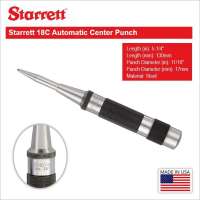
Starrett 18C Automatic Center Punch with Adjustable Stroke
₱3,950.00₱4,150.00
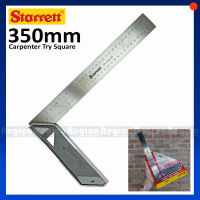
Starrett Carpenter Try Square Regico Hardware
₱440.00
Buy on Lazada
Starrett Straight Edge Rule AMSE-1000 1000mm and AMSE-1500 1500mm variations
₱1,665.00
Buy on LazadaAbout Starrett
The L.S. Starrett Company, commonly known as Starrett, is an American manufacturer of precision measuring tools, gages, metrology equipment, saw blades, and related industrial products. Founded in 1880 in Athol, Massachusetts, by inventor and entrepreneur Laroy S. Starrett, the company is one of the oldest continuously operating American precision-tool manufacturers. Its products are used in machining, metalworking, manufacturing, construction, aerospace, automotive, woodworking, quality control, and other industries.1
Starrett is particularly well known for its precision measuring instruments, including micrometers, calipers, dial indicators, gauges, rules, squares, and gage blocks, as well as its bandsaw blades and cutting products. The company states that it manufactures more than 5,000 product variations for industrial, professional, and consumer markets.2
Quick facts
| Category | Information |
|---|---|
| Full name | The L.S. Starrett Company |
| Common name | Starrett |
| Founded | 1880 |
| Founder | Laroy S. Starrett |
| Headquarters | Athol, Massachusetts, United States |
| Industry | Precision tools, metrology, industrial cutting equipment |
| Main products | Measuring tools, gages, metrology systems, saw blades, hand tools |
| Markets | Industrial, professional, construction, manufacturing, consumer |
| Global presence | Manufacturing and sales operations across North America, Europe, South America, Asia and other markets |
| Former stock ticker | NYSE: SCX |
| Current ownership | Private company following its 2024 acquisition by MiddleGround Capital |
| Established reputation | Precision, accuracy, craftsmanship and American toolmaking |
| Company slogan/description | “World’s Greatest Toolmakers” |
The company remains headquartered in Athol, where it was founded. Starrett describes itself as a global manufacturer with American manufacturing heritage and says it continues to manufacture products in the United States using both domestic and globally sourced materials and components.3
History
Founding
The story of Starrett begins with Laroy Sunderland Starrett, an inventor from Maine who became interested in developing practical mechanical tools.
One of his most important inventions was the combination square. Starrett’s history identifies 1877 as the year of the invention. The tool combined several functions—including squaring, measuring, marking, and angle-related work—into one instrument.4
In 1880, Starrett established his company in Athol, Massachusetts, to manufacture and sell precision tools. The first major product was the combination square, which quickly established the company’s reputation.5
The company grew rapidly. By 1881, Starrett had moved into larger premises, and in 1882 Laroy Starrett established sales connections in London and Paris, giving the company an international market almost from the beginning.6
Laroy S. Starrett
Laroy S. Starrett (1836–1922) was the central figure in the company’s early development.
His approach was not simply to manufacture ordinary hardware but to improve tools through precision engineering, accuracy, usability and repeatability. That philosophy became the foundation of the Starrett brand.
Starrett’s original combination square was important because it represented the kind of multifunctional precision instrument that would become characteristic of the company’s product portfolio.
His broader philosophy was essentially that a successful manufacturer should create useful inventions that solved real problems. The company still presents this entrepreneurial philosophy as part of its heritage.7
Starrett died in 1922, after which leadership passed to succeeding generations and executives.8
Development of the product range
Starrett did not remain a one-product company.
During the late 19th and early 20th centuries, it expanded into increasingly sophisticated precision measuring instruments and mechanical tools.
Among the important categories associated with Starrett are:
- Micrometers
- Vernier and electronic calipers
- Dial indicators
- Test indicators
- Precision rules
- Combination squares
- Levels
- Protractors
- Depth gauges
- Thickness gauges
- Gage blocks
- Granite surface plates
- Precision ground stock
- Saw blades
- Bandsaw blades
- Hole saws
- Hacksaw blades
- Hand tools
- Optical and vision inspection systems
- Laser measurement systems
- Force and material testing systems
Today, Starrett groups its products broadly into industrial products and metrology systems.9
Precision measurement
Precision measurement is arguably the area in which Starrett has its strongest historical identity.
A machinist might use a Starrett instrument to answer questions such as:
Is this shaft exactly 25.000 mm?
Is this surface truly flat?
Is this component within tolerance?
Is this hole in the correct position?
Is this manufactured part dimensionally accurate?
These seemingly small measurements are critical in modern manufacturing. A difference of a few micrometres can determine whether a component fits correctly or fails quality control.
Starrett therefore occupies an important position in the metrology ecosystem—the science and technology of measurement.
The company says that its precision measuring tools meet or exceed applicable national and international accuracy requirements at manufacture and are traceable to the U.S. National Institute of Standards and Technology (NIST).10
Famous Starrett products
Combination squares
The Starrett combination square is probably the single product most closely associated with the company’s origin.
The basic concept dates back to Laroy Starrett’s 1877 invention. Modern versions combine a graduated blade with a movable head and can be used for several measurement and layout operations.
It became an iconic tool among machinists, mechanics, engineers, metalworkers and woodworkers.
Micrometers
Starrett produces a broad range of outside, inside, depth and specialty micrometers.
A micrometer is designed for highly accurate dimensional measurement, typically at a level substantially finer than an ordinary ruler or tape measure.
Starrett’s mechanical micrometers are particularly associated with traditional American machine-shop practice.
Calipers
Starrett manufactures:
- Vernier calipers
- Dial calipers
- Electronic/digital calipers
- Specialty calipers
These are used to measure external dimensions, internal dimensions and depths.
Dial indicators
Dial indicators are another major Starrett category.
They are used to detect very small movements or deviations, such as:
- Runout
- Flatness
- Alignment
- Parallelism
- Concentricity
- Machine-tool setup errors
Starrett has continued developing electronic versions as well; in 2024 it introduced the W4900 touchscreen electronic indicator, illustrating the company’s move from traditional mechanical metrology toward digital measurement technology.11
Gages and metrology
Starrett’s business extends beyond handheld tools.
Its metrology portfolio includes:
- Gage blocks
- Granite surface plates
- Optical systems
- Vision systems
- Laser measurement
- Force testing
- Material testing
- Inspection equipment
The company also provides custom gaging solutions, developing specialized measurement tools for particular manufacturing applications. Starrett says it has produced thousands of special tools for customer-specific requirements.12
This means Starrett can be involved not only in the measurement of an individual component but in the broader quality-control system of a manufacturing operation.
Saw blades and cutting technology
Although Starrett is famous for measuring instruments, cutting products are a major part of the business.
The company manufactures:
- Bandsaw blades
- Bi-metal blades
- Carbide-tipped blades
- Carbon-steel blades
- Power hacksaw blades
- Reciprocating blades
- Jigsaw blades
- Hole saws
- Hand hacksaw blades
- Specialty cutting products
These products are used for cutting materials such as metals, wood and other industrial materials.13
Starrett’s saw business also helped drive its international expansion during the 20th century.
International expansion
Starrett became an international company relatively early.
The company established sales connections in London and Paris as early as 1882.14
Later, manufacturing expanded internationally:
- 1956 — manufacturing operation established in São Paulo, Brazil
- 1958 — factory established in Jedburgh, Scotland
- 1998 — factory established in Suzhou, China
These operations helped Starrett serve industrial markets outside the United States.15
The company’s current facilities and sales network extend across multiple countries, including the United States, United Kingdom, Brazil, China, Australia and New Zealand.16
Important acquisitions and expansion
Starrett also expanded through acquisitions.
One notable example was the Webber Gage Company, which joined Starrett in 1962. Webber was known for precision gage blocks, strengthening Starrett’s position in industrial measurement and quality control.17
In 1970, Starrett acquired the Herman Stone Company, a manufacturer of granite surface plates. The granite operation was subsequently moved to Mount Airy, North Carolina.18
These developments illustrate an important aspect of Starrett’s strategy: expanding from individual hand tools into a broader precision measurement and inspection ecosystem.
Manufacturing philosophy
One of Starrett’s major selling points is its emphasis on manufacturing quality.
The company describes its heritage as being rooted in:
- Precision
- Accuracy
- Quality
- Craftsmanship
- Innovation
- Durability
Starrett also maintains a significant manufacturing presence in the United States. Its headquarters and largest manufacturing plant remain in Athol, Massachusetts, where the company was originally founded.19
However, it is important to understand that not every Starrett product is necessarily made in the United States. Starrett is a global manufacturer, and its products can originate from different manufacturing locations. The company explicitly states that it uses globally sourced materials and components and manufactures products in multiple countries.20
So, “Starrett” does not simply mean “every product is American-made.” Rather, the brand has a historically strong American manufacturing identity combined with a global manufacturing network.
Starrett and American manufacturing
Starrett is frequently associated with the history of American industrialization and machine-tool manufacturing.
Its Athol factory became an important local employer and grew alongside the development of American manufacturing.
The company’s history is particularly intertwined with the rise of:
- Machine shops
- Metalworking
- Toolmaking
- Automotive manufacturing
- Industrial machinery
- Aerospace
- General manufacturing
The significance of Starrett is therefore larger than the individual tools it sells. Its products have been part of the measurement infrastructure that allows industrial products to be manufactured accurately and consistently.
Corporate history
The company was originally established in 1880 and was later incorporated. Starrett remained family-influenced for generations, with members of the Starrett family holding senior leadership positions.21
For much of its modern history, The L.S. Starrett Company was a publicly traded company under the ticker SCX on the New York Stock Exchange.
That changed in 2024.
2024 acquisition and privatization
On March 11, 2024, Starrett announced that it had entered into an agreement to be acquired by an affiliate of MiddleGround Capital, a private-equity investment firm specializing in industrial businesses. The proposed transaction valued the company at $16.19 per share in cash.22
The transaction was structured as a go-private merger.
After completion, Starrett became a wholly owned subsidiary of MiddleGround Capital, and its Class A common stock was no longer publicly listed.23
Therefore, as of 2026, Starrett should be understood as a private company, rather than as a currently publicly traded NYSE company.
This is an important distinction if you encounter older information describing Starrett as NYSE: SCX.
Current business
Today, Starrett describes itself as a global manufacturer producing more than 5,000 variations of precision tools, gages, measuring instruments and saw blades.24
Its markets include:
Manufacturing
Precision tools are used for machining, inspection and quality control.
Automotive
Starrett products can be used in component manufacturing and dimensional inspection.
Aerospace
High-precision measurement is particularly important because aerospace components often have very tight tolerances.
Metalworking
Micrometers, indicators, calipers, gages and cutting tools are common equipment in machine shops.
Construction
Starrett also produces levels, squares, tapes, rules and other jobsite tools.
Woodworking
Saw blades, squares, measuring tools and layout instruments are used by professional and hobbyist woodworkers.
General industrial production
Starrett tools are used wherever components need to be measured, cut, formed or assembled.25
Starrett’s reputation
Starrett’s reputation is based less on being a low-cost tool brand and more on being a precision-oriented professional manufacturer.
The brand is particularly respected among:
- Machinists
- Toolmakers
- Mechanical engineers
- Inspectors
- Metrologists
- Mechanics
- Metalworkers
- Woodworkers
- Manufacturing engineers
- Quality-control professionals
The company’s traditional mechanical instruments are also popular among people who appreciate old-school precision engineering and durable American-made tools.
Starrett itself uses the phrase “World’s Greatest Toolmakers” to describe its heritage.26
That phrase is best understood as a company branding claim, rather than an independently verified ranking.
Starrett vs. ordinary hardware brands
One useful way to understand Starrett is to distinguish it from ordinary consumer hardware brands.
A typical hardware brand might focus heavily on:
“Can this tool perform the job?”
Starrett’s traditional philosophy is closer to:
“Can this tool perform the job accurately, repeatably and reliably enough for professional measurement or manufacturing?”
For example, a $10 ruler might be perfectly adequate for measuring a piece of furniture.
A machinist inspecting a precision component may instead require a tool whose accuracy, calibration and repeatability are carefully controlled.
That difference explains why Starrett tools can command substantially higher prices than generic measuring tools.
Precision vs. accuracy
It is also useful to distinguish two concepts associated with Starrett:
Accuracy means how close a measurement is to the true value.
Precision/repeatability means how consistently an instrument produces the same result when measuring the same thing.
Industrial metrology requires both.
Starrett therefore places considerable emphasis on manufacturing tolerances, calibration and traceability. Its services include calibration and repair, in addition to manufacturing measurement equipment.27
Starrett’s legacy
More than 140 years after its founding, Starrett’s greatest legacy is arguably the normalization of precision measurement as an essential part of manufacturing.
A modern factory depends on a chain something like:
Design → Manufacturing → Measurement → Inspection → Quality Control → Finished Product
Starrett operates heavily in the measurement, inspection and cutting portions of that chain.
Its tools help manufacturers determine whether a component actually conforms to the dimensions specified by an engineer.
Timeline
| Year | Event |
|---|---|
| 1877 | Laroy S. Starrett invents the combination square |
| 1880 | The L.S. Starrett Company founded in Athol, Massachusetts |
| 1881 | Company moves to larger premises |
| 1882 | Sales connections established in London and Paris |
| 1900 | Company incorporated |
| 1920 | First Starrett indicator produced |
| 1922 | Laroy S. Starrett dies |
| 1956 | São Paulo, Brazil manufacturing operation established |
| 1958 | Jedburgh, Scotland factory established |
| 1962 | Webber Gage Company joins Starrett |
| 1970 | Herman Stone Company acquired |
| 1985 | New factory established in Mount Airy, North Carolina |
| 1998 | Suzhou, China factory established |
| 2006 | New U.S. factory established in Waite Park, Minnesota |
| 2023 | Starrett expands into drill bits and drilling solutions |
| 2024 | Agreement announced to take Starrett private through MiddleGround Capital |
| 2024 | W4900 touchscreen electronic indicator introduced |
| 2025 | New management appointments announced |
| 2026 | Starrett continues operating as a private global precision-tool manufacturer |
The historical dates above are primarily based on Starrett’s own published history.28
What makes Starrett distinctive?
If you reduce the entire Starrett story to a few points, its identity is essentially:
1. Very old
Founded in 1880, making Starrett one of America’s historic precision-tool manufacturers.
2. Precision-focused
Its core expertise is not merely making tools, but making tools capable of accurate measurement and controlled manufacturing.
3. Strong American heritage
The company originated in Athol, Massachusetts, and still maintains significant U.S. manufacturing.
4. Global
Despite its American origins, Starrett has manufacturing, distribution and customers around the world.
5. Broad product portfolio
It has expanded from the original combination square into thousands of products spanning measurement, metrology and cutting.
6. Industrial rather than purely consumer-oriented
Its most important customers are manufacturers, machine shops, engineers and professional users.
7. Long-standing brand reputation
Starrett has spent more than a century building its association with precision, craftsmanship and durability.
In one paragraph
Starrett, formally The L.S. Starrett Company, is an American precision-tool and industrial manufacturing company founded by Laroy S. Starrett in Athol, Massachusetts, in 1880. Originating from Starrett’s invention of the combination square in 1877, the company grew into a major manufacturer of precision measuring instruments, gages, metrology equipment and saw blades. Over more than 140 years, Starrett expanded from a Massachusetts toolmaker into a global industrial brand serving manufacturing, machining, automotive, aerospace, construction, woodworking and other markets. Its best-known products include micrometers, calipers, dial indicators, combination squares, gage blocks, granite surface plates and bandsaw blades. The company retains a strong American manufacturing identity while operating a global manufacturing and distribution network. After being publicly traded as NYSE: SCX for many years, Starrett entered a go-private transaction with MiddleGround Capital in 2024 and is now privately owned.29
References
- About Us
- Our Company
- History
- Products
- Made in America
- Our History – Starrett
- The Starrett Story
- Accuracy
- Vision and Optical Systems
- Custom Gaging Solutions
- Saw Products & Hand Tools
- Facilities
- THE L.S. STARRETT COMPANY ENTERS INTO A MERGER AGREEMENT WITH MIDDLEGROUND CAPITAL TO BECOME PRIVATE COMPANY
- Our Services
- News & Events
- strr-20251231
- EDGAR Filing Documents for 0001210708-26-000038
- EDGAR Filing Documents for 0001628280-26-018174
- st-20251231
- EDGAR Filing Documents for 0000874238-26-000024
- EDGAR Filing Documents for 0001692063-26-000013
- EDGAR Filing Documents for 0001692063-26-000013
- sstk-20251231
- Starrett Products – Quality You Can Trust
- Starrett Products – Quality You Can Trust
- Starrett History
- sec.gov
- STARRETT CELEBRATES 60 YEARS OF UK MANUFACTURING – Starrett
- sec.gov