Shop on Lazada
STIHL products
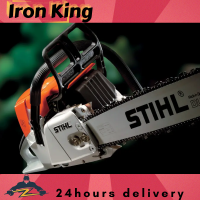
Gasoline Chainsaw (Orange)Imported with original packaging 20inch
₱2,499.00₱6,999.00
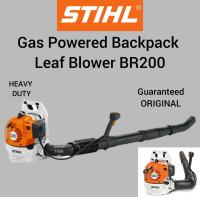
STIHL Original Gas Powered Backpack Leaf Blower 2 Strokes Engine BR200
₱37,899.00₱45,000.00
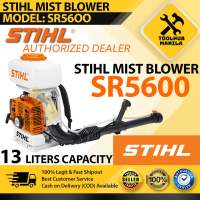
STIHL Mist Blower Stihl SR5600 Mist Blower SR 5600 (Stihl Authorized Dealer)
₱19,500.00₱28,000.00
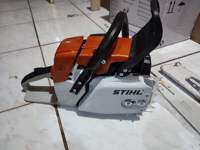
Branded Powerful Chainsaw 30 Inches Model Ms381
₱19,999.00
Buy on Lazada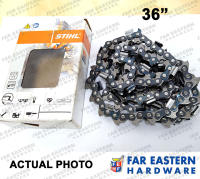
STIHL Chainsaw Saw Chain 12″ | 14″ | 16″ | 20″ | 25″ | 30″ | 36″
₱2,313.00
Buy on Lazada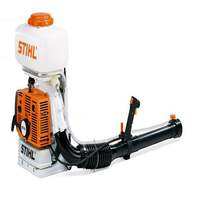
Stihl Germany SR420 Powerful Mist Blower Heavy-Duty Backpack Sprayer for Disinfection Pest Control Chemical Application
₱34,000.00₱36,000.00
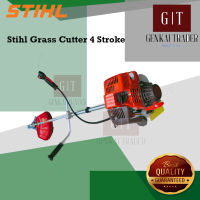
Stihl Grass Cutter 4 Stroke Gasoline
₱29,250.00₱67,275.00
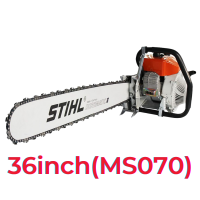
【Ready Stock】Orlginal Chainsaw 20/24/36 Inch Orlginal Germany MS070 High-Power Chain Saw Big Chainsaw
₱11,999.00₱29,999.00
About STIHL
STIHL is a German family-owned manufacturer of outdoor power equipment, recognised globally for its chainsaws. Founded by engineer Andreas Stihl in 1926, the company expanded from a small engineering workshop in Stuttgart into a major international manufacturer serving the forestry, agriculture, landscaping, construction and residential garden sectors. STIHL is headquartered in Waiblingen, Germany, near Stuttgart, and distributes products in more than 160 countries.1
In 2026, STIHL marks its 100th anniversary. Its contemporary strategy integrates traditional gasoline-powered machinery with battery-powered products, digital technologies, robotics and artificial intelligence.2
Company profile
| Category | Information |
|---|---|
| Official name | Andreas Stihl AG & Co. KG |
| Brand | STIHL |
| Founded | 1926 |
| Founder | Andreas Stihl |
| Headquarters | Waiblingen, Baden-Württemberg, Germany |
| Industry | Outdoor power equipment / mechanical and mechatronic engineering |
| Ownership | Family-owned |
| Main products | Chainsaws, trimmers, brushcutters, blowers, hedge trimmers, lawn mowers, cut-off machines, construction equipment, garden equipment and protective equipment |
| Main markets | Forestry, agriculture, landscaping, construction and private gardening |
| Global presence | 160+ countries |
| Employees | 19,000+ globally |
| Manufacturing | Germany, USA, Brazil, Switzerland, Austria, China and the Philippines, with further production expansion including Romania |
| Best known for | Chainsaws and outdoor power equipment |
| Global position | World’s best-selling chainsaw brand since 1971 |
Corporate reporting on workforce size varies slightly by year; STIHL describes itself as having more than 19,000 employees, while other current corporate materials cite more than 20,000.3 Notably for local readers, the Philippines is listed among the company’s global manufacturing locations.
History
Founding (1926)
The history of STIHL began with Andreas Stihl, a German engineer focused on improving the efficiency of forestry work. In the 1920s, forestry relied heavily on axes, manual saws and physical labour. Seeking a better solution, Stihl founded his engineering company in Stuttgart in 1926 and developed his first chainsaw: a large electric two-person saw.4
Although this original machine differed significantly from modern compact chainsaws, it established the principle that continues to define the company: making work in and with nature easier. This philosophy remains central to the corporate identity a century later.5
Portable chainsaws (1930s)
STIHL continued to refine its technology by making chainsaws smaller, lighter and more practical. In 1929, the company introduced a more powerful and manoeuvrable saw, followed by the development of one-person electric saw technology during the 1930s.6
During this decade, STIHL also began expanding beyond Germany, exporting machines to markets such as the United States and Canada, which laid the foundation for its future international business.7
Post-war development
The Second World War severely disrupted operations; the Stuttgart factory was heavily damaged, and production was subsequently relocated to Neustadt, now part of Waiblingen. Waiblingen became the company headquarters in 1948 and remains so today.8
Following the war, STIHL rebuilt its manufacturing and sales operations and diversified its product range. The company gradually shifted its focus towards portable, gasoline-powered equipment suitable for forestry and other demanding environments.
Rise of the chainsaw
The chainsaw became the defining product of STIHL. Rather than treating it merely as a mechanical tool, the company continuously developed supporting technologies, including lighter engines, improved chain systems, automatic chain lubrication, vibration reduction, chain brakes, electronic ignition, easier starting mechanisms, improved fuel management, electronic engine controls and battery technology.
Historical corporate materials identify numerous technological milestones, such as automatic chain oiling, centrifugal clutches, chain braking systems, electronic ignition and anti-vibration technology.9 STIHL states that it has been the world’s best-selling chainsaw brand since 1971,10 a distinction that forms a significant part of its brand identity.
International expansion
STIHL transformed from a German manufacturer into a global enterprise through the establishment of both sales subsidiaries and manufacturing facilities. Today, products are available in more than 160 countries, supported by a network of sales companies, importers and dealers. Corporate materials describe a worldwide network of more than 50,000 dealers.11
The manufacturing network has historically included facilities in Germany, the United States, Brazil, Switzerland, Austria, China and the Philippines. The company has also expanded battery-tool production in Europe, including a site in Oradea, Romania, announced as its eighth production facility.12
Product portfolio
While often synonymous with chainsaws, STIHL offers equipment across multiple industries.
Forestry
The traditional core market includes chainsaws, professional forestry equipment, pole pruners, protective clothing, chains, guide bars and forestry accessories.
Landscaping
For professional landscapers and groundskeepers, STIHL produces brushcutters, grass trimmers, hedge trimmers, blowers, garden pruners, lawn mowers and robotic lawn mowers.
Agriculture
Products are utilised in orchards, farms, plantations, agricultural maintenance and vegetation management.
Construction
The company manufactures equipment for construction applications, including cut-off machines, concrete and masonry cutting equipment, drills and demolition tools.
Homeowners
A significant consumer market exists for individuals maintaining gardens, lawns, trees and private land. STIHL describes its customer base as ranging from professional forestry and agriculture users to landscaping, construction and private garden owners.13
Major product categories
Chainsaws
Chainsaws remain the signature product, with ranges spanning lightweight homeowner models, mid-range farm and property-maintenance saws, professional forestry saws, specialised arborist saws and battery-powered chainsaws. Professional models are particularly associated with forestry and tree-care work.
Brushcutters and trimmers
STIHL produces gasoline and battery-powered brushcutters, grass trimmers and clearing saws, widely used for managing grass, weeds and vegetation.
Hedge trimmers
The hedge-trimmer range serves both homeowners and professional landscapers.
Blowers
Equipment includes handheld blowers, backpack blowers, battery blowers and professional high-performance models.
Lawn equipment
The lawn care portfolio comprises lawn mowers, battery lawn mowers, robotic mowers, grass trimmers and scarifiers.
Construction equipment
This category includes cut-off machines and tools designed for demanding job-site applications.
Protective equipment
Personal protective equipment (PPE) is a critical component of the brand, given the mechanical hazards associated with power tools. Products include forestry helmets, hearing and eye protection, gloves, chainsaw protective clothing, boots and work clothing.
Gasoline versus battery technology
A significant shift in modern strategy is the move towards battery-powered equipment. While historically associated with gasoline engines, STIHL pursues a dual technology leadership approach, continuing to develop gasoline equipment while investing heavily in battery technology.14
Battery products now represent approximately one in four STIHL products sold, with particular strength in markets such as Germany and Switzerland.15 Advantages include lower local emissions, reduced noise, easier starting, lower vibration in certain applications, convenience for residential users and suitability for noise-sensitive environments.
Gasoline equipment remains essential for applications requiring long operating times, high power, rapid refuelling, professional forestry use and remote work where charging infrastructure is limited.
Technology and innovation
Innovation is central to the brand, with technologies developed to improve performance, safety, ergonomics and reliability.
- Anti-vibration technology: Reduces vibration transmitted from the engine and cutting system to the operator.
- Chain brake: A safety feature designed to stop the chain rapidly under specified conditions.
- Automatic chain lubrication: Ensures appropriate lubrication of the cutting system during operation.
- Electronic engine management: Uses electronics to optimise engine operation.
- M-Tronic: Electronic engine-management technology that automatically regulates parameters under changing operating conditions.
- Easy2Start: A system designed to reduce the effort required to start compatible gasoline equipment.
- Battery systems: Extensive platforms for battery-powered equipment.
The company is also investing in digital solutions, robotics and artificial intelligence, expanding its definition of outdoor power equipment beyond traditional mechanical machinery.16
Brand identity
The STIHL brand is built around several recurring themes:
- Engineering: Presented as an engineering-driven company rooted in solving practical problems.
- Reliability: Durability and reliability are central, as professional users depend on equipment for their livelihood.
- Quality: Emphasises a “Made by STIHL” philosophy and vertical control over key technologies and components.17
- Professional performance: The orange-and-white branding is strongly associated with professional forestry, arboriculture, landscaping and construction.
- Innovation: Identity is linked to continuous technical development rather than traditional chainsaws alone.
- Nature: The current brand purpose is “Making it easier for people to work in and with nature.”18
Visual identity
The distinctive orange-and-white colour scheme makes equipment easily recognisable in forests, gardens and construction sites. This visual identity—combining orange, white, mechanical engineering, outdoor work and chainsaws—is particularly valuable in professional markets where brand recognition is strong.
Family ownership
Unlike many major industrial brands, STIHL remains a family-owned company, currently in its third generation of family involvement.19 This structure influences corporate philosophy, emphasising long-term development, investment, technological independence, product quality and controlled growth. The company describes this approach as “grow from our own strength.”20
Distribution strategy
STIHL places considerable importance on specialist dealers rather than treating products purely as consumer retail goods. The authorised dealer network provides sales, maintenance, repairs, replacement parts, technical advice, demonstrations and customer support.
The worldwide network consists of sales companies, importers and more than 52,000 dealers. This dealer-centred approach is particularly relevant for professional equipment, as chainsaws and brushcutters require more technical support than ordinary consumer appliances.
Competitive advantage and market position
STIHL’s primary competitive advantage lies in the combination of brand reputation, engineering, dealer support and professional credibility. Professional buyers consider factors beyond initial price, including reliability, weight, power-to-weight ratio, fuel consumption, vibration, ergonomics, spare parts availability, durability, resale value and operator safety.
Decades of focus on these factors have created an ecosystem where customers purchase a professional equipment and service system rather than a standalone tool.
Competitors
STIHL operates in a highly competitive market alongside brands such as Husqvarna, ECHO, Makita, Honda, DeWalt, Milwaukee and Toro. However, STIHL maintains a distinctive position due to its concentrated focus on forestry and chainsaws.
Strategic outlook and centenary
The strategic challenge for the 21st century involves balancing traditional strengths with evolving technology. While historical identity centred on gasoline engines and professional forestry, the future encompasses gasoline, battery, robotics, digital technology and broader outdoor equipment. The company explicitly identifies battery technology, digital solutions, robotics and artificial intelligence as key areas for future development.21
In 2026, STIHL celebrates 100 years of operation under the theme “Built for Nature. Trusted since 1926.” The anniversary serves as both a celebration of engineering heritage and a marker of transition toward next-generation technologies.22
Historical context
A comprehensive overview acknowledges that the company’s history includes difficult periods. Founder Andreas Stihl was involved with the Nazi Party and the Allgemeine SS during the Nazi era, and the company utilised forced labour during the Second World War. Its Stuttgart facilities were subsequently heavily damaged during Allied bombing.23 Following the war, STIHL rebuilt its operations and developed into the international company it is today.
STIHL today
As of 2026, STIHL is a global family-owned mechatronics and outdoor-power-equipment company covering product development, manufacturing, international distribution and specialist servicing. It operates in more than 160 countries, employs over 19,000 people and remains the world’s best-selling chainsaw brand.24
The company is transitioning from a traditional gasoline-powered equipment specialist into a broader technology firm combining gasoline, battery, digital and robotic outdoor equipment.25
References
- From one-man operation to world market leader: The STIHL success story since 1926
- STIHL Brand DNA
- STIHL 100 Years
- World market leader STIHL: Pioneering spirit for more than 100 years
- From one-man operation to world market leader: The STIHL success story since 1926
- About STIHL
- Success through invention: STIHL product innovation milestones
- STIHL on course for growth: From Swabia to the world.
- STIHL Inc. Corporate Fact Sheet
- STIHL Group and strategy | STIHL Sustainability Report 2024
- Success through invention: STIHL product innovation milestones
- STIHL on course for growth: From Swabia to the world.
- Stihl
- STIHL Group Reports 2025 Revenue Growth and Launches ALLPRO Battery System
- About STIHL | STIHL
- From one-man operation to world market leader: The STIHL success story since 1926
- World market leader STIHL: Pioneering spirit for more than 100 years
- History of STIHL
- The world of STIHL – global market leader and family-owned business
- STIHL Group and strategy | STIHL Sustainability Report 2022
- About STIHL: A global market leader with strong roots
- Business Performance – The STIHL Group | STIHL Integrated Corporate Report 2025
- Home | STIHL Integrated Corporate Report 2025
- STIHL on course for growth: From Swabia to the world.
- Home | STIHL Integrated Corporate Report 2025