Shop on Lazada
suminoe products
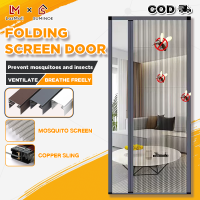
Suminoe Aluminum Alloy Screen Door Anti Mosquito Folding Screening Door Punch-Free Self-Adhesive Sliding Sliding folding screen door Anti mosquito insect invisible screen door
₱1,519.48₱4,997.06
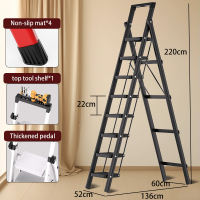
Suminoe ladder foldable 3/4/5/6/7/8 Step ladder aluminium Foldable Aluminum heavy dutyladder Telescopic for home Step ladder
₱1,600.16₱5,761.76
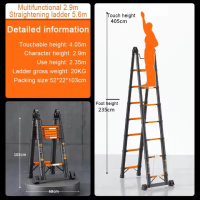
Suminoe 1200kg Telescopic Ladder Heavy Duty Aluminum Ladder Aluminum Multi-Function Folding Ladder Non-Slip Feet Adjustable Household Ladder Suitable Home Repair Roof Cleaning
₱4,776.26₱14,526.47
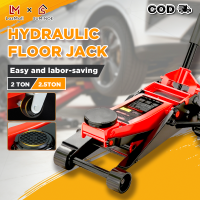
Suminoe Heavy Duty Floor Garage Crane 2.5 Ton Large Capacity Car Motorcycle Engine Transmission Removal Installation Tool Hydraulic Lift Sturdy Steel Frame for Professional Mechanic & DIY
₱29,400.00₱30,000.00
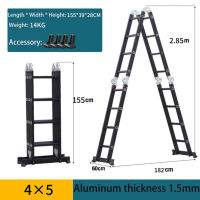
Suminoe Ladder Foldable Ladder Heavy Duty Ladder Aluminium Heavy Duty Portable Double Ladder Thickened Adjustable Multi Purpose
₱5,239.21₱15,938.24
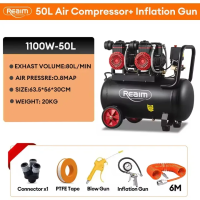
Suminoe 1100W Heavy Duty Air Compressor | Oil-Free 0.8MPa Pressure | Portable Power for All Pneumatic Tools & Tires
₱9,162.02₱28,055.88
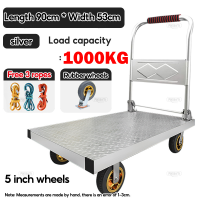
Suminoe Trolley Cart 1000KG Wheels Heavy Duty Hand Trucks Push Cart Heavy Duty Foldable 1000kg Aluminum Multifunctional
₱1,543.51₱5,791.18
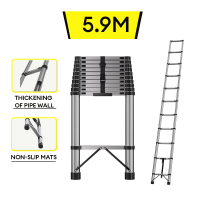
Suminoe Telescopic Ladder Aluminum Extension Ladder Foldable Portable Multi Purpose Household Ladder Strong Load Capacity 500KG
₱3,722.31₱11,114.71
About suminoe
Overview
SUMINOE Co., Ltd. (住江織物株式会社, Suminoe Orimono Kabushiki-gaisha), commonly referred to as SUMINOE, is a Japanese manufacturer of textiles and interior materials with origins dating back to 1883. Originally established as a carpet maker in Osaka, the company has evolved into a diversified supplier of interior textiles, automotive materials, flooring, curtains, transportation interiors, functional materials, and traditional hand-woven Japanese textiles.1 Its corporate headquarters are located in Chūō-ku, Osaka, Japan.
Founded by Denshichi Murata, the business was initially focused on hand-woven carpets before being incorporated as Suminoe Textile Joint-Stock Company in 1913. In December 2024, the corporate name was officially changed from Suminoe Textile Co., Ltd. to SUMINOE Co., Ltd. to reflect its expanded scope beyond traditional textiles.2
| Item | Information |
|---|---|
| Name | SUMINOE Co., Ltd. |
| Japanese Name | 住江織物株式会社 |
| Former Name | Suminoe Textile Co., Ltd. |
| Founded | 1883 |
| Incorporated | December 25, 1913 |
| Founder | Denshichi Murata |
| Headquarters | Osaka, Japan |
| Industry | Textiles, interior materials, automotive materials, flooring, functional materials |
| Major Fields | Interior, transportation, automotive, environmental products, arts & crafts textiles |
| President | Teppei Nagata |
| Employees | 263 (parent company); 2,943 (consolidated) as of May 31, 2025 |
| Capital | ¥9.554 billion as of May 31, 2025 |
| Current Corporate Name | SUMINOE Co., Ltd. (since December 2024) |
| Corporate Vision | “Bringing innovation to all kinds of spaces” |
Company information is based primarily on SUMINOE’s corporate disclosures.3
History
Origins: 1883
The history of SUMINOE began in 1883 during the Meiji period. Founder Denshichi Murata, originally a rice merchant in the Osaka area, recognized potential in the emerging carpet industry and purchased three looms to produce carpets as a secondary business. This workshop, known as the Murata Factory, served as the origin of the modern SUMINOE enterprise.4
During this era of rapid modernization in Japan, demand for Western-style interior textiles grew significantly for public infrastructure. Early clients included government buildings, railways, ships, theaters, and the Imperial Diet Building. In 1891, the Murata Factory supplied carpets for the opening of the Imperial Diet Building in Tokyo, establishing its reputation for quality.5
Early Technological Achievements
In 1890, Murata produced what SUMINOE describes as Japan’s first Wilton-style machine-woven carpet. He subsequently received a patent in 1892 for his weaving method, known as Yamato-ori.6 This achievement marked the company’s early integration of imported industrial technology with Japanese craftsmanship.
Establishment of Suminoe Textile
The business was reorganized as Suminoe Textile Joint-Stock Company in 1913. The name was derived from the Suminoe area of Osaka, which became central to the company’s identity.7 During this period, SUMINOE introduced German and British power loom technology, becoming the first company in Japan to manufacture machine-woven moquette, a dense fabric ideal for transportation seating.8 This innovation shifted the company’s focus toward railway and transit interiors.
Transportation and Automotive Interiors
Transportation interiors remain a core area of expertise for SUMINOE. Since the early 20th century, the company has supplied textiles for railway cars, streetcars, ships, theaters, automobiles, buses, and aircraft.9 A significant milestone occurred in 1964 when SUMINOE supplied moquette seating material for the original 0 Series Shinkansen.10
Today, the automotive business produces materials for seat coverings, seat backs, door trims, and ceiling linings.11 Specific product offerings include:
- Seat Materials: Woven fabrics, tricot, jersey, synthetic leather, knitted fabrics, and moquette.
- Interior Components: Seat backs, door trims, headliners, and non-woven fabrics.
The company also applies specialized technologies such as TRIPLE FRESH® deodorizing treatment to certain automotive interiors.12 This business segment is highly internationalized, with manufacturing and sales operations in the United States, Mexico, China, Thailand, Indonesia, India, and Vietnam.13
Post-War Expansion and Carpet Innovation
Following World War II, the rise of Western-style interiors in Japan transformed SUMINOE from a specialist carpet producer into a comprehensive interior-products manufacturer. The portfolio expanded to include household and commercial carpets, curtains, carpet tiles, and automotive interiors.
Notably, in 1954, a subsidiary produced the Flying Feather, a small automobile that symbolized the company’s willingness to experiment beyond textiles.14 In 1980, the Nara Factory began producing what the company describes as Japan’s first carpet tiles, offering a modular alternative to wall-to-wall carpeting that allowed for individual replacement and pattern customization.15 This technology laid the foundation for the modern ECOS® product family.
Environmental Philosophy and Sustainability
Environmental sustainability is integral to SUMINOE’s corporate identity. In 1998, the company introduced its “KKR+A” philosophy:
- K — Health
- K — Environment
- R — Recycling
- A — Amenity
This framework guided the development of recycling-oriented manufacturing systems and products utilizing recycled materials.16
ECOS® and Recycled Technologies
ECOS® is a major environmentally oriented carpet-tile line featuring a horizontal recycling system, where used products are recycled into new materials of the same type. SUMINOE states that some ECOS products contain a high proportion of recycled material and significantly reduce CO₂ emissions compared to conventional alternatives.17
Other sustainable technologies include SUMITRON®, a polyester fiber developed from recycled PET bottles,18 and SUMICUBE®, a seat-cushion material designed for safety and environmental performance.19
Traditional Craftsmanship and Notable Projects
Despite its industrial scale, SUMINOE maintains traditional hand-weaving techniques inherited from its founding. The arts-and-crafts division produces hand-woven carpets, dantsu, Tango dantsu, donchō (theater curtains), rugs, mats, and ceremonial textiles.20
The company’s textiles have been installed in numerous prestigious locations:
- Imperial Diet Building: Supplied carpets for the original building in 1891 and for the current structure completed in 1936.21
- Imperial Palace: In 1968, supplied an 836 m² hand-woven carpet for the Homeiden, requiring approximately 10,000 weavers and nine months to complete.
- Imperial Theatre: Supplier of seat coverings since 1915 and subsequent renovations.
- Takarazuka Grand Theater: Supplier of carpets and seat coverings since its opening in 1924.
- Shinkansen: Supplier of moquette for the 0 Series Shinkansen launched in 1964.
Global Operations and Corporate Structure
While fundamentally a Japanese company, SUMINOE operates an extensive international network. Overseas sales account for roughly half of the automotive-textiles segment, supported by operations in Thailand, the United States, China, Indonesia, India, Mexico, and Vietnam.13 This global footprint enables the company to supply automobile manufacturers and other clients near their production sites.
As of May 31, 2025, SUMINOE reported capital of approximately ¥9.55 billion, with 263 employees at the parent company and 2,943 across the consolidated group.3 The company is led by President Teppei Nagata.
Business Portfolio
SUMINOE’s modern business structure encompasses five primary categories:
- Interior Products: Carpets, carpet tiles, flooring, curtains, wall materials, and interior fabrics.
- Automotive Textiles: Seat fabrics, seat backs, door trims, headliners, and functional interior materials.
- Transportation Interiors: Materials for railways, buses, ships, and aircraft.
- Functional Materials: Deodorizing materials, environmental materials, biotechnology-related products (SUMINOE BIOTECH®), and specialized flooring.20
- Arts & Crafts Textiles: Hand-woven carpets, dantsu, donchō, rugs, and traditional textiles.
Brand Identity and Naming
The name “Suminoe” is geographically and culturally linked to the Suminoe/Sumiyoshi area of Osaka, specifically referencing the historically significant Suminoe shore.7 Unlike invented modern brand names, it carries distinct Japanese heritage.
The company’s identity is defined by four themes: over 140 years of Japanese heritage; expertise in architectural and vehicular spaces; engineering innovation ranging from early mechanization to functional materials; and a commitment to sustainability through recycling technologies.20
In December 2024, the transition from Suminoe Textile Co., Ltd. to SUMINOE Co., Ltd. signaled a strategic shift. The company now positions itself not merely as a carpet manufacturer but as a space and interior-materials technology firm guided by the vision: “Bringing innovation to all kinds of spaces.”2
References
- History | Corporate Guidance | SUMINOE Co., Ltd.
- Top Message | Corporate Guidance | SUMINOE Co., Ltd.
- Corporate Summary | Corporate Guidance | SUMINOE Co., Ltd.
- From Suminoe Textile to SUMINOE | SUMINOE Co., Ltd.
- Seat Coverings, Ceiling Materials | Automotive Textiles | Business & Product | SUMINOE Co., Ltd.
- About the SUMINOE GROUP | Corporate Guidance | SUMINOE Co., Ltd.
- Arts and Crafts Textiles | Business & Product | SUMINOE Co., Ltd.
- SUMINOE Co., Ltd.
- New Year’s Greetings for 2025 | News Release | SUMINOE Co., Ltd.
- 沿革 | 企業情報 | SUMINOE株式会社
- Business & Product | SUMINOE Co., Ltd.
- Worldwide Operations | Corporate Guidance | SUMINOE Co., Ltd.
- Automotive Textiles | Business & Product | SUMINOE Co., Ltd.
- Car Mats and Accessories | Automotive Textiles | Business & Product | SUMINOE Co., Ltd.
- 会社概要 | 企業情報 | SUMINOE株式会社
- Floor Carpets, Exterior Fabric Components | Automotive Textiles | Business & Product | SUMINOE Co., Ltd.
- Information | News Release | SUMINOE Co., Ltd.
- T.C.H. Suminoe Company Limited
- T.C.H. Suminoe Company Limited
- SUMINOE INDUSTRIES
- History|株式会社スミノエ インテリア プロダクツ(SUMINOE Interior Products)