Shop on Lazada
SUMO products
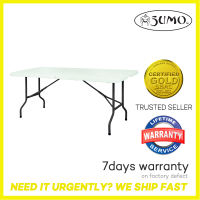
SUMO™ ST-7230P Rectangular 6ft. Folding Table Fold-in-half Top Residential Grade 72 x 30 Restobar Furniture Restobar Table Bar Furniture Bar Table Designer Table Pantry Table Cafe Table Cafe Furniture Restaurant Furniture Outdoor Table Outdoor
₱3,149.00₱3,999.00
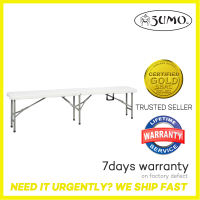
SUMO FBB-7210 6 Ft. Rectangular Folding Steel Bench (White) Restobar Furniture Restobar Bench Restobar Chair Outdoor Chair Outdoor Bench Pantry Bench Pantry Chair Canteen Chair Canteen Bench Foldable Bench Foldable Chair Folding Chair
₱1,699.00₱2,199.00
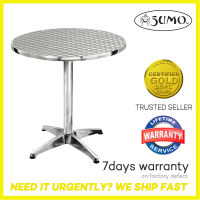
Sumo AT-60R 60cm Top Aluminum Round Pantry Table (Silver) Restobar Furniture Restobar Table Bar Furniture Bar Table Designer Table Pantry Table Cafe Table Cafe Furniture Restaurant Furniture Outdoor Table Outdoor Furniture Round Table
₱1,999.00₱2,499.00
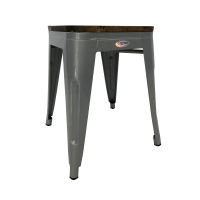
Sumo TLXWD45 All Steel Tolix Stool with wood on Seater Powder Coated Steel Frame - Guest Chair Steel Chair Restobar Furniture Restobar Chair Restaurant Chair Bar Chair Coffee Chair Pantry Chair Cafe Chair Canteen Chair Dining Chair
₱1,299.00₱1,699.00
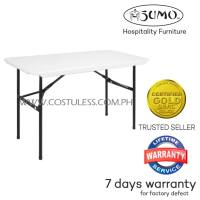
Sumo ST-2448SLM Rectangular Solid Slim Top Table Furniture with Foldable Steel Legs (White) Restobar Furniture Restobar Table Bar Furniture Bar Table Designer Table Pantry Table Cafe Table Cafe Furniture Restaurant Furniture Outdoor Table
₱2,299.00₱2,899.00
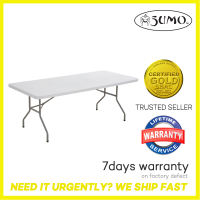
SUMO ST-9630F 8ft Rectangular Fold in Half Top Folding Plastic Table (White) Restobar Furniture Restobar Table Bar Furniture Bar Table Designer Table Pantry Table Cafe Table Cafe Furniture Restaurant Furniture Outdoor Table Outdoor Furniture
₱4,399.00₱5,499.00
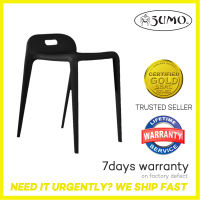
Sumo SS-77BLK Black Full PP Plastic Stacking Stool Furniture (Black) Restobar Furniture Restobar Chair Stackable Chair Plastic Chair Black Chair Bar Furniture Cafe Chair Pantry Chair Canteen Chair Cafe Furniture Restaurant Furniture Bar Stool
₱999.00₱1,499.00
Sumo SC-888BLU Deluxe Plastic Stacking Chair (Blue) Restobar Chair Restobar Furniture Bar Chair Plastic Chair Stackable Chair Blue Chair Waiting Chair Pantry Chair Cafe Chair Canteen Chair Cafe Furniture Restaurant Furniture Dining Chair
₱1,299.00₱1,699.00
About SUMO
SUMO is a Thai power tool and industrial equipment brand operated by Siam Global Group Co., Ltd. The brand focuses primarily on power tools, cordless tools, cutting and grinding consumables, construction equipment, and related workshop products. According to the company, SUMO has been present in the Thai professional tool market for more than 20 years and positions itself around professional-grade performance at accessible prices.1
Note: “SUMO” is a name used by several unrelated brands worldwide, such as Sumo Digital in the UK and Sumo Biscuits in India. This profile refers specifically to SUMO Power Tools associated with Siam Global Group in Thailand.
Brand overview
| Field | Information |
|---|---|
| Brand name | SUMO |
| Thai name | ซูโม่ |
| Industry | Power tools, industrial tools, construction equipment |
| Origin / market | Thailand |
| Operating company | Siam Global Group Co., Ltd. |
| Parent / operator | Siam Global Group |
| Established / market presence | More than 20 years, according to the company |
| Primary market | Thailand |
| International markets | Various Asian markets |
| Main positioning | Professional-quality tools at accessible prices |
| Product model | Corded + cordless tools and accessories |
| Official distributor/company site | Siam Global Group / SUMOsgb.co.th |
SUMO is positioned as a Thai-origin tool brand developed for the needs of professional tradespeople, contractors, technicians, construction workers, and general users. Its operating company, Siam Global Group, describes itself as having more than two decades of experience in the tool and related-equipment industry.1
Rather than concentrating on a single category such as drills or grinders, SUMO has developed a broad product ecosystem covering electric power tools, cordless tools, cutting and grinding products, construction tools, workshop equipment, and other job-site equipment. The company states that the brand’s philosophy is to offer high-quality products at reasonable prices, with particular attention to the practical requirements of Thai users.1
History
Publicly available information from Siam Global Group does not provide a detailed year-by-year corporate history for SUMO. However, the company describes SUMO as a Thai tool brand with more than 20 years of experience in the professional tool market.1 Over time, SUMO has expanded beyond traditional corded power tools into a broader portfolio that includes cordless equipment and consumables.
The development of a shared cordless-battery ecosystem is particularly significant. SUMO states that its cordless tools are designed so that compatible tools can use the same battery platform, allowing users to build a collection of tools without purchasing a separate battery and charger for every machine.1
Today, SUMO products are sold through Siam Global Group’s own channels, retailers, and other distribution networks. The company also states that it exports products to several Asian countries, including Sri Lanka, Myanmar, Vietnam, Cambodia, Laos, and Singapore.1
Ownership and company structure
SUMO operates under Siam Global Group Co., Ltd., a Thai company based in Bangkok. Siam Global Group’s business extends beyond the SUMO name and includes other brands and product categories. Its online catalog contains thousands of products, while SUMO itself represents one of the company’s major tool brands.1
The company’s published contact information places its headquarters at:
85, 87 Soi On Nut 64, Sukhumvit 77, Suan Luang, Bangkok 10250, Thailand.1
Product portfolio
SUMO’s product range is divided into several primary categories.
Corded power tools
These are conventional mains-powered tools intended for applications where continuous electrical power is available. Examples include:
- Electric drills
- Angle grinders
- Cutting machines
- Rotary hammers
- Demolition hammers
- Concrete equipment
- Polishers
- Other heavy-duty electric tools
SUMO markets its corded tools particularly toward applications requiring continuous operation and relatively high power.1
Cordless power tools
Cordless tools are a central component of SUMO’s modern product strategy. The company’s cordless range includes products such as:
- Cordless drills
- Impact drills
- Rotary hammers
- Cordless grinders
- Cordless saws
- Impact wrenches
- Blowers
- Garden tools
- Construction tools
- Other battery-powered equipment
SUMO states that its cordless ecosystem contains more than 50 tools that can share batteries, although exact compatibility depends on the specific battery platform and model.1 This approach mirrors the ecosystem strategy used by many international power tool manufacturers: once a customer owns batteries and a charger, purchasing additional “bare tools” becomes more economical.
Cutting and grinding consumables
SUMO’s catalog includes consumables such as:
- Cutting discs
- Grinding discs
- Abrasive wheels
- Metal-cutting discs
- Stainless-steel cutting products
- Multi-purpose cutting/grinding discs
- Drill bits and related accessories
The company’s current catalog includes SUMO Power Cut, Super Cut, GP, and Turbo Cut products.1 Consumables are strategically important as they are repeatedly purchased by professional users, unlike power tools which may remain in service for years.
Construction and job-site equipment
SUMO’s broader portfolio extends into equipment used in construction and industrial workplaces. Examples include:
- Concrete-related equipment
- Tile-cutting equipment
- Generators
- Air tools
- Material-handling equipment
- Workshop equipment
- Various construction accessories
The company emphasizes SUMO’s intention to cover different stages of a job rather than simply selling individual machines.1
Cordless battery ecosystem
A key feature of the SUMO brand is its shared battery ecosystem. Instead of treating every cordless tool as an independent product, SUMO’s strategy allows compatible tools to operate from the same battery family. For professional users, this provides several advantages:
- Lower equipment cost: Fewer batteries may be required.
- Simpler charging: One charging system can serve multiple tools.
- Greater mobility: Tools can be used without a power cable.
- Backup flexibility: Batteries can be moved between compatible machines.
- Easier expansion: Users can add additional bare tools to an existing system.
SUMO specifically promotes battery compatibility as an integral part of its cordless-tool ecosystem.1
Target customers
SUMO’s positioning allows it to serve several distinct customer groups:
- Professional tradespeople: Electricians, mechanics, metalworkers, carpenters, installers, and maintenance technicians use SUMO drills, grinders, saws, impact tools, and other equipment.
- Construction companies: Contractors utilize the brand’s power tools and construction equipment for job-site applications.
- Industrial users: Factories and maintenance departments use SUMO products for repair, fabrication, and general maintenance.
- DIY users: Because SUMO emphasizes relatively accessible pricing, its products are also marketed toward consumers needing capable equipment for home projects.
Brand positioning
SUMO is positioned as offering professional-oriented tools without the price level of premium international brands. The company describes SUMO as a Thai brand focused on quality, practical performance, and reasonable pricing.1
This places SUMO in a specific segment of the market. At one end are inexpensive generic tools sold primarily on price; at the other are premium international brands with extensive professional ecosystems and higher prices. SUMO attempts to occupy the middle ground: more professional and ecosystem-oriented than basic generic tools, while remaining comparatively accessible.
Design and engineering philosophy
According to Siam Global Group’s published material, SUMO emphasizes designing products around actual job-site requirements. The company highlights the use of materials and components intended to support durability. For example, corporate material specifically discusses the use of 100% copper motor windings in certain products, emphasizing thermal resistance and electrical conductivity.1
Product design also incorporates ergonomic considerations. Documentation for the SUMO DM20 electric demolition hammer, for instance, describes an ergonomic handle, non-slip TPR material, and an adjustable auxiliary handle designed to reduce fatigue during operation.1 These specifications represent manufacturer claims rather than independent laboratory assessments.
Distribution
SUMO products are distributed through several channels. The primary corporate platform is Siam Global Group’s website, which offers SUMO products alongside other brands.1 The company also states that SUMO is available through:
- Authorized and retail dealers
- Hardware and construction-supply stores
- Online marketplaces
- Social-commerce channels
- Siam Global Group’s direct sales channels
SUMO products are also listed by major Thai home-improvement retailers such as HomePro.2
International presence
Although SUMO is fundamentally positioned as a Thai brand, its business is not limited to Thailand. Siam Global Group states that it exports products to several Asian markets, including Sri Lanka, Myanmar, Vietnam, Cambodia, Laos, and Singapore.1 This gives SUMO a regional rather than exclusively domestic orientation.
Relationship with other Siam Global brands
SUMO is part of a broader ecosystem operated by Siam Global Group. The company’s product portfolio includes brands such as:
- SUMO: Tools and related products
- YAMADA: Safety-related equipment
- MAXICUT
- Boxing
The company describes its broader catalog as containing more than 6,000 SKUs, covering tools, consumables, safety equipment, and related products.1 Consequently, SUMO functions as part of a comprehensive industrial-supply business rather than an isolated power tool label.
Market position
In the Thai market, SUMO competes in a highly fragmented power tool sector. Its principal competitive advantages include:
- Thai-market orientation
- Broad product range
- Relatively accessible pricing
- Cordless-tool ecosystem
- Availability of consumables
- Local distribution
- After-sales and service infrastructure
- Integration with Siam Global Group’s wider product portfolio
The company specifically emphasizes replacement parts and consumables, stating that common components such as carbon brushes and genuine spare parts are supported.1
Brand identity
The SUMO name is visually associated with a dark/green product color scheme and red SUMO lettering, according to Siam Global Group’s description of the brand.1 The name references sumo, the Japanese wrestling tradition. However, corporate information identifies SUMO Power Tools as a Thai brand, not a Japanese manufacturer.1 This distinction is notable because the name and visual identity may suggest Japanese origin, while the company explicitly describes SUMO as a Thai tool brand.
Strengths
From a business perspective, SUMO’s main strengths include:
- Broad ecosystem: The brand covers both machines and consumables rather than concentrating on one type of tool.
- Cordless platform: Compatible battery-powered products encourage users to remain within the SUMO ecosystem.1
- Price positioning: SUMO deliberately targets a price point intended to be accessible to Thai tradespeople and general users.1
- Local market knowledge: As a Thai-operated brand, the company positions its products around conditions and requirements encountered by local users.
- Distribution: The combination of direct online sales, dealers, retailers, and marketplaces provides broad availability.
- Product breadth: The wider Siam Global Group ecosystem allows customers to source many different types of workshop and job-site products from one supplier.
Limitations and considerations
SUMO does not possess the same global brand recognition as companies such as Bosch, Makita, DeWalt, or Milwaukee Tool. Independent, long-term comparative testing across the entire SUMO product range is also less extensive than for major global professional brands. Therefore, statements about durability, performance, or professional grade should ideally be evaluated model by model, rather than assuming uniform performance across all SUMO products.
Comparison with premium global tool brands
| Factor | SUMO | Premium global brands |
|---|---|---|
| Thai-market focus | High | Variable |
| Price accessibility | High | Medium–Low |
| Product range | Broad | Very broad |
| Cordless ecosystem | Yes | Yes |
| Global brand recognition | Medium/limited | Very high |
| Global service network | Limited compared with major brands | Extensive |
| Local availability in Thailand | Strong | Strong |
| Professional positioning | Yes | Yes |
| Independent global testing/reputation | More limited | Extensive |
SUMO’s primary proposition is that of a locally established, broad-range Thai tool brand offering professional-oriented equipment at a relatively accessible price.
Corporate ecosystem
The SUMO business model combines power tools, cordless batteries, accessories, cutting and grinding consumables, construction equipment, safety equipment, and distribution. This creates a comprehensive job-site ecosystem. For example, a contractor could purchase a SUMO cordless drill, grinder, impact wrench, and blower using a common battery platform, then purchase cutting discs and other consumables through the same supplier. This ecosystem approach is a key strategic characteristic of the brand.1
Summary
SUMO Power Tools is a Thai power tool brand operated by Siam Global Group, with a stated history of more than 20 years in the Thai tool market. Its portfolio encompasses corded and cordless power tools, construction equipment, workshop equipment, and consumables. The brand’s strategy centers on combining professional-oriented performance, broad product coverage, shared cordless batteries, and relatively accessible pricing.1
Its strongest identity is not simply as a manufacturer of drills or grinders, but as a Thai industrial-tool ecosystem serving professional tradespeople, contractors, technicians, and consumers.