Shop on Lazada
Takis products
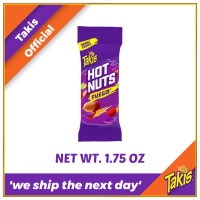
Takis Hot Nuts Fuego (1.75 oz)
₱145.00₱230.00
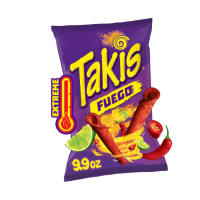
Takis Blue Heat & Fuego Hot Chili Pepper 9.9 oz
₱540.00
Buy on Lazada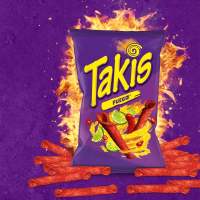
Takis Fuego Rolled Tortilla Chips 280g - Explosive combination of chili pepper and lime flavors
₱659.00₱699.00
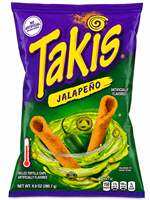
Takis Jalapeño Hot Chili Pepper Lime Tortilla Chips 9 oz (286.7 g)
₱599.00
Buy on LazadaAbout Takis
Overview
Takis is a Mexican snack food brand best known for its intensely flavoured, rolled corn tortilla chips. The brand is owned and produced by Barcel, the snack food subsidiary of Grupo Bimbo, one of Mexico’s largest food companies. Originally launched in Mexico, Takis has since become an internationally recognised snack, particularly associated with spicy and sour profiles such as Takis Fuego.
| Category | Information |
|---|---|
| Brand name | Takis |
| Industry | Snack food |
| Product type | Rolled corn tortilla chips and related snacks |
| Origin | Mexico |
| Creator / producer | Barcel |
| Parent company | Grupo Bimbo |
| Original launch | 1999 |
| Best-known product | Takis Fuego |
| Signature characteristics | Rolled shape, chilli-forward seasoning, intense flavours |
| Main market associations | Mexican, Latin American, U.S. and international snack culture |
| Official Mexican brand site | Barcel – Takisbarcel.com.mx |
History
Origins
Takis was developed by Barcel, a Mexican snack company operating within Grupo Bimbo. The product was introduced in Mexico in 1999. Its unusual rolled shape served as a major point of differentiation from conventional flat tortilla chips 1.
The concept was inspired by the appearance of a rolled taquito, a familiar Mexican food form. Rather than producing a standard triangular tortilla chip, Takis shaped the corn tortilla into a compact tube coated with strong seasoning.
The brand was initially designed with the Hispanic consumer market in mind, particularly in the United States. However, its popularity eventually expanded well beyond that demographic. Grupo Bimbo later described the product as attracting teenagers across different ethnic backgrounds in the U.S. market.
Development of Takis Fuego
A pivotal moment in the brand’s history occurred in 2006, when Barcel introduced Takis Fuego in Mexico.
Fuego combined chilli and lime flavours with the characteristic rolled-corn format. Barcel positioned it specifically towards consumers who enjoyed intense flavours. The original Mexican launch was supported by television, radio, internet and sampling campaigns.
Fuego eventually became the product most strongly associated with the Takis brand, particularly in the United States.
Expansion into the United States
The development of Takis in the United States was central to its transformation from a Mexican snack into an international brand.
Although initially targeted at the growing Hispanic market, the snack’s unusual shape and strong flavour helped it reach a much broader audience. According to Grupo Bimbo, Takis Fuego was introduced in the U.S. in 2006, where its popularity grew significantly among teenagers.
Rapid growth eventually led Barcel USA to open a production facility in Coppell, Texas, in 2012, helping to accommodate increased U.S. demand. In 2014, Barcel USA received the Nielsen U.S. Breakthrough Innovation Award for Takis after the product stood out among thousands of new products evaluated.
Distinctive Characteristics
The identity of Takis is built around several key features that distinguish it from other salty snacks.
Rolled Shape
Unlike traditional tortilla chips, Takis are formed into tight cylinders. This shape gives the snack a recognisable appearance and creates a different eating experience compared to ordinary chips.
Intense Seasoning
Takis deliberately emphasises strong flavours rather than mild seasoning. The brand has historically marketed itself around the idea of intensity, particularly through spicy, acidic and savoury combinations.
Chilli and Lime
The combination of chilli pepper and lime is fundamental to the identity of Takis. It reflects flavour profiles commonly associated with Mexican snack culture.
Purple Packaging
The bright purple packaging associated with Takis Fuego became an important part of the product’s visual identity. This distinctive colour scheme makes the product relatively easy to recognise on store shelves.
Major Varieties
Takis has been sold in numerous flavours and product variations over the years. Availability differs by country and changes over time.
Some historically important varieties include:
- Takis Fuego — chilli and lime; the brand’s best-known variety.
- Takis Nitro — a hotter, chilli-oriented variety.
- Takis Guacamole — a guacamole-inspired flavour.
- Takis Salsa Brava — inspired by a spicy salsa flavour.
- Takis Fajitas — a fajita-inspired seasoning.
- Takis Original — a more straightforward version of the product.
The exact portfolio is market-dependent. For example, Barcel’s current Mexican website lists Takis Fuego and Takis Original among its Takis products 2.
Takis Fuego
Takis Fuego is arguably the defining product of the brand.
The variety was officially launched by Barcel in Mexico in September 2006. Barcel described it as a product for consumers seeking particularly intense flavours, combining chile and limón (chilli and lime).
Its subsequent popularity made “Fuego” almost synonymous with Takis in many international markets. The product’s identity combines rolled corn, chilli, lime, strong seasoning and distinctive packaging. This combination helped establish Takis as something more than just another tortilla chip brand.
Ownership
Takis is not an independent snack company; it is a brand within Barcel, which is part of Grupo Bimbo.
Grupo Bimbo’s Mexican brand portfolio currently includes Takis alongside brands such as Bimbo, Marinela, Barcel, Tía Rosa, Sanissimo and others.
The corporate structure can be simplified as:
Grupo Bimbo
↓
Barcel
↓
Takis
Grupo Bimbo is a major Mexican food corporation with operations spanning numerous countries and a large portfolio of food brands.
Marketing and Brand Identity
Marketing for Takis has traditionally focused on youth, boldness, intensity and novelty.
Rather than presenting itself as a conventional family tortilla chip brand, Takis has cultivated an image centred around extreme flavour experiences. This is especially apparent in its treatment of spicy products such as Fuego.
The brand’s appeal has consequently become associated with challenges regarding flavour tolerance, often phrased as questions about handling intensity. This positioning makes Takis particularly distinctive within the broader salty snack category.
Popularity Among Young Consumers
Takis became especially successful among teenagers and younger consumers in the United States. Grupo Bimbo specifically noted the product’s strong popularity among teenagers when discussing its 2014 Nielsen award.
The product’s unusual appearance also makes it visually distinctive in social media content. Over time, Takis evolved beyond a conventional packaged snack to develop a recognisable presence in youth and internet culture.
Product Extensions
The influence of Takis is not limited to the original rolled tortilla chips. The flavour concept has been extended to other snack formats, depending on the market.
Historically, Barcel’s Takis-related portfolio has included products beyond the original rolled corn snack while maintaining the brand’s characteristic intense flavour positioning. Grupo Bimbo has also described Takis as one of Barcel’s principal brands.
This strategy allows the company to use the Takis name as a broader flavour and snack platform, rather than restricting it to a single chip format.
Packaging and Sustainability
Takis has served as a testing ground for some of Barcel’s packaging innovations.
In 2009, Grupo Bimbo announced that Barcel was beginning to use metalised polypropylene packaging containing a pro-degradation additive, starting with the Takis line. The company presented the initiative as an effort toward more environmentally oriented packaging technology.
Nutrition
Like other highly seasoned tortilla chip snacks, Takis are primarily a snack food rather than a nutritionally complete food.
Nutritional composition varies substantially by product and country. For example, Barcel’s Mexican site currently lists a 58 g serving of Takis Fuego at 319 kcal, with 19 g of total fat, 33 g of carbohydrates and 520 mg of sodium 2.
Because recipes and serving sizes can differ between markets, the nutrition label on the specific package is the best reference for consumers in the Philippines.
Cultural Significance
Takis is notable for representing the globalisation of a distinctly Mexican-inspired snack concept.
The brand began as a Mexican product and was initially associated with Hispanic consumers in the United States. Its popularity subsequently expanded to consumers from many different backgrounds. Grupo Bimbo’s account of the U.S. growth of Takis specifically highlights this transition.
In this sense, Takis exemplifies how a regional food product can become a global youth-oriented brand without abandoning its core flavour identity.
Timeline
- 1999 — Takis is introduced in Mexico 1.
- 2000s — The brand expands internationally, including into the U.S. market.
- 2006 — Takis Fuego launches in Mexico.
- 2006 — Takis Fuego is introduced in the United States and begins gaining substantial popularity.
- 2009 — Barcel introduces degradable packaging technology beginning with Takis.
- 2012 — Barcel opens a Takis production facility in Coppell, Texas, in response to growing U.S. demand.
- 2014 — Barcel USA receives the Nielsen U.S. Breakthrough Innovation Award for Takis.
- Today — Takis remains one of Barcel/Grupo Bimbo’s major snack brands and is sold in multiple international markets.
In Popular Culture
Takis has developed an identity beyond the traditional salty snack aisle. Its bright packaging, unusual rolled form and extreme flavour positioning have made it particularly recognisable among younger consumers.
The brand name is now strongly associated with spicy snacks, chilli-lime flavour, extreme food challenges and youth-oriented snack culture.
Its popularity demonstrates the power of product differentiation: while the basic ingredients—corn, seasoning and oil—are relatively familiar, the shape, flavour intensity, packaging and marketing distinguish Takis from conventional tortilla chips.
Brand Significance
From a business perspective, Takis serves as a case study in brand differentiation.
The company took a relatively familiar food category—corn tortilla snacks—and differentiated it through:
- A distinctive rolled shape
- Highly concentrated seasoning
- Strong chilli-and-lime flavour profiles
- Bold visual branding
- Youth-oriented marketing
- Expansion into multiple flavours and formats
- International distribution
The result was a snack brand that moved from being a Mexican-market product to a recognisable international consumer brand.