Shop on Lazada
Tempo products
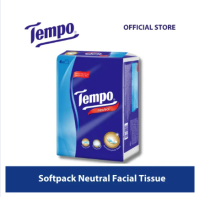
Tempo Softpack Neutral Facial Tissue (4-Ply 4 Packs x 90 Sheets)
₱264.00
Buy on Lazada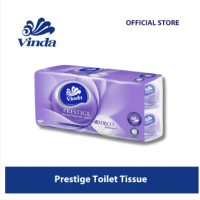
Vinda Prestige 4D Toilet Tissue 3PLY (8 Rolls)
₱366.00
Buy on Lazada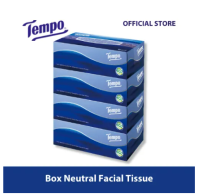
Tempo Box Neutral Facial Tissue (3-Ply 4 Boxes x 86 Sheets)
₱340.00
Buy on Lazada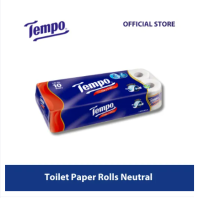
Tempo Toilet Paper Rolls Neutral (3-Ply 10 Rolls)
₱500.00
Buy on Lazada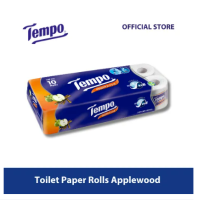
Tempo Toilet Paper Rolls Applewood (3-Ply 10 Rolls)
₱500.00
Buy on Lazada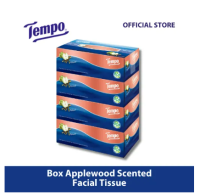
Tempo Box Applewood Scented Facial Tissue (3-Ply 4 Boxes x 86 Sheets)
₱340.00
Buy on Lazada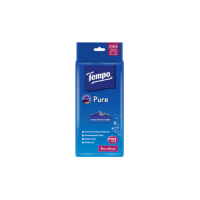
Tempo Mini Wet Wipes (Antibacterial 8 Sheets per Pack 6 Packs)
₱150.00
Buy on Lazada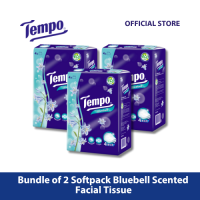
Bundle of 3 Tempo Softpack Bluebell Scented Facial Tissue
₱712.80
Buy on LazadaAbout Tempo
Overview
Tempo is a German-origin paper-tissue and consumer-hygiene brand best known for its pocket tissues and facial tissues. Founded in 1929, it is widely recognised as the first German paper-handkerchief brand. Today, Tempo is owned by Essity, a Swedish global hygiene and health company, and is sold in various European and Asian markets.1
Essity currently lists Tempo among its major Consumer Tissue brands alongside Lotus, Zewa, Cushelle, and Plenty.
Basic Information
| Field | Information |
|---|---|
| Brand | Tempo |
| Origin | Germany |
| Founded | 1929 |
| Original product | Disposable paper handkerchiefs |
| Current owner | Essity AB |
| Industry | Consumer tissue / personal hygiene |
| Major products | Pocket tissues, facial tissues, wet tissues, toilet tissue, and related paper products |
| Key markets | Germany, Austria, Switzerland, Italy, Hong Kong, China, and other markets |
| Brand positioning | Quality, softness, strength, reliability, and convenience |
| Chinese name | 得宝 (Tempo) |
History
1929: The Beginning
The history of Tempo began in Germany in 1929. Brothers Oskar Rosenfelder and Emil Rosenfelder, who were associated with Vereinigte Papierwerke AG, developed the concept of a disposable paper handkerchief made from cellulose. The Tempo trademark was registered on January 29, 1929, in Berlin. Essity cites this date as the patent or registration of the Tempo paper handkerchief, marking the official start of the brand’s history.
This innovation addressed a practical need: unlike traditional cloth handkerchiefs that required washing and ironing, a paper handkerchief could be used once and discarded. The name “Tempo” was chosen to reflect the spirit of the era, symbolising speed, modernity, and a rapidly changing lifestyle.2
1930s–1960s: Mass Adoption
Over subsequent decades, Tempo transformed the paper handkerchief from a novelty item into an everyday consumer staple. Historical records indicate significant production growth: approximately 150 million Tempo products were produced in 1935, rising to roughly 1 billion in 1955 and exceeding 4 billion in 1962.3 This expansion helped establish Tempo as a household name in Germany.
1970s: Product Design Innovation
A key innovation during this period was Tempo’s distinctive folding system. The company introduced a folding design that allowed users to open the tissue packet with one hand, enhancing convenience and differentiating the product from standard paper tissues.4 In the decades that followed, Tempo continued to introduce variations in fragrance, softness, strength, packaging, and format.
2001: Acquisition by SCA
Ownership of the brand eventually transferred to the Swedish hygiene and forest-products company SCA, which acquired Tempo in 2001.5 SCA subsequently built a substantial international Consumer Tissue business around brands including Tempo, Lotus, and Zewa.
2017: Transition to Essity
A major corporate restructuring occurred in 2017 when SCA separated its hygiene and health business from its forest-products operations. The hygiene and health division became the independent company Essity, listed on Nasdaq Stockholm on June 15, 2017. Tempo then became part of Essity’s Consumer Tissue portfolio.
Product Portfolio
Although historically associated with pocket handkerchiefs, Tempo has significantly expanded its range. Its current product portfolio may include:
- Pocket tissues and paper handkerchiefs
- Facial tissues
- Box tissues
- Wet tissues
- Toilet tissue
- Other consumer-tissue formats depending on the market
Essity defines Consumer Tissue as encompassing toilet paper, household towels, handkerchiefs, facial tissues, wet wipes, and napkins. In China, for example, Essity and Vinda present Tempo products under the Chinese name 得宝, covering categories such as paper handkerchiefs, soft-pack tissues, box tissues, and wet tissues. In Italy, Tempo expanded into toilet paper beginning in 2010.6
Brand Positioning
Tempo’s central value proposition has historically been the combination of softness and strength. Rather than competing solely as a low-cost commodity, Tempo positions itself as a higher-quality, dependable tissue brand. Essity describes Tempo in Italy as offering a blend of resistance and softness, highlighting the brand’s reputation for balancing these two attributes.
This positioning addresses the seemingly contradictory characteristics consumers evaluate in tissues:
- Softness against the skin
- Tensile strength
- Absorbency
- Thickness
- Resistance to tearing
- Portability
- Fragrance or freshness
- Packaging and appearance
Tempo has built much of its identity around resolving the trade-off between softness and strength.
Genericisation in Germany
One notable characteristic of Tempo is that the brand name became closely associated with the product category itself. In Germany, “Tempo” became so strongly linked to paper handkerchiefs that the term is often used colloquially to refer to paper tissues generally, including those made by competitors. This is an example of genericisation, where a trademark becomes widely understood as the name of a product category.
While this represents a significant marketing achievement, it also presents a trademark-management challenge: as a brand becomes more generic, maintaining its distinctiveness as a registered trademark becomes increasingly difficult.
Design and Visual Identity
Tempo has traditionally maintained a highly recognisable visual identity. For decades, the brand’s red-and-white packaging and distinctive Tempo wordmark have been synonymous with German paper tissues. Essity notes that the Tempo lettering and packaging design remained largely unchanged from the 1950s until recent modernisation efforts.6
Instead of frequently reinventing its image, Tempo has historically relied on visual continuity to communicate trust and familiarity. In 2025, Essity introduced a refreshed look for the traditional Tempo brand, describing the redesign as an effort to combine the brand’s long heritage with a more modern identity while retaining core values of trust, strength, and care.6
Innovation
Despite being nearly a century old, Tempo continues to introduce product innovations.
One-Hand Opening
The distinctive folding arrangement introduced in the 20th century made the tissue easier to open with one hand.7
Stronger Tissues
Tempo has developed tissues designed to withstand greater mechanical stress. Essity has specifically promoted versions capable of surviving a washing-machine cycle if accidentally left in a pocket.
Fragranced Products
The brand has introduced fragranced tissues and products incorporating ingredients such as eucalyptus oil in selected markets.8
Wet Tissue and Other Formats
Tempo has expanded beyond traditional dry handkerchiefs into wet tissue and other consumer-tissue categories.9
International Markets
Tempo began as a distinctly German brand but has since become international. Essity identifies Tempo as a leading brand in several European markets, with a presence in countries including Germany, Austria, Switzerland, Italy, the Netherlands, and Hong Kong.
Germany
Germany remains one of Tempo’s most important markets. Essity describes Tempo as the market leader in tissues in Germany, Austria, and Switzerland.
Italy
Tempo is regarded as one of the best-known and most highly respected tissue brands in the Italian market, particularly noted for its perceived quality.
Hong Kong and China
Tempo has developed a significant presence in Greater China. In mainland China, the brand is marketed as 得宝 (Dé Bǎo) and is associated with a premium tissue positioning. Vinda’s Tempo page describes the brand as a German premium tissue brand originating in 1929.
Tempo in China
The Chinese name for Tempo is 得宝. According to Chinese reference sources, the brand entered Hong Kong in 1997 and mainland China in 2009.
In China, Tempo is positioned somewhat differently from its original German identity. It is often marketed as a premium lifestyle and tissue brand, with considerable emphasis on:
- Premium paper quality
- Softness and thickness
- Sophisticated packaging
- Lifestyle imagery
- Design
- Gifting
- Artistic and cultural collaborations
Vinda’s official Tempo page describes the brand as a German premium tissue brand founded in 1929, noting its long sales history in European markets and Hong Kong. This illustrates brand localisation, where the same historical brand occupies a different cultural position in different countries.
Ownership: Essity
Tempo is part of Essity AB, a Swedish multinational specialising in hygiene and health products. Essity’s portfolio includes brands such as:
- Tempo
- TENA
- Tork
- Zewa
- Lotus
- Cushelle
- Plenty
- Libresse
- Libero
- Actimove
- Leukoplast
- JOBST
Essity reported approximately SEK 138 billion in net sales in 2025, with approximately 36,000 employees, and sells products in around 150 countries. Consequently, Tempo is no longer an independent German manufacturer but a brand within a larger global hygiene company.
Relationship with Vinda
There is an important distinction between ownership and local manufacturing or distribution. In Greater China, Tempo is associated with Vinda International, a major Chinese tissue company. Vinda’s official website presents Tempo/得宝 as part of its product portfolio while stating that Essity retains ownership of the Tempo brand rights.
In simplified terms, Tempo is a brand owned by Essity that is marketed and operated in certain Chinese markets through the Vinda/Essity structure. This explains why Chinese consumers may encounter Tempo branding alongside Vinda even though the ultimate global brand owner is Essity.
Sustainability
As part of Essity, Tempo operates within the group’s broader sustainability strategy. Essity states that its Consumer Tissue business is addressing issues including:
- Reducing waste
- Reducing carbon emissions
- Sustainable materials
- Improving resource efficiency
- Optimising production and supply chains
Tempo’s sustainability initiatives are therefore best understood in the context of Essity’s corporate environmental and sourcing policies rather than as an entirely independent programme.
Brand Values
Based on Essity’s descriptions, Tempo can be understood through several recurring values:
Reliability
A Tempo tissue is intended to perform effectively when needed, whether for colds, allergies, emotional moments, or everyday messes.
Strength
Strength is one of the brand’s defining functional characteristics.
Softness
Softness is equally important, particularly because the product is frequently used on sensitive facial skin.
Convenience
The original disposable-paper concept was based on making the handkerchief more convenient than a reusable cloth alternative.
Innovation
Tempo has repeatedly modified folding, materials, strength, fragrances, formats, and packaging throughout its history.
Heritage
Its nearly century-long history is a significant component of its brand equity.
Marketing Significance
From a marketing perspective, Tempo demonstrates how a simple commodity product can become a powerful consumer brand. Paper tissues are typically low-involvement products that consumers do not research extensively before purchase. Yet Tempo has established strong differentiation through:
- Brand recognition
- Consistent packaging
- Perceived product quality
- German heritage
- Long history
- Product innovation
- Premium positioning in selected markets
- High mental availability
Its greatest asset may be that consumers associate its name directly with the category of paper handkerchiefs.
Timeline
| Year | Event |
|---|---|
| 1929 | Tempo trademark registered in Germany; disposable paper handkerchief brand established |
| 1935 | Production reaches about 150 million products |
| 1950s | Tempo’s recognisable visual identity becomes established |
| 1955 | Production reaches approximately 1 billion |
| 1962 | Production exceeds 4 billion |
| 1970s | Distinctive one-hand-opening folding becomes an important product innovation |
| 1997 | Tempo enters Hong Kong |
| 2001 | Tempo is acquired by SCA |
| 2009 | Tempo enters mainland China |
| 2010 | Tempo expands into toilet tissue in Italy |
| 2017 | SCA’s hygiene and health business becomes Essity; Tempo becomes an Essity brand |
| 2019 | Tempo celebrates its 90th anniversary |
| 2024 | Tempo celebrates 95 years |
| 2025 | Essity introduces a refreshed Tempo visual identity |
| 2026 | Tempo remains part of Essity’s Consumer Tissue portfolio |
Overall Assessment
Tempo is essentially a 20th-century German invention that evolved into a global premium tissue brand. Its trajectory is notable because the product itself is extremely simple, yet the brand accumulated enormous cultural recognition. Starting with disposable paper handkerchiefs in 1929, Tempo helped establish a new everyday hygiene habit and eventually became so strongly associated with paper tissues in Germany that its name entered everyday language.
Today, nearly a century later, Tempo is no longer a standalone German company. It is a major Essity Consumer Tissue brand, with products and positioning adapted to different markets around the world. In Europe, it retains its strong heritage and tissue-market reputation, while in China it has developed a particularly prominent premium/lifestyle positioning under the name 得宝.
References
- Esempi di marchi
- 95 Jahre Tempo – Die Taschentuch-Ikone feiert seine Erfolgsgeschichte
- Erfolgsgeschichte auch dank Essity-Werk Neuss: Tempo wird 90 Jahre
- 得宝Tempo-德国高端纸巾品牌
- Tempo (brand)
- Traditionsmarke Tempo im neuen Look
- Thương hiệu Tempo của nước nào? Đánh giá chi tiết có tốt không?
- DeWiki > Tempo (Marke)
- Thương Hiệu Tempo Chính Hãng, Giá Tốt | Pharmacity