Shop on Lazada
Texas Instruments products
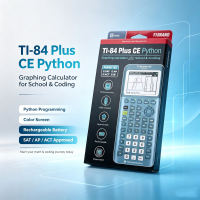
Original Texas Instruments TI-84 Plus CE Python Color Graphing Calculator
₱14,990.00₱17,999.00
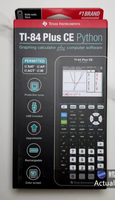
Texas Instruments TI-84 Plus CE Color Graphing Calculator ( Black )
₱11,510.30₱15,000.00
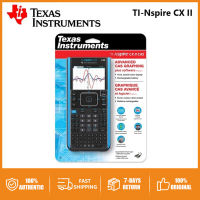
Original Texas Instruments TI-Nspire CX II Advanced CAS Color Graphing Calculator Plus Software
₱16,990.00₱17,999.00

Texas Instruments | Financial Calculator BAII Plus
₱3,832.00₱4,170.00
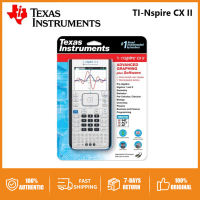
Original Texas Instruments TI-Nspire CX II Advanced Non-CAS Color Graphing Calculator Plus Software
₱14,990.00₱15,999.00
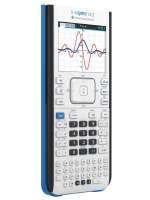
Texas Instruments TI-Nspire CX II Advanced Graphing White
₱14,399.00
Buy on Lazada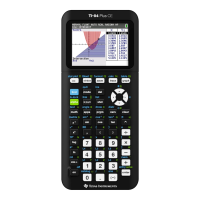
Texas Instruments TI-84 Plus CE Graphing Calculator Black
₱13,199.00
Buy on Lazada
Texas Instruments TI-84 Plus CE Color Graphing Calculator Black
₱11,250.00₱12,500.00
About Texas Instruments
Texas Instruments Incorporated (TI) is an American multinational semiconductor company headquartered in Dallas, Texas. Established in 1930, TI is among the world’s oldest continuously operating semiconductor firms and is widely recognized for its leadership in analog semiconductors, embedded processing, signal processing, power management, microcontrollers, calculators, and educational technology. Its components are integral to industrial equipment, automobiles, data centers, personal electronics, communications systems, aerospace, and numerous other electronic applications.
Today, TI operates primarily as a business-to-business semiconductor manufacturer rather than a consumer-electronics brand. It designs, manufactures, tests, and sells tens of thousands of semiconductor products to more than 100,000 customers worldwide. For fiscal year 2025, TI reported $17.68 billion in revenue, with approximately 95% derived from its Analog and Embedded Processing segments.1
Company overview
| Category | Information |
|---|---|
| Full name | Texas Instruments Incorporated |
| Common name | Texas Instruments / TI |
| Founded | 1930 |
| Original name | Geophysical Service |
| Headquarters | Dallas, Texas, United States |
| Industry | Semiconductors / electronics |
| Major businesses | Analog and Embedded Processing |
| Stock ticker | TXN |
| Stock exchange | Nasdaq Global Select Market |
| Current chairman, president & CEO | Haviv Ilan |
| Employees | 33,000+ |
| Customers | 100,000+ |
| Products | 80,000+ |
| 2025 revenue | $17.68 billion |
| Website | Texas Instruments official website |
TI states that it produces tens of billions of chips annually and maintains design, manufacturing, and sales operations in over 30 countries.2
The company’s shares have been publicly traded since 1953. TI was listed on the New York Stock Exchange until late 2011 before transferring its listing to Nasdaq under the symbol TXN in January 2012.
Origins and early history
Texas Instruments did not originally begin as a semiconductor company.
Its origins trace back to Geophysical Service, a firm established in 1930 that specialized in reflection seismography, a technique used to locate underground geological structures and oil deposits. The company eventually expanded from geophysical exploration into electronics.3
During World War II, the company’s expertise in signal processing proved valuable for military electronics. Geophysical Service developed technologies related to submarine detection and radar, helping establish engineering and manufacturing capabilities that would later become central to TI.
In 1951, the company adopted the name Texas Instruments Incorporated, while Geophysical Service became a wholly owned subsidiary.
This transformation marked the beginning of the company’s long-term shift toward electronics and, ultimately, semiconductors.
The transistor era
One of TI’s most significant early semiconductor achievements occurred in the 1950s.
In 1954, Texas Instruments developed and commercialized a pivotal silicon transistor, helping establish silicon as a practical material for semiconductor manufacturing. TI’s experience with transistors eventually led directly to one of the most important inventions in the history of electronics: the integrated circuit.4
At the time, electronic equipment was constructed from individual components—transistors, resistors, capacitors, and other parts—which made systems relatively large, expensive, and difficult to manufacture.
The next advancement involved integrating many of these components onto a single piece of semiconductor material.
Jack Kilby and the integrated circuit
Perhaps the most renowned event in Texas Instruments’ history took place in 1958.
TI engineer Jack Kilby developed the concept of the integrated circuit (IC). On September 12, 1958, he demonstrated a working integrated circuit at a TI laboratory.5
The fundamental concept was revolutionary: instead of manufacturing electronic components individually and connecting them, multiple components could be integrated into a single semiconductor device.
This innovation eventually became the foundation of modern electronics.
Important nuance
Kilby is widely recognized as one of the inventors of the integrated circuit, but he was not the sole contributor to its development.
At Fairchild Semiconductor, Robert Noyce independently developed a different approach to the integrated circuit that facilitated practical semiconductor interconnections and mass production. The two approaches were eventually covered by cross-licensing arrangements between the companies.
Kilby’s contribution was nevertheless historically immense. He later received the 2000 Nobel Prize in Physics for his role in the invention of the integrated circuit.
The IC fundamentally altered the economics and physical scale of electronics, enabling the modern computer, smartphone, automobile, industrial controller, and countless other electronic systems.
Expansion into consumer electronics
Although TI is now primarily a semiconductor company, it has historically produced many consumer-facing technologies.
One of its best-known areas was the electronic calculator.
In 1967, TI developed the Cal-Tech, described by the company as the world’s first handheld electronic calculator.
TI subsequently introduced the TI-2500 Datamath in 1972, followed by scientific calculators such as the SR-50 in 1974.6
Calculators eventually became one of TI’s most recognizable brands, particularly within the education sector.
Educational calculators
Products such as the:
- TI-83
- TI-84 series
- TI-89
- TI-Nspire
became widely used by students and teachers, particularly in mathematics and science education.
TI’s educational technology business remains distinct from its core semiconductor operations and has become a significant part of the company’s public identity.
Digital signal processing
TI also emerged as a major pioneer in digital signal processing (DSP).
DSP involves processing signals such as:
- audio
- images
- radar
- wireless communications
- sensor data
- speech
- video
using digital computation.
A particularly notable example was TI’s Speak & Spell, introduced in 1978. This educational toy utilized semiconductor technology to generate speech and served as an early demonstration of digital signal-processing technology. TI states that the product contained the industry’s first chip with DSP logic.
TI’s DSP expertise subsequently became critical in communications, audio, industrial equipment, automotive systems, and many other applications.
Transition to a semiconductor-focused company
Over the decades, Texas Instruments became increasingly focused on semiconductors.
The company eventually divested many of its former businesses to concentrate on technologies where it believed it could maintain strong competitive advantages.
The modern TI business is centered principally on:
- Analog semiconductors
- Embedded processing
This distinction is significant.
TI is not primarily a manufacturer of CPUs for PCs or smartphones. Instead, much of its business involves the semiconductor components that enable electronic systems to sense, power, control, communicate, and process information.
Product portfolio
TI’s product catalog contains more than 80,000 products.7
These products can broadly be categorized into several technology segments.
Analog semiconductors
Analog chips interact with the physical world.
Real-world information is fundamentally analog:
- temperature
- pressure
- sound
- light
- voltage
- current
- motion
TI develops chips capable of sensing, conditioning, amplifying, converting, and managing these signals.
Examples include:
- operational amplifiers
- analog-to-digital converters
- digital-to-analog converters
- voltage references
- audio ICs
- interface ICs
- sensor-interface devices
- power-management ICs
- battery-management components
- motor-control components
Analog was TI’s largest business segment in 2025, generating approximately $14.01 billion in revenue.
Power management
Power management is one of TI’s most critical areas.
Electronic devices require electricity at precisely controlled voltages and currents. TI produces semiconductor components that help systems:
- convert voltage
- regulate power
- charge batteries
- monitor current
- manage batteries
- protect circuits
- control motors
- improve energy efficiency
This technology is present in everything from electric vehicles and industrial machinery to servers, telecommunications equipment, and portable electronics.
Consequently, TI chips may be present inside a product even when consumers never see the TI branding.
Embedded processing
TI’s second major business is Embedded Processing.
Embedded processors are specialized computing devices designed to perform specific tasks within larger electronic systems.
TI’s portfolio includes:
- microcontrollers (MCUs)
- processors
- digital signal processors
- wireless connectivity devices
- radar-processing technology
- vision-processing devices
- specialized embedded processors
In 2025, Embedded Processing generated approximately $2.70 billion, representing about 15% of TI’s revenue.8
These products are particularly vital in industrial and automotive applications.
Key end markets
Automotive technology
Automotive electronics have become an increasingly important market for Texas Instruments.
Modern vehicles contain semiconductor systems for:
- advanced driver assistance
- radar
- cameras
- battery management
- electric powertrains
- infotainment
- lighting
- motor control
- power conversion
- vehicle networking
- safety systems
TI’s strategy increasingly emphasizes automotive because the semiconductor content per vehicle continues to rise, particularly with electrification and advanced driver-assistance systems.9
Industrial technology
The industrial market is another primary focus.
TI chips are found in:
- factory automation
- robotics
- industrial sensors
- motor drives
- power supplies
- measurement equipment
- building automation
- energy infrastructure
- medical equipment
- grid systems
Industrial electronics are particularly attractive to TI because many products have long operating lifetimes and require semiconductor components to remain available for extended periods.
Data centers
Data centers have also become increasingly significant for TI.
Modern data centers consume vast amounts of electrical power, creating demand for semiconductor technologies that can efficiently:
- convert electrical power
- regulate voltage
- manage processors
- monitor current
- control cooling systems
- connect electronic subsystems
TI’s 2025 strategy specifically identified data centers, alongside industrial and automotive markets, as important long-term growth opportunities.
Manufacturing strategy
A key factor distinguishing Texas Instruments from many semiconductor companies is its emphasis on internal manufacturing.
TI designs chips and invests heavily in manufacturing its own semiconductors.
A particularly important component of this strategy is 300-millimeter wafer manufacturing.
A semiconductor wafer is a circular piece of semiconductor material on which individual chips are fabricated. Larger wafers allow manufacturers to produce more chips per wafer, potentially improving manufacturing economics.
TI has invested significantly in 300mm manufacturing facilities in locations including:
- Richardson, Texas
- Lehi, Utah
- Sherman, Texas
The company states that its internal manufacturing capability provides greater supply-chain control and cost advantages.10
This strategy is significant because semiconductor companies increasingly compete not only on chip design but also on manufacturing capacity and supply reliability.
Global operations
Although headquartered in Dallas, Texas Instruments is a global enterprise.
TI maintains manufacturing, design, and sales operations across North America, Europe, and Asia.
Its manufacturing and technology footprint includes locations in the United States as well as countries such as:
- Japan
- Malaysia
- the Philippines
- Germany
- Mexico
- Taiwan
- China
TI reports having more than 33,000 employees and serving more than 100,000 customers worldwide.
Business model
TI’s business model differs somewhat from companies such as NVIDIA, AMD, or Qualcomm.
Its strategy emphasizes four major competitive advantages:
Manufacturing and technology
TI invests heavily in its own manufacturing capabilities and semiconductor process technology.
Broad product portfolio
Its extensive catalog allows TI to sell multiple types of chips to the same customer and participate in diverse electronic designs.
Distribution and market reach
TI sells through a broad network comprising direct sales, distributors, and online channels.
Long-lived products and customer relationships
Many industrial and automotive products remain in production for years, often far longer than consumer electronics.
TI considers these four characteristics essential to its long-term competitive position.
Major markets
TI’s modern business is concentrated around several major end markets.
| Market | Examples |
|---|---|
| Industrial | Factory automation, robotics, energy, instrumentation |
| Automotive | EVs, ADAS, radar, powertrain, infotainment |
| Data center | Power management and infrastructure |
| Personal electronics | Smartphones, PCs, appliances, wearables |
| Communications | Networking and communications equipment |
| Other | Aerospace, defense, medical and specialized electronics |
In 2025, approximately 75% of TI’s revenue came from industrial, automotive, and data-center markets.11
This reflects a deliberate strategic shift toward markets where TI expects semiconductor content to grow over the long term.
Competitive landscape
TI operates in a highly competitive semiconductor industry.
Competitors vary depending on the specific product category but may include companies such as:
- Analog Devices
- NXP Semiconductors
- STMicroelectronics
- Infineon Technologies
- Microchip Technology
- onsemi
- Renesas Electronics
However, TI’s competitive position is particularly strong in analog and power-management semiconductors, where its extensive product portfolio, manufacturing scale, and enduring customer relationships serve as key advantages.
Relationship with NVIDIA, Intel, and AMD
It is useful to note that TI is not a direct equivalent of NVIDIA, Intel, or AMD.
For example:
NVIDIA is heavily associated with high-performance GPUs and accelerated computing.
Intel is historically associated with CPUs and data-center processors.
AMD develops CPUs, GPUs, and related computing products.
Texas Instruments, by contrast, specializes in the semiconductor components that handle power, sensing, signal conversion, control, and embedded processing.
Therefore, a computer, automobile, or industrial robot may contain a powerful processor from one company while simultaneously utilizing numerous TI chips for supporting functions.
TI calculators
Despite its transformation into a semiconductor-focused company, Texas Instruments remains highly recognizable to general consumers due to its calculators.
The TI-83 and TI-84 families became particularly influential in secondary-school and university mathematics education.
TI calculators are notable for combining:
- scientific computation
- graphing
- programming
- data analysis
- educational software
The company’s calculator history dates back to its pioneering handheld calculator work in the 1960s and 1970s.
Thus, the name “Texas Instruments” carries two distinct associations depending on the audience:
To an engineer: a major semiconductor manufacturer.
To a student: the company behind the TI-84 calculator.
Both associations are accurate.
Leadership
As of 2026, Texas Instruments is led by Haviv Ilan, who serves as chairman, president, and chief executive officer. He became president and CEO in 2023 and assumed the role of chairman in 2026.12
Ilan is a long-serving TI executive. Prior to becoming CEO, he served as executive vice president and chief operating officer, holding leadership roles across TI’s analog, embedded-processing, and wireless businesses.13
His strategy continues TI’s emphasis on:
- analog semiconductors
- embedded processing
- internal manufacturing
- 300mm wafer capacity
- industrial markets
- automotive
- data centers
- long-term free-cash-flow growth
Financial position
For fiscal year 2025, TI reported:
- Revenue: $17.68 billion
- Analog revenue: $14.01 billion
- Embedded Processing revenue: $2.70 billion
- Employees: 33,000+
- Products: 80,000+
- Customers: 100,000+
Approximately 95% of revenue was derived from Analog and Embedded Processing.14
TI is also known for returning substantial capital to shareholders through dividends and share repurchases. The company reported 22 consecutive years of dividend increases from 2004 through 2025.15
Silicon Labs acquisition
A significant recent development is TI’s announced acquisition of Silicon Labs.
In February 2026, Texas Instruments announced an agreement to acquire Silicon Labs, describing the transaction as a means to strengthen its embedded-processing strategy through Silicon Labs’ wireless-connectivity portfolio.16
This move is strategically significant because wireless connectivity is increasingly critical in:
- industrial IoT
- smart buildings
- connected devices
- automation
- energy systems
- consumer electronics
The transaction aligns with TI’s broader objective of becoming a more comprehensive supplier of embedded semiconductor technologies.
Historical importance to electronics
TI’s historical significance extends far beyond its brand recognition among general consumers.
The company has contributed to several pivotal stages of electronic development:
1930s–1940s:
Geophysical technology → signal processing → military electronics
1950s:
Silicon transistor technology
1958:
Jack Kilby’s integrated-circuit invention
1960s–1970s:
Integrated circuits, calculators, and semiconductor expansion
1970s–1990s:
DSP, consumer electronics, and embedded computing
1990s–2000s:
Expansion of analog, DSP, and embedded-processing technologies
2010s–2020s:
Increasing focus on analog, power management, automotive, and industrial electronics
2020s:
Significant investment in 300mm manufacturing and growing emphasis on industrial, automotive, and data-center semiconductor demand.17
Significance in analog chips
A fundamental concept underpins TI’s business.
Digital processors often receive the most attention because they are easily associated with “computing.” However, analog electronics are necessary for digital systems to interact with the physical world.
For example:
Temperature sensor → analog signal → TI signal-conditioning chip → ADC → processor
Or:
Battery → TI power-management IC → processor/motor/display
Or:
Radar sensor → analog front end → TI processing chip → vehicle-control system
Consequently, even sophisticated AI computers require substantial analog and power-management hardware.
This explains why TI’s market remains relevant even as computing architectures evolve.
Brand identity
Texas Instruments’ corporate identity is strongly associated with:
- engineering
- semiconductor innovation
- reliability
- long product lifetimes
- analog electronics
- power management
- embedded processing
- manufacturing
- education
- calculators
Its distinctive TI logo is therefore linked to two overlapping domains: the semiconductor industry and educational calculators.
The company’s stated mission centers on making electronics more affordable through semiconductors.18
Legacy
Texas Instruments’ legacy is closely tied to making electronic functions smaller, cheaper, and more practical.
Jack Kilby’s invention of the integrated circuit helped establish the technological trajectory of modern electronics. TI subsequently participated in the development of transistors, calculators, DSP technology, embedded processors, and modern analog semiconductor technology.19
The company has thus followed an unusual trajectory:
oil exploration → geophysics → military electronics → transistors → integrated circuits → calculators → DSP → analog and embedded semiconductors.
This evolution explains why a company founded in 1930 remains a major semiconductor manufacturer nearly a century later.
Texas Instruments today
As of 2026, Texas Instruments is best understood as a large, vertically integrated analog and embedded-semiconductor company rather than primarily a calculator manufacturer.
Its modern priorities center on:
- analog semiconductors
- power management
- embedded processors
- microcontrollers
- signal processing
- automotive electronics
- industrial automation
- data-center infrastructure
- 300mm semiconductor manufacturing
- long-term supply reliability
The company employs 33,000+ people, serves 100,000+ customers, and offers 80,000+ products, with manufacturing and operations spanning more than 30 countries.20
In summary, Texas Instruments is one of the foundational companies of the semiconductor industry. Its most historically significant achievement was Jack Kilby’s 1958 integrated-circuit invention, while its contemporary importance stems primarily from its vast portfolio of analog, power-management, and embedded-processing chips that operate within millions of electronic systems globally.21
References
- txn-20251231
- txn-20260303
- Texas Instruments
- Invention of the integrated circuit
- Timeline | Texas Instruments
- TEXAS INSTRUMENTS
- txn-20250305
- txn-20250331
- Investor relations – Haviv Ilan – Executive Officers – Texas Instruments
- Texas Instruments to acquire Silicon Labs | TI.com
- Investor relations – Texas Instruments announces CFO transition – Texas Instruments
- Investor relations – Texas Instruments to webcast its 2026 annual meeting of stockholders – Texas Instruments
- Texas Instruments to webcast its 2026 annual meeting of stockholders | TI.com
- TI CEO Haviv Ilan to speak at Morgan Stanley investor conference | TI.com
- Investor relations – 0000097476-26-000059 – 10-K – Texas Instruments
- EDGAR Filing Documents for 0000097476-26-000059
- Texas Instruments Incorporated (via Public) / Annual Report for Fiscal Year Ending December 31, 2025 (Form 10-K)
- Investor relations – Texas Instruments to acquire Silicon Labs – Texas Instruments
- Investor relations – TI reports Q4 2025 and 2025 financial results and shareholder returns – Texas Instruments
- sec.gov
- TI CEO Haviv Ilan to speak at UBS investor conference | TI.com