Shop on Lazada
Thayers products
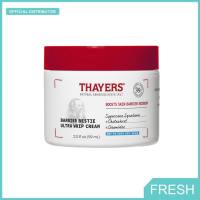
Thayers Barrier Bestie Ultra Whip Cream 59ml
₱1,000.00
Buy on Lazada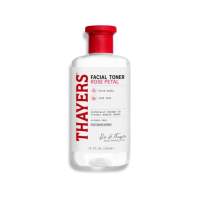
THAYERS Rose Petal / Unscented / Cucumber Witch Hazel Facial Toner
₱1,039.00₱1,359.00
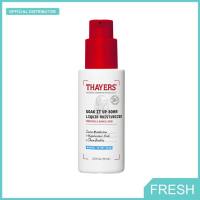
Thayers Soak it up 80-hour Liquid Moisturizer 75ml
₱1,000.00
Buy on Lazada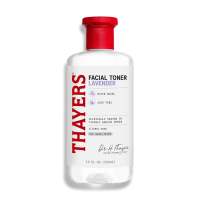
THAYERS Alcohol-Free Lavender Witch Hazel Facial Toner with Aloe Vera Formula
₱1,175.00
Buy on Lazada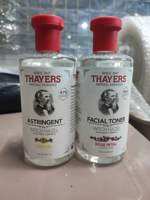
Thayers natural remedies facial toner
₱799.00
Buy on Lazada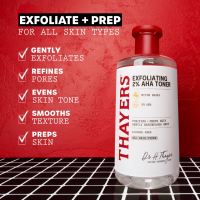
Thayers 2% AHA Exfoliating Glycolic Toner
₱1,179.00
Buy on Lazada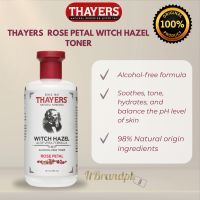
Thayers Alcohol-Free Hydrating Rose Petal Witch Hazel Facial Toner with Aloe Vera Formula (new packaging)
₱1,100.00
Buy on Lazada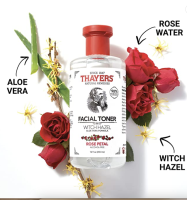
ORIGINAL THAYERS Alcohol-Free Rose Petal Witch Hazel Facial Toner with Aloe Vera Formula 12 Ounce FROM USA
₱1,680.00
Buy on LazadaAbout Thayers
Thayers is an American skincare brand best known for its witch hazel-based toners and astringents, particularly its alcohol-free Witch Hazel with Aloe Vera formulas. The company traces its origins to 1847, when physician and chemist Dr. Henry Thayer established Henry Thayer & Co. in Cambridge, Massachusetts. Today, Thayers operates as part of L’Oréal’s Consumer Products Division.1
Overview
| Category | Information |
|---|---|
| Brand | Thayers |
| Original company | Henry Thayer & Co. |
| Founded | 1847 |
| Founder | Dr. Henry Thayer |
| Country of origin | United States |
| Headquarters | Easton, Connecticut |
| Parent company | L’Oréal |
| Industry | Skincare / Beauty / Personal Care |
| Best known for | Witch hazel toners and astringents |
| Signature ingredient | Witch hazel (Hamamelis virginiana) |
| Notable positioning | Botanical skincare combined with dermatological/science-backed ingredients |
| Major acquisition | Acquired by L’Oréal in 2020 |
L’Oréal announced its agreement to acquire Thayers Natural Remedies from Henry Thayer Company in June 2020, with the brand joining L’Oréal’s Consumer Products Division.2 L’Oréal subsequently lists Thayers among its brands.3
History
1847–Dr. Henry Thayer
Thayers’ history begins with Dr. Henry Thayer, who was born in 1823 and studied chemistry and medicine at Boston Medical School. He founded Henry Thayer & Co. with the goal of producing concentrated plant extracts and botanical remedies.
According to Thayers, Dr. Thayer developed more than 800 plant-based remedies during his career. His company became particularly associated with pharmaceutical and botanical extracts during the 19th century.1
In 1855, his work with fluid extracts received recognition from the American Institute of New York, followed by recognition from the Massachusetts Charitable Mechanics Association for his extraction apparatus in 1856. In 1877, Dr. Thayer published a catalog describing his extensive range of solid and fluid extracts.1
This botanical-extraction heritage eventually became the foundation of the modern Thayers skincare identity.
The transition to skincare
Although the original company was primarily concerned with medicinal and botanical extracts, Thayers gradually became strongly associated with witch hazel preparations.
The brand says it introduced its alcohol-free witch hazel in 1989, marking an important step toward the modern facial-toner business.1
In 2012, Thayers says it began incorporating locally grown, certified-organic witch hazel and aloe vera into its formulas.1
2020–L’Oréal acquisition
A major turning point came in 2020, when L’Oréal announced an agreement to acquire Thayers Natural Remedies from Henry Thayer Company.
At the time, L’Oréal described Thayers as a U.S. natural-skincare brand headquartered in Easton, Connecticut, with a strong heritage in toners and astringents. L’Oréal specifically identified the Witch Hazel Aloe Vera Formula Facial Toner as the brand’s iconic bestselling product.2
The acquisition was subsequently reflected in L’Oréal’s portfolio of brands.2
What is Thayers famous for?
Thayers is most strongly associated with witch hazel.
Witch hazel is derived from the North American shrub Hamamelis virginiana. Its leaves, bark and stems naturally contain compounds including tannins and polyphenols. Thayers has built much of its brand identity around extracting and incorporating these botanical compounds into skincare.1
Its best-known products are therefore not conventional moisturizers or makeup products, but toners and astringents designed to:
- remove residual impurities after cleansing
- reduce excess surface oil
- refresh and balance the skin
- soothe the appearance of irritated skin
- prepare skin for subsequent skincare products
- improve the appearance of pores and skin texture
For example, Thayers’ Original Witch Hazel Astringent is marketed for oily-to-combination skin and uses witch hazel and aloe vera in a pH-balanced formula.1
The Thayers Witch Hazel Difference
One of the brand’s major points of differentiation is its non-distilled, alcohol-free witch hazel.
Traditional witch-hazel preparations can be produced through distillation and may contain alcohol. Thayers instead emphasizes a botanical extraction process intended to retain naturally occurring tannins. The company describes its process as similar to brewing tea, rather than relying on conventional alcohol distillation.1
Thayers says its witch hazel is sourced from a family farm in Easton, Connecticut, where the plant is harvested by hand. The company describes the extraction process as a form of maceration involving witch hazel, aloe vera and glycerin.1
This gives the brand a distinctive narrative:
Botanical heritage + witch hazel + alcohol-free formulas + modern skincare science
Product portfolio
Although Thayers became famous for witch hazel toners, its product range has expanded considerably.
1. Facial toners
This remains the core of the brand.
Examples include formulas centered around:
- Witch Hazel + Aloe Vera
- Rose Petal
- Unscented Witch Hazel
- Cucumber
- Hydrating ingredients
- Exfoliating acids
- Other targeted skincare actives
The brand now positions its toner range around different skin concerns rather than treating toner as a single-purpose product.1
2. Facial mists
Thayers also sells facial mists. Interestingly, the company’s FAQ states that its facial toner and corresponding facial mist can have the same formula, with the principal difference being the delivery method: toner is generally applied using a cotton pad, while mist is sprayed directly onto the face.1
3. Cleansers
The modern Thayers portfolio extends beyond toning into facial cleansing and other skin-preparation products.
4. Acne and exfoliating products
The brand has also moved toward more targeted skincare, combining witch hazel with ingredients such as salicylic acid and alpha-hydroxy acids (AHAs).
For example, its 2% AHA toner combines witch hazel with an AHA blend and is positioned around exfoliation, smoother texture, more even-looking skin tone and pore appearance.1
5. Hydrating skincare
Thayers has also expanded into hydration-focused formulas. One example is its Hydrating Milky Facial Toner, which uses ingredients such as snow mushroom and hyaluronic acid.1
Brand philosophy
Thayers’ original philosophy came from Dr. Henry Thayer’s belief in the potential of medicinal plants and botanical extracts.
The contemporary brand has essentially modernized that philosophy. Rather than presenting itself purely as a traditional herbal-remedy company, Thayers describes its approach as combining plant extracts with dermatological actives.1
Its current positioning can therefore be summarized as:
Traditional botanical remedies → modern, science-backed skincare.
L’Oréal describes the brand as combining time-tested botanicals with contemporary skincare innovation and positions it around accessible, natural and science-backed remedies.3
Ingredients and formulation philosophy
Thayers places considerable emphasis on botanical ingredients, particularly:
- Witch hazel
- Aloe vera
- Rosewater
- Cucumber extract
- Snow mushroom
- Hyaluronic acid
- Salicylic acid
- AHAs
The exact ingredients vary by product.
The brand says its formulations are dermatologist tested and formulated without sulfates, parabens and phthalates, while also emphasizing vegan and cruelty-free positioning. It also says its products are made in the USA.1
A notable part of the current sustainability story is its use of 100% recycled plastic bottles for its packaging, according to the company’s science and responsibility information.1
The role of witch hazel
Witch hazel isn’t simply an ingredient that Thayers happens to use—it is effectively the identity of the brand.
The plant, Hamamelis virginiana, is native to North America. Its naturally occurring tannins are central to Thayers’ explanation of why its witch-hazel formulas work as botanical skin treatments.1
This has helped Thayers occupy a distinctive position between two categories:
Traditional herbal remedy
↕
Modern skincare
That positioning is one of the reasons the brand has been able to maintain its heritage while expanding into contemporary products containing ingredients such as AHAs, salicylic acid and hyaluronic acid.
Brand positioning
Thayers can broadly be described as an accessible, mass-market skincare brand with premium-looking botanical heritage.
Its positioning has several components:
Heritage
The brand can trace its story back to 1847, giving it an unusually long history for a modern skincare label.1
Natural ingredients
Witch hazel and other botanical extracts remain central to the brand’s identity.
Science
Modern Thayers products increasingly combine botanicals with recognized dermatological actives.1
Accessibility
Rather than positioning itself as an exclusive luxury skincare house, Thayers emphasizes widely accessible skincare products and distribution through mass, beauty, drugstore and e-commerce channels. L’Oréal specifically highlighted this multichannel expansion when announcing the acquisition.2
Heritage branding
The company’s historical connection to Dr. Henry Thayer is used heavily in its storytelling, allowing the brand to distinguish itself from newer “natural skincare” startups.
Thayers and L’Oréal
Today, Thayers is part of L’Oréal, one of the world’s largest beauty companies.
This is significant because Thayers sits within a huge portfolio containing brands across mass-market beauty, professional beauty, dermatological skincare and luxury cosmetics.
L’Oréal acquired Thayers in 2020 specifically because of its established U.S. natural-skincare heritage and strong position in toners and astringents.2
However, Thayers has retained a distinct brand identity rather than being absorbed into another L’Oréal skincare brand. L’Oréal currently presents Thayers as its own Consumer Products Division brand.3
Target consumers
Historically, Thayers appealed particularly to consumers looking for:
- witch hazel products
- natural or botanical skincare
- affordable toners
- oily or combination-skin products
- alcohol-free alternatives to traditional astringents
Today, the target audience is broader.
The brand is increasingly designed around specific skin concerns, including:
- hydration
- excess oil
- visible pores
- acne/blemish concerns
- uneven texture
- dullness
- sensitive skin
- skin-barrier support
L’Oréal’s current vision specifically mentions expanding Thayers’ relevance among Gen Z and Millennials, while retaining the brand’s historical credibility.3
Why Thayers became culturally recognizable
One of Thayers’ biggest strengths is that its hero product is extremely easy to recognize.
The classic bottle, witch hazel positioning and long-standing association with toner created a strong visual and functional identity.
Rather than competing primarily on complex skincare routines, Thayers historically had a simple proposition:
Cleanse → tone → refresh/balance the skin.
That simplicity helped make its witch hazel toner a recognizable staple, particularly among consumers interested in affordable skincare.
The brand itself describes its classic toner as an iconic product with more than 175 years of heritage behind it.1
Brand evolution
A useful way of understanding Thayers’ evolution is:
1847
Dr. Henry Thayer establishes a botanical-extract company.
↓
19th century
The company develops a reputation for plant-based medicinal extracts.
↓
20th century
Witch hazel becomes increasingly central to the company’s identity.
↓
1989
Thayers introduces its alcohol-free witch hazel positioning.1
↓
2012
The brand incorporates locally grown certified-organic witch hazel and aloe vera into its formulas.1
↓
2020
L’Oréal agrees to acquire Thayers Natural Remedies.2
↓
2020s
Thayers expands from traditional witch-hazel toners into modern skincare using ingredients such as AHAs, salicylic acid, hyaluronic acid and snow mushroom.1
↓
Today
Thayers positions itself as a botanical skincare brand combining medicinal-plant heritage with modern dermatological science.13
Corporate identity
Parent company: L’Oréal
Division: Consumer Products
Brand origin: United States
Heritage: 1847
Core category: Skincare
Hero category: Facial toners / witch hazel
Core botanical: Witch hazel (Hamamelis virginiana)
Manufacturing identity: Made in the USA, according to Thayers
Brand philosophy: Botanical ingredients + science-backed skincare
Key differentiator: Alcohol-free, non-distilled witch hazel heritage12