Shop on Lazada
GONGTINGJIUZUNTANG products
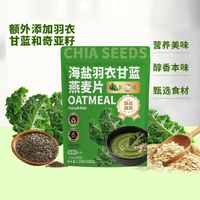
GONGTINGJIUZUNTANG | Seaweed Kale Salted Oatmeal with Chia Seeds
₱1,537.11
Buy on Lazada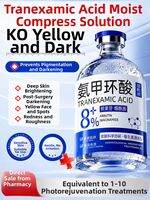
GONGTINGJIUZUNTANG | Tranexamic Acid Brightening Essence for Dark Spots
₱843.74₱2,498.66
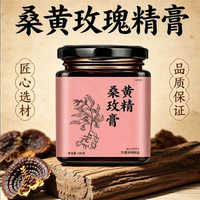
GONGTINGJIUZUNTANG | Herbal Plant Extract Tonic
₱3,007.24
Buy on Lazada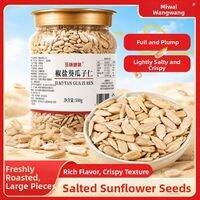
GONGTINGJIUZUNTANG | Roasted Large Grain Pumpkin Seeds Salt & Pepper
₱1,128.56₱1,270.59
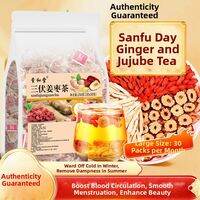
GONGTINGJIUZUNTANG | Ginger Jujube Tea Red Dates Dry Ginger Goji Independent Packaging
₱1,870.40₱3,177.98
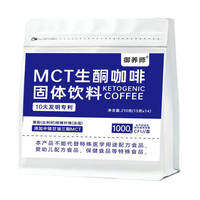
GONGTINGJIUZUNTANG | Keto Low Carb Breakfast Replacement Coffee
₱1,530.29
Buy on Lazada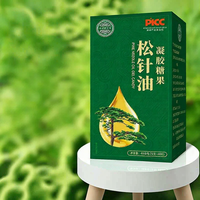
GONGTINGJIUZUNTANG | Pine Needle Oil Gel Candy 5kg
₱1,127.94
Buy on Lazada
GONGTINGJIUZUNTANG | Tomato and Almond Seven Whites Drink
₱1,148.61
Buy on LazadaAbout GONGTINGJIUZUNTANG
Brand overview
GONGTINGJIUZUNTANG (宫庭九尊堂) is a Chinese consumer-health and wellness brand. Its name appears in Chinese e-commerce listings as “宫庭九尊堂”, while its Latin brand rendering is GONGTINGJIUZUNTANG. Based on available public information, the brand is primarily associated with herbal wellness products, dietary and nutritional supplements, functional foods, and personal-care items sold through Chinese online retail and pharmacy-oriented channels.
Unlike brands with extensive corporate histories and official websites, GONGTINGJIUZUNTANG has relatively limited reliable public documentation. Consequently, details such as its founding story, corporate ownership, headquarters location, revenue, and international operations cannot be established with confidence from current sources. The information below distinguishes documented facts from reasonable characterisations based on marketplace data.
| Field | Information |
|---|---|
| Chinese name | 宫庭九尊堂 |
| Romanised/English name | GONGTINGJIUZUNTANG |
| Industry | Wellness, dietary nutrition, herbal products, personal care |
| Primary market | China |
| Distribution | E-commerce, pharmacy-oriented stores, livestream commerce |
| Product positioning | Traditional-herbal / nutritional wellness |
| Known product types | Capsules, tablets, powders, solid beverages, herbal drinks, skincare/personal-care products |
| Publicly documented trademark applicant | 蒋庆海 for at least some “宫庭九尊堂” trademark filings |
| Corporate headquarters | Not reliably established from the sources reviewed |
| Founded | Not reliably established |
| Official website | No clearly verifiable official corporate website located |
The name GONGTINGJIUZUNTANG is used as a brand identifier on JD.com listings, where “宫庭九尊堂(GONGTINGJIUZUNTANG)” appears across numerous product categories.1
Name and identity
The Chinese name is written as 宫庭九尊堂 rather than the more commonly encountered expression 宫廷九尊堂. This distinction is significant for research purposes, as searches using the latter spelling may yield different or unrelated results.
The brand’s Latin spelling, GONGTINGJIUZUNTANG, appears directly alongside the Chinese name in Chinese e-commerce databases, establishing this as the romanised brand identity used commercially.2
The name carries a deliberately traditional Chinese-medical and wellness character:
- 宫庭 (Gōngtíng) — evokes a palace or courtly setting.
- 九尊 (Jiǔzūn) — suggests “nine revered or distinguished things or persons”.
- 堂 (Táng) — traditionally used in the names of Chinese medicine halls, pharmacies, and health-related establishments.
Consequently, the brand name is designed to evoke traditional Chinese medicine, imperial heritage, prestige, and traditional wellness. This is an interpretation of the naming convention rather than evidence that the company itself possesses an actual historical connection to an imperial court.
Brand positioning
GONGTINGJIUZUNTANG operates primarily within the mass-market Chinese wellness and functional-food ecosystem rather than as a conventional pharmaceutical company. Its product listings cover a broad range of consumer needs.
Nutritional and herbal products
Marketplace listings include ginseng products, sea-cucumber capsules, herbal tablets, herbal powders, herbal beverages, dietary-fibre products, vegetable and greens powders, enzyme products, and nutritional drinks.3
Weight management and meal replacement
The brand is associated with products marketed as meal replacements or dietary-fibre drinks, including kale and chia-seed powders, vegetable powders, and various breakfast or meal-replacement formulations.
Men’s wellness
Listings include products such as ginseng and plant-based tablets marketed towards men’s wellness.3
Beauty and personal care
Products under the GONGTINGJIUZUNTANG name also include sulfur-based soaps and skincare items. One marketplace listing identifies Guangzhou Jiamei Cosmetics Co., Ltd. as the manufacturer of a sulfur liquid soap carrying the brand name.
This broad portfolio suggests that GONGTINGJIUZUNTANG functions more like an umbrella consumer-wellness brand than a narrowly specialised pharmaceutical manufacturer.
Product portfolio
A notable characteristic of GONGTINGJIUZUNTANG is the breadth of products appearing under its name.
Nutritional supplements
Products associated with the brand include:
- 贡参宝牌海参胶囊 (sea-cucumber capsules)
- 人参苦瓜地黄葛根片 (a botanical tablet containing ginseng, bitter melon, rehmannia, and kudzu)
- Various ginseng-related products
- N-acetylneuraminic-acid products
- Botanical extracts and nutritional supplements
JD listings explicitly identify GONGTINGJIUZUNTANG alongside these products.4
Functional beverages and powders
A substantial portion of the brand’s online presence consists of powdered beverages and nutritional formulations. Examples include kale and chia-seed powders, vegetable and fruit powders, soybean and soy-milk powders, dietary-fibre drinks, enzyme green-juice products, herbal drinks, breakfast and meal-replacement powders, and collagen-related nutritional products.4
Personal care
The brand has appeared on personal-care products, including sulfur-based cleansing items. A marketplace listing identifies a 宫庭九尊堂 sulfur liquid soap manufactured by Guangzhou Jiamei Cosmetics Co., Ltd.5
This demonstrates that the brand name on a product does not necessarily indicate that GONGTINGJIUZUNTANG itself manufactures the item. Chinese consumer brands frequently utilise different contract manufacturers for various product lines.
Distribution model
GONGTINGJIUZUNTANG relies heavily on online retail and livestream-commerce distribution. Products are repeatedly described in marketplace listings using terms such as:
- “直播同款” (livestream-selling equivalent)
- “药房直售” (pharmacy direct sale)
- “官方旗舰店” (official flagship store)
- “店直售” (direct store sale)
- “中国供销合作社” (China Supply and Marketing Cooperative-associated wording)
- “邮政农品” (postal agricultural-products-associated wording)
JD listings show GONGTINGJIUZUNTANG products marketed through pharmacy-oriented channels and livestream-related stores.7 This suggests the brand’s commercial model is closely connected to China’s social commerce, livestream retail, and online pharmacy marketplace ecosystem.
Relationship with manufacturers
When researching GONGTINGJIUZUNTANG, it is important to note that the brand owner, seller, and manufacturer should not automatically be treated as the same entity. Public listings associate the brand with products manufactured by different companies. For example:
- A historical listing for 宫庭九尊堂硫磺软膏 identified 江西德济堂生物科技有限公司 as the relevant company.
- A listing for sulfur liquid soap identifies 广州伽美化妆品有限公司 as the manufacturer.5
- A 2022–2023 report regarding 全能细胞 C.A.M.P. identified 安徽北辉药业有限公司 as the publishing and manufacturing enterprise, while the registered brand was reported as 宫庭九尊堂.
Therefore, GONGTINGJIUZUNTANG is more accurately described as a brand appearing across products supplied by multiple manufacturers rather than a single manufacturing corporation.
Trademark information
Evidence connects the name to trademark registrations and applications involving 蒋庆海. A Qichacha trademark record identifies “宫庭九尊堂” and lists 蒋庆海 as the applicant, with an address in 岳池县, Sichuan.
An earlier trademark record for “九尊堂” (application/registration number 42479067) was filed in 2019 by 蒋庆海. The listed goods and services included categories such as Chinese medicinal materials, slimming tea, nutritional supplements, disinfectants, and herbal extracts. This provides documentary evidence that the 九尊堂 naming family has been used in the health and wellness sector since at least the late 2010s.
However, trademark ownership, brand licensing, distribution, and manufacturing can be separate relationships. It cannot be concluded from trademark records alone that 蒋庆海 personally owns and operates every commercial entity selling GONGTINGJIUZUNTANG products today.
Historical development
A precise corporate history is difficult to reconstruct from public sources.
Before 2020
The 九尊堂 name was already associated with health-related products and trademark activity. A 2019 trademark filing by 蒋庆海 covered Chinese medicinal materials, nutritional supplements, herbal extracts, and related categories. By 2020, products carrying the 宫庭九尊堂 name were being sold in the personal-care and health-product market, with a 2020 inquiry concerning a sulfur ointment providing evidence of the brand’s existence during that period.5
Around 2022–2023
The brand appears to have expanded into functional foods, solid beverages, and nutritional products. A product called 全能细胞 C.A.M.P. was reported as having GONGTINGJIUZUNTANG as its registered brand, with 安徽北辉药业有限公司 identified as the publishing enterprise. During this period, the brand also became visible in products marketed through livestream channels.
2024–2026 marketplace presence
More recent marketplace data shows a considerably broader catalogue encompassing nutritional supplements, herbal products, meal replacements, greens powders, dietary-fibre products, ginseng products, herbal beverages, beauty products, and personal-care products. JD currently indexes GONGTINGJIUZUNTANG as a recognisable brand across several product categories.8
Brand architecture
GONGTINGJIUZUNTANG operates with a multi-brand and multi-product architecture. GONGTINGJIUZUNTANG often serves as the parent-facing brand name, while individual products carry separate product brands or names. Examples appearing in marketplace data include:
- 贡参宝
- 轻优夕
- 博优迪
- 同韵堂
- 鹊滋堂
- 畅沁堂
- Various unnamed botanical formulations
For instance, JD lists products under the GONGTINGJIUZUNTANG name while identifying specific items such as 贡参宝牌海参胶囊 and 轻优夕牌黄芪低聚木糖颗粒当归酵素粉.8 This structure allows GONGTINGJIUZUNTANG to function as a storefront or brand umbrella while individual formulations maintain their own product branding.
Relationship with Chinese traditional medicine
The brand’s identity draws strongly on the aesthetics and vocabulary of traditional Chinese medicine (TCM) and traditional wellness culture. This is evident in the name “宫庭九尊堂”, references to herbal ingredients such as ginseng, rehmannia, kudzu, and bitter melon, and the use of marketing language like “古方” (traditional formula). Marketplace listings describe products using terms such as “古方舒肝茶” and “真材实料草本植萃”.6
Nevertheless, traditional-looking branding should not automatically be interpreted as proof of a historical TCM institution or an ancient imperial formula. There is no sufficiently authoritative source establishing that GONGTINGJIUZUNTANG is a centuries-old traditional medicine hall.
Regulatory classification
GONGTINGJIUZUNTANG products should not all be assumed to be medicines. Different products fall into varying regulatory categories, including ordinary food, functional or solid beverages, dietary and nutritional supplements, cosmetics and personal-care products, health food, or, where separately approved, medicine.
For example, a report concerning 全能细胞 C.A.M.P. states that the product was a 块状固体饮料 (block-shaped solid beverage) and notes that such a product is not automatically a medicine or health food with authorised therapeutic functions. Similarly, a 2020 inquiry concerning the brand’s sulfur ointment explicitly stated that the product was not a drug and that the cited hygiene-product licence was not a pharmaceutical approval number.5
From a consumer or research perspective, “GONGTINGJIUZUNTANG” is a brand name; the legal and regulatory status must be determined product by product. This distinction is particularly important because online listings sometimes use terms such as “药房直售” or health-oriented language that can make an ordinary food or supplement appear more medicinal than its actual regulatory classification warrants.
Online retail strategy
The brand’s marketplace footprint suggests several commercial strategies.
Livestream commerce
Many listings explicitly refer to 直播同款 (“same product as sold in livestreams”), indicating substantial exposure through livestream selling.7
Bundled purchasing
Products are frequently offered in tiered packages, such as one-box trial packages, two-box basic packages, three-box cycle packages, five-box packages, and eight-box packages. This is a common direct-response e-commerce strategy intended to encourage repeat consumption.
Pharmacy-oriented positioning
Expressions such as 药房直售 (“direct pharmacy sale”) appear repeatedly in listings.5 While this contributes to a health-professional image, a product being sold through a pharmacy does not by itself establish that the product is a pharmaceutical drug.
Brand image
Based on its naming, packaging, product categories, and distribution language, the brand’s image can be summarised as traditional Chinese wellness combined with modern nutritional supplementation and accessible e-commerce. It does not position itself primarily as a luxury cosmetics house, a premium pharmaceutical manufacturer, a mainstream food company, or a high-end international supplement company. Instead, it occupies a space between herbal wellness, nutritional supplementation, functional foods, and lifestyle health products.
Strengths of the brand
From a commercial perspective, several characteristics stand out.
Broad product range
The brand addresses multiple consumer needs, ranging from nutritional drinks and meal replacements to herbal products and personal care.6
Strong traditional-health positioning
The Chinese name and ingredient vocabulary immediately communicate an association with traditional Chinese wellness.
E-commerce adaptability
Its presence across marketplace and livestream-style listings indicates an ability to participate in modern Chinese digital commerce.7
Multiple price and use occasions
The availability of trial packs and larger multi-box packages allows the brand to target both first-time and repeat buyers.
Weaknesses and concerns
The same characteristics that define the brand also create challenges.
Limited transparent corporate information
Compared with major Chinese healthcare companies, there is relatively little easily verifiable public information regarding the corporate group, management, headquarters, manufacturing network, annual revenue, R&D facilities, scientific publications, or international subsidiaries. This makes it difficult to construct a conventional corporate profile.
Highly fragmented product portfolio
The extremely broad range—from sea-cucumber capsules to meal-replacement powders to cosmetics—makes the brand identity less focused.
Manufacturer ambiguity
Different products appear connected to different manufacturers.5 Consumers should therefore examine the specific product’s manufacturer, food, drug, or cosmetic registration, and regulatory category rather than relying solely on the GONGTINGJIUZUNTANG brand name.
Health-claim sensitivity
Some products are marketed using language associated with weight management, men’s wellness, herbal therapy, or other health outcomes. The legal significance of such claims depends on the actual regulatory category of each product.
International presence
There is evidence that GONGTINGJIUZUNTANG products have reached markets outside mainland China; for example, Shopee Taiwan listings sell GONGTINGJIUZUNTANG products.7 However, there is insufficient evidence to characterise the brand as a major international company or to establish a substantial overseas corporate operation. Its international presence appears to be primarily cross-border e-commerce rather than a clearly documented global retail network.
What GONGTINGJIUZUNTANG is and is not
It appears to be
- A Chinese wellness and health-product brand
- Associated with herbal and nutritional products
- Active in online retail
- Strongly represented on Chinese e-commerce marketplaces
- Connected to livestream-commerce distribution
- Associated with multiple manufacturers and product brands
- Influenced heavily by traditional Chinese wellness aesthetics
It should not automatically be described as
- A pharmaceutical company
- A traditional Chinese medicine hospital
- An ancient imperial medical institution
- A single manufacturing corporation
- A government-owned health company
Available evidence does not substantiate these broader claims.
Overall assessment
GONGTINGJIUZUNTANG (宫庭九尊堂) is best understood as a Chinese consumer wellness and nutritional-products brand with a strong traditional-herbal identity and a broad, e-commerce-oriented product portfolio. Its commercial footprint is considerably clearer than its corporate history. Marketplace evidence shows a wide range of products, including nutritional supplements, herbal tablets, powders, functional beverages, meal replacements, and personal-care products.8
The brand appears to have developed from a health and herbal-product naming tradition associated with “九尊堂” into the more specific “宫庭九尊堂” identity, with trademark evidence connecting the name to 蒋庆海. Its most distinctive characteristic today is the combination of traditional Chinese wellness branding and modern social-commerce distribution. Simultaneously, the brand’s broad product range and reliance on multiple manufacturers mean that individual products need to be evaluated separately for their manufacturer, regulatory classification, and permitted health claims.
The strongest publicly accessible evidence consists of JD marketplace brand and product records, trademark databases, and Chinese product-information sources. JD’s records establish the brand’s broad commercial product footprint, while trademark records provide evidence concerning the “宫庭九尊堂” and “九尊堂” names.8 There is insufficient reliable evidence to confirm details such as the exact founding year, headquarters, founder biography, annual sales, employee count, official corporate website, or consolidated corporate ownership.