Shop on Lazada
Thrustmaster products
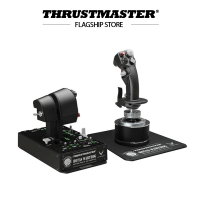
Thrustmaster HOTAS Warthog
₱29,995.00
Buy on Lazada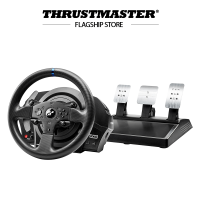
Thrustmaster T300 RSGT
₱23,995.00
Buy on Lazada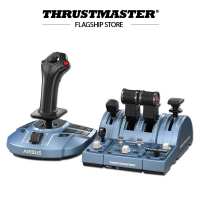
Thrustmaster TCA Captain Pack X Airbus Edition for XBOX
₱18,995.00
Buy on Lazada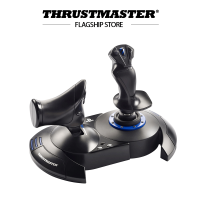
Thrustmaster T Flight Hotas 4
₱5,995.00
Buy on Lazada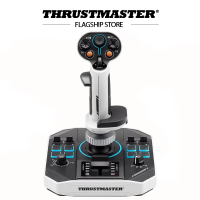
Thrustmaster SOL-R 1 Flightstick
₱11,995.00
Buy on Lazada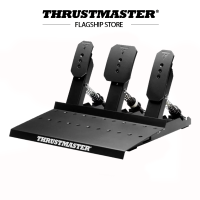
Thrustmaster Raceline Pedals III
₱8,995.00
Buy on Lazada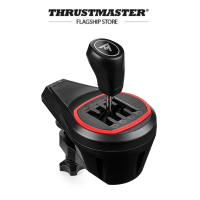
Thrustmaster TH8S Shifter Add-On
₱4,395.00
Buy on Lazada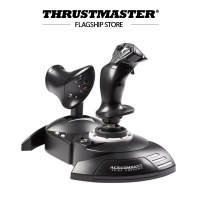
Thrustmaster T.Flight Hotas One for Xbox and PC
₱6,490.00
Buy on LazadaAbout Thrustmaster
Thrustmaster is a gaming peripheral brand best known for sim-racing wheels, flight-simulation controls and high-performance game controllers for PC and consoles. Founded in the United States in 1990, it has been part of Guillemot Corporation since 1999 1. The brand currently positions itself around three core values: Passion, Quality and Innovation.
Quick facts
| Category | Information |
|---|---|
| Brand | Thrustmaster |
| Founded | 1990 |
| Origin | United States |
| Parent company | Guillemot Corporation S.A. |
| Parent ownership since | 1999 |
| Industry | Gaming hardware / interactive entertainment |
| Main products | Racing wheels, pedals, shifters, handbrakes, joysticks, HOTAS systems, gamepads, gaming audio, farming/trucking peripherals |
| Main platforms | PC, PlayStation, Xbox |
| Best known for | Sim racing and flight simulation |
| Brand philosophy | Passion, Quality, Innovation |
| Major partnerships/licensing | Ferrari, Airbus, Boeing, U.S. Air Force, Sony/PlayStation, Microsoft/Xbox, Polyphony Digital, Sparco, Alcantara and others |
| Global distribution | Guillemot says its products are distributed in more than 150 countries |
Guillemot’s 2024 corporate information identifies Thrustmaster as one of its two flagship brands, alongside Hercules, and states that the group distributes its products in more than 150 countries.
Brand definition and purpose
Thrustmaster is not primarily a game developer but a hardware and peripheral brand. Its purpose is to provide physical interfaces between players and games, particularly when standard keyboards, mice or gamepads cannot reproduce an experience with sufficient accuracy.
For example, while a standard controller can steer a virtual car, a Thrustmaster racing wheel combined with pedals and a shifter reproduces the physical controls of a real vehicle. Similarly, a HOTAS system with throttle and rudder pedals approximates an aircraft cockpit far more closely than a conventional gamepad. This emphasis on physical controls underpins the brand’s prominence in simulation gaming. The company describes its current expertise as spanning racing, flying, controllers and gaming audio, with products covering PC, PlayStation and Xbox.
History
1990 — Foundation
Thrustmaster was founded in the United States in 1990, originally specialising in high-end gaming controllers 1. Its early identity was particularly associated with sophisticated joystick and flight-control hardware. Although older Guillemot corporate documents have occasionally cited slightly different founding years, Thrustmaster’s current official timeline and recent corporate documentation confirm 1990 as the brand’s establishment date 1.
1999 — Acquisition by Guillemot
A major turning point occurred in 1999 when French technology company Guillemot Corporation acquired the peripherals and accessories division of the American Thrustmaster group. This acquisition transformed Thrustmaster into one of Guillemot’s principal gaming-hardware brands. Guillemot subsequently developed Thrustmaster as its specialist brand for PC and console gaming accessories, while its other major brand, Hercules, focused primarily on digital music, DJ equipment and related hardware.
2000s — Expansion
During the 2000s, Thrustmaster broadened its product portfolio considerably. It exhibited at E3 in Los Angeles for the first time in 2001 and experimented with motion-oriented gaming peripherals such as the Freestyler Board and Freestyler Bike. It also produced accessories for emerging platforms including Sony’s PSP. However, its long-term strategic identity increasingly centred on racing, flight simulation and specialist gaming controls.
Sim racing
Sim racing is arguably the brand’s most recognisable modern category. Thrustmaster manufactures steering wheels, wheel bases, detachable wheel rims, pedal sets, load-cell pedals, sequential shifters, H-pattern shifters, handbrakes, wheel accessories and racing mounts. Its racing ecosystem covers rally, GT and Formula-style driving, with an emphasis on component compatibility that allows users to start with a basic setup and upgrade over time 1.
Key racing product families
- T300: One of Thrustmaster’s best-known belt-driven force-feedback wheel platforms, particularly associated with PlayStation and PC.
- T-GT / T-GT II: Developed with Polyphony Digital for the Gran Turismo ecosystem. Thrustmaster specifically describes the T300 RS GT and T-GT II as products developed in partnership with Polyphony Digital.
- TS-XW: A higher-end wheel-base ecosystem aimed particularly at Xbox and PC users.
- T818: An entry into Direct Drive sim racing where the steering wheel connects directly to the motor rather than using belt or gear transmission. Thrustmaster currently positions it within its PC racing ecosystem.
- EVO Racing: A newer modular racing ecosystem featuring interchangeable rims and components, including the EVO Racing Hub and various EVO wheel rims.
Significance in sim racing
Thrustmaster occupies a distinct position between entry-level gaming wheels, enthusiast sim racing and high-end simulation equipment. Historically, it has attracted users who wish to build a setup gradually rather than purchasing a complete professional cockpit at once. The brand explicitly promotes this modular ecosystem approach, enabling progression from a wheel base to rims, pedals, shifters, handbrakes and mounting equipment 1.
Flight simulation
Flight simulation reflects Thrustmaster’s original hardware heritage. Current flight products include joysticks, HOTAS systems, throttles, rudder pedals, flight yokes, MFD panels, mounting equipment and aircraft-specific controls. The ecosystem covers civil aviation, military aviation and space simulation 1.
HOTAS systems
HOTAS (Hands On Throttle-And-Stick) provides dedicated joystick and throttle arrangements instead of conventional gamepads. Thrustmaster produces products ranging from entry-level joysticks to sophisticated HOTAS ecosystems, including hardware associated with F-16-style military aviation, Boeing, Airbus, space simulation and general aviation. The company states it maintains partnerships involving Boeing, Airbus and the U.S. Air Force for realistic aircraft-related controls.
Game controllers
Thrustmaster also manufactures conventional and modular gamepads, particularly for PC and Xbox. The most recognisable family is ESWAP, which is based around interchangeable modules. Rather than treating the controller as a fixed object, users can replace or rearrange analog sticks, D-pads, fighting-game modules and custom-coloured components through what Thrustmaster calls its Hot Swap system 1. This modularity makes ESWAP particularly relevant to competitive gaming, as players can customise the physical configuration of the controller to suit specific genres or preferences.
H.E.A.R.T. technology
H.E.A.R.T. stands for HallEffect AccuRate Technology. Based on Hall-effect sensing, it detects movement magnetically rather than relying on conventional physical contact mechanisms. Thrustmaster uses this technology in select controllers and gaming-control products. Current ESWAP and H.E.A.R.T. products emphasise precision and resistance to the mechanical wear traditionally associated with analog-stick potentiometers. This is significant because analog-stick drift has become one of the most widely discussed reliability issues in modern game controllers.
Gaming audio
Although racing and flight simulation receive the most attention, Thrustmaster’s official brand description lists gaming audio among its areas of expertise. Historically, however, audio has been less central to the brand’s public identity than racing, flight simulation and controllers.
Farming and trucking simulation
A more recent expansion involves farming and trucking simulation. Guillemot’s 2024 corporate report notes that Thrustmaster added dedicated farming and trucking accessories beginning in 2023. These games share the same fundamental philosophy as racing and flight simulation: reproducing physical controls accurately increases immersion. Users can create specialised setups for farming, trucking, heavy vehicles and specialised vehicle controls rather than relying on conventional gamepads. This forms part of Thrustmaster’s broader move toward becoming a comprehensive simulation-hardware ecosystem.
Major technology themes
Several technological concepts are strongly associated with Thrustmaster:
- Force feedback: In racing wheels, this communicates road texture, steering resistance, understeer, kerbs, collisions and traction loss, distinguishing serious sim-racing systems from basic USB steering wheels.
- Hall-effect sensing: Used in H.E.A.R.T.-based controllers to provide accurate and durable positional detection.
- Modular hardware: Products are frequently designed as ecosystems allowing individual components to be replaced or upgraded, evident in ESWAP controllers, racing wheel rims and bases, pedals, shifters, handbrakes and flight-control systems.
- Software configuration: Thrustmaster provides software such as Thrustmapper for configuring button assignments, sensitivity, dead zones and vibration settings.
Licensing and partnerships
Extensive official licensing and partnerships represent a key competitive advantage. The official site lists relationships with Airbus, Boeing, Ferrari, Microsoft/Xbox, Sony Interactive Entertainment, Polyphony Digital, Sparco Gaming, Alcantara and the U.S. Air Force. For simulation hardware, licensed products can reproduce the appearance and layout of real aircraft or motorsport equipment rather than offering only generic designs. Ferrari-branded racing products, for example, connect Thrustmaster hardware with real-world motorsport identity.
Platform compatibility
Thrustmaster products cover major gaming platforms:
- PC: Offers the broadest selection, particularly for flight simulation, sim racing and professional/competitive controllers.
- PlayStation: Thrustmaster has a long history of PlayStation-compatible racing products, including equipment developed around the Gran Turismo ecosystem.
- Xbox: Maintains a substantial Xbox ecosystem for racing, gamepads and simulation.
Compatibility is product-specific. A PC-compatible wheel is not necessarily Xbox-compatible, and PlayStation/Xbox compatibility can depend on the exact wheel base and licensed configuration.
Market position
| Segment | Thrustmaster’s role |
|---|---|
| Casual gaming | Secondary |
| Standard controllers | Significant |
| Competitive controllers | Significant |
| Flight simulation | Major |
| Sim racing | Major |
| Professional simulation | Enthusiast-oriented |
| Farming/trucking simulation | Growing |
| Gaming audio | Smaller category |
Thrustmaster is positioned as a specialist simulation and performance-hardware brand rather than a generic gaming accessories company. Its e-commerce presence describes it as a provider of hardware for sim racing, flight simulation and high-performance gaming, targeting everyone from beginners to experienced users 2.
Relationship with Guillemot Corporation
Thrustmaster is a brand of Guillemot Corporation rather than an independent public company. Guillemot Corporation is a French company involved in interactive entertainment hardware with two flagship brands: Thrustmaster for gaming and simulation hardware, and Hercules for digital music and DJ equipment. Guillemot acquired Thrustmaster’s peripherals and accessories division in 1999 1. The corporate structure places Thrustmaster under Guillemot Corporation S.A., encompassing racing, flight, controller, simulation and gaming peripheral categories.
Brand philosophy
Thrustmaster officially summarises its philosophy through three values:
- Passion: Products are presented as being developed by people who are themselves enthusiastic about gaming and simulation.
- Quality: Emphasis is placed on durable, precise and immersive hardware rather than disposable generic peripherals.
- Innovation: The brand invests in technologies such as force feedback, modular controllers, Hall-effect sensing and increasingly sophisticated simulation ecosystems.
These values are explicitly presented by Thrustmaster itself.
Ecosystem approach
The most important characteristic of Thrustmaster is ecosystem thinking. Rather than following a simple buy-and-use model, Thrustmaster encourages gradual expansion: purchasing a base, adding a wheel, upgrading pedals, adding a shifter, handbrake and accessories to build a complete simulation setup. The same principle applies to flight simulation (joystick, throttle, rudder pedals, MFDs, mounting system, cockpit) and controllers (replaceable sticks, D-pads, specialised modules). The company explicitly promotes compatibility and gradual expansion across its racing and flight ecosystems 1.
Position in sim racing
Within sim racing, Thrustmaster is one of the major established brands. Its appeal historically stems from providing an accessible route into dedicated sim racing while offering products that scale to enthusiast-level setups. The typical progression spans basic controllers, entry-level wheels, force-feedback wheels, modular wheel ecosystems, Direct Drive systems, and complete pedal, shifter, handbrake and cockpit setups. Thrustmaster covers much of this spectrum. Newer platforms such as the T818 Direct Drive and EVO ecosystem demonstrate attempts to compete further upmarket while retaining the broader ecosystem philosophy 1.
Comparison with other brands
Sim racing
Common competitors include Logitech, Fanatec, Moza Racing, Logitech G, Hori, Simagic, Asetek and PXN. Thrustmaster is particularly notable for its long history, broad compatibility and mature ecosystem.
Flight simulation
Major competitors include Logitech/Saitek, VKB, Virpil, Winwing and Turtle Beach. Thrustmaster covers a wide spectrum from inexpensive entry-level joysticks to sophisticated HOTAS equipment.
Gamepads
Competition comes from Microsoft Xbox, Sony, 8BitDo, Razer, Scuf, Victrix and Turtle Beach. Thrustmaster differentiates itself through the ESWAP modular philosophy and H.E.A.R.T./Hall-effect technology.
Strengths
- Long history: Developing gaming-control hardware since 1990.
- Strong simulation expertise: Racing and flight simulation have been central to its identity for decades.
- Large ecosystem: Users can combine wheels, pedals, shifters, handbrakes, throttles and other accessories.
- Broad platform support: Products available for PC, PlayStation and Xbox, though compatibility varies by model.
- Strong licensing portfolio: Partnerships with Ferrari, Airbus and Boeing provide considerable authenticity.
- Modular philosophy: Many products can be upgraded rather than completely replaced.
- Wide price range: Portfolio includes both entry-level products and advanced enthusiast equipment.
Limitations and criticisms
- Ecosystem compatibility complexity: Different wheel bases, consoles and accessories do not work together in every combination; buyers must verify compatibility before purchasing.
- Intense high-end competition: Brands such as Fanatec, Moza, Simagic and Asetek have created strong competition at the enthusiast end, particularly around Direct Drive technology.
- Coexisting product generations: Older and newer technologies may exist simultaneously in the catalogue, potentially confusing newcomers.
- Platform-specific products: Xbox, PlayStation and PC compatibility can differ significantly between models.
Notable product families
- Racing: T300, T-GT, TS series, T818, EVO Racing, pedals, shifters, handbrakes
- Flight: T.Flight, T.16000M, HOTAS, TCA Airbus, Boeing controls, F-16/Viper products, rudder pedals
- Controllers: ESWAP, ESWAP X, ESWAP S, H.E.A.R.T. products, accessories/modules
- Farming / Trucking: Specialised simulation controls
- Gaming Audio
This reflects the brand’s current product organisation, although the exact catalogue changes over time 1.
Industry significance
Thrustmaster’s significance extends beyond selling steering wheels and joysticks. Its larger contribution lies in bringing physical simulation controls into mainstream consumer gaming. Before dedicated simulation peripherals became commonplace, many players experienced racing and flight games almost entirely through keyboards and conventional controllers. Companies such as Thrustmaster helped establish the idea that games become substantially more immersive when physical controls resemble the real-world equipment being simulated. That philosophy now extends beyond racing and aviation into trucking, farming and other simulation genres.
Current identity
As of 2026, Thrustmaster is best described as a French-owned, globally distributed gaming-hardware brand with American origins, specialising in simulation and enthusiast control hardware. Its strongest identities remain sim racing, flight simulation and performance/modular controllers, with newer expansion into farming and trucking simulation and a smaller gaming-audio presence. Guillemot’s recent corporate documentation confirms Thrustmaster’s expertise in racing wheels, flight simulators, gamepads and, since 2023, farming and trucking accessories, while continuing to emphasise technological innovation.