Shop on Lazada
TIGER BALM products
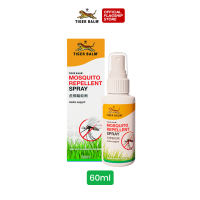
Tiger Balm Mosquito Repellent Patch & Spray
₱259.00
Buy on Lazada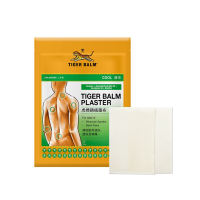
Tiger Balm Cool and Warm Plaster 2s for Pain Relief and Comfort
₱109.00
Buy on Lazada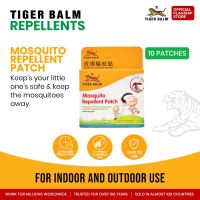
Tiger Balm Mosquito Repellent Patch 10s
₱249.00
Buy on Lazada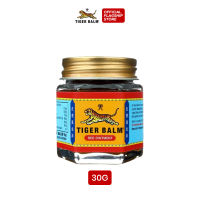
Tiger Balm Red Ointments - Herbal Remedy for Comfort and Warm
₱129.00
Buy on Lazada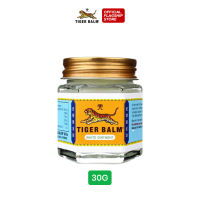
Tiger Balm White Ointment - Herbal Remedy for Comfort and Soothing
₱129.00
Buy on LazadaTiger Balm White Ointment 30g
₱129.00
Buy on Lazada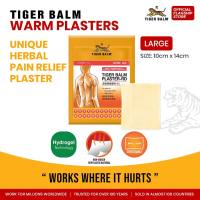
Tiger Balm Warm Plaster Large
₱109.00
Buy on Lazada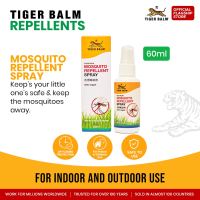
Tiger Balm Mosquito Repellent Spray (LEO) 60ml
₱259.00
Buy on LazadaAbout TIGER BALM
Tiger Balm is a consumer healthcare brand with strong historical ties to Singapore, best known for its topical analgesic ointments, creams, patches, oils, and other products used for the temporary relief of muscle and joint aches, strains, sprains, and tension-related discomforts. With a history spanning more than a century, the brand is owned by Haw Par Corporation Limited, a Singapore-listed company whose heritage is directly linked to the Aw family who created Tiger Balm.1 Its most recognizable products are the red and white Tiger Balm ointments, distinguished by their small hexagonal jars and distinctive herbal aroma. Over the decades, the brand has expanded significantly beyond its original ointment to include patches, creams, gels, sprays, liniments, inhalers, and wellness products.2
Basic information
| Attribute | Information |
|---|---|
| Brand | Tiger Balm |
| Chinese name / heritage | 虎标 / 虎標 (commonly associated with the Tiger Balm brand in Chinese markets) |
| Industry | Consumer healthcare / topical pain relief / wellness |
| Founded | Early 20th century; Tiger Balm brand dates to 1909 according to the company’s official history |
| Origins | Rangoon (present-day Yangon), Burma/Myanmar |
| Founders | Aw Boon Haw and Aw Boon Par |
| Earlier formulation | Developed by their father, Aw Chu Kin |
| Parent company | Haw Par Corporation Limited |
| Corporate base | Singapore |
| Best known for | Tiger Balm Red and Tiger Balm White |
| Core ingredients | Camphor, menthol and various essential oils, depending on product |
| Main category | Topical analgesics |
| Global presence | Sold internationally, with the company describing the brand as available in more than 100 countries |
Haw Par describes Tiger Balm as its flagship consumer-healthcare brand and states that it is trusted by millions of consumers worldwide.3
Origins
The origins of Tiger Balm lie not with a modern pharmaceutical corporation but with a traditional Chinese medicine practitioner. In the 19th century, Aw Chu Kin (胡子钦), a Chinese herbalist originally from Fujian, China, relocated to Rangoon, Burma. There he established a medical practice and apothecary named Eng Aun Tong (永安堂), generally translated as the “Hall of Everlasting Peace,” where he prepared and sold traditional remedies including an ointment for aches and pains.4
Aw Chu Kin’s sons subsequently became central to transforming this family remedy into an international commercial brand:
- Aw Boon Haw (胡文虎) — “Boon Haw” is associated with the meaning “gentle tiger.”
- Aw Boon Par (胡文豹) — “Boon Par” is associated with “gentle leopard.”
Boon Haw was born in 1882 and Boon Par in 1888. Following their father’s death in 1908, the brothers continued and developed the family business.5
The original formula
Before being named Tiger Balm, the product was known as Ban Kim Ewe (万金油), described by the company as “Ten Thousand Golden Oils.” The brothers worked to refine their father’s ointment into a commercially successful product, combining traditional herbal knowledge with ingredients that produced a characteristic cooling and warming sensation.6
Modern descriptions identify camphor and menthol as the principal active ingredients in most Tiger Balm products. Depending on the specific formulation, other ingredients may include:
- Cajuput oil
- Clove oil
- Cassia/cinnamon oil
- Dementholised mint oil
- Eucalyptus oil
- Other essential oils
The exact formulation varies between products and markets.7 Consequently, “Tiger Balm” does not refer to a single chemical formula today; the classic ointment, patch, muscle rub, liniment, and newer wellness products can have substantially different ingredient combinations.
Origin of the name
The brand name is closely associated with Aw Boon Haw. According to Tiger Balm’s official history, Boon Haw registered the name Tiger Balm in 1909, using his “Tiger” nickname as the basis for the brand. This story subsequently became intertwined with the tiger imagery that remains one of the brand’s most recognizable characteristics.8 The tiger is therefore not merely a marketing mascot invented by a modern advertising agency but is embedded in the personal name and identity of the founder.
Expansion into Singapore and Southeast Asia
Aw Boon Haw eventually looked beyond Rangoon and expanded southward into Malaya and Singapore. He moved to Singapore in 1926, where the family established a much larger production operation. According to Haw Par’s historical account, the factory on Neil Road had production capacity many times that of the earlier Rangoon operation.9
Singapore became pivotal to Tiger Balm’s development. From there, the business expanded into markets including Malaya, Singapore, Hong Kong, China, Thailand/Siam, and Batavia/Jakarta. The brand consequently developed an identity that was simultaneously Chinese in its medicinal heritage, Southeast Asian in its commercial history, and increasingly international in its distribution.10
Marketing and early distribution
A significant aspect of Tiger Balm’s history is that its success was not solely the result of its formula. Aw Boon Haw was an exceptionally aggressive marketer. Historical accounts describe him traveling through towns in Malaya in a specially designed automobile featuring a tiger’s head and a roaring horn to attract crowds and distribute samples of Tiger Balm and related products.11
This approach transformed a traditional medicinal ointment into a mass-market consumer brand. Tiger Balm served as an early example of a business strategy combining product, distinctive packaging, a memorable mascot, sampling, aggressive distribution, and storytelling. This combination helped turn a small traditional remedy into a recognizable household brand.
Iconic packaging
The hexagonal jar is arguably as important to Tiger Balm’s identity as the tiger itself. The compact container became an instantly recognizable visual symbol of the product, particularly across Asia. The classic ointments eventually became associated with two principal colors:
Tiger Balm Red
Tiger Balm Red contains the classic ingredients found in the white formulation plus cassia/cinnamon oil, which contributes to its characteristic reddish-yellow color. The company recommends the red formulation particularly for muscular aches and pains in markets where these indications apply.12
Tiger Balm White
Tiger Balm White has a similar basic analgesic formulation but does not contain the cassia oil responsible for the red formulation’s characteristic color. In some markets, it is particularly associated with tension headaches and nasal congestion applications, subject to local labeling.13
The distinction between Red and White has become part of Tiger Balm’s global brand vocabulary.
Mechanism of action
Tiger Balm is primarily a topical product rather than an oral medicine. Its familiar sensation comes largely from ingredients such as menthol and camphor.
Menthol
Menthol produces an initial cooling sensation followed by a sensation of warmth. It is used in topical analgesic formulations to provide temporary relief of minor aches and pains.14
Camphor
Camphor contributes to the characteristic cooling/warming sensation and is another major active ingredient in many Tiger Balm formulations.15
Essential oils
Essential oils such as cajuput, clove, and cassia/cinnamon contribute to the characteristic aroma and formulation of the classic ointments.16
When applied, the familiar sensation is not literally the balm heating the body like a hot pack. Rather, its ingredients interact with sensory receptors in the skin, producing cooling, warming, and soothing sensations associated with topical pain relief.
Product portfolio
Tiger Balm has evolved considerably from its original jar. The modern portfolio includes several categories:
Ointments
Classic products include Tiger Balm Red Ointment, Tiger Balm White Ointment, and Regular/Extra/Ultra Strength variants in some markets. The company describes Ultra Strength Ointment as one of its strongest ointment formulations in the U.S. market, containing 11% camphor and 11% menthol.17
Patches
Tiger Balm produces topical patches and plasters designed to provide targeted relief without requiring the user to rub ointment onto the skin. Some formulations use ingredients such as menthol, camphor, and capsicum extract, depending on the market and product.18
Creams and rubs
Modern products include formulations aimed at muscular aches, neck and shoulder discomfort, back pain, joint pain, and sports-related soreness.19
Oils and liniments
Tiger Balm Liniment extends the original topical concept into a liquid format.
Sports and Active products
The brand has developed an Active line containing products such as muscle rub, gel, and spray, positioned toward physically active consumers and athletes.20
Wellness products
More recently, Tiger Balm has expanded beyond conventional pain relief into Sensorial Therapy, including aromatherapy-oriented products such as peppermint, sandalwood, ginger, and lavender variants. Haw Par describes this as a newer move into aromatherapy and on-the-go wellness.21
From medicine cabinet to lifestyle brand
This expansion is strategically important. Historically, Tiger Balm’s central proposition was essentially “You have an ache → apply Tiger Balm.” Modern Tiger Balm seeks to broaden that proposition toward pain relief, active lifestyle, everyday wellness, and sensory experience. Its current product catalog spans ointments, patches, creams, lotions, gels, sprays, oils, inhalers, and wellness products.22
This allows Tiger Balm to compete not only with traditional analgesic balms but also with sports recovery products, muscle creams, pain patches, massage products, aromatherapy products, and wellness brands.
Haw Par Corporation
The corporate story is inseparable from Tiger Balm. Haw Par Corporation Limited is the company that owns Tiger Balm. The name Haw Par derives from the two brothers: “Haw” refers to tiger and “Par” refers to leopard. Haw Par Brothers International Limited was incorporated in 1969 and listed on the stock exchanges of Singapore and Malaysia. It was subsequently renamed Haw Par Corporation Limited in 1997.23
Today, Haw Par’s principal business interests include consumer healthcare, with Tiger Balm as its leading healthcare brand, alongside other investments.24
Corporate crisis and restructuring
Tiger Balm’s history includes a significant corporate episode. In the early 1970s, Slater Walker, a British investment group, gained control of Haw Par. During this period, the company underwent substantial restructuring and asset sales. Tiger Balm’s Asian markets were temporarily out-licensed to the Jack Chia Group under a long-term arrangement.25
The situation deteriorated, and Haw Par experienced a near-collapse in 1975 following the discovery of accounting irregularities during the Slater Walker period. The company was subsequently reorganized and rebuilt.26 This episode is a critical part of the corporate history because Tiger Balm’s survival as a global brand was not inevitable.
Regaining global control
In 1992, the 20-year licensing agreement with Jack Chia Group expired. Haw Par regained worldwide control of Tiger Balm and began a major effort to rebrand the product for younger consumers and expand the product range.27
This period helped establish the modern Tiger Balm strategy: heritage combined with recognizable identity, new formats, and international distribution. Rather than abandoning its traditional ointment, the company used it as the foundation for a much broader product portfolio.
Connection to Singapore
Tiger Balm has a particularly strong connection with Singapore. The Aw family’s Singapore history eventually produced one of the country’s most unusual landmarks: Haw Par Villa, originally known as Tiger Balm Gardens. The original gardens were created by the Aw family and featured elaborate representations of Chinese mythology, morality, and folklore. The site later became known as Haw Par Villa and is now a cultural attraction in Singapore.28
Consequently, Tiger Balm is more than a consumer product in Singaporean history; it is connected to the development of Singaporean Chinese business culture, early mass advertising, traditional medicine commerce, philanthropy, popular culture, and urban heritage.
Globalization
Tiger Balm gradually transitioned from a Southeast Asian household product to an international consumer-healthcare brand. Haw Par states that Tiger Balm is now distributed globally through a network of partners, while Tiger Balm’s own international materials describe the brand as being sold in over 100 countries.29
This makes Tiger Balm a notable example of an Asian-origin consumer brand achieving global recognition without abandoning its original cultural identity. Unlike many Western pharmaceutical brands, Tiger Balm’s branding continues to emphasize the tiger, Chinese and Southeast Asian heritage, herbal ingredients, the distinctive aroma, the traditional jar, and the story of the Aw brothers.
Manufacturing
Tiger Balm products are manufactured in several locations depending on the market and product. The company’s U.S. FAQ states that Tiger Balm products are made in China, Malaysia, Singapore, Thailand, and Taiwan.30 Haw Par says its Tiger Balm and Kwan Loong products are manufactured in GMP-certified facilities, with quality systems including ISO 9001 and GMP certifications.31
Therefore, “Tiger Balm” should not be considered as necessarily being manufactured in one single factory or country.
Brand identity
Tiger Balm possesses a distinct visual and sensory identity.
The tiger
The tiger represents Aw Boon Haw and gives the brand its name.
Red and gold
The traditional color scheme communicates warmth, energy, traditional Chinese cultural associations, potency, and medicinal heritage.
The hexagonal jar
The jar acts almost like a logo in physical form. Even without seeing the words “Tiger Balm,” many consumers can recognize the product from its shape and color.
The smell
The distinctive medicinal and herbal aroma is integral to the brand. The company attributes it to the combination of ingredients including camphor, menthol, cassia oil, and other essential oils.32 This is unusual in modern consumer branding, as the scent itself has become part of the product’s identity.
Cultural significance
Tiger Balm’s importance extends beyond commercial sales. It represents an early example of Asian entrepreneurship creating a globally recognizable consumer brand. Its story combines several historical trends: traditional Chinese medicine evolving into Southeast Asian Chinese entrepreneurship, early mass production, aggressive sampling and advertising, Singapore-based expansion, international licensing, corporate restructuring, and emergence as a global consumer healthcare brand.
This trajectory makes Tiger Balm particularly relevant from the perspectives of business history, branding, Asian diaspora history, and consumer culture.
Market positioning
Tiger Balm occupies a unique position. It is not simply a traditional Chinese medicine product, nor is it positioned like a conventional prescription pharmaceutical company. Its identity sits between multiple categories:
| Category | Tiger Balm’s relationship |
|---|---|
| Traditional medicine | Strong historical connection |
| Modern OTC medicine | Strong |
| Consumer healthcare | Core business |
| Sports recovery | Growing |
| Wellness | Growing |
| Aromatherapy | Newer category |
| Pharmaceutical prescription medicine | Not its core business |
This hybrid positioning is one of the reasons the brand has survived for more than a century.
Safety and regulatory differences
When discussing Tiger Balm internationally, it is important to note that the product, indications, and regulations differ by country. A Tiger Balm product sold in Singapore, Malaysia, the United States, or the United Kingdom may have different active ingredients, concentrations, permitted claims, directions for use, product classifications, packaging, and regulatory status.
For example, the U.S. product range identifies camphor and menthol as major active ingredients, while other ingredients may be categorized differently under local regulations.33 Claims regarding what Tiger Balm treats should always be interpreted according to the specific product’s local label rather than treating every Tiger Balm product as identical.
Timeline
1870s
Aw Chu Kin establishes a traditional medicine practice and apothecary in Rangoon.
1908
Aw Chu Kin dies; his sons Aw Boon Haw and Aw Boon Par take over the family business.
1909
The Tiger Balm name is introduced according to the company’s official heritage account.34
1920s
Boon Haw expands the business into Malaya and Singapore.
1926
The Aw family establishes a major operation in Singapore.
1937
The Aw family builds the original Tiger Balm Gardens, later known as Haw Par Villa.
1944
Aw Boon Par dies.
1954
Aw Boon Haw dies at age 72.
1969
Haw Par Brothers International Limited is incorporated and listed.
1971–1975
Slater Walker gains control of Haw Par; the company enters a severe corporate crisis.
1975
Haw Par approaches collapse amid the fallout from the Slater Walker period.
1992
Haw Par regains worldwide control of Tiger Balm following the expiration of its long-term licensing agreement.
1997
Haw Par Brothers International is renamed Haw Par Corporation Limited.
2000s–2010s
Tiger Balm expands into additional formulations, markets, and consumer segments.
2020s
The brand continues expanding into patches, sports products, sprays, gels, and wellness/aromatherapy products, including Tiger Balm Sensorial Therapy.
Today
Tiger Balm remains Haw Par’s flagship consumer healthcare brand and is sold internationally.
References
- Heritage – Tiger Balm
- Product Types – Tiger Balm
- Product Types – Tiger Balm
- Wisdom Of Generations | Tiger Balm History
- Heritage – Tiger Balm CA
- FAQ – Tiger Balm
- Products Overview – Tiger Balm
- FAQ – Tiger Balm SG
- Tiger Balm White Ointment – Multi-Symptom Relief
- How Can Tiger Balm Help with Muscle Pain Treatment? – Tiger Balm
- FAQ – Tiger Balm
- Sore Muscle Relief and Remedy Tips – Tiger Balm
- The Complete Guide to Tiger Balm Pain Relief – Patches, Balms, and More – Tiger Balm
- The 100-Year Legacy of Tiger Balm that Continues to Gain International Recognition – Tiger Balm
- Tiger Balm – Wiki.sg
- About Us | Tiger Balm UK
- よくある質問 – Tiger Balm JP
- About Us | Tiger Balm UK
- Het Verhaal van Tijgerbalsem | Oorsprong en Geschiedenis
- 歴史 – Tiger Balm JP
- Home – Tiger Balm US
- Where to buy – Tiger Balm
- Tiger Balm Relief – Fast & Effective
- Tiger Balm Neck and Shoulder Rub | Neck Pain Cream
- Tiger Balm Red Ointment – Warm Pain Relief
- Tiger Balm White Ointment – Multi-Symptom Relief
- FAQ – Tiger Balm SG
- Tiger Balm CA – Effective Body Ache and Pain Relief
- History | Tiger Balm
- Haw Par Corporation Limited – Profile
- Haw Par Corporation Limited – 医药保健
- Homepage | Haw Par Corporation Limited
- Haw Par Corporation Limited – Annual Report 2023 – Page 10
- Tiger Balm