Shop on Lazada
Trek products
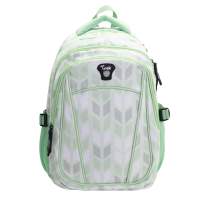
TREK 17″ Classic Backpack Bag for Boys & Girls– Water-Resistant Laptop Compartment Stylish Lightweight Large Capacity High-Quality Durable School Bag for Kids Teens Adults | Elementary University High School Travel
₱1,129.00
Buy on Lazada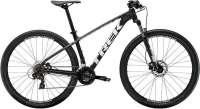
Trek Marlin 5 27.5er Black-Medium
₱22,800.00
Buy on Lazada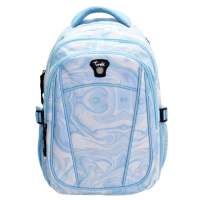
TREK 17″ Backpack School Bag for Boys & Girls - Durable Stylish w/ Laptop Sleeve
₱1,129.00
Buy on Lazada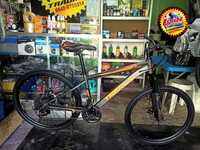
MOUNTAIN BIKE 26er alloy MTB w/free Wolfs chain lube
₱6,300.00
Buy on Lazada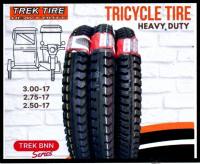
TREK BNN Heavy duty Motorcycle tire 3.00x17 8ply
₱825.00
Buy on Lazada
TREK Sticker Decal for Mountain Bike and Road Bike (Sticker cut out)
₱90.00
Buy on LazadaAbout Trek
Trek Bicycle Corporation, commonly referred to as Trek, is an American manufacturer of bicycles and cycling products headquartered in Waterloo, Wisconsin, United States. Established in 1976 by Richard “Dick” Burke and Bevil Hogg, the company began as a small builder of hand-made steel touring frames and has since developed into one of the world’s leading bicycle brands.1
Trek designs and manufactures bicycles for road cycling, mountain biking, gravel riding, commuting, recreation, touring, racing, and electric mobility. The company operates a global retail and dealer network, maintains a significant presence in professional cycling, and owns associated brands including Bontrager, Electra, and Diamant.2
In 2026, Trek is celebrating its 50th anniversary, marking five decades of bicycle production in Waterloo.3
Overview
| Field | Information |
|---|---|
| Full name | Trek Bicycle Corporation |
| Brand name | Trek |
| Founded | 1976 |
| Founders | Richard “Dick” Burke; Bevil Hogg |
| Headquarters | Waterloo, Wisconsin, U.S. |
| Industry | Bicycle and sporting goods |
| Products | Bicycles, e-bikes, components, cycling equipment, apparel and accessories |
| Major categories | Road, mountain, gravel, hybrid, city, kids’, electric and racing bicycles |
| Known for | Bicycle engineering, carbon-fiber technology, racing, mountain bikes and road bikes |
| Global presence | Offices and operations in more than 20 countries |
| Current era | 50th anniversary in 2026 |
Trek defines itself as a global cycling company with the mission to “change the world by bikes.” Its Waterloo headquarters serves as both the company’s birthplace and its current global base of operations.4
History
Foundation
The origins of Trek date back to 1975, when Dick Burke and Bevil Hogg discussed establishing a new American bicycle manufacturer. Burke was affiliated with the Milwaukee-based Roth Corporation, while Hogg brought experience from the bicycle retail sector.
During this period, the lower end of the American bicycle market was dominated by mass-market manufacturers, while high-end models were primarily imported from Europe or Japan. Burke and Hogg identified an opportunity for a premium American bicycle company, and Roth Corporation provided $100,000 in seed funding for the venture.5
The founders selected the name Trek. According to company history, Burke preferred the name because it evoked concepts of travel, adventure, freedom, and exploration.6
The red barn
Operations commenced in 1976 from a modest 7,000-square-foot red barn in Waterloo, Wisconsin, located between Madison and Milwaukee. The structure had previously served as a carpet warehouse.
The original workforce consisted of only five employees. In its first full year of production, Trek manufactured 904 touring frames, all constructed from steel tubing using traditional lugged, silver-brazed methods.7
The company’s early philosophy centred on demonstrating that high-quality bicycles could be produced in the United States. Consequently, Trek’s initial products were positioned as premium American-made bicycles that emphasised craftsmanship over mass production.8
Expansion during the 1980s
Trek quickly outgrew its original barn facility.
In 1980, the company acquired land adjacent to its original site to develop a larger factory. This expansion allowed Trek to evolve from a small frame-building shop into a comprehensive bicycle manufacturer with larger-scale assembly and painting capabilities.9
The product range also began to diversify during this decade.
Mountain bikes
In 1983, Trek launched the Model 850, its first mountain bike. This introduction coincided with the rapid emergence of mountain biking as a major cycling discipline.10
Aluminum technology
In 1985, Trek released the Model 2000, featuring bonded aluminum tubing. This model marked a significant departure from conventional steel construction and helped establish the technological expertise that would later underpin Trek’s carbon-fiber development.11
International expansion
By the late 1980s, Trek had expanded beyond its domestic market.
In 1989, the company opened its first international office in the United Kingdom, a pivotal step in its global development.12
Today, Trek maintains offices in more than 20 countries, with a substantial portion of its workforce based outside North America. The global headquarters remains in Waterloo.13
Manufacturing and production operations have also been established outside the United States. European operations include the Hartmannsdorf facility in Germany, where Trek states that more than half of the Trek and Diamant products sold in Europe are assembled.14
Carbon-fiber development
A defining chapter in Trek’s technological history was its entry into carbon-fiber bicycles.
In 1990, Trek introduced the 5000, its first full-carbon bicycle. Developed with external assistance and kept strictly confidential, the project demonstrated the immense potential of carbon fiber despite the limitations of the first-generation model.15
Trek subsequently cultivated in-house expertise in carbon construction.
This effort culminated in OCLV Carbon, Trek’s proprietary carbon-fiber manufacturing technology. OCLV has become one of the company’s most recognisable technological trademarks and is widely used in its high-performance road and mountain bikes.
Trek and professional cycling
Professional racing has long been integral to Trek’s corporate identity.
The company utilises professional cycling to test technologies under extreme conditions and to promote its products. Trek’s racing involvement spans road cycling, mountain biking, cyclocross, and triathlon.
Lance Armstrong era
One of the most prominent periods in Trek’s history occurred during the late 1990s and early 2000s through its association with Lance Armstrong and the U.S. Postal Service professional cycling team.
The Trek 5500 gained significant fame during this era. Company records note that a production Trek 5500 won the 1999 Tour de France, helping to establish Trek as a globally recognised manufacturer of high-performance road bikes.16
In 1998, Trek also established its Advanced Concepts Group (ACG), a dedicated team of engineers, designers, and technicians focused on developing advanced bicycle technologies.
This work contributed to the creation of performance models such as the Madone and TTX.
Important historical note: Armstrong’s Tour de France victories and associated achievements were later stripped of official recognition following doping investigations and his lifetime ban in 2012. While Trek’s association with the Armstrong era remains a significant part of company history, his results are no longer considered officially recognised Tour de France victories.
Major brands and acquisitions
Trek has expanded its portfolio well beyond the core Trek brand.
Bontrager
Trek integrated Bontrager into its family during the 1990s. Bontrager is closely associated with bicycle components, wheels, saddles, helmets, clothing, and other cycling equipment.
Gary Fisher
Gary Fisher was also added to the Trek portfolio. As one of the pioneers of mountain biking, Fisher’s association helped strengthen Trek’s mountain bike technology and reputation.
Klein
Klein was another notable bicycle brand incorporated into the Trek family during the 1990s, known particularly for sophisticated aluminum-frame construction and distinctive design.
Trek’s 50th-anniversary timeline identifies Bontrager, Klein, LeMond, and Fisher as brands added to its lineup around 1994–95.17
Diamant
In 2002, Trek acquired Diamant, one of Germany’s oldest bicycle brands. This acquisition provided Trek with a significant foothold in the European market and access to the Hartmannsdorf manufacturing facility.18
Electra
Electra Bicycle Company is another member of the Trek family. Electra focuses on lifestyle, comfort, and recreational bicycles, complementing Trek’s performance-oriented identity.19
Product categories
Trek currently produces bicycles across virtually every major cycling discipline.
Road bikes
Trek’s road range encompasses high-performance racing bicycles as well as endurance and recreational models.
Major Trek road families include:
- Madone — aerodynamic race bike
- Émonda — lightweight performance road bike
- Domane — endurance-oriented road bike
- Checkpoint — gravel-focused platform
- Speed Concept — triathlon/time-trial bicycle
The Madone has established itself as one of Trek’s flagship racing products.
Mountain bikes
Trek is also a leading manufacturer of mountain bikes.
Its mountain bike portfolio includes:
- Marlin — entry-level/cross-country oriented MTB
- X-Caliber — cross-country hardtail
- Procaliber — performance XC
- Roscoe — trail hardtail
- Fuel EX — trail/all-mountain
- Slash — enduro
- Supercaliber — high-performance cross-country
- Session — downhill racing
Mountain biking has been central to Trek’s identity since the introduction of the Model 850 in 1983.20
Gravel and adventure cycling
Reflecting the growth of mixed-surface riding, Trek has increasingly emphasised gravel cycling.
The Checkpoint is its best-known gravel platform, designed for pavement, gravel roads, and dirt tracks.
This segment bridges traditional road cycling and mountain biking and has become a vital category in the modern bicycle industry.
Hybrid, city and recreational bikes
Trek also manufactures bicycles for everyday transportation and recreational use.
These include:
- Hybrid bicycles
- Fitness bikes
- Commuter bikes
- City bicycles
- Touring bikes
- Kids’ bicycles
The FX family is among Trek’s most recognised hybrid and fitness platforms.
Electric bicycles
Trek entered the electric bike market relatively early.
The company produced its first electric bicycle, the ElecTrek, in 1999. Equipped with a Yamaha PAS motor system and a range of approximately 20 miles, it was an early experiment in a category that would later become a major market segment.21
Modern Trek e-bikes now span road, mountain, hybrid, city, and cargo applications.
Innovation
Technology has always been central to Trek’s brand identity.
Notable technological developments include:
OCLV Carbon
OCLV stands for Optimum Compaction, Low Void. It is Trek’s proprietary carbon-fiber manufacturing technology, developed to produce lightweight, strong, and precisely constructed frames.
Y-frame
Trek’s Y-bike/Y-frame designs were influential in the development of full-suspension mountain bikes during the 1990s.
29er mountain bikes
Trek and Gary Fisher played a key role in popularising large-wheel mountain bikes. In 2001, Trek engineers and Gary Fisher introduced some of the first mass-produced 29er mountain bikes, helping transform the format from a niche experiment into a major MTB category.22
Project One
Launched in 2001, Project One allows customers to configure highly customised Trek bicycles, including bespoke paint schemes and component selections.23
Trek’s racing organization
Trek operates its own racing organisation through Trek Factory Racing.
As of 2026, the racing structure includes programmes covering:
- Road
- Cross-country mountain biking
- Downhill mountain biking
- Cyclocross
- Triathlon
- Development racing
- Junior racing
The company’s road WorldTour organisation is Lidl-Trek, while its MTB programmes include Trek-Unbroken XC and Trek-Unbroken DH.24
Lidl-Trek
Lidl-Trek is Trek’s top-level professional road cycling team, competing in both men’s and women’s categories.
In October 2025, Lidl acquired a majority stake in the team while Trek Bicycle retained a significant share. The team represents a partnership between the Lidl organisation and Trek Bicycle.25
The team currently fields men’s, women’s, and development squads and competes throughout the international road-racing calendar.26
In 2026, Trek also introduced Lidl-Trek Junior Racing, creating a pathway intended to guide promising riders from junior competition through U23 development and ultimately toward the WorldTour.27
Trek and bicycle shops
Trek has historically operated through an extensive network of independent bicycle dealers.
The company also began opening its own retail stores in 1991. According to Trek, the purpose was not merely direct-to-consumer sales but to gain insights into the retail experience and use those lessons to better support independent dealers.28
This approach has enabled Trek to develop a combined model of:
manufacturer → dealer → bicycle shop → rider
rather than functioning solely as a conventional direct-to-consumer bicycle company.
Trek Travel
In 2002, Trek established Trek Travel, a bicycle-tourism company offering guided cycling vacations.
The concept combined cycling with higher-end travel and hospitality, allowing customers to experience destinations by bicycle.29
Trek Travel later became a separate entity, although it retains a close relationship with Trek Bicycle.
Sustainability
Environmental sustainability has become an increasingly important component of Trek’s corporate strategy.
A primary initiative involves low-emission aluminum.
Emissions research identified aluminum as the largest source of greenhouse gas emissions among Trek’s major materials. The company subsequently developed a sustainable aluminum sourcing policy and shifted production toward aluminum made using lower-emission energy sources.30
According to Trek, by October 2025, nearly every Trek aluminum frame had transitioned to this new standard, with some frames achieving reductions of up to 70% in their production footprint.31
This shift marks a notable evolution from Trek’s original identity as a craft-focused frame builder to a modern manufacturer increasingly concerned with supply chain environmental impact.
Manufacturing
A distinctive aspect of Trek’s history is the contrast between its American origins and its modern global manufacturing network.
Trek began manufacturing bicycles in Waterloo, Wisconsin, with early products explicitly marketed around American craftsmanship.
Today, bicycle manufacturing is globally distributed. Trek maintains engineering, development, manufacturing, and assembly operations in various locations worldwide, including North America, Europe, and Asia.32
The Waterloo headquarters remains critical for engineering, corporate operations, and heritage.
Trek describes Waterloo as the place “where every Trek bike calls home”, despite the international nature of current production.33
Brand identity
Trek’s brand identity encompasses several core themes:
Performance
Trek maintains a strong connection to competitive cycling and high-performance engineering.
Innovation
The company has consistently adopted emerging technologies, transitioning from steel to aluminum, carbon fiber, suspension systems, electronic components, and electric-assist bicycles.
Accessibility
Despite producing elite racing machines, Trek also manufactures bicycles for beginners, commuters, families, and recreational riders.
Adventure
The name “Trek” was chosen partly for its association with travel and exploration.34
Cycling as transportation
Trek increasingly positions bicycles as tools for transportation, recreation, health, community building, and environmental improvement.
Notable Trek bicycles
Historically significant Trek models include:
| Model | Significance |
|---|---|
| Trek 500 | Early touring/road platform |
| Model 850 | Trek’s first mountain bike |
| Model 2000 | Early bonded-aluminum bicycle |
| 5000 | Early full-carbon Trek |
| 5500 | Iconic high-performance road bike |
| Y-bike | Influential early full-suspension MTB |
| Madone | Flagship aerodynamic/performance road platform |
| Émonda | Lightweight performance road platform |
| Domane | Endurance road platform |
| Fuel EX | Major trail MTB platform |
| Session | Downhill racing platform |
| Marlin | Popular entry-level MTB |
| Checkpoint | Gravel/adventure platform |
Trek’s 50th anniversary
2026 marks 50 years of Trek.
The anniversary campaign reflects on five decades of bicycle development, highlighting 50 significant Trek bicycles, technological breakthroughs, racing achievements, and key moments in company history.35
The company’s evolution can be summarised as follows:
1976:
Five employees → hand-built steel touring frames → one Wisconsin barn
1980s:
Mountain bikes → aluminum → larger-scale manufacturing
1990s:
Carbon fiber → international expansion → professional racing
2000s:
29ers → Project One → European expansion → e-bikes
2010s:
Advanced road and MTB technology → greater global retail presence
2020s:
Gravel → sophisticated e-bikes → sustainability → global professional racing
2026:
50th anniversary → global cycling company
Corporate and cultural significance
Trek holds significance within the bicycle industry as its history parallels the development of modern cycling.
Founded when American bicycle manufacturing faced intense competition from European and Japanese products, Trek’s founders sought to create a premium American alternative. Over subsequent decades, the company participated in—and often accelerated—the development of:
- Modern mountain biking
- Carbon-fiber bicycle frames
- 29-inch mountain bikes
- High-performance road racing
- Custom bicycle configuration
- Electric bicycles
- Gravel cycling
- Global bicycle retail
- Sustainable bicycle manufacturing
Consequently, the company has evolved from a small American frame builder into a multinational cycling organisation.
What makes Trek different?
Trek’s primary distinguishing characteristic is arguably the combination of mass-market scale and high-performance engineering.
While many companies specialise in either inexpensive recreational bicycles or elite racing machines, Trek attempts to serve both markets.
The range extends from accessible models like the Marlin and FX to sophisticated carbon racing machines used by professional athletes.
This broad product ecosystem is a key factor in Trek becoming one of the most recognisable names in cycling.
Legacy
The most significant aspect of Trek’s legacy is its transformation from a five-person company in a Wisconsin barn into a global bicycle brand without severing its connection to Waterloo.
Trek describes its journey as moving from “silver-brazed to molded carbon”, illustrating the profound technological change that occurred during its first half-century.36
The original red barn represents the central idea behind Trek: that a small group can use engineering, craftsmanship, and cycling culture to challenge an established industry.
Today, Trek remains headquartered in Waterloo, where it began in 1976, while its products, employees, dealers, athletes, and customers extend around the world.37
References
- Inside Trek – Heritage
- Explore Trek HQ | Take a Virtual or In-person Tour – Trek Bikes (SG)
- 50 years of Trek | A timeline of innovation and impact
- Electra and Trek
- 50 years of Trek | A timeline of innovation and impact – Trek Bikes (CA)
- The world of Trek – Trek Bicycle’s global offices
- How Trek Bicycle began in 1976 in Waterloo, WI
- Trek – Bicycle Wiki
- 50 years of Trek | A timeline of innovation and impact – Trek Bikes (IE)
- Trek Bicycle Corporation
- About us | Trek Race Shop
- Successful conclusion of contract: Lidl acquires majority stake in Lidl-Trek with the aim of becoming the number one road cycling team | Trek Race Shop
- Lidl-Trek | Trek Race Shop
- Introducing: Lidl-Trek Junior Racing | Trek Race Shop
- A Sustainable Shift : Trek’s low impact aluminum bikes
- Low-emission aluminum: inside Trek’s biggest sustainability challenge – Trek Bikes (INE)
- Six National Titles and 14 Medals: Successful Championship Week for Lidl-Trek | Trek Race Shop
- A new chapter begins: Lidl-Trek announces leadership transition following the 2026 Tour de France | Trek Race Shop
- Declarations of Conformity – Trek Bicycle
- Lidl-Trek strengthens organisation with four senior appointments | Trek Race Shop
- Trek’s factory MTB teams are now Trek-Unbroken! | Trek Race Shop
- Lidl-Trek’s new Project One colorway and kit combo is *mwah* | Trek Race Shop
- Lidl-Trek Future Racing’s 2026 Roster is Here! | Trek Race Shop
- On the Move | Watch The Look Back on PBS Wisconsin
- Inside Trek – Heritage – Trek Bikes (AU)
- Trek 介绍 — 传承 – Trek Bikes (CN)
- How Trek Bicycle began in 1976 in Waterloo, WI
- How Trek Bicycle began in 1976 in Waterloo, WI – Trek Bikes (BE)
- Company
- The 50 bikes that built Trek | Celebrating five decades of innovation
- Team | Lidl-Trek
- Home | Trek Race Shop
- The First 50 – Trek 50th anniversary paint scheme – Trek Bikes (AU)
- A Sustainable Shift: Trek’s low-impact aluminium bikes – Trek Bikes (AU)
- A Sustainable Shift : Trek’s low impact aluminum bikes
- Sustainability – Trek Bikes (IE)
- Our planet is everyone’s business – Trek Bicycle – Trek Bikes (INE)