Shop on Lazada
UHA products
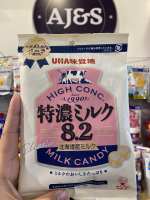
UHA HOKKAIDO MILK CANDY
₱155.00
Buy on Lazada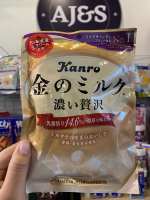
JAPAN KANRO GOLD - PREMIUM MILK CANDY
₱155.00
Buy on Lazada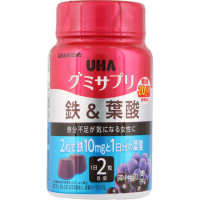
UHA Gummy Supplement Iron & Folic Acid Bottle 60 Tablets/40Tablets Ship directly from Japan
₱698.10₱873.00
UHA | Juice Filled Gummy Candies 312g
₱523.00₱581.00
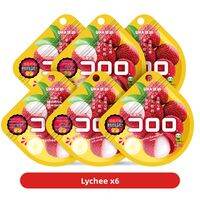
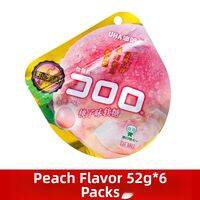
UHA | Fruit Flavored Gummies 6 Packs
₱489.00₱747.00
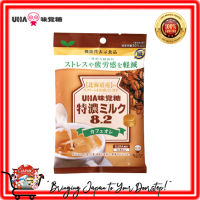
UHA Mikakuto Milk Candy Matcha Chocolate Strawberry Brown Sugar Coffee Japanese Candy
₱243.00₱558.00
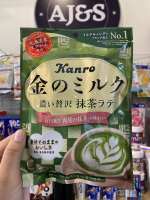
JAPAN KANRO GOLD - PREMIUM MATCHA MILK CANDY
₱155.00
Buy on Lazada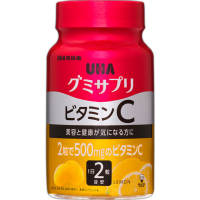
UHA Gummy Supplement Vitamin C SP 60 Tablets/40Tablets Ship directly from Japan
₱839.00₱1,049.00
About UHA
Overview
UHA Mikakuto, commonly referred to as UHA, is a Japanese confectionery and food manufacturer headquartered in Osaka, Japan. The company is recognised internationally for its distinctive gummies, candies, throat lozenges, snacks, and functional food products 1. UHA has built a reputation for combining traditional Japanese confectionery techniques with unconventional flavours, textures, ingredients, and product concepts.
| Category | Information |
|---|---|
| Company / Group | UHA Mikakuto (UHA味覚糖) |
| Founded | October 18, 1949 |
| Headquarters | Osaka, Japan |
| Industry | Confectionery, food, functional foods |
| President & CEO | Yasumasa Yamada |
| Employees | 408 (company profile figure) |
| Capital | ¥10 billion |
| Consolidated sales | ¥33 billion |
| Main markets | Japan and international markets |
| Known for | Gummies, candy, soft candy, throat candy, snacks and supplements |
| Corporate concept | “Deliciousness is Gentleness” |
| UHA meaning | “Unique Human Adventure” / historically also explained as “YUU–HA” |
The figures above are derived from UHA Mikakuto’s English corporate profile and are subject to change over time 1.
Name and meaning
The name UHA carries specific significance within the company’s identity. Internationally, UHA uses the phrase “Unique Human Adventure” to express its philosophy of pursuing originality, individuality, and new challenges 1. Domestically, the company also explains UHA as a coined Japanese expression derived from “YUU” (pleasure) and “HA” (waves), conveying the idea that its confectionery should bring pleasure gently, like calm waves 1.
The Japanese name Mikakuto (味覚糖) relates broadly to taste, flavour, and confectionery. Consequently, the full corporate name UHA Mikakuto combines this modern international identity with the company’s traditional Japanese designation.
History
UHA Mikakuto traces its corporate history to 1949. During its early decades, the company expanded its manufacturing and sales network throughout Japan before diversifying into the experimental products for which it is now known 1.
1949–1960s: Foundation and expansion
- 1949: Company established.
- 1956: Tokyo branch opened.
- 1959: Osaka factory completed; Nagoya branch opened.
- 1960: Fukuoka branch opened.
- 1964: Hiroshima branch opened.
- 1965: Sendai and Sapporo branches opened.
- 1967: Sales offices established in major Japanese cities 1.
During this foundational period, UHA developed a broad range of traditional confectionery products, establishing the manufacturing base that would later support its more innovative lines.
1970s–1980s: Product diversification
UHA expanded its manufacturing infrastructure and introduced increasingly diverse products during this era:
- 1972: First Nara factory completed.
- 1976: Launch of the Otoboke Lion campaign.
- 1978: Expansion of Tokyo-area operations.
- 1982: Establishment of Mikakuto Shoji as a sales company.
- 1984: Second Nara factory completed.
- 1985: Nara distribution centre opened.
- 1987: Entry into the gummy candy category.
- 1989: Introduction of SHIGEKIX 1.
The development of gummy products during this period became central to UHA’s subsequent brand identity.
1990s: The UHA identity
A significant corporate shift occurred in 1990 when the company adopted the Mikakuto Group name and updated its corporate emblem 1. Other key developments included:
- 1992: Completion of UHA Hall at headquarters.
- 1995: Establishment of UHA Pipin Co., Ltd.
- 1997: Completion of the third Nara factory.
- 1998: Commencement of Shanghai operations 1.
This decade solidified UHA’s association with unconventional and highly recognisable Japanese sweets.
2000s–present
UHA continued its international expansion and investment in manufacturing capabilities:
- 2001: Establishment of UHA Mikakuto’s Shanghai company.
- 2002: Completion of Shanghai factory.
- 2007: Completion of Tokyo headquarters building.
- 2008: Completion of Fukushima factory.
- 2011: Completion of second Shanghai factory.
- 2012: Obtained FSSC 22000 food-safety certification.
- 2013: Establishment of Indonesia operation.
- 2019: Completion of Kobe factory 1.
In 2026, the company announced new products involving its Ninja Meshi and Puccho lines, alongside plans for a new factory in Kanoya, Kagoshima, to strengthen production of its long-running Osatsu Doki sweet-potato snack 1.
Corporate philosophy
UHA’s central corporate philosophy is “Deliciousness is Gentleness.” This concept extends beyond taste, aiming to combine deliciousness with kindness while contributing to health and beauty 1.
Complementing this is the concept of “Unique Human Adventure,” which reflects UHA’s emphasis on:
- Originality and experimentation
- Individuality and new product concepts
- Unusual sensory experiences
- Challenging established confectionery norms 1
This philosophical framework explains why UHA products often differ significantly from conventional Western confectionery in both appearance and sensory experience.
Major product categories
UHA’s portfolio extends well beyond standard hard candy. Its official catalogue categorises products into hard candy, soft candy, throat candy, gummies, ramune/tablets, snacks, nutritional foods, supplements, and health & beauty products 1.
Gummies
Gummies represent one of UHA’s most recognisable categories. Major brands include:
- Kororo
- Ninja Meshi
- SHIGEKIX
- Kogumi
- Sakeru Gummy
- Puccho Gummy
UHA is noted for experimenting with texture and mouthfeel rather than treating gummies merely as flavoured gelatin 1. Notably, the company developed technology intended to reproduce a fresh-grape-like texture in confectionery, an invention that was granted a patent in the Philippines 2.
Puccho
Puccho is a flagship soft-candy brand distinguished by a chewy structure combined with additional textural elements. Current varieties include soda, cola, and fruit flavours 1. Puccho also serves as a frequent platform for character and entertainment collaborations in Japan.
SHIGEKIX
Introduced in 1989, SHIGEKIX is an iconic UHA product associated with intense sour flavours and a distinctive chewy texture, making it one of the company’s longest-running modern brands 1.
Ninja Meshi
Ninja Meshi is a recent gummy and snack phenomenon utilising a ninja-inspired identity centred on portable, chewy confectionery. The brand has achieved sufficient prominence in Japan to warrant dedicated advertising campaigns and celebrity collaborations, with new releases continuing into 2026 1.
Osatsu Doki
Osatsu Doki is a long-running sweet-potato-based snack representing UHA’s engagement with familiar Japanese ingredients beyond candy. In July 2026, UHA announced the establishment of a new factory in Kanoya, Kagoshima, a region associated with sweet-potato production, to bolster manufacturing capacity for this line 1.
Tokuno Milk
Tokuno Milk 8.2 is an established milk-candy line sold alongside variations such as Salt Milk, Peach, Azuki Milk, and café au lait 1.
Supplements and functional foods
UHA has expanded into functional and nutritional products, including:
- UHA Gummy Supplements
- UHA Gummy Supplements KIDS
- Plant-based gummy supplements
- Instant supplements
- Nutritional bars
- Protein products
- Health & beauty products 1
This diversification aligns with the company’s philosophy that enjoyable food and health need not be mutually exclusive.
Product philosophy and innovation
UHA distinguishes itself through an emphasis on sensory innovation. Rather than focusing solely on flavour, the company explores questions regarding bite texture, fruit replication, multi-textural combinations, and the integration of functional ingredients into enjoyable formats 1.
The company maintains a strong focus on food science, biotechnology, and product development, supported by dedicated engineering and research organisations within the UHA group 1. Its work on reproducing natural fruit characteristics, such as grape-like mouthfeel, exemplifies this technical approach and differentiates its products from conventional gummies 2.
International business
While fundamentally a Japanese company, UHA has expanded significantly into international markets. Operations were established in Shanghai in the late 1990s and early 2000s, followed by an Indonesia operation in 2013 1.
UHA’s Indonesian entity describes its mission as bringing the philosophy of “Deliciousness is Gentleness” to local consumers while adapting confectionery expertise to regional preferences 3. The company’s international presence is particularly visible across Asian markets, where Japanese confectionery is valued for distinctive flavours, packaging, and product innovation.
Brand architecture
UHA Mikakuto serves as the parent corporate identity encompassing numerous individual product brands, including:
- Puccho
- SHIGEKIX
- Kororo
- Ninja Meshi
- Kogumi
- Sakeru Gummy
- Tokuno Milk
- Osatsu Doki
- UHA Gummy Supplements
The portfolio changes frequently due to limited editions, seasonal products, and collaborations. The official catalogue currently lists more than 100 items across various categories 1.
Market positioning and cultural relevance
From a branding perspective, UHA differentiates itself through novelty, texture, and Japanese cultural creativity. While many confectionery companies compete primarily on taste or price, UHA adds the dimension of the eating experience itself, featuring unusual textures, unexpected flavours, playful packaging, and functional-food positioning 1.
In simple terms, UHA positions itself as a Japanese confectionery innovator that transforms familiar ingredients into unusual sensory experiences. Its identity bridges traditional Japanese confectionery, modern snack culture, and food innovation, embracing fun and mass-market accessibility over premium exclusivity. This is reinforced by the corporate philosophy of providing “Better Products at Better Prices” 1.
Within Japan, UHA products are deeply integrated into convenience store and supermarket culture. Brands like Puccho, SHIGEKIX, Kororo, and Ninja Meshi are designed for high recognisability and ease of consumption. The company actively leverages contemporary pop culture; for example, 2026 announcements included collaborations with Matsuda Genta and Licca-chan, illustrating the use of entertainment partnerships to maintain cultural relevance 1.
Corporate structure
The UHA Mikakuto group comprises several entities, including:
- Mikakuto Co., Ltd.
- UHA Mikakuto Co., Ltd.
- UHA Co., Ltd.
- UHA Pipin Co., Ltd.
- UHA Mikakuto Precision Engineering Laboratories Co., Ltd.
- UHA Mikakuto Confectionery and Food (SHA) Co., Ltd.
The group operates primarily in the manufacture and sale of confectionery and food products 1.
Headquarters and manufacturing
UHA is headquartered in Osaka, with significant manufacturing and distribution facilities in Japan, notably in Nara. Manufacturing operations have also been established outside Japan, including in Shanghai 1. The Nara infrastructure remains vital to domestic production, while subsequent factories and overseas facilities have enabled expanded capacity and geographic reach.