Shop on Lazada
House Foods products
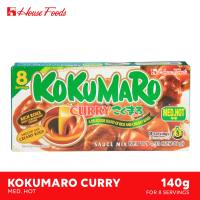
House Foods Kokumaro Japanese Curry Medium Hot 140g
₱196.00
Buy on Lazada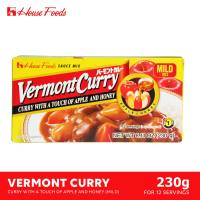
House Foods Vermont Japanese Curry Mild 230g
₱287.00
Buy on Lazada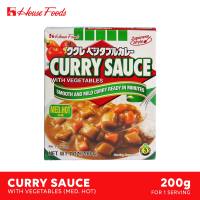
House Foods Kukure Japanese Curry Sauce Medium Hot 200g
₱165.00
Buy on Lazada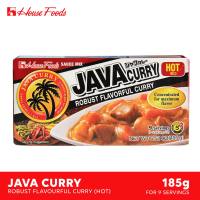
House Foods Java Japanese Curry Hot 185g
₱286.00
Buy on Lazada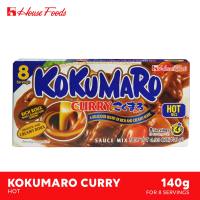
House Foods Kokumaro Japanese Curry Hot 140g
₱196.00
Buy on Lazada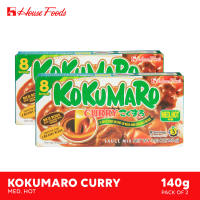
House Foods Kokumaro Japanese Curry Medium Hot 140g (Bundle of 2)
₱570.00
Buy on Lazada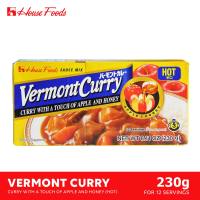
House Foods Vermont Japanese Curry Hot 230g
₱287.00
Buy on Lazada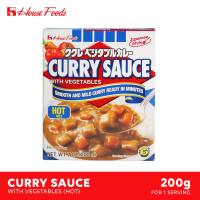
House Foods Kukure Japanese Curry Sauce Hot 200g
₱165.00
Buy on LazadaAbout House Foods
Overview
House Foods Group Inc. (ハウス食品グループ本社株式会社, House Shokuhin Gurūpu Honsha Kabushiki-gaisha) is a major Japanese food company best known internationally for Japanese curry products, particularly Vermont Curry. Its business today extends well beyond curry into tofu and plant-based foods, functional and health foods, restaurants, spices, prepared foods, and other food-related sectors. The company’s corporate roots date to 1913 in Osaka, Japan.1
House Foods holds particular significance in the history of Japanese cuisine for helping transform curry from a Western-influenced dish into an everyday home-cooked staple in Japan.2
| Item | Details |
|---|---|
| Japanese name | ハウス食品グループ本社株式会社 |
| English name | House Foods Group Inc. |
| Founded | November 11, 1913 |
| Established/incorporated | June 7, 1947 |
| Origin | Osaka, Japan |
| Industry | Food manufacturing and food services |
| Best known for | Japanese curry, curry roux, spices, tofu and plant-based foods |
| Famous brand | Vermont Curry |
| Major restaurant business | Curry House CoCo Ichibanya |
| Major overseas markets | United States, China, Southeast Asia and other international markets |
| Current corporate structure | Holding-company group |
The company maintains its current corporate headquarters in Tokyo, with another major headquarters located in Higashi-Osaka, Osaka.
History
1913–1925: Origins as a pharmaceutical and herbal business
House Foods did not originally begin as a food company. In 1913, Seisuke Urakami founded Urakami Shoten in Osaka, a business dealing in herbal medicines and related materials. The company subsequently developed expertise in ingredients and eventually transitioned toward food products, particularly spices.1
This origin is integral to the House Foods story; its modern food business grew partly from specialized knowledge of ingredients and spices rather than beginning as a conventional restaurant or packaged-food manufacturer.
1926–1928: Entry into curry
House Foods began manufacturing and selling its own curry powder in 1926, followed by the launch of its House Curry product in 1928.1
This period coincided with the rising popularity of curry in Japan. Originally introduced during the country’s modernization as a Western-style dish, Japanese curry had evolved into a distinct local cuisine. House Foods became one of the key companies that helped commercialize this emerging culinary culture.
1947: Re-establishment after World War II
Following World War II, the company restarted operations and was incorporated in 1947 as Urakami Ryoshoku Kogyosho. It was later renamed House Foods Industrial Co., Ltd. in 1960.1
1960: Solid curry roux
A significant milestone occurred in 1960 with the launch of Indian Curry, the company’s first solid curry roux. This product simplified preparation significantly, allowing consumers to cook meat and vegetables and create a curry sauce by simply adding the roux, eliminating the need to prepare spice mixtures from scratch.
1963: Vermont Curry
The company’s most famous product, Vermont Curry, was introduced in 1963. House Foods deliberately created a milder curry that children could enjoy alongside adults, using apples and honey to achieve a mellow flavor profile.1 This concept challenged the prevailing assumption that curry should be relatively spicy.
The product became a massive success and remains one of the defining brands in Japanese curry. According to market-sales data cited by the company, Vermont Curry became the number-one-selling Japanese curry roux brand.1
1960s–1970s: Expansion beyond curry
During this era, House Foods expanded its portfolio considerably beyond curry. Key developments included:
- Stew mixes
- Packaged noodles
- Ready-to-eat/retort curry
- Snacks
- Desserts
- Other cooking products
Through these additions, the company evolved from being primarily associated with curry into a broader packaged-food manufacturer.1
1981–1983: Entry into the United States
House Foods established a Los Angeles representative office in 1981. In 1983, it entered the U.S. tofu business through House Foods & Yamauchi, which eventually became House Foods America Corporation.1
This move was strategically significant as the company’s international growth was not based solely on exporting Japanese curry but also involved developing soybean and tofu businesses tailored to overseas markets.
1990s: China and health foods
In 1997, House Foods entered China by opening a Shanghai Curry House restaurant. The company also expanded into health foods during this period,1 marking the beginning of a broader international strategy encompassing both packaged foods and foodservice.
2013: Holding-company structure
In 2013, House Foods shifted to a holding-company structure, establishing the framework for the current House Foods Group. The group has since expanded through investments and acquisitions in areas including restaurants, spices, health foods, procurement, and other food businesses.1
Major brands and products
Vermont Curry
Vermont Curry is widely considered the signature product of House Foods. Introduced in 1963, it was designed to be suitable for both adults and children, featuring apple and honey for a characteristically mellow flavor.1 The name “Vermont” was inspired by an American health-food trend involving apple cider vinegar and honey, which influenced the product’s concept.1
Vermont Curry is sold internationally, including in Japan, the United States, China, Taiwan, and South Korea.1
Java Curry
Java Curry represents the opposite end of the spectrum from the mild positioning of Vermont Curry. Designed as a spicier, more adult-oriented curry, it emphasizes aromatic spices and rich onion flavor. Current export versions are available in medium-hot and hot varieties, providing an option for consumers who prefer a stronger curry flavor.
Kokumaro Curry
Kokumaro Curry occupies a middle position in the company’s curry portfolio, emphasizing richness and depth of flavor. Current export listings include medium-hot and hot varieties.1
Together, Vermont, Java, and Kokumaro provide House Foods with a recognizable range:
- Vermont Curry → mellow/family-oriented
- Kokumaro Curry → rich and balanced
- Java Curry → spicy/adult-oriented
Kukure Curry
Kukure Curry is part of the House Foods ready-to-eat curry range. Unlike curry roux, which requires cooking ingredients and preparing sauce, retort curry is packaged as a prepared meal that can simply be heated. The product lineup includes both curry roux and ready-made retort sauces.
House Foods in the United States
The American operations of House Foods feature a product strategy that differs from its traditional Japanese identity. House Foods America Corporation has been producing tofu in the United States since 1983.2
Its U.S. portfolio includes:
- Tofu
- Organic tofu
- Shirataki
- Plant-based foods
- Specialty products
- Value-added products3
In January 2025, House Foods Holding USA became the headquarters for the group’s U.S. soybean value-chain business, with a stated long-term ambition to develop into a global plant-based food company.4 The U.S. business now combines House Foods America’s tofu expertise with entities such as Keystone Natural Holdings, which develops tofu, meat alternatives, and other plant-based foods.1
House Foods and CoCo Ichibanya
A pivotal development in the modern history of House Foods was its expansion into the restaurant sector. The group owns a major stake in Ichibanya Co., Ltd., the operator of Curry House CoCo Ichibanya (CoCo ICHIBAN), a Japanese curry restaurant chain with an international presence. House Foods Group classifies restaurant operations as one of its major business segments.1
This gives the group a distinctive position in the industry:
House Foods → manufactures packaged curry → CoCo ICHIBAN → serves Japanese curry in restaurants
Consequently, the group participates in both home consumption and restaurant consumption of Japanese curry.
Business structure
Today, House Foods Group operates well beyond curry manufacturing. Its major businesses are broadly divided into four areas. For FY2025, the company reported the following segment figures:1
| Business | FY2025 net sales | FY2025 operating profit |
|---|---|---|
| Domestic Food Business | — | — |
| International Food Business | ¥63.4 billion | ¥3.4 billion |
| Restaurant Business | ¥65.5 billion | ¥3.4 billion |
| Other Food-Related Business | ¥50.1 billion | ¥0.9 billion |
The international business covers soybean-related products, curry, and functional foods, particularly in the United States, China, and Southeast Asia.1 The restaurant business includes CoCo ICHIBAN and other dining operations, while the other food-related business encompasses prepared foods, food-ingredient trading, and food analysis.1
International expansion
The international strategy of House Foods has developed around several major regions.
United States
Beginning in 1983, the U.S. became an important market for tofu and plant-based foods.1
China
House Foods began its Chinese curry business in the 1990s, pursuing the goal of making curry and rice more familiar to Chinese consumers.1
Southeast Asia
The group has expanded into countries including Thailand, Indonesia, and Vietnam, with businesses covering functional beverages, curry, and other foods.1
CoCo ICHIBAN international expansion
The group’s restaurant business has also grown internationally, with CoCo ICHIBAN operations in markets including the United States, China, Taiwan, South Korea, Thailand, the United Kingdom, and India.1
Corporate philosophy
The philosophy of House Foods is closely connected to the concepts of home cooking and happiness. Its current corporate philosophy describes the company as aiming to be a “good partner” that connects people through food and creates a happy everyday life.
Historically, the founding philosophy emphasized that the warm taste of home cooking should be present in happy Japanese households.1 This explains why the company has traditionally positioned its products as convenient ways to create family meals rather than merely selling ingredients.
Significance to Japanese curry culture
House Foods is significant not simply because it sells curry, but because it participated in the industrialization and popularization of Japanese curry. Its influence can be viewed in several stages:
- Curry powder: House Foods entered the curry market during the early development of Japan’s modern curry culture.
- Curry roux: Solid roux made Japanese curry easier for ordinary households to prepare.
- Vermont Curry: A deliberately mild, family-friendly curry broadened the consumer base.
- Ready-to-eat curry: Retort products increased convenience further.
- Restaurants: Through CoCo ICHIBAN, the broader group operates in the restaurant curry market.
- Globalization: House Foods exports Japanese curry products and operates curry businesses overseas.
This combination makes House Foods one of the companies most closely associated with modern Japanese curry culture.1
Distinction between House Foods Group and House Foods America
It is important to distinguish between the corporate entities:
- House Foods Group Inc. is the Japanese parent and group organization.
- House Foods America Corporation is a U.S. group company primarily associated with tofu and plant-based foods.
When House Foods tofu appears in an American supermarket, it represents the U.S. side of the same broader corporate group whose Japanese business is famous for Vermont Curry and other Japanese foods.1 In its U.S. business, the company describes House Foods as a brand under House Foods Holding USA Inc.4
House Foods today
As of 2026, House Foods is best understood not merely as a “Japanese curry brand,” but as a diversified Japanese food group with three particularly recognizable pillars:
- 🍛 Japanese curry and packaged foods — Vermont, Java, Kokumaro, Kukure, and related products
- 🌱 Soybean/tofu and plant-based foods — particularly important in North America
- 🍽️ Restaurant operations — especially CoCo ICHIBAN
Its strategy has increasingly focused on developing international businesses and value chains around spices, functional ingredients, soybeans, and value-added vegetables, rather than relying exclusively on the mature Japanese packaged-food market.1
The group’s latest publicly listed integrated report is the 2025 Integrated Report, which covers its strategy, business structure, overseas expansion, governance, and financial and non-financial data.1