Shop on Lazada
Umbro products
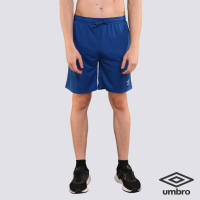
Umbro Training Shorts Activewear For Men
₱899.00
Buy on Lazada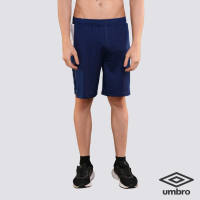
Umbro Navy Blue Training Short Activewear For Men
₱650.00₱899.00
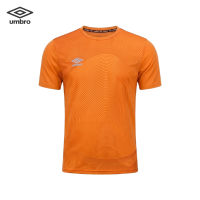
Umbro Sweat-Wicking Workout Training Shirt for Gym Exercise Activewear for Men
₱734.00₱1,049.00
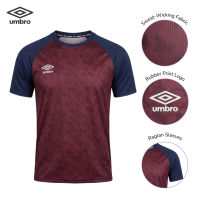
Umbro Sweat-Wicking Workout Training Shirt Raglan Sleeve for Gym Exercise Activewear for Men
₱1,049.00
Buy on Lazada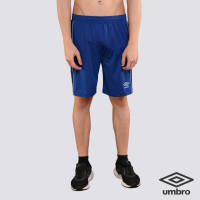
Umbro Dark Blue Training Shorts With Drawstring Activewear For Men
₱650.00₱899.00
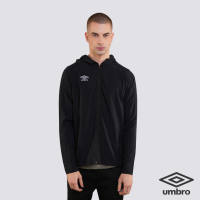
Umbro Hooded Light Weight Jacket Activewear For Men
₱2,309.00
Buy on Lazada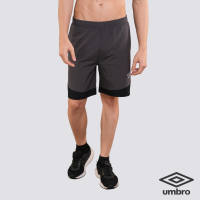
Umbro Training Shorts with Flat Inner Drawstring Activewear for Men
₱629.00₱899.00
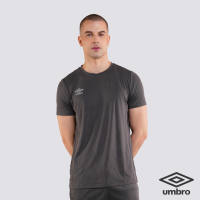
Umbro Essentials Shirt Activewear For Men
₱944.00
Buy on LazadaAbout Umbro
Umbro is a British sportswear and sporting-goods brand best known for its deep association with football (soccer) and, to a lesser extent, rugby. Founded in 1924 by brothers Harold and Wallace Humphreys in Cheshire, England, the company evolved from a small family clothing business into one of the most recognizable names in football apparel, famous for its distinctive Double Diamond logo.1
Today, Umbro’s identity combines its British sporting heritage with football-focused performance wear, footwear, equipment, fan apparel, and lifestyle products. The brand operates internationally through licensing and commercial partnerships.1
Quick facts
| Field | Information |
|---|---|
| Brand | Umbro |
| Industry | Sportswear and sporting goods |
| Founded | 1924 |
| Founders | Harold Humphreys and Wallace Humphreys |
| Origin | Cheshire, England |
| Current headquarters/base | Manchester, England |
| Original name | Humphreys Brothers |
| Name origin | “UM” from Humphreys + “BRO” from Brothers |
| Best known for | Football kits, football boots, sportswear and equipment |
| Other major sport | Rugby |
| Iconic symbol | Double Diamond |
| Current brand owner | Authentic Brands Group |
| Major former owner | Nike (2008–2012) |
| Previous owner | Iconix Brand Group (2012 onward, before ABG) |
| Official website | umbro.com |
Origins
Umbro’s story began in the early 1920s in Mobberley, Cheshire, near Manchester. Harold Humphreys and his brother Wallace established a small clothing business originally known as Humphreys Brothers. According to Umbro’s own history, the brothers initially operated from a cupboard in the back of their family’s pub before the business expanded.1
In 1924, the Humphreys Brothers name was shortened to Umbro. The name was constructed from “UM”, taken from Humphreys, and “BRO”, representing brothers.1
Harold Humphreys had previously worked in the fashion industry and developed an appreciation for tailoring, quality, and craftsmanship. This background influenced Umbro’s early philosophy: sports clothing should not merely be functional but should also look smart and fit well.1
That philosophy eventually became central to Umbro’s identity as a kind of “sports tailor”, particularly in football.
Early development
During its first years, Umbro was essentially a clothing and sportswear manufacturer rather than the huge international football brand it would eventually become.
By 1930, demand had grown enough for the company to establish its first factory. This allowed Umbro to increase production while maintaining the quality associated with the Humphreys family’s tailoring background.1
Umbro expanded beyond football as well. In 1933, the company entered the rugby market, producing jerseys, shorts, and socks. Rugby therefore became an important part of Umbro’s sporting heritage alongside football.1
The company also began developing relationships with professional football clubs.
A particularly important moment came in 1934, when both Manchester City and Portsmouth wore Umbro kits in the FA Cup final at Wembley. Manchester City won the match. Umbro regarded the event as an early demonstration that its products could perform at the highest levels of English football.1
Rise as a football brand
Football gradually became the central focus of Umbro’s identity.
During the twentieth century, the company became closely associated with British football, supplying kits for clubs and national teams. Its reputation was based not only on manufacturing but also on design and tailoring.
This differentiated Umbro from companies that approached sportswear primarily as mass-produced athletic equipment.
Umbro’s philosophy was essentially:
If you look smart, you play smart.
The company’s founder believed that appearance, confidence, and performance were connected. Umbro still describes this philosophy as part of its brand heritage today.1
This combination of performance + tailoring + football culture became one of Umbro’s defining characteristics.
The Double Diamond
One of the most recognizable elements of Umbro is its Double Diamond logo.
The symbol became strongly associated with football during the twentieth century and eventually became almost synonymous with the brand itself. Umbro describes the Double Diamond as a symbol worn by players and supporters around the world.1
Unlike a simple corporate logo, the Double Diamond became part of football culture. It appeared on:
- Football shirts
- Training kits
- Football boots
- Shorts
- Goalkeeper equipment
- Rugby shirts
- Casual clothing
- Retro football apparel
- Fan merchandise
The logo’s simplicity also made it particularly effective in football fashion, where historic kits and logos frequently return as retro products.
Umbro and England
Perhaps the most important relationship in Umbro’s history was its association with the England national football team.
Umbro became deeply connected with English football and supplied England kits during some of the most famous periods in the national team’s history.
Most famously, England wore Umbro when it won the 1966 FIFA World Cup on home soil. England defeated West Germany 4–2 in the final at Wembley, winning its only men’s World Cup title.
The association between Umbro and England consequently became an important part of the company’s historical identity.
For football fans, Umbro therefore became associated not just with sportswear but with a particularly British vision of football: traditional shirts, tailored silhouettes, bold designs, and national-team football.
Umbro and international football
Umbro’s influence was never limited to England.
Over the decades, the brand supplied numerous national teams and professional clubs around the world. Its products appeared in major football competitions and at some of the sport’s most famous stadiums.
Umbro itself summarizes its history through references ranging from Wembley and Manchester to the Maracanã, Ellis Park, and Estadio Azteca.1
This international expansion helped transform Umbro from an English sports manufacturer into a global football brand.
Umbro’s product range
Although football is the heart of Umbro, its product range is broader.
Football
Umbro produces or has produced:
- Football shirts
- Shorts
- Training wear
- Football boots
- Goalkeeper gloves
- Shin guards
- Footballs
- Jackets
- Tracksuits
- Base layers
- Fan apparel
The company describes its football offering as covering everything from professional players to grassroots football and fans.1
Rugby
Rugby has been part of Umbro’s business since 1933. The brand has supplied rugby jerseys and other equipment and apparel for professional and national teams.1
Lifestyle
Umbro has also moved beyond pure performance sportswear into football-inspired lifestyle fashion.
This includes:
- Casual shirts
- Track jackets
- Sweatshirts
- T-shirts
- Retro football clothing
- Sneakers and casual footwear
- Streetwear collaborations
This has allowed Umbro’s historical football identity to remain relevant even among consumers who do not necessarily play football.
Umbro’s famous football boots
Umbro has also produced several influential football boot lines.
One of the most recognizable is the Speciali, which became closely associated with traditional leather football boots and players who valued touch and control.
Umbro’s boot history is important because the brand historically positioned itself differently from purely performance-driven competitors. Its products frequently attempted to combine technical football requirements with classic British styling.
The Speciali became particularly significant to Umbro’s identity and remains part of the brand’s heritage storytelling.1
The Nike era
A major turning point occurred in 2007, when Nike agreed to acquire Umbro.
The acquisition was completed in 2008, with Nike seeking to strengthen its position in football. Umbro subsequently operated as part of Nike’s broader portfolio.
The relationship gave Umbro access to Nike’s global resources while allowing Nike to own a brand with a long-standing football heritage.
However, Nike eventually decided to divest the company.
In October 2012, Nike announced that it had agreed to sell Umbro to Iconix Brand Group for approximately $225 million. The transaction was completed later that year.21
Nike explained that the sale was part of a strategy to focus on its highest-potential brands and on its own football business.2
The Iconix era
Under Iconix, Umbro returned to operating primarily as an independent football brand rather than as part of Nike.
The strategy emphasized Umbro’s heritage and its position as an authentic football brand.
The company subsequently rebuilt relationships with professional clubs and national teams.
During the 2010s, Umbro signed or renewed deals with teams including:
- Everton
- Hull City
- Derby County
- West Ham United
- Blackburn Rovers
- Schalke 04
- PSV Eindhoven
- Serbia
- Jamaica
- Malawi
- Vasco da Gama
- Grêmio
These partnerships helped re-establish Umbro’s presence in international football following its separation from Nike.3
Umbro and football culture
One of Umbro’s most interesting characteristics is that its cultural importance extends beyond professional football.
The brand became associated with the broader football terrace and streetwear culture.
Its older kits, track jackets, and training pieces became popular as retro fashion. This helped Umbro occupy a space somewhere between:
sports performance → football heritage → streetwear → fashion.
This is especially important because football apparel has increasingly become part of everyday fashion.
Umbro has therefore been able to market its heritage not only to professional athletes but also to football supporters and fashion consumers.
Designer collaborations
Umbro has also worked with designers and fashion labels to reinterpret its football heritage.
Its collaboration history has included names such as Off-White c/o Virgil Abloh, Palace, Supreme, Patta, Aries, Nigel Cabourn, Rowing Blazers, Christopher Raeburn, Henry Holland and Vetements, among others.4
These collaborations helped introduce Umbro to audiences outside traditional sportswear.
The strategy essentially turns Umbro’s historical football products into fashion objects while retaining the Double Diamond and football heritage.
Ownership today
Umbro’s corporate ownership has changed several times.
The major sequence is:
Humphreys Brothers → Umbro → Nike → Iconix Brand Group → Authentic Brands Group
Nike sold Umbro to Iconix in 2012 for $225 million.21
Authentic Brands Group subsequently became the owner of the Iconix portfolio. Authentic operates a large brand-licensing model in which brands are developed through networks of specialized operating and licensing partners rather than necessarily manufacturing every product themselves. Authentic describes its business as owning and investing in intellectual property and working with more than 1,700 partners globally.1
This is important when discussing modern Umbro: “Umbro” is a global brand whose products can be manufactured, distributed, and marketed through different regional partners and licensees.
Umbro’s brand identity
Umbro’s identity can be summarized around several concepts:
Football heritage
Football is unquestionably the center of Umbro’s brand. The company has been involved with the sport since the 1920s and presents itself as a brand for professional, grassroots, and fan communities.1
British heritage
Umbro’s origins in Cheshire and Manchester give it a strong British identity. Tailoring, industrial craftsmanship, and traditional football culture are repeatedly emphasized in its brand history.1
Performance
Despite its fashion and retro appeal, Umbro remains a technical sportswear company producing football and rugby equipment and apparel.
Style
The brand’s founder came from a tailoring background, so style has historically been treated as an important part of performance rather than something separate from it.
Community
Modern Umbro messaging emphasizes football as a shared culture rather than merely an elite professional sport. Its current brand storytelling uses the phrase “This is Our Game” and stresses players, fans, and grassroots football.1
Competitors
Umbro has historically competed with some of the world’s largest sportswear companies, including:
- Adidas
- Nike
- Puma
- Reebok
- Joma
- Kappa
- Macron
- New Balance
However, Umbro occupies a somewhat different position from the largest global sportswear giants.
Nike and Adidas, for example, operate across numerous sports and enormous lifestyle categories. Umbro’s identity is much more tightly connected to football and rugby, which gives it a distinctive specialist heritage.
Why Umbro remains important
Umbro’s significance comes less from its current size than from its historical influence on football culture.
The brand has existed for more than a century and has been involved with:
- Major international football
- World Cup history
- English football
- Professional clubs
- Rugby
- Football footwear
- Football kit design
- Retro sportswear
- Streetwear
- Designer collaborations
Its unusual longevity is one of its biggest assets.
A modern consumer can encounter Umbro in several completely different contexts: a professional football kit, a vintage England shirt, a football boot, a rugby jersey, a terrace-inspired track jacket, or a high-fashion collaboration.
That ability to move between sport, heritage, and fashion is one of Umbro’s defining characteristics.
Timeline
| Year | Event |
|---|---|
| 1924 | Harold and Wallace Humphreys establish Umbro from the Humphreys Brothers business. |
| 1930 | Umbro opens its first factory as demand increases. |
| 1933 | Umbro enters rugby. |
| 1934 | Manchester City and Portsmouth wear Umbro in the FA Cup final. |
| 1966 | England wins the World Cup wearing Umbro. |
| 20th century | Umbro becomes one of Britain’s major football kit manufacturers. |
| 2007 | Nike announces its agreement to acquire Umbro. |
| 2008 | Nike completes the acquisition. |
| 2012 | Nike announces the sale of Umbro to Iconix Brand Group for $225 million. |
| 2012 | Iconix completes the acquisition. |
| 2014–17 | Umbro rebuilds a major portfolio of club and national-team partnerships. |
| 2024 | Umbro celebrates its 100th anniversary. |
| 2020s | Umbro continues developing football, rugby, lifestyle and collaboration products through a global licensing/partner model. |
The early timeline is documented by Umbro itself, while the Nike-to-Iconix transaction is documented by Nike and Iconix.12
Umbro at 100 years
In 2024, Umbro celebrated its 100th anniversary.
The centenary campaign emphasized the continuity of the brand from its beginnings in a small family business to its global presence in football and rugby. Umbro’s own historical material describes the journey from the family’s pub in Mobberley to football stadiums around the world.1
The centenary is particularly significant because relatively few sportswear brands can claim a continuous history reaching back to the early development of modern football sportswear.
In popular culture
Umbro has become particularly recognizable through football shirts.
Classic Umbro designs are frequently remembered for:
- Bold geometric patterns
- Diamond motifs
- Oversized or traditional collars
- Detailed fabric patterns
- Distinctive 1990s styling
- Strong national colors
- The Double Diamond logo
This has made vintage Umbro clothing highly recognizable even to people who are not familiar with the company’s corporate history.
The 1990s and early 2000s are especially important to Umbro’s contemporary cultural image because football fashion from that era has experienced a major revival.
Umbro’s place in sportswear history
Umbro is best understood as one of the foundational football-specialist sportswear brands.
Its history is different from that of Nike or Adidas. Rather than beginning as a giant multinational athletic corporation, Umbro started as a small British family clothing business and gradually specialized in sports.
Its evolution can therefore be described in four broad stages:
1. Family tailoring business
Humphreys Brothers develops clothing and sportswear in Cheshire.
2. British sports manufacturer
Umbro establishes itself in football and rugby.
3. Global football brand
The Double Diamond becomes internationally recognized through clubs and national teams.
4. Heritage + lifestyle brand
Umbro combines professional sportswear with retro football culture, streetwear, and fashion collaborations.
Overall
Umbro is much more than a football-kit manufacturer. It is a century-old British sportswear brand whose identity was built around the relationship between football, tailoring, performance, and style.
Founded by Harold and Wallace Humphreys in 1924, Umbro grew from a small Cheshire clothing business into an international football institution. Its Double Diamond became one of the sport’s most recognizable symbols, while its involvement with England, professional clubs, rugby, and football footwear established a substantial sporting legacy.1
Its ownership changed dramatically in the modern era—most notably through Nike’s 2008 acquisition and 2012 sale to Iconix—but the fundamental identity of the brand has remained remarkably consistent: British football heritage combined with technical sportswear and distinctive design.21
Today, Umbro continues to position itself around football and rugby while using its heritage in lifestyle fashion and collaborations. In that sense, the Double Diamond has evolved from a sportswear logo into a symbol of football culture itself.1