Shop on Lazada
USANA products
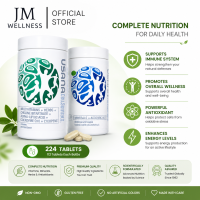
Cellsentials 224 tablets 100% original multivitamins for immunity and overall health
₱3,899.00₱4,800.00
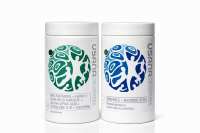
CELLSENTIALS core minerals + mega anti oxidants
₱3,898.00
Buy on Lazada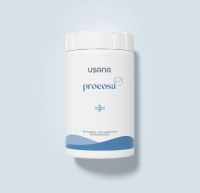
PROCOSA glucosamine hydrochloride plus complex food supplement
₱2,678.00₱3,578.00

Cellsentials 100% Genuine 2 bottles of 112 tablets = 224 tablet
₱4,990.00
Buy on Lazada
PURE REST melatonin food supplement
₱1,398.00₱1,998.00

HEPASIL herbal dietary supplement
₱3,198.00
Buy on Lazada
USANA Cellcentials
₱3,690.00
Buy on Lazada
USANIMALS MULTIVITAMINS + MINERAL + INOSITOL + LECITHIN + HYDROLYSED RICE PROTEIN 56 TABLETS
₱1,598.00
Buy on LazadaAbout USANA
Company overview
USANA Health Sciences (NYSE: USNA) is an American health and wellness company best known for its nutritional supplements, functional foods, skincare, and personal-care products. Founded in 1992 by Dr. Myron W. Wentz, USANA is headquartered in Salt Lake City, Utah, and has historically operated primarily through a direct-selling or network-marketing model rather than conventional retail distribution.1
For the fiscal year ended January 3, 2026, USANA reported approximately US$925 million in annual net sales, about 387,000 active customers in its core nutritional business, and operations in 25 markets.2 The company describes itself as a global nutrition, personal health, and wellness enterprise that develops and manufactures science-based nutritional supplements, functional foods, and personal-care products.3
| Item | Information |
|---|---|
| Full name | USANA Health Sciences, Inc. |
| Brand | USANA |
| Founded | 1992 |
| Founder | Myron W. Wentz, Ph.D. |
| Headquarters | Salt Lake City, Utah, United States |
| Industry | Nutrition, health & wellness, personal care |
| Business model | Primarily direct selling / network marketing |
| Stock exchange | New York Stock Exchange |
| Ticker | USNA |
| Current CEO | Kevin G. Guest |
| Chairman | Kevin G. Guest |
| Markets | 25 |
| FY2025 net sales | Approximately US$925 million |
| FY2025 core active customers | Approximately 387,000 |
| Major geographic presence | Asia-Pacific, Americas and Europe |
| Major subsidiary/business investment | BabyCare; Hiya |
Corporate identity and mission
USANA serves as both the company’s brand name and corporate identity, with branding centred on health, nutrition, science, and long-term wellness. The corporate mission focuses on improving health and wellness worldwide by providing science-backed health products. In its 2024 annual report, the company described this mission as delivering high-quality, science-backed health products alongside a direct-sales opportunity.4
History
Foundation
USANA was founded in 1992 by Myron W. Wentz, Ph.D., a microbiologist and immunologist with a background in human cell culture technology and infectious-disease diagnostics. The company was established to develop nutritional and personal-care products using scientific research as part of their formulation and development.5 It subsequently adopted a business model based heavily on direct selling, wherein independent distributors purchase and recommend USANA products while building their own sales organisations.
International expansion
During the 1990s and 2000s, USANA expanded beyond the United States into international markets, increasingly focusing on the Asia-Pacific region. The company grew substantially during this period, becoming one of the better-known publicly traded companies in the direct-selling nutrition sector. It eventually became particularly significant in Greater China, which includes mainland China, Hong Kong, and Taiwan.
2007–2008 controversy and SEC inquiry
In 2007, short seller Barry Minkow, through the Fraud Discovery Institute, publicly accused USANA of operating a pyramid scheme and criticised aspects of its products and business model. USANA denied the allegations and pursued legal action against Minkow.6 The controversy prompted an informal inquiry by the U.S. Securities and Exchange Commission (SEC).
The SEC inquiry was subsequently closed. In January 2008, USANA reported that the SEC had informed the company it would not recommend enforcement action.7 Shareholder and distributor lawsuits associated with the controversy also arose, but a major shareholder class action was ultimately dismissed.7 This episode illustrates the broader controversy surrounding multi-level marketing and direct selling rather than establishing that USANA itself was legally determined to be an illegal pyramid scheme.
Public listing
USANA became publicly traded in the United States, with shares originally listed on NASDAQ before moving to the New York Stock Exchange under the symbol USNA. As a publicly listed company, USANA is required to disclose its financial results, risks, management information, and business operations to the SEC.9
Founder: Dr. Myron Wentz
Myron W. Wentz, Ph.D. is the founder of USANA and currently holds the title of Founder and Chairman Emeritus.8 His scientific background in microbiology and immunology became a central part of USANA’s corporate identity, as the company has consistently emphasised research, formulation, manufacturing, and science-based nutrition in its branding. However, the company’s “science-based” positioning refers to its product-development philosophy; individual nutritional or health claims are evaluated according to the evidence supporting each specific product or claim.
Leadership
As of 2026, Kevin G. Guest serves as USANA’s Chief Executive Officer and Chairman of the Board.9 Guest joined the company in 2003 and held senior marketing, regional, and executive positions before becoming CEO. He later served as Executive Chairman when Jim Brown took over as CEO in 2023. In January 2026, USANA announced that Jim Brown had stepped down as CEO and President, and that Kevin Guest would reassume the CEO position while continuing as Chairman.10 Other senior executives lead finance, science, operations, commercial activities, legal affairs, and human resources.11
Products
USANA’s product portfolio is divided into several categories.
Nutritional supplements
Nutritional supplements constitute the company’s core business. Products include multivitamin and mineral supplements, targeted nutritional supplements, antioxidant-related products, cardiovascular-focused supplements, bone and skeletal-health products, digestive-health products, and other specialised nutritional formulations. USANA divides its nutritional portfolio into categories such as Essentials/CellSentials and Nutritionals Optimizers.12
Functional foods
The company sells foods designed to complement its nutritional products, including meal-replacement shakes, protein products, snack bars, and other convenient nutritional foods. These products are described as providing combinations of carbohydrates, protein, and fats, positioned as convenient options within an overall healthy diet.13
Skincare
USANA has developed skincare products under the Celavive® brand. Celavive is positioned as a comprehensive skincare system and incorporates USANA’s proprietary InCelligence Technology® branding.14
Personal care
In addition to vitamins and nutritional supplements, USANA sells various personal-care products, making it more accurately described as a broader health, wellness, and personal-care company.
InCelligence Technology
InCelligence Technology® is a key scientific and marketing concept for USANA. The company describes the technology as being designed to support the body’s natural ability to “nourish, protect and renew itself.”15 While prominent in modern branding and skincare products, it should be understood as USANA’s proprietary product-development and marketing concept rather than a universally recognised medical technology or independent scientific standard.
Business model
USANA has historically operated primarily through direct selling, also known as network marketing or multi-level marketing (MLM). Rather than relying on supermarkets, pharmacies, or conventional retail stores, the company uses independent individuals to promote and sell its products. Participants generally fall into two categories.
Preferred Customers
Preferred Customers purchase USANA products for personal use. Under the traditional customer structure, they do not have the right to resell or distribute the products.16
Associates and Brand Partners
Associates or Brand Partners act as independent sales participants. They may purchase USANA products, recommend them to customers, earn compensation from qualifying product sales, build a sales organisation, and earn additional compensation according to the applicable compensation plan. USANA disclosures explain that direct-selling participants can build sales organisations by enrolling other participants and developing networks of product users.17
Classification and regulatory context
Historically and structurally, USANA is classified as a multi-level or direct-selling company. Its SEC filings describe the company as operating through independent distributors and direct-selling participants.18 A legal MLM compensates participants for product sales, whereas an illegal pyramid scheme centres compensation primarily around recruiting participants rather than genuine sales to end consumers.
Although USANA faced allegations and scrutiny regarding this distinction, particularly during the 2007 controversy, the SEC’s informal inquiry was closed with no recommendation for enforcement action.19 The company acknowledges that the direct-selling industry continues to face significant media, regulatory, and public scrutiny, particularly in countries such as the United States, China, Canada, Japan, and South Korea.20
Manufacturing
USANA manufactures and performs quality-control operations for a substantial portion of its nutritional products. Its primary manufacturing facility is located in Salt Lake City, Utah, and the company has also operated manufacturing and quality-control facilities associated with BabyCare in China.21 Approximately two-thirds of its nutritional products are manufactured in-house, representing roughly 67% of product sales.22 This vertical integration allows USANA to maintain control over raw materials, formulation, manufacturing, testing, quality control, and packaging.
Research and development
Research and development is central to USANA’s corporate identity. Activities include developing new products, updating existing formulas, incorporating new scientific information, adapting formulas to regulatory requirements in different countries, and developing nutritional and personal-care products. The company lists research connections involving institutions such as the University of Utah, University of California, Davis, and University of North Carolina at Pembroke.23 For evaluation purposes, specific ingredients, dosages, clinical evidence, and regulatory claims for individual products should be examined independently.
International presence
As of its FY2025 reporting, USANA operated in 25 markets.24 Its geographic organisation includes the Asia-Pacific region (Greater China, Southeast Asia/Pacific, and North Asia) as well as the Americas and Europe. Asia-Pacific has historically been USANA’s most important growth region, with China representing one of the company’s most significant individual markets.25
China and BabyCare
In 2010, USANA acquired BabyCare, a Chinese business focused on maternal and child products. BabyCare became a key component of USANA’s China operations. As of the FY2025 filing, BabyCare held licenses allowing it to conduct direct selling in several Chinese provinces and municipalities, including Beijing, Jiangsu, Shaanxi, and Tianjin.26
Hiya acquisition
In December 2024, USANA acquired a 78.85% controlling ownership interest in Hiya Health Products, LLC, a direct-to-consumer children’s health and wellness company.27 This acquisition is strategically significant because Hiya operates through a direct-to-consumer model, diversifying USANA beyond its traditional direct-selling business. Consequently, USANA now combines traditional direct selling with direct-to-consumer health products. Its 2026 SEC reporting categorises the business into a core nutritional business and the Hiya direct-to-consumer business.28
Financial performance
For fiscal year 2025, USANA reported US$925 million in annual net sales, approximately 387,000 active customers in its core nutritional business, and operations in 25 markets.29 For comparison, the company reported approximately US$855 million in revenue and approximately 454,000 direct-selling active customers in 2024.30 The decrease in active-customer numbers alongside higher revenue demonstrates that customer count alone does not fully reflect the company’s financial performance.
Controversies and criticism
USANA’s reputation combines its status as a legitimate publicly traded nutrition company with the controversies inherent to the MLM business model. Criticism has historically focused on whether the compensation structure encourages recruitment, income expectations among distributors, product pricing compared with conventional supplements, distributor turnover, retail sales outside the distributor network, marketing claims, the sustainability of the MLM model, and regulatory restrictions on direct selling in certain countries.
The 2007 controversy was the most prominent example. While shareholder litigation alleged problems involving the MLM model and business disclosures, the relevant shareholder case was dismissed, and the SEC’s informal inquiry ended without an enforcement recommendation.31 Historical records neither prove USANA was a pyramid scheme nor suggest it has never faced serious criticism.
USANA Foundation
USANA operates a charitable organisation, the USANA Foundation. According to the 2025 annual report, the foundation provided more than 6.9 million meals, distributed over US$400,000 in aid and grants, and delivered approximately 55,000 backpacks of food to children facing food insecurity during 2025.32 These activities form part of USANA’s broader corporate-social-responsibility positioning.
Competitive landscape
USANA operates in overlapping industries with competitors ranging from direct-selling firms such as Herbalife, Nu Skin, and Amway to conventional supplement brands sold through pharmacies, supermarkets, health-food stores, e-commerce platforms, and brand-owned websites. This creates a strategic dynamic where USANA products compete not only against other MLM companies but also against lower-priced and more accessible mainstream nutritional products.
Participant considerations
Individuals interact with USANA either as product-focused consumers seeking vitamins, supplements, protein products, skincare, or personal-care items, or as business-focused participants interested in selling products, building a customer base, recruiting, receiving commissions, or developing a direct-selling business. Purchasing a product and joining as a business participant are distinct decisions.
For those considering the business opportunity, product quality should be evaluated based on ingredients, dosages, independent testing, clinical evidence, price per serving, and nutritional needs. Separately, the business opportunity should be assessed using actual retail sales, customer acquisition costs, product margins, required purchases, monthly expenses, compensation-plan requirements, median participant income, turnover rates, time commitment, and tax implications. A good product does not automatically constitute a viable business opportunity, nor does a challenging MLM model imply product ineffectiveness.
Strengths and risks
Strengths
From a corporate perspective, USANA possesses several notable strengths. It has operated since 1992, demonstrating brand longevity. The company manufactures a significant portion of its products internally,33 operates across 25 markets,34 and maintains a strong presence in Asia-Pacific. As a publicly traded entity, it provides transparency through SEC filings and audited financial information. Additionally, the Hiya acquisition expands its exposure beyond traditional MLM/direct selling into the direct-to-consumer sector.35
Risks
USANA faces significant risks, including ongoing controversy and scrutiny regarding the direct-selling industry, which the company acknowledges in its SEC filings.36 Direct-selling regulations vary substantially between countries, particularly in Asia. The company depends heavily on attracting and retaining independent sales participants and customers. Core active-customer counts decreased from approximately 454,000 in 2024 to approximately 387,000 in 2025 despite revenue growth.37 Furthermore, products face competition from lower-priced supplements in conventional retail channels, and geographic concentration in Asia-Pacific creates exposure to local economic, regulatory, and political conditions.
References
- usna-20260103
- Management Team :: USANA Health Sciences, Inc. (USNA)
- Company Information :: USANA Health Sciences, Inc. (USNA)
- a385051_usanaxfullbookxp
- Board of Directors :: USANA Health Sciences, Inc. (USNA)
- USANA Health Sciences, Inc.
- USANA Health Sciences, Inc.
- usna-20260108
- Investor Relations :: USANA Health Sciences, Inc. (USNA)
- USANA Health Sciences, Inc.
- USANA Health Sciences, Inc. Annual report pursuant to Section 13 and 15(d)
- usna-20240629
- usna-20231230
- Table of Contents
- [USANA Health Sciences, Inc. Annual report [Section 13 and 15(d), not S-K Item 405]](https://ir.usana.com/sec-filings/all-sec-filings/xbrl_doc_only/2639)
- usna-20260404
- During National Show Your Smile Month, Kevin Guest Urges Leaders to Lift Others Daily :: USANA Health Sciences, Inc. (USNA)
- USANA Celebrates 30 Years of Excellence in Canada :: USANA Health Sciences, Inc. (USNA)
- usna-20260407
- sec.gov
- sec.gov
- EDGAR Filing Documents for 0000896264-26-000021
- sec.gov
- EDGAR Filing Documents for 0000896264-26-000014
- SEC EDGAR Submission 0000896264-26-000005
- Document
- usna-20260108
- EDGAR Filing Documents for 0000896264-25-000170
- sec.gov
- Annual Reports :: USANA Health Sciences, Inc. (USNA)
- usna-20250404
- usna-20250501
- usna-20241228
- EDGAR Filing Documents for 0000896264-25-000092
- sec.gov
- EDGAR Filing Documents for 0000896264-25-000092
- usna-20240928