Shop on Lazada
UV Care products
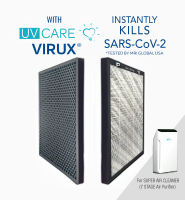
UV Care Super Air Cleaner (7 Stage) Filters
₱6,600.00
Buy on Lazada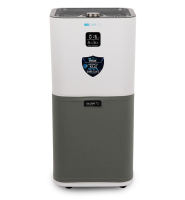
UV Care Super Plasma Air Pro with Medical-Grade H14 HEPA Filter & UV Care ViruX Technology
₱43,995.00
Buy on Lazada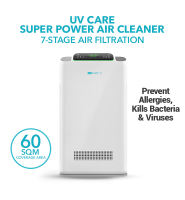
UV Care Super Power Air Cleaner w/ Medical Grade HEPA Filter
₱22,995.00
Buy on Lazada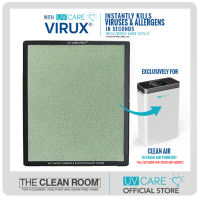
UV Care Clean Air Purifier 6 Stage Medical Grade H13 HEPA Filter (Unit Sold Separately)
₱3,750.00
Buy on Lazada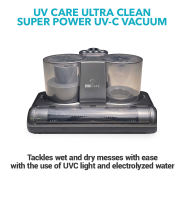
UV Care Ultra Clean Super Power UV-C Vacuum
₱6,995.00
Buy on Lazada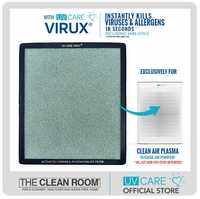
UV Care Clean Air Plasma 6-Stage Air Purifier Biodegradable Medical Grade H13 HEPA Filter (Unit Sold Separately)
₱3,850.00
Buy on Lazada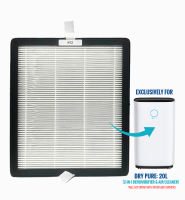
UV Care Dry Pure 2-in-1 Dehumidifier & Air Cleaner Medical Grade HEPA Filter (Unit Sold Separately)
₱2,500.00
Buy on Lazada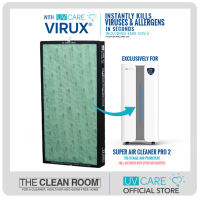
UV Care Super Air Cleaner Pro 2 Composite Filter (Unit Sold Separately)
₱7,200.00
Buy on LazadaAbout UV Care
Overview
UV Care is a sanitation and environmental-health technology brand focused primarily on UV-C germicidal disinfection, air purification, and related cleaning technologies. The brand is particularly prominent in the Philippines, where it is distributed by Intech Group Innovations Corp. and has expanded from UV-C sterilization devices into air purifiers, UV-C vacuums, water purification, dehumidification, and specialized commercial and industrial systems.1
Note: UV Care’s own materials describe it as a U.S. brand, while Philippine corporate and trademark records show Intech Group Innovations Corp. as the Philippine distributor and trademark applicant. Because publicly available sources do not clearly document the entire corporate ownership chain, it is more accurate to distinguish the UV Care brand from its Philippine operating and distribution company rather than simply calling UV Care a Philippine company.1
Quick facts
| Field | Information |
|---|---|
| Brand | UV Care |
| Industry | UV-C sanitation, air purification, cleaning & environmental-health technology |
| Core technology | UV-C / ultraviolet germicidal irradiation (UVGI) |
| Key market | Philippines, with international presence |
| Established / organized | 2015 is cited by UV Care USA and Intech Group |
| Philippine distributor | Intech Group Innovations Corp. |
| Philippine base | Quezon City, Metro Manila |
| Main product areas | UV-C sterilizers, air purifiers, UV-C vacuums, toothbrush sterilizers, room sterilizers, water purification, dehumidifiers |
| Commercial customers | Homes, hospitals, clinics, offices, schools, malls, restaurants and other establishments |
| Website | uvcare.net |
| International website | theuvcare.com |
What is UV Care?
UV Care is a germ-protection and sanitation technology brand built around the use of ultraviolet-C light to reduce microorganisms on surfaces and in air-handling environments.
Its central proposition is relatively straightforward: rather than relying exclusively on chemical disinfectants, UV Care products use UV-C germicidal irradiation as a physical method of disinfection. The brand describes its principal germicidal wavelength as approximately 253.7 nm, the wavelength associated with conventional germicidal UV-C lamps.1
Over time, UV Care has broadened its definition of “germ protection.” Its current portfolio includes not just standalone sterilizers but also:
- Air purifiers
- UV-C room sterilizers
- UV-C handheld and bed vacuums
- Robot vacuums
- Toothbrush sterilizers
- Pocket sterilizers
- Germicidal wands
- Shoe sterilizers
- Air-conditioning UV sterilizers
- Dehumidifier and air-cleaning systems
- Water purification systems
- Specialized commercial and industrial UV-C equipment1
UV-C remains the technological identity of the brand, while “healthy indoor environments” has become the broader consumer proposition.
History
2015: The beginning
The year 2015 is important to UV Care’s history.
UV Care USA says the company was organized in 2015 and focused specifically on UVGI germicidal solutions.2
In the Philippines, Intech Group Innovations Corp. also identifies itself as founded or organized in 2015, with a focus on UV-C germicidal technology.3
A 2021 Manila Bulletin profile provides additional context, reporting that Carolyn Chuayung Tanchen, managing director of Intech Group Innovations Corp., described 2015 as the year their company discovered and launched UV Care. The early business relied heavily on demonstrations, events, and direct customer education because UV Care was not yet a household name.
This is significant because UV-C sterilization was initially a relatively specialized technology rather than a mainstream consumer category.
Early positioning
The early UV Care proposition centered on bringing UV-C germicidal technology into everyday environments.
Rather than competing solely as a conventional cleaning-products brand, UV Care attempted to occupy the intersection of healthcare, sanitation, technology, and household appliances.
An article from 2016, for example, described UV Care as a company specializing in germicidal solutions and reported on its UV-C light sterilizers and laboratory-testing claims.4
Expansion in the Philippines
The Philippine business subsequently expanded beyond consumer products.
UV Care says its products are used in:
- Hospitals and clinics
- Schools
- Offices
- Restaurants
- Hotels
- Food-related businesses
- Malls
- Retail establishments
- Corporate environments
- Industrial applications1
This created two major sides to the brand:
Consumer UV Care
Products designed for ordinary homes and individuals.
Professional / institutional UV Care
Larger or specialized systems designed for hospitals, businesses, buildings, and industrial applications.
The technology behind UV Care
The defining technology is UV-C germicidal irradiation, commonly called UVGI.
UV-C is part of the ultraviolet spectrum. At appropriate wavelengths and exposure levels, UV-C radiation can damage the genetic material of microorganisms, preventing them from reproducing.
UV Care’s U.S. site identifies 253.7 nm as its principal germicidal wavelength.2
This gives UV Care a fundamentally different proposition from ordinary cleaning products. A chemical disinfectant works through chemical interaction with microorganisms, whereas a UV-C system works through ultraviolet radiation exposure.
The practical effectiveness depends on factors such as:
- UV-C intensity
- Exposure time
- Distance from the lamp
- Angle and positioning
- Whether microorganisms are shaded
- Surface characteristics
- Lamp and system design
- Airflow in air-treatment systems
Therefore, the statement that UV-C can inactivate microorganisms should not be interpreted as meaning that any UV-C exposure automatically sterilizes everything.
UV Care USA itself includes the qualification that its technology is effective sanitizing technology but does not completely eliminate all microbes.2
What does “UV-C” mean?
The ultraviolet spectrum is commonly divided into UVA, UVB, and UVC.
- UVA — longer wavelength; associated primarily with skin aging and other biological effects.
- UVB — shorter wavelength; strongly associated with sunburn and direct DNA damage.
- UVC — shorter wavelength and highly energetic; artificial UVC sources are widely used for germicidal applications.
The key distinction for UV Care is that its products are designed around germicidal UV-C, rather than UV radiation for cosmetic or tanning purposes.
Main product categories
UV Care’s current catalog is considerably broader than its original sterilization niche.1
UV-C sterilizers
These are among the brand’s most recognizable products. Examples include:
- Multipurpose sterilizers
- Pocket sterilizers
- Room sterilizers
- Germ sticks
- Germ terminators
- Specialized sterilization equipment
The Pocket Sterilizer, for example, is marketed as a portable UV-C device with a sensor designed to switch the lamp off when the device is flipped upward, addressing direct exposure concerns.1
Air purifiers
Air purification has become one of UV Care’s largest product categories.
The lineup includes systems using combinations of:
- HEPA filtration
- UV-C
- Activated carbon
- Pre-filtration
- Other air-treatment technologies
- In some models, plasma or ion-related technology
UV Care currently lists H13 and H14 HEPA air-purifier models, including multi-stage systems.1
Some models incorporate the company’s proprietary ViruX® technology. UV Care markets ViruX® as a technology designed to eliminate airborne pathogens, including SARS-CoV-2, in conjunction with its filtration and UV-C systems.1
UV-C vacuums
One of the brand’s more distinctive categories is its range of UV-C vacuum cleaners.
These combine conventional vacuuming with UV-C treatment, targeting dust and particulate matter in places such as:
- Beds
- Mattresses
- Sofas
- Upholstery
- Curtains
For example, the Dual Power UV Vacuum combines suction, high-frequency vibration, and UV-C treatment, and includes a sensor intended to prevent UV-C exposure when the device is lifted.1
The product range has since expanded to include:
- Super Power UV Vacuum
- Dual Power UV Vacuum
- Ultra Clean Super Power UV-C Vacuum
- UV-C robot vacuums
- Hydrovac products1
Toothbrush sterilizers
UV Care also sells dedicated UV-C toothbrush sterilizers, including Clean Brush and Clean Brush Pro.
This is an example of the brand’s broader strategy: applying UV-C to everyday objects that consumers associate with hygiene.
Air-conditioning UV sterilization
UV Care offers systems designed to integrate UV treatment with air-conditioning environments.
This moves the brand away from being simply a consumer-appliance company and toward building-level indoor environmental technology.
Water purification
The current portfolio also includes the UV Care Pure Hydrogen-Rich RO Water Purifier, extending the brand into reverse-osmosis water treatment.1
This represents a significant expansion from the company’s original UV-C identity.
Dehumidification
UV Care also sells the Dry Pure 2-in-1 Dehumidifier & Air Cleaner, combining moisture control with air purification and UV Care’s ViruX® technology.1
Consumer vs. commercial business
One of the interesting aspects of UV Care is that it is not exclusively a consumer electronics or appliance brand.
Its business can broadly be divided into three areas.
Home & personal
Products for:
- Families
- Babies and children
- Bedrooms
- Living rooms
- Kitchens
- Bathrooms
- Cars
- Personal objects
Healthcare
UV Care markets equipment for:
- Hospitals
- Clinics
- Dental practices
- Healthcare professionals
- Medical environments
Commercial & industrial
Its professional solutions target:
- Offices
- Schools
- Malls
- Restaurants
- Hotels
- Food manufacturing
- Corporate facilities
- Industrial environments
The company specifically says it can develop custom UV-C devices for specialized applications, using engineers and scientists to create systems outside its standard consumer and industrial products.1
That custom-engineering capability is an important differentiator in its positioning.
UV Care’s Philippine connection
The Philippines is arguably one of the most important markets in UV Care’s public identity.
Intech Group Innovations Corp. identifies itself as UV Care’s exclusive distributor in the Philippines and lists its headquarters in Quezon City.3
UV Care’s Philippine website likewise states that Intech Group Innovations Corp. exclusively distributes UV Care in the Philippines and Asia.1
The Philippine trademark record provides additional evidence of the relationship: an Intellectual Property Office of the Philippines publication lists Intech Group Innovations Corp. as the applicant for the UV CARE mark in 2021, covering products such as room sterilizers, portable germ zappers, toothbrush sterilizers, pocket sterilizers, and UVC light bulbs.5
This helps explain why UV Care has particularly strong visibility in the Philippine market.
Management and people
One publicly documented figure associated with the Philippine operation is Carolyn Chuayung Tanchen, identified by Manila Bulletin as managing director of Intech Group Innovations Corp.
The same article discusses the company’s early efforts to build UV Care through demonstrations, events, and direct selling and education.
An earlier 2016 article also identified Antonio Tanchen as operations manager of Intech Group Innovations Corp. while introducing UV-Care products.4
However, publicly available sources do not provide a sufficiently comprehensive corporate-history record to confidently describe all founders, shareholders, executives, or ownership relationships. So a formal “founder” list should be treated cautiously.
Certifications, testing and regulatory claims
UV Care heavily emphasizes testing and certification in its marketing.
Its official Philippine site says the brand is:
- U.S. FDA registered
- U.S. EPA registered
- BBB accredited
- A member of the International Ultraviolet Association (IUVA)
- Associated with UL-listed products
- CE certified
- Tested by independent laboratories1
There is an important nuance here. Registration, certification, listing, and laboratory testing are not interchangeable concepts.
For example, saying that a particular product is “FDA registered” does not necessarily mean the FDA has independently certified that every marketing claim made about the product is true. Likewise, UL listing and CE marking address particular safety or conformity requirements rather than functioning as a universal endorsement of a brand.
There is also a discrepancy worth noting: UV Care’s Philippine website says it is BBB accredited, while the BBB’s current profile for the Walnut, California UV Care business says the business is not BBB accredited and is currently unrated.1
For a neutral brand profile, therefore, it is better to say UV Care makes these certification and registration claims, with some claims requiring product- or entity-specific verification, rather than treating every certification statement as a blanket endorsement.
Scientific positioning
UV Care’s marketing revolves around several recurring scientific concepts:
Germicidal UV-C
The foundational technology.
HEPA filtration
Used in the company’s air purifiers to physically capture fine airborne particles.
UV-C + filtration
Rather than relying on UV-C alone, some air purifiers combine filtration and UV-C treatment.
ViruX®
UV Care’s proprietary technology marketed in connection with pathogen reduction in certain air-purifier models.1
Chemical-free disinfection
The company emphasizes that UV-C treatment can provide a method of microbial reduction without applying chemical disinfectants to the treated surface.1
The overall philosophy is therefore: physical cleaning + filtration + UV-C treatment + engineering controls.
Brand positioning
UV Care occupies an unusual position in the consumer market.
It isn’t simply an appliance brand, an air-purifier brand, a cleaning brand, or a medical-equipment company.
Instead, its positioning is essentially: technology-based germ protection for homes, people, and institutions.
This positioning allows UV Care to sell products across multiple categories while maintaining one common technological narrative.
A UV-C toothbrush sterilizer and a hospital UV-C room system may look like completely different products, but from the brand’s perspective they are applications of the same underlying idea: using germicidal technology to create cleaner environments.
Target customers
UV Care’s target market can be broadly divided into:
Families
Especially consumers concerned about household hygiene, children, babies, and frequently touched objects.
Health-conscious consumers
People interested in air quality, sanitation, and reducing environmental exposure to microorganisms.
Allergy and air-quality consumers
The air-purifier side of the brand appeals to people concerned about dust, allergens, particulate matter, and indoor air quality.
Healthcare professionals
Doctors, dentists, nurses, and medical institutions are specifically mentioned in UV Care’s marketing.1
Businesses
Offices, restaurants, hotels, malls, schools, and other establishments form an important B2B market.
Industrial customers
UV Care also positions itself as capable of designing customized UV-C solutions for specialized industrial applications.
Distribution and retail presence
In the Philippines, UV Care products are sold through a mixture of:
- UV Care’s own channels
- Department stores
- Baby-product retailers
- Hardware retailers
- E-commerce
- Corporate sales
- Specialized distribution
Its contact page currently lists locations or retail relationships involving outlets such as Robinsons Magnolia, SM Megamall, Mothercare, Baby Company, Ace Hardware, and Rustan’s, among others.1
Retailer Rustan’s currently carries a selection of UV Care products including air purifiers and multipurpose sterilizers.6
Brand expansion
UV Care’s evolution can be summarized roughly like this:
2015
→ UV-C germicidal technology and sterilization
Early consumer phase
→ Portable sterilizers, wands, and household sanitation
Household expansion
→ Toothbrush sterilizers, room sterilizers, and UV-C vacuums
Air-quality expansion
→ HEPA + UV-C air purifiers
Professional expansion
→ Hospitals, businesses, and industrial environments
Technology expansion
→ ViruX®, plasma/air-treatment systems, and multi-stage purification
Adjacent categories
→ Water purification and dehumidification
This is a classic example of technology-led brand extension: the company starts with a specific technology and progressively finds more consumer and commercial applications for it.
UV Care’s competitive identity
The brand’s biggest competitive advantage is arguably specialization.
Many appliance manufacturers sell an air purifier as one product among hundreds of unrelated household appliances.
UV Care, by contrast, has built its identity around a particular problem: How can technology help reduce germs and improve environmental hygiene?
That gives the brand a relatively coherent story across its product categories.
Its other differentiator is the combination of consumer products and professional solutions. A company that can supply a small personal sterilizer and also engineer specialized UV-C equipment can position itself as more than a conventional consumer-goods manufacturer.
Important limitations and criticisms
A neutral wiki-style profile should also acknowledge limitations.
“Sterilization” vs. “disinfection”
Marketing language sometimes uses “sterilizer” or “sterilization,” but technically, sterilization is a stronger claim than merely reducing microbial contamination.
The actual result of a UV-C device depends heavily on dose, exposure, positioning, and whether microorganisms are shielded.
UV-C can be hazardous
UV-C is not inherently safe simply because it is being used for sanitation.
Direct exposure can damage skin and eyes. Consequently, well-designed consumer products often incorporate:
- Motion sensors
- Orientation sensors
- Automatic shutoff
- Enclosures
- Shielding
Several UV Care products specifically advertise sensor-based protection against direct UV-C exposure.1
Air purifiers are not simply “virus killers”
Air purification involves several mechanisms. HEPA filtration physically captures particles, while UV-C can inactivate microorganisms under appropriate conditions.
Therefore, performance claims should be evaluated for the particular model and test conditions, rather than generalized to every UV Care product.
Marketing claims should be product-specific
UV Care’s website contains strong claims such as “99.9%” pathogen reduction and rapid SARS-CoV-2 elimination.1
Those claims should ideally be interpreted alongside the relevant laboratory test, test organism, exposure conditions, and product model. A laboratory result for one device does not automatically establish the same performance for the entire brand.
Brand philosophy
UV Care’s stated mission is essentially built around healthier homes and environments without relying exclusively on chemicals.
UV Care USA describes its mission as keeping families healthy and homes and businesses safe through effective, non-toxic germicidal disinfection using UVGI light. Its stated vision is to become a leading provider of UV-C sanitation products and complete sanitation solutions.2
The brand therefore combines three ideas:
Health
Protect people from harmful microorganisms and improve indoor environments.
Technology
Use UV-C, HEPA filtration, and other engineering solutions rather than conventional cleaning alone.
Convenience
Turn specialized sanitation technology into everyday consumer products.
UV Care today
As of 2026, UV Care is no longer simply a “UV sterilizer” company.
Its portfolio spans several connected areas:
| Area | Examples |
|---|---|
| UV-C sanitation | Pocket sterilizers, wands, room sterilizers |
| Air purification | H13/H14 HEPA + UV-C systems |
| Cleaning | UV-C vacuums and robot vacuums |
| Personal hygiene | Toothbrush sterilizers |
| Climate/environment | Dehumidifiers and air cleaners |
| Water | RO water purification |
| Commercial | Institutional and industrial UV-C systems |
| Custom solutions | Engineered UV-C equipment |
The official catalog confirms that this diversification is now a major part of the brand.1
Overall assessment
UV Care can best be described as a UV-C-centered sanitation and indoor-environment technology brand that evolved from specialized germicidal equipment into a broad consumer, healthcare, and commercial solutions business.
Its strongest identity remains UV-C germicidal technology. The brand differentiates itself by applying that technology across many everyday situations—from toothbrushes and mattresses to air purifiers and institutional environments.
Its history is particularly interesting in the Philippines because the local business, Intech Group Innovations Corp., appears to have played a major role in developing UV Care’s Philippine market from its 2015 beginnings.1
The brand’s public positioning emphasizes scientific testing, certifications, healthcare applications, and germ-protection. At the same time, a careful evaluation should distinguish between brand marketing claims, regulatory registration, product certification, and independent scientific evidence.
In one sentence
UV Care is a UV-C sanitation technology brand founded or organized around 2015 that has grown from portable germicidal devices into a broad portfolio of UV-C sterilizers, HEPA/UV-C air purifiers, cleaning appliances, water and environmental systems, and specialized commercial solutions, with a particularly strong presence in the Philippines.1