Shop on Lazada
Vespa products
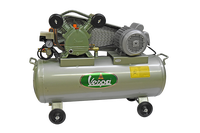
VESPA Air Compressor Belt Type 2HP Heavy Duty
₱30,000.00
Buy on Lazada
Vespa 2HP Air Compressor with Belt and Direct Drive 100% COPPER
₱5,998.00
Buy on Lazada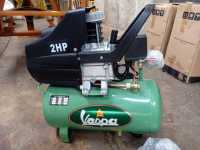
VESPA Air Compressor 2HP (Direct Couple) HEAVY DUTY
₱7,499.00
Buy on Lazada
HEAVY DUTY Air Compressor Head Pump 0.5HP DOUBLE PISTONS (Compatible for Most Brands)
₱4,999.00₱9,600.00

Vespa Air compressor Belt Type 1/4 Hp
₱15,998.00₱36,795.00

HEAVY DUTY Air Compressor Head Pump 1/4HP (Compatible for Most Brands)
₱3,699.00₱7,000.00

Vespa Air Compressor 1/4 Horse Power
₱8,750.00
Buy on Lazada
VESPA 2HP Coupled Type Air Compressor 2HP 25Liters Direct
₱6,999.00₱7,299.00
About Vespa
Vespa is an Italian scooter brand owned by Piaggio & C. S.p.A. and remains one of the most recognisable names in the history of two-wheeled transport. Established in 1946 in Pontedera, Tuscany, Vespa was originally conceived as an affordable and practical means of personal mobility for post–World War II Italy. It has since evolved from a utilitarian scooter into an international symbol of Italian design, fashion, mobility, youth culture, and lifestyle. 1
As of 2026, Vespa is celebrating its 80th anniversary. The marque states that more than 160 models have been created throughout its history, while the Piaggio Group reports cumulative production exceeding 20 million Vespas. 1
Overview
| Category | Information |
|---|---|
| Brand | Vespa |
| Industry | Motorcycles / scooters / mobility |
| Founded | 1946 |
| Founder / parent company | Piaggio |
| Origin | Pontedera, Tuscany, Italy |
| Creator of original scooter | Corradino d’Ascanio |
| First production model | Vespa 98 |
| Parent group | Piaggio Group |
| Vehicle type | Scooter |
| Design identity | Italian, retro-modern, monocoque steel body |
| Current major families | Primavera, Sprint, GTS, GTV, 946 |
| Electric models | Vespa Elettrica and electric variants depending on market |
| 80th anniversary | 2026 |
| Global status | International premium scooter and lifestyle brand |
Origins
The origins of Vespa are rooted in post-war Italy. Piaggio had previously been an industrial firm with significant experience in aircraft and aerospace manufacturing. With Italy’s industrial infrastructure severely damaged by World War II, the company sought new products suited to a nation in reconstruction.
Company chairman Enrico Piaggio envisioned a vehicle that would offer ordinary citizens inexpensive and convenient personal transport. The initial attempt was the MP5, nicknamed Paperino (“Donald Duck”). Although designed by Renzo Spolti, the result did not satisfy Piaggio.
Enrico Piaggio subsequently commissioned aircraft engineer and designer Corradino d’Ascanio to reimagine the concept. D’Ascanio possessed an atypical background for a motorcycle designer; his extensive aviation experience included work on early helicopter prototypes. Consequently, his approach to the scooter diverged significantly from conventional motorcycle engineering.
In 1945, the resulting MP6 prototype emerged. This design introduced several concepts that would become central to the Vespa identity:
- A step-through layout
- Protective bodywork enclosing mechanical components
- A flat floorboard
- A compact and lightweight form factor
- A comfortable riding position
- An enclosed engine
- Small wheels
- A clean, aerodynamic aesthetic
- A design intended to be accessible to a broad range of riders
D’Ascanio was not merely designing a smaller motorcycle; he was creating an entirely new category of vehicle.
The birth of Vespa
The first production model was the Vespa 98, launched in 1946. The Vespa trademark was registered on 23 April 1946, a date generally regarded as the official founding of the brand, with production commencing at Piaggio’s factory in Pontedera. 1
According to company history, Enrico Piaggio reportedly likened the prototype’s appearance and sound to a wasp. The Italian word for wasp is “vespa”, which provided the name for the new scooter. The designation proved remarkably apt, as the vehicle was visually distinctive, instantly recognisable, and fundamentally different from traditional motorcycles.
Revolutionary design philosophy
The significance of the original Vespa extended beyond its styling; its engineering philosophy differed radically from contemporary motorcycles.
Step-through construction
Rather than requiring the rider to swing a leg over a large fuel tank, the Vespa featured an open central area, making mounting and dismounting considerably easier.
Protective bodywork
The scooter’s body shielded the rider from much of the engine, chain, and mechanical hardware.
Flat floor
The floorboard provided a comfortable platform for the rider’s feet, enhancing the vehicle’s practicality for everyday urban transport.
Enclosed mechanical components
The engine and transmission were integrated into the rear portion of the vehicle, contributing to its distinctive, clean silhouette.
Compact wheels
Small wheels contributed to the scooter’s compact proportions and manoeuvrability.
Steel body
Traditional Vespas became particularly associated with their pressed-steel bodies, which imparted a solid, sculptural appearance.
This combination of engineering, practicality, and visual design established the foundation of the Vespa identity.
From transportation to cultural icon
Vespa’s success transcended mere transportation. During the 1950s and 1960s, the scooter became synonymous with a modern image of life. Young people gained independent mobility, cities became more accessible, and the scooter became associated with leisure, romance, and personal freedom.
Vespa describes its historical development as a progression from an innovative mobility product into an icon of style and lifestyle. 2 Its cultural significance was reinforced through appearances in film, television, photography, advertising, music, fashion, art, and popular culture.
A definitive example is the 1953 film Roman Holiday, starring Audrey Hepburn and Gregory Peck. The Vespa became closely linked with the imagery of exploring Rome on two wheels, helping transform the scooter from a functional product into an aspirational object.
Vespa and Italian design
Perhaps the most critical aspect of Vespa’s identity is its relationship with Italian design. While many motorcycles emphasise exposed mechanical components such as engines, frames, and suspension, Vespa adopted a different approach where the body functions almost as industrial sculpture.
The characteristic Vespa silhouette includes:
- A rounded front shield
- A curved rear body
- A central step-through area
- A compact engine compartment
- A single-sided front suspension design on many classic generations
- Small wheels
- A distinctive handlebar
- A prominent front leg shield
- A flowing, near-seamless body
This continuity allows the brand to retain an instantly recognisable visual language even as technology evolves, a key factor in Vespa remaining identifiable across eight decades.
Vespa through the decades
1940s — The beginning
The Vespa 98 established the basic concept, designed primarily as affordable personal transportation for a recovering nation with an emphasis on simplicity, usability, and accessibility.
1950s — International expansion
During this decade, Vespa expanded beyond Italy, gaining international popularity. The scooter became associated with European urban life and began appearing frequently in popular culture, proving adaptable to diverse markets.
1960s — Youth culture
The 1960s were pivotal in transforming Vespa into a cultural symbol associated with youth, modernity, and shifting social attitudes. In Britain, Vespa became particularly linked with the Mod movement. Historical materials identify the mid-1960s as a crucial period when the scooter became intertwined with fashion and youth culture. 2
The renowned Vespa Primavera was introduced in the late 1960s, eventually becoming one of the most important nameplates in the family.
1970s — The PX era
The Vespa P/PX generation became one of the brand’s most enduring designs. Introduced in 1977, the PX continued in various forms for decades, celebrated for its classic steel body, manual gear-changing system, and traditional character. 3 For enthusiasts, the PX represents the quintessential Vespa formula: steel body, manual transmission, simple mechanical character, and unmistakable Italian design.
1980s — Global identity
Vespa continued its international development during the 1980s. Ownership increasingly communicated a specific personality and lifestyle rather than serving solely as transport.
1990s — Modernization
This decade marked a significant technological transition with the introduction of models such as the ET series. These moved towards modern engines, automatic transmissions, and contemporary equipment while retaining traditional design cues, demonstrating that Vespa could modernise technology without abandoning its visual identity.
2000s — Larger and more powerful scooters
Vespa expanded into larger, performance-oriented scooters with the introduction of the Vespa GT/GTS family in the early 2000s. 3 The GTS line became a major large-frame offering, providing larger engines, greater performance, substantial dimensions, long-distance capability, and modern electronics while retaining the characteristic body.
2010s — Heritage meets technology
Vespa increasingly positioned itself as a premium lifestyle brand. Models including the Primavera, Sprint, GTS, and 946 combined retro-inspired styling with modern engines, electronics, and safety equipment. The modern Primavera, launched in 2013, succeeded the LX family and drew heavily from the heritage of the original 1960s Primavera. 3
2020s — Electric and lifestyle expansion
Vespa entered the electric era with the Vespa Elettrica, combining the traditional silhouette with electric propulsion. Simultaneously, the brand expanded its identity beyond motorcycles. Today, the official Vespa brand encompasses scooters, electric mobility, helmets, clothing, accessories, lifestyle products, special editions, collaborations, and cultural projects. The official website explicitly presents Vespa as a combination of motor, fashion, and lifestyle. 2
Current lineup
As of 2026, the international Vespa range comprises several major families. 1
Vespa Primavera
The Primavera is among the most recognisable modern Vespas, aimed primarily at urban riders. It emphasises lightness, elegance, manoeuvrability, classic styling, and modern electronics. Current versions feature varying engine capacities and technology packages; the 2026 Primavera, for instance, offers updated styling, digital displays, and keyless functionality depending on the version. 1
Vespa Sprint
The Sprint is the sportier member of the small-frame-inspired range, featuring more aggressive and youthful styling compared to the Primavera. The 2026 Sprint S received updated styling, wheels, displays, and connectivity features. 2
Vespa GTS
The GTS is Vespa’s larger, performance-oriented family. Offering substantially more power than small-frame models, it caters to riders seeking greater capability for urban and longer-distance riding, featuring modern technology such as electronic displays and keyless systems. 2
Vespa GTV
The GTV offers a distinctive, sporty interpretation of the large Vespa platform. Its most recognisable characteristic is the low-mounted front headlamp, echoing historical Vespa designs. 2
Vespa 946
The 946 is a highly design-focused model representing Vespa’s role as a luxury and design object rather than a practical mass-market scooter. It frequently serves as the basis for special editions and collaborations.
Design philosophy
The fundamental Vespa philosophy can be summarised as “Evolution without losing identity.” While underlying technology has shifted dramatically—from simple small-displacement engines, mechanical controls, and steel construction in 1946 to fuel injection, electronic management, ABS, digital displays, smartphone connectivity, keyless systems, and electric propulsion today—the basic silhouette remains recognisable. Vespa describes this as evolving in shape while retaining its spirit, 2 similar to how luxury fashion houses maintain recognisable design codes across generations.
Lifestyle brand positioning
Unlike manufacturers that sell only transportation, Vespa sells transportation plus identity. The brand has developed an extensive lifestyle ecosystem involving fashion, helmets, bags, watches, accessories, art, photography, special editions, designer collaborations, and pop-culture partnerships. The official website categorises the brand into vehicle range, ready-to-wear, lifestyle, and experiences. 2 Consequently, a Vespa functions as much as a fashion statement as a practical vehicle.
Cinema and cultural impact
Cinema has played a major role in shaping Vespa’s international image. The scooter has appeared in countless productions portraying Italy, romance, youth, travel, freedom, and European city life. The association with Rome is particularly potent; the image of riding a Vespa through narrow Italian streets is among the world’s most recognisable representations of Italian lifestyle. Vespa’s own history emphasises its penetration into cinema, music, art, photography, and fashion. 2
Women and mobility
An often-overlooked aspect of Vespa’s historical importance is its relationship with women’s mobility. The step-through design made the scooter significantly easier to use while wearing dresses or other clothing that rendered conventional motorcycles inconvenient. Furthermore, inexpensive individual transport afforded women greater freedom to travel independently. Vespa describes its early history as contributing to female mobility and emancipation, 1 a factor in its cultural significance beyond engineering.
Manufacturing
Vespa’s historical home is Pontedera, Italy, where production began in 1946. As the brand became a global product, the Piaggio Group expanded production internationally. Historically identified manufacturing facilities include:
- Pontedera, Italy
- Vĩnh Phúc, Vietnam
- Baramati, India
Pontedera remains the brand’s historic production base and a vital manufacturing centre. 2
Relationship with the Piaggio Group
Vespa is not an independent motorcycle company but a brand within the Piaggio Group, whose portfolio also includes Piaggio, Aprilia, Moto Guzzi, and commercial vehicle brands such as Ape and Porter. However, Vespa holds a distinctive position: whereas Aprilia is associated with performance racing and Moto Guzzi with traditional motorcycling, Vespa is primarily linked with urban mobility, design, lifestyle, and Italian culture.
Logo and visual identity
The Vespa logo is among the most recognisable marks in the industry, traditionally using a stylised V combined with the word VESPA. While the visual identity has evolved over decades, the typography and emblem remain strongly associated with the brand. The logo’s simplicity complements the already visually distinctive scooter.
Pricing and value proposition
A Vespa typically costs more than a basic commuter scooter of comparable displacement because it is not positioned solely around transportation efficiency. The price reflects Italian design, brand heritage, body construction, styling, materials, engineering, reputation, lifestyle positioning, limited editions, and design collaborations. Customers are effectively purchasing the Vespa identity itself, comparable to the distinction between a functional watch and a luxury timepiece.
Major strengths
- Iconic design: A Vespa is usually identifiable from a distance.
- Strong heritage: Few scooter brands possess a continuous cultural history dating to 1946.
- Italian identity: The brand is intrinsically connected to international perceptions of Italian style.
- Lifestyle appeal: The product functions as both transportation and fashion.
- Broad international recognition: Vespa operates across numerous markets as a global cultural symbol.
- Ability to modernize: The brand incorporates modern safety, electronic, and electric technology without abandoning its fundamental visual identity.
By the end of 2025, the Piaggio Group reported more than 20 million Vespa units produced, demonstrating the scale and longevity of the marque.
Criticisms and limitations
Vespa is not necessarily the optimal choice for every rider:
- Higher price: It occupies a premium position relative to practical commuter scooters.
- Styling over maximum practicality: Competing scooters may offer greater storage or utility for the price.
- Performance: Smaller models are designed primarily for urban mobility rather than high-performance riding.
- Maintenance and ownership costs: Parts, servicing, and insurance can be more expensive than those for mass-market scooters depending on the market and model.
- Brand premium: A portion of the price reflects the brand value itself.
For buyers seeking only inexpensive transportation, conventional Japanese, Chinese, Indian, or Indonesian scooters may offer better value.
Vespa in Indonesia
Indonesia shares a unique relationship with Vespa. The brand entered popular culture decades ago, fostering a dedicated enthusiast community centred on older machines, particularly classic two-stroke models that have become objects of restoration, customisation, and collecting. As one of the world’s largest scooter markets, Indonesia is a significant environment for Vespa. Modern products coexist with this distinctive local enthusiast culture, creating a contrast between classic Vespa culture and modern premium Vespa culture.
80th Anniversary
2026 marks Vespa’s 80th anniversary, calculated from its official founding on 23 April 1946. The company describes the milestone as a celebration of eight decades of history, design, freedom, and cultural influence, with anniversary-specific products, events, and design elements planned throughout the year. 1 The 2026 range demonstrates the strategy of combining traditional styling with modern technology; Primavera and Sprint have received updates, while GTS and GTV models have gained enhanced digital and convenience features. 2
Defining characteristics
Vespa can be understood through three layers:
- Vehicle: At its most basic, Vespa is a scooter manufacturer producing small and large scooters for urban and recreational transport.
- Design: The scooter possesses an instantly recognisable Italian design language that has remained remarkably consistent since 1946.
- Culture: Most importantly, Vespa represents ideas of Italy, freedom, youth, style, romance, travel, and individuality. This cultural meaning transformed a successful scooter into a global icon.
Historical significance
Vespa’s greater achievement was altering the cultural meaning of the scooter. Prior to Vespa, two-wheelers were perceived primarily as practical transport. Vespa demonstrated that a vehicle could simultaneously be useful, beautiful, fashionable, and culturally meaningful, a formula that influenced scooter design and marketing worldwide and helped establish the scooter as a vital form of urban mobility.
Notable models
| Model | Period / role | Significance |
|---|---|---|
| Vespa 98 | 1946 | Original production Vespa |
| Vespa 125 | 1940s–50s | Early expansion of the range |
| Vespa GS | 1950s | Performance-oriented historic model |
| Vespa Primavera | 1960s–present | One of the most iconic names |
| Vespa Sprint | Historic + modern | Sportier interpretation |
| Vespa PX | 1977 onward | Legendary manual-transmission Vespa 3 |
| Vespa ET | 1990s | Major modern-generation transition |
| Vespa GT/GTS | 2000s–present | Large, more powerful Vespa 3 |
| Vespa 946 | 2010s–present | Design/luxury flagship |
| Vespa Elettrica | 2010s–present | Electric era |
| GTV | 2000s–present | Sportier large-frame design |
Contemporary status
Today, Vespa is best understood not merely as a scooter manufacturer but as a global Italian lifestyle brand built around the scooter. Its current strategy combines heritage, Italian design, modern technology, premium positioning, fashion, and global cultural identity. The official 2026 range centres on the GTS, GTV, Primavera, Sprint, and 946 families, with specific versions and special editions varying by market. 1
If Toyota represents practical Japanese automotive engineering, Harley-Davidson represents American motorcycle culture, and Ferrari represents Italian performance and luxury, then Vespa represents Italian urban mobility and lifestyle. Its greatest product is not simply the scooter, but the idea of the scooter as an expression of personal style.