Shop on Lazada
Mahle products
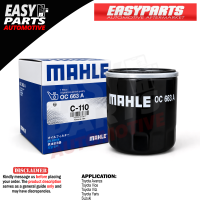
Mahle Oil Filter OC663A (C-110) Toyota Avanza Vios Vitz Yaris Suzuki
₱140.00
Buy on Lazada
Car Filters for GLA GLB Series
₱2,184.00
Buy on Lazada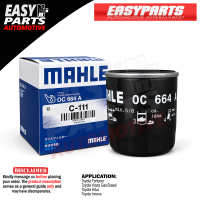
Mahle Oil Filter OC664A (C-111) Toyota Fortuner Hiace Gas/Diesel Hilux Innova
₱140.00
Buy on Lazada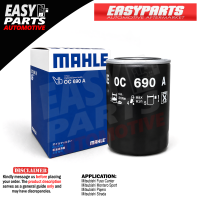
Mahle Oil Filter OC690A (C-313) Mitsubishi Fuso Canter Montero Sport Pajero Strada
₱450.00
Buy on Lazada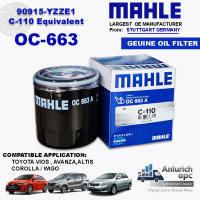
MAHLE Oil Filter for Toyota Vios Avanza Altis Corolla Wigo. C-110 OC 663
₱125.00
Buy on Lazada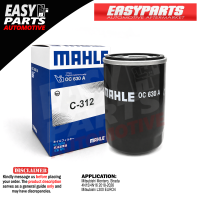
Mahle Oil Filter OC630A (C-312) Mitsubishi Montero Strada 4N15/4N16 L300 EURO4
₱185.00
Buy on Lazada
MAHLE FUEL FILTER FOR NISSAN UD TRUCKS MAZDA ISUZU CROSSWIND EXTREME D-MAX 4JH1/C190/C240/4BA1/4BE1/4BC2. KC 294 A FC-208A
₱200.00
Buy on Lazada
Mahle | For Trumpchi Models GM8 GM6 GS4 GS5 GS8 GA3 GA4 Oil Filter
₱343.18
Buy on LazadaAbout Mahle
Company Overview
Mahle is a German multinational automotive technology company and Tier-1 supplier headquartered in Stuttgart, Germany. Established in 1920, the firm is best known for its engine components, filtration systems, and thermal management technologies, alongside an expanding portfolio for electric and low-emission vehicles 1. Mahle currently positions itself as a development partner and supplier for both passenger cars and commercial vehicles, with a strategic focus on electrification, thermal management, and efficient internal combustion engine (ICE) technologies 2.
| Category | Information |
|---|---|
| Company name | MAHLE GmbH |
| Brand | Mahle |
| Founded | 1 December 1920 |
| Headquarters | Stuttgart, Germany |
| Industry | Automotive components & mobility technology |
| Main customers | Automotive OEMs, commercial vehicle manufacturers, aftermarket |
| Key focus areas | Electrification, thermal management, ICE technologies |
| 2025 Sales | €11.257 billion |
| 2025 Employees | 64,242 |
| Production locations | 127 |
| Major R&D centres | 11 |
| Ownership | Foundation-owned |
| CEO | Arnd Franz |
As of 2025, Mahle reported global sales of €11.257 billion and employed 64,242 people worldwide 3.
Product Portfolio
Mahle’s business is organised into several distinct technology families that span traditional and modern automotive engineering.
Engine Components
Engine components represent the historical foundation of Mahle’s reputation. The traditional portfolio encompasses pistons, piston rings, cylinder liners, connecting rod assemblies, valve train components, camshaft technologies, and engine filtration systems for both petrol and diesel applications. The company is particularly noted for its early expertise in light-alloy pistons; while cast-iron pistons were the industry standard in the early 1920s, Mahle began experimenting with lighter alloys during this period 4. Over time, the company evolved from manufacturing individual components to developing complete systems and modules for automotive manufacturers 5.
Thermal Management
Thermal management has become a central pillar of Mahle’s modern operations. This discipline involves controlling heat across various vehicle systems, including internal combustion engines, electric motors, batteries, inverters, power electronics, charging systems, and passenger compartment air conditioning. Mahle develops technologies to efficiently heat or cool these systems through products such as radiators, compressors, heat exchangers, and HVAC units. The significance of this division increased substantially following the acquisition of Behr, a specialist in automotive cooling and climate control, in which Mahle took a majority stake in 2013 6.
Electrification
Mahle has transitioned from being primarily associated with combustion engines to becoming a broader electric mobility technology supplier. Current developments include electric motors, drive systems, battery thermal management, power electronics cooling, mechatronic systems, and charging-related technologies for both passenger and commercial electric vehicles. Despite this shift, the company maintains a technology-neutral strategy, continuing to improve combustion engine technologies capable of utilising lower-carbon or renewable fuels alongside its electrification efforts 7.
Internal Combustion Engine Technologies
Mahle retains ICE technology as one of its three primary strategic fields. The company focuses on enhancing engine efficiency, reducing emissions, improving durability, lowering weight, and ensuring compatibility with alternative fuels, including hydrogen 8. This expertise in pistons, cylinder systems, filtration, and thermal management remains relevant for hybrid vehicles, commercial transport, and markets where combustion engines continue to be prevalent.
History
Founding and Early Development
Mahle’s origins trace back to Bad Cannstatt, Stuttgart, in 1920. Engineer and aircraft pioneer Hellmuth Hirth required commercial support for his engine development work, leading Hermann Mahle to join the operation as its seventh employee on 1 December 1920, a date the company recognises as its founding 9. Initially operating as a small experimental workshop, the firm achieved a crucial breakthrough with the development of light-alloy pistons.
In 1922, Hermann’s brother Ernst Mahle joined the company, taking responsibility for development and production. Their collaboration focused on making aluminium and light-alloy pistons reliable enough for increasingly demanding engines, establishing the technical foundation of the Mahle brand 10. By 1929, as engines became more powerful and precise, contamination emerged as a critical issue. Mahle expanded into air and oil filtration, strategically broadening its scope beyond pistons to encompass technologies surrounding the entire engine system 11.
Expansion and Corporate Structure
From the 1930s through the 1960s, Mahle developed a comprehensive range of engine components, including valves, camshafts, and lightweight technologies, gradually becoming one of Germany’s major engine component suppliers. In 1964, founders Hermann and Ernst Mahle transferred their ownership interests into a charitable foundation structure, which remains the company’s ownership model today 12.
During the 1970s and 1980s, Mahle expanded internationally, establishing operations in the United States, Brazil, Spain, Austria, Japan, and other European markets. This period marked its transformation from a domestic component manufacturer into a global automotive supplier 13.
Transformation into a Systems Supplier
The 1990s represented a pivotal era as automotive manufacturers increasingly sought suppliers capable of providing complete modules rather than individual parts. Mahle responded by evolving from a component manufacturer into a development partner for systems and modules 14. This transition was supported by acquisitions and partnerships in valve trains, filtration, thermal management, and mechatronics.
By the 2000s, Mahle had established a genuine global presence across Europe, North and South America, China, Japan, India, Korea, and other Asian markets. The company deepened its role as an engineering and development partner directly with Original Equipment Manufacturers (OEMs) 15. Consequently, Mahle components are frequently integrated into vehicles without visible branding on the exterior.
Business Model and Market Position
OEM Partnership
Mahle operates primarily as a B2B enterprise. Its relationship with vehicle manufacturers typically involves receiving engineering requirements, developing specific components or systems, and supplying them for vehicle production. The company states that one in every two vehicles worldwide is equipped with Mahle components 16.
Aftermarket Operations
Beyond original equipment supply, Mahle maintains a significant aftermarket business serving workshops, parts distributors, engine repair specialists, and vehicle owners. This portfolio includes filters, engine components, cooling parts, thermal management units, and workshop equipment. Currently branded as Mahle Lifecycle and Mobility, this division supplies replacement parts often derived from technologies originally developed for series-production vehicles 17. Consumers and mechanics commonly encounter Mahle products in categories such as oil, air, fuel, and cabin filters; pistons and cylinder components; and radiators and air-conditioning parts 18.
Motorsport and E-Bikes
Mahle’s engineering heritage in lightweight materials, thermal management, and high-speed rotating components has led to significant involvement in motorsport. The company has historically supplied engine components to numerous racing programmes and performance engine manufacturers. Additionally, Mahle has entered the electric bicycle market, developing compact electric drive systems, motors, batteries, and electronic controls. This diversification leverages the company’s expertise in lightweight electric motors and vehicle thermal systems.
Strategic Direction
Mahle’s current “MAHLE 2030+” strategy is built upon three principal pillars:
- Electrification: Technologies for electric vehicles, motors, battery systems, power electronics, charging infrastructure, and electric commercial vehicles.
- Thermal Management: Temperature control solutions for batteries, electric motors, power electronics, vehicle interiors, and combustion engines.
- ICE: Enhancements to internal combustion engines focusing on efficiency, emissions reduction, lightweight design, advanced combustion, and alternative/renewable fuels.
This strategic framework reflects Mahle’s view of its future as extending beyond traditional engine parts to encompass broader mobility technologies 19.
Financial Performance and Scale
The latest full-year figures available for Mahle cover the 2025 fiscal year.
| Metric | 2025 |
|---|---|
| Sales | €11.257 billion |
| Employees | 64,242 |
| Production locations | 127 |
| Major R&D centres | 11 |
| R&D expenditure | €607 million |
| EBITDA | €779 million |
| EBIT | €228 million |
| Consolidated net income | €20 million |
Sales decreased from €11.681 billion in 2024 to €11.257 billion in 2025, while adjusted EBIT stood at €442 million 20. The company operates across five continents, with major production and R&D activities concentrated in Europe, the Americas, and Asia 21.
Industry Context
Mahle occupies a distinctive position at the intersection of traditional and modern automotive engineering. Unlike suppliers limited to a single technology, Mahle possesses deep expertise in the traditional powertrain (pistons, rings, cylinders, valves, filters) while simultaneously investing in the electric powertrain (batteries, motors, inverters, cooling). This dual capability reduces dependence on any single vehicle technology.
When compared to peers such as Bosch, ZF Friedrichshafen, Continental, Valeo, DENSO, and BorgWarner, Mahle’s product mix differs significantly. While Bosch has a broader electronics and industrial focus, ZF specialises in transmissions and chassis, and DENSO is deeply involved in electronics, Mahle’s identity remains uniquely tied to engine components, filtration, and thermal management.
Five characteristics define the Mahle brand: a German engineering heritage originating in Stuttgart over a century ago; deep foundational expertise in engine components; central competency in thermal management; active transition toward electrification; and a strong dual presence in both OEM and aftermarket channels. Ultimately, Mahle functions as a bridge between the era of internal combustion and the next generation of mobility, combining historical engine expertise with investment in electric and thermal technologies 22.
References
- About MAHLE – MAHLE Group
- Imprint – MAHLE Group
- MAHLE Improves Operating Result in 2025 – MAHLE Group
- MAHLE 2025 BUSINESS YEAR AT A GLANCE
- MAHLE chronicle – MAHLE Group
- 100 Jahre Pioniergeist – MAHLE Konzern
- Mahle Behr
- Mahle (Unternehmen)
- 100 Jahre Pioniergeist – MAHLE Group
- Home – MAHLE Konzern
- Home – MAHLE Group
- MAHLE Improves Operating Result in 2025 – MAHLE Newsroom
- MAHLE incrementa su resultado operativo en 2025 – MAHLE Newsroom
- MAHLE holds its ground in a difficult market environment – MAHLE Group
- MAHLE—keeping the world moving for 100 years – MAHLE Newsroom
- MAHLE bewegt die Welt – seit 100 Jahren – MAHLE Newsroom
- MAHLE Chronik – MAHLE Konzern
- Über MAHLE – MAHLE Konzern
- Publications – MAHLE Group
- Locations – MAHLE Group
- Business segments – MAHLE Group
- Home – MAHLE Newsroom