Shop on Lazada
Wacom products
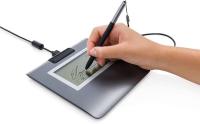
Wacom STU-430 / STU 430 LCD Signature Pad
₱14,800.00₱17,500.00

Wacom MovinkPad 11 inches
₱43,500.00
Buy on Lazada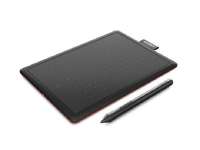
Wacom CTL 472 Digital Tablet Graphic Drawing Tablet Pad 2048 Pressure Level Small Size Wacom CTL-472(Black and Red)
₱4,771.06₱8,050.32

Wacom Signature Pad STU-430
₱14,695.00
Buy on Lazada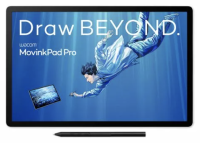
Wacom MovinkPad Pro 14
₱88,000.00
Buy on Lazada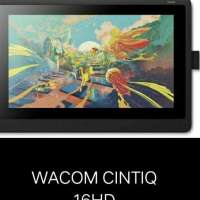
Wacom Cintiq 16HD
₱49,600.00
Buy on Lazada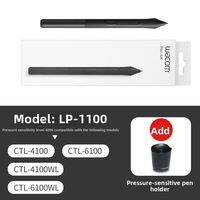
Wacom | Digital Drawing Pen
₱2,649.00₱3,429.00
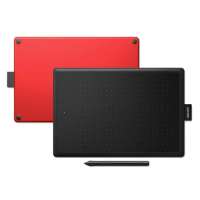
Wacom CTL-672 Bamboo Splash Pen Drawing Tablet Medium Graphic PC/MAC/WINDOWS
₱5,856.50₱8,712.36
About Wacom
Company Overview
Wacom Co., Ltd., commonly referred to as Wacom, is a Japanese technology corporation recognized globally for its graphics tablets, pen displays, digital pens, and digital-ink technologies. Established in 1983, the company played a foundational role in the modern digital-pen industry and maintains strong associations with digital illustration, animation, photography, graphic design, 3D modeling, CAD, education, and various creative workflows 1.
Headquartered in Kazo, Saitama, Japan, Wacom is publicly listed on the Tokyo Stock Exchange Prime Market under securities code 6727. The company operates internationally with significant regional presence across North America, Europe, and Asia-Pacific 1.
| Item | Information |
|---|---|
| Company name | Wacom Co., Ltd. (株式会社ワコム) |
| Brand | Wacom |
| Industry | Digital input devices, digital pen technology, creative technology |
| Founded | July 12, 1983 |
| Founded in | Saitama, Japan |
| Headquarters | Kazo, Saitama, Japan |
| CEO | Nobutaka Ide |
| Stock exchange | Tokyo Stock Exchange, Prime Market |
| Stock code | 6727 |
| Main products | Pen tablets, pen displays, digital pens, smartpads, software/services |
| Major brands | Cintiq, Intuos, Wacom One, Movink, Bamboo |
| Main customers | Artists, designers, photographers, animators, educators, enterprises and technology manufacturers |
Corporate records confirm the founding date of July 12, 1983, the Kazo headquarters location, and Nobutaka Ide as President and CEO 1.
History
Foundation: 1983
Wacom was established in 1983 in Saitama, Japan, with initial business operations focused on pen tablets and CAD software for electrical engineering 2.
The corporate name derives from the concept of “World Computer”, where “Wa” substitutes for “World.” The Japanese character 和 (wa) signifies harmony, reflecting the company’s stated goal of fostering a harmonious relationship between people and computers 2. This philosophy influenced product development by prioritizing interaction methods that mimic traditional pen usage rather than relying solely on keyboards and mice.
1984: The Cordless Pen Tablet
A pivotal early milestone occurred in 1984 with the introduction of what the company describes as the world’s first cordless pen tablet 1. This innovation significantly enhanced the natural feel of digital drawing instruments.
Subsequent development led to electromagnetic resonance (EMR) technology. In 1987, the SD series launched a cordless, battery-free pen utilizing EMR, establishing a technological foundation that remains central to Wacom’s digital-pen systems 3.
Expansion into Creative Industries
Throughout the late 1980s and 1990s, Wacom expanded its focus toward professional creative applications. Wacom Europe was established in Germany in 1988, followed by Wacom Technology in the United States in 1991 1.
During this period, Wacom tablets began appearing in professional design workflows. The company notes adoption in product-design processes starting in the late 1980s, followed by integration into film, animation, and game-production studios 4. A significant endorsement came in 1990 when Walt Disney utilized Wacom pen technology for the production of Beauty and the Beast 2. This reinforced Wacom’s reputation as a provider of professional creative technology rather than merely a computer peripheral manufacturer.
Major Product Evolution
Intuos
Introduced in 1998, the Intuos line marked Wacom’s entry into high-performance graphics tablets for professional artists and designers 1. Unlike pen displays, traditional Intuos tablets feature no screen; users draw on the tablet surface while viewing output on a separate monitor. This configuration remains widely used by digital artists, illustrators, photographers, graphic designers, 3D artists, animators, and CAD users. The current Intuos family serves the accessible segment of the professional range, while Intuos Pro targets advanced professional users 1.
Cintiq
Cintiq represents one of Wacom’s most influential product lines. Launched in 2001 as an interactive LCD pen display, it differentiated itself from Intuos by allowing users to draw directly on the screen 1. This direct-on-screen interaction closely mimics traditional drawing on paper or canvas. Cintiq has since become a recognizable standard in the creative industry, with current offerings including various Cintiq and Cintiq Pro models 1.
Wacom One
Expanding beyond the strictly professional market, the Wacom One family provides an accessible entry point for digital creativity. This lineup includes both pen displays and screenless pen tablets positioned for digital drawing, painting, note-taking, annotation, education, online collaboration, and hobbyist use 1. Current models include the Wacom One 12, Wacom One 13 touch, Wacom One M, and Wacom One S 1.
Modern Product Portfolio
Wacom’s contemporary offerings are categorized into several distinct segments.
Pen Tablets
These screenless devices connect to computers or compatible devices, requiring users to view results on a separate display while drawing with a pressure-sensitive pen. Key families include Intuos, Intuos Pro, Wacom One, and specialized tablet products 1.
Pen Displays
Combining a display with pressure-sensitive pen input, these devices enable direct on-screen drawing. Primary families include Cintiq, Cintiq Pro, Wacom One, and Movink 1.
Portable Creative Devices
Addressing mobile workflows, Wacom has developed portable products such as the Movink and MovinkPad families. Movink is marketed as the company’s lightest and thinnest pen display, designed for creators working outside traditional desk setups 1.
Digital Pens and Styluses
Through its Technology Solutions business, Wacom develops digital-pen technologies independent of its own hardware, licensing them for integration into third-party computers, tablets, and smartphones 1.
Smartpads and Digital Ink
Beyond drawing tablets, Wacom offers Smartpads and digital-ink technologies capable of capturing handwriting and converting it into digital data 1.
Core Technology
Electromagnetic Resonance (EMR)
Electromagnetic resonance (EMR) is the technology most closely associated with Wacom. The tablet generates an electromagnetic field that interacts with components inside the pen, enabling position tracking without requiring a conventional battery in many implementations 3. This facilitates key features valued by artists:
- Position tracking
- Pressure sensitivity
- Tilt detection
- Pen identification
- Battery-free operation
The historical development of cordless, battery-free pen technology contributed significantly to Wacom’s influence in the graphics-tablet market 3.
Pressure Sensitivity
Wacom digital pens distinguish between varying pressure levels, translating light pressure into thin or light strokes and heavy pressure into thick or dark strokes. Combined with digital painting, illustration, and photo-editing software, this capability allows tablets to function as artistic instruments rather than simple pointing devices.
Tilt Detection
Modern Wacom pens detect the angle of inclination, enabling simulation of traditional tools such as pencils, brushes, markers, airbrushes, and calligraphy instruments. For professional digital artists, tilt response is essential for replicating media behavior that changes based on both pressure and angle.
Business Segments
Wacom’s corporate structure encompasses two primary business segments.
Branded Products
This segment includes consumer-facing pen tablets and pen displays serving creative professionals, hobbyists, educational institutions, enterprises, and digital signature applications.
Technology Solutions
Wacom licenses and supplies digital-pen technologies to other manufacturers for integration into smartphones, tablets, and PCs. Companies such as Samsung and Lenovo have incorporated Wacom technology into their products 4. This positions Wacom as a technology supplier within the broader digital-pen ecosystem, extending beyond its branded hardware sales.
Adoption in Mobile Devices
Wacom technology expanded beyond dedicated graphics tablets in the early 2010s with adoption in smartphones 1. Historical materials note the integration of Wacom digital-pen technology in Samsung’s Galaxy Note series, as well as subsequent Galaxy S and Galaxy Tab products 2. Consequently, many users interact with Wacom technology through third-party devices without owning Wacom-branded hardware.
Applications in Creative Industries
Wacom maintains strong ties to professional creative sectors:
- Illustration: Pen tablets and displays are standard tools for digital painting, comics, concept art, and illustration.
- Animation: Devices support character design, storyboarding, 2D animation, and other production stages.
- Film and VFX: Pen displays facilitate compositing, matte painting, texture work, and visual effects.
- Video Games: Tablets are used for concept art, character and environment design, and texture creation.
- Photography: Pressure-sensitive pens enable precise retouching and masking.
- Graphic Design: Tablets support drawing, typography, image manipulation, and layout work.
- 3D Design: Pen tablets complement 3D modeling and sculpting applications.
- CAD and Industrial Design: Reflecting its origins, Wacom technology continues to serve professional CAD and design workflows 4.
Education
Wacom increasingly targets education and digital learning markets. Pen displays and tablets enable teachers to annotate documents, draw diagrams, explain mathematical concepts, mark assignments, present lessons, and collaborate remotely. Current product strategy explicitly includes education alongside creative and enterprise applications 1.
Enterprise Applications
Outside the art and design sector, Wacom provides signature tablets and interactive pen displays for digital document signing and paperless workflows 5. Digital-ink technology supports handwriting capture and signature verification. The company’s business thus spans three overlapping domains: creative technology, digital pen technology, and enterprise digital ink.
Global Presence
Although headquartered in Japan, Wacom operates extensively worldwide. Following the establishment of Wacom Europe (1988) and Wacom Technology US (1991), the company expanded across Asia-Pacific, including China, South Korea, Australia, Singapore, Taiwan, and India 1. In 2023, Wacom Vietnam Science and Technology was established 2. Major regional locations now include Japan, the United States, Germany, India, China, Korea, Taiwan, Singapore, Australia, and Vietnam 1.
Corporate Development
Wacom became publicly traded during its expansion phase, listing on JASDAQ in 2003 and subsequently on the First Section of the Tokyo Stock Exchange in 2005. Following market restructuring, shares now trade on the Prime Market under code 6727 1.
Strategically, the company identifies “Wacom Chapter 2” as beginning under new management in 2018 and “Wacom Chapter 3” as commencing in 2021 2.
Brand Identity
Wacom’s brand emphasizes digital creativity that feels natural and intuitive. The core proposition centers on making digital creation resemble the use of physical creative instruments. This drives emphasis on pen feel, pressure response, accuracy, ergonomics, and hand-canvas interaction. Corporate branding describes the pen as a natural extension of the user’s senses, highlighting the connection between hand, eye, and creative workflow 1.
Industry Significance
Wacom’s contribution extends beyond manufacturing drawing tablets; it helped establish the digital pen as a legitimate human-computer interface. Prior to widespread digital drawing, computer interaction was dominated by keyboard-mouse-monitor paradigms. Wacom popularized the hand-pen-digital canvas model, which better reproduces the physical relationship between hand movement, pressure, and mark-making. Technologies such as cordless pens, EMR, pressure sensitivity, and pen displays brought digital drawing closer to traditional media.
Competitive Landscape
Wacom operates in a competitive market with alternatives including Huion, XP-Pen, Xencelabs, Apple (iPad + Apple Pencil), Microsoft (Surface Pen), and various stylus and pen-display manufacturers. However, Wacom retains a distinctive position due to its long history, professional creative-industry adoption, proprietary pen technologies, and extensive product ecosystem. It is frequently treated as a reference benchmark against which professional drawing tablets are compared.
Product Family Summary
| Family | General positioning | Main concept |
|---|---|---|
| Wacom One | Beginner / education / hobbyist | Accessible entry into digital creation |
| Intuos | Creative users | Screenless drawing tablet |
| Intuos Pro | Professional | Advanced screenless professional tablet |
| Cintiq | Creative users | Pen display for drawing directly on screen |
| Cintiq Pro | Professional | High-end professional pen display |
| Movink | Mobile/pro creative | Thin and portable pen display |
| MovinkPad | Portable creative | Standalone/portable creative workflow |
| Bamboo | Consumer / general digital input | Earlier consumer-oriented Wacom family |
| Wacom for Business | Enterprise | Signature and interactive pen solutions |
While specific lineups evolve, these categories represent the fundamental structure of the Wacom product ecosystem 1.
Timeline
- 1983 — Wacom founded in Saitama, Japan 1.
- 1984 — Introduced a cordless pen tablet 3.
- 1987 — Introduced EMR-based cordless/battery-free pen technology 3.
- 1988 — Established Wacom Europe in Germany 1.
- 1990 — Walt Disney adopted Wacom pen technology for Beauty and the Beast 2.
- 1991 — Established Wacom Technology in the United States 1.
- 1998 — Introduced the professional Intuos line 1.
- 1999 — Introduced consumer-oriented Graphire/FAVO products 1.
- 2001 — Introduced Cintiq interactive pen displays 1.
- 2003 — Listed on JASDAQ 1.
- 2005 — Listed on the First Section of the Tokyo Stock Exchange 1.
- 2007 — Introduced the Bamboo series for general consumers 1.
- 2010 — Established Wacom India 1.
- 2011 — Wacom pen technology began appearing in smartphones 1.
- 2018 — Began the “Wacom Chapter 2” strategic phase 2.
- 2020 — Introduced Wacom One as an accessible creative pen-display platform 2.
- 2021 — Began “Wacom Chapter 3” 2.
- 2023 — Established Wacom Vietnam Science and Technology 2.
- 2020s — Expanded portfolio with Movink, MovinkPad, newer Wacom One models, and redesigned Intuos Pro products 1.