Shop on Lazada
WANGMAZI products

WANGMAZI | Professional Sewing Scissors for Cutting Fabric
₱1,576.52₱3,209.14

WANGMAZI | Multipurpose Chopping And Slicing Kitchen Knife
₱2,037.68₱2,385.47
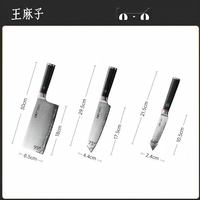
WANGMAZI | Damascus Steel Chefs Knife Household For Meat Slicing
₱11,280.89₱13,909.98
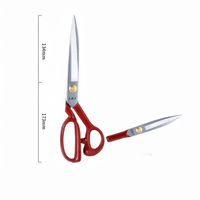
WANGMAZI | Tailor Scissors Professional Sewing and Fabric Cutting Large
₱2,053.47₱3,703.41
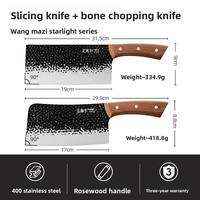
WANGMAZI | Hand Forged Kitchen Cutting Knife
₱2,768.30₱3,663.59

WANGMAZI | Special Pedicure Tool Large Size Nail Clipper
₱1,104.06₱1,138.17

WANGMAZI | Titanium & Stainless Steel Kitchen Scissors for Home Use and Chicken Bones
₱590.63₱889.81

WANGMAZI | Titanium Kitchen Scissors For Food Preparation
₱636.84₱739.84
About WANGMAZI
WANGMAZI (王麻子) is a historic Chinese cutlery and scissors brand with deep roots in Beijing. Its origins are traditionally traced to 1651, during the Shunzhi era of the Qing dynasty. Over more than three centuries, the name has become synonymous with forged scissors, kitchen knives, and traditional Chinese blade-making craftsmanship. The brand is officially recognized in China as a “Zhonghua Laozihao” (China Time-Honored Brand), and its traditional scissors-forging technique is listed as part of the national intangible cultural heritage.1
Historical records indicate that the WANGMAZI name emerged in Beijing in 1651 and became associated with a shopkeeper surnamed Wang who was nicknamed “Wang Mazi” (“Wang the Pockmarked”) due to facial pockmarks. Official heritage sources consistently cite 1651 as the brand’s founding date.
Overview
| Field | Information |
|---|---|
| Chinese name | 王麻子 |
| Romanization | WANGMAZI |
| Industry | Cutlery, scissors, kitchen tools |
| Origin | Beijing, China |
| Traditional founding date | 1651 |
| Brand category | Chinese traditional/time-honored brand |
| Best known for | Forged scissors and kitchen knives |
| Heritage | Wang Mazi scissors-forging technique |
| National intangible cultural heritage | Yes; listed in 2008 |
| China Time-Honored Brand | Yes |
| Historical reputation | “南有张小泉,北有王麻子” — “Zhang Xiaoquan in the south, Wang Mazi in the north” |
The Ministry of Commerce’s Time-Honored Brand Digital Museum identifies Beijing Yichang Wangmazi Industry & Trade Co., Ltd. (北京栎昌王麻子工贸有限公司) as the enterprise associated with the WANGMAZI brand in its historical-brand record.
Name and meaning
王麻子 (Wáng Mázi) literally translates to approximately “Wang the Pockmarked.” According to traditional brand history, the original shopkeeper was surnamed Wang and had visible facial pockmarks. Customers began referring to the scissors and knives sold at his shop as “Wang Mazi” products. What started as a personal nickname eventually evolved into the commercial name of one of China’s most recognized traditional cutlery brands.
Unlike many modern Chinese brands with names created specifically for marketing, WANGMAZI derives its identity from an old-fashioned personal descriptor, distinguishing it within the industry.
Origins: Beijing, 1651
The traditional history of WANGMAZI begins in 1651, the eighth year of the Shunzhi reign of the Qing dynasty. The early business was located outside Xuanwumen (宣武门) in Beijing and focused on selling knives, scissors, and other iron goods. Historical accounts suggest that the superior quality of its scissors served as its primary competitive advantage.2
A critical component of the early business model was rigorous quality selection. WANGMAZI developed a famous principle known as “三看、两试” (Three Looks, Two Tests). The three inspections involved examining the appearance, the cutting edge, and the pivot or joint. The two tests required assessing cutting performance and the operational feel of the scissors. Only products passing these checks were deemed fit for sale, establishing quality control as a foundational element of the WANGMAZI identity.3
Early reputation
WANGMAZI’s reputation expanded beyond Beijing relatively early in its history. A significant historical reference appears in 1758, when Qing scholar Pan Rongbi mentioned WANGMAZI in Dijing Suishiji (《帝京岁时纪胜》), a text documenting Beijing customs and products. This inclusion provides documentary evidence that the name was already associated with notable goods in the capital by the 18th century.
By the early 19th century, the brand had achieved sufficient fame that descendants of the original business adopted the name “三代王麻子” (Three Generations of Wang Mazi). In 1816, a shop at 135 Xuanwai Street, Beijing, used this signboard, and the WANGMAZI name was subsequently engraved directly onto scissors as a recognizable mark.
“The North’s Wang Mazi”
WANGMAZI eventually became one of the two most famous traditional Chinese scissors brands. The traditional saying “南有张小泉,北有王麻子” translates to “Zhang Xiaoquan in the south, Wang Mazi in the north.” Here, Zhang Xiaoquan refers to the renowned Hangzhou-based scissors brand. Together, these two names serve as shorthand for the geographical traditions of Chinese scissors manufacturing.11 Consequently, WANGMAZI occupies a significant position not only as a historic knife brand but also in the broader history of Chinese scissors and traditional forging.
Traditional craftsmanship
The core of WANGMAZI’s heritage lies in forging rather than merely assembling or stamping metal components. Traditional scissors production involved heating, forging, shaping, grinding, sharpening, assembling, and adjusting blades. This process demands considerable manual skill, as the two blades must function in precise coordination rather than simply being individually sharp.
The traditional WANGMAZI scissors-forging technique was designated a National Intangible Cultural Heritage project in 2008 under the traditional craft category. The official Chinese intangible cultural heritage database identifies it as project VIII-38, with Beijing listed as the declaring region.4 This designation distinguishes WANGMAZI from ordinary contemporary scissors manufacturers, positioning it simultaneously as a consumer brand and a custodian of traditional Chinese craft.
The famous “Black Tiger”
One of WANGMAZI’s historically significant products was known as “黑老虎” (Black Tiger). Traditional WANGMAZI scissors were characterized by their dark, polished appearance and sharp blades. “Black Tiger” became a popular nickname for this specific style and remains an important part of the brand’s product history.5
The product’s reputation rested on practical characteristics rather than elaborate branding, including sharpness, durability, smooth operation, strong blade construction, a traditional forged appearance, and consistent workmanship.
Expansion during the late Qing and Republican periods
WANGMAZI evolved from a single historic shop into a broader production network. Historical records cited by the brand and the Chinese intangible-cultural-heritage system indicate that by 1936, there were approximately 70 workshops associated with WANGMAZI production, employing more than 300 people.6 This expansion demonstrates that “WANGMAZI” had transitioned from a local shop name into a recognized brand and production standard.
During this period, the brand also became vulnerable to imitation. Historical accounts describe numerous businesses using names resembling WANGMAZI, such as “True Wang Mazi” and “Old Wang Mazi,” illustrating the high commercial value of the WANGMAZI reputation.
Reorganization after 1949
Following the establishment of the People’s Republic of China, Beijing’s traditional scissors workshops underwent significant organizational changes. In 1956, numerous knife-and-scissors workshops were organized into cooperative production structures, consolidating the WANGMAZI name into a formal industrial organization.
In 1959, the Wang Mazi Scissors Factory was established in Beijing, and the WANGMAZI trademark was formally registered. This era marked the transformation of WANGMAZI from a traditional network of workshops into a modern industrial enterprise.
National recognition
Throughout the 20th century, WANGMAZI products received significant recognition within China. According to the brand’s historical records, WANGMAZI products earned National Silver Awards during the 1980s, with “Black Tiger” scissors specifically recognized for their quality. Products were also exported to Hong Kong, Macao, and Southeast Asia. These achievements associated the brand with broader Chinese manufacturing quality rather than solely with Beijing specialty goods.
Crisis and restructuring
WANGMAZI’s history includes a major business crisis during China’s economic restructuring in the 1990s and early 2000s. In 1995, the former scissors factory joined a larger WANGMAZI industrial group before undergoing further restructuring. In 2002, the scissors factory applied for bankruptcy protection, formally entering bankruptcy in January 2003.
This episode demonstrates that a famous heritage brand can survive culturally even when its original corporate structure fails commercially. The WANGMAZI trademark and brand subsequently underwent further corporate reorganization.
Revival and modern WANGMAZI
The modern brand seeks to combine its historical identity with contemporary manufacturing and product design. Current brand presentation emphasizes three core values:
传承 (Inheritance)
Preserving traditional forging techniques and Chinese knife-and-scissors culture.
创新 (Innovation)
Combining traditional craftsmanship with modern technology and product development.
引领 (Leadership)
Positioning WANGMAZI as a modern Chinese kitchen-knife and cutlery specialist.7
The brand describes its contemporary ambition as becoming a world-class kitchen-knife benchmark while promoting Chinese knife-and-scissors culture internationally.10
“China Time-Honored Brand” status
A key modern credential for WANGMAZI is its 中华老字号 (China Time-Honored Brand) status. The Ministry of Commerce’s Time-Honored Brand Digital Museum identifies WANGMAZI as a China Time-Honored Brand with a founding year of 1651. This designation is a recognized heritage classification for businesses possessing long histories, distinctive products or services, and cultural significance. WANGMAZI thus forms part of China’s broader traditional-brand ecosystem alongside historic names in medicine, food, tea, and clothing.
Product range today
While scissors remain the historical symbol of WANGMAZI, the contemporary product portfolio has expanded significantly. Products associated with the modern brand include:
- Kitchen knives
- Scissors
- Fruit and vegetable tools
- Peelers
- Sharpeners and whetstones
- Cutting boards
- Other kitchen-related cutting tools9
This expansion reflects a strategic shift from being primarily a scissors brand toward becoming a comprehensive Chinese kitchen-cutlery brand.
Design and modernization
The modern WANGMAZI identity extends beyond traditional aesthetics. The company states that contemporary WANGMAZI products have received international design recognition, including an iF Design Award in 2022 and MUSE Design Awards gold awards in 2024 for two product series.7
This reflects a strategic evolution from the traditional focus on craftsmanship, durability, and household reputation toward a modern approach integrating traditional craftsmanship with modern engineering, industrial production, contemporary design, and global positioning. The brand aims to leverage its heritage as an asset for modern product design rather than relying solely on nostalgia.
Cultural significance
WANGMAZI possesses value across multiple dimensions:
- Historical value: Origins tracing back to 17th-century Beijing.
- Craft value: Traditional scissors-making technique recognized as national intangible cultural heritage.8
- Brand value: “王麻子” is a recognizable household name beyond its original workshop context.
- Cultural value: Strong association with traditional Beijing commerce and Chinese metalworking.
- National-brand value: Official recognition as a China Time-Honored Brand.9
- Contemporary value: Competition through product innovation and international design alongside historical reputation.10
Brand positioning
WANGMAZI is best understood today as a historic Chinese cutlery brand that uses traditional forging heritage as the foundation for modern kitchen knives, scissors, and household cutting tools. Its differentiation lies in the combination of over 300 years of heritage, Beijing identity, traditional forging, national intangible cultural heritage status, time-honored-brand recognition, and modern kitchen products.
WANGMAZI vs. Zhang Xiaoquan
WANGMAZI is frequently compared to Zhang Xiaoquan (张小泉), another legendary Chinese scissors brand.
| Feature | WANGMAZI | Zhang Xiaoquan |
|---|---|---|
| Historical association | Beijing | Hangzhou |
| Traditional reputation | Northern China | Southern China |
| Famous product | Scissors / kitchen knives | Scissors |
| Traditional saying | “North” | “South” |
| Heritage | Traditional scissors forging | Traditional scissors craftsmanship |
| Brand identity | Beijing / northern Chinese cutlery | Hangzhou / Jiangnan scissors tradition |
| Modern direction | Kitchen knives + scissors + kitchen tools | Scissors + broader household/kitchen products |
The phrase “南有张小泉,北有王麻子” effectively summarizes their historical regional positioning.11
Brand timeline
- 1651: WANGMAZI’s traditional founding date in Beijing.
- 1758: WANGMAZI documented in Dijing Suishiji.
- 1816: “三代王麻子” (“Three Generations of Wang Mazi”) appears as a shop sign.
- 1916–1936: WANGMAZI-related workshop production expands substantially; by 1936, historical records cite around 70 workshops.6
- 1956: Beijing reorganizes traditional knife-and-scissors workshops.
- 1959: WANGMAZI Scissors Factory established and trademark formally registered.
- 1980s: WANGMAZI products receive national-level quality recognition and expand into overseas markets.
- 2002–2003: Original WANGMAZI scissors enterprise enters bankruptcy and restructuring.
- 2008: WANGMAZI scissors-forging technique enters the national intangible cultural heritage list.4
- 2010/2011: WANGMAZI receives China Time-Honored Brand recognition; Ministry of Commerce database records recognition in 2011.
- 2020: Brand enters new modernization phase associated with “China Kitchen Knife Expert” positioning.10
- 2022: WANGMAZI products receive iF Design Award.7
- 2023: Brand passes review for continued China Time-Honored Brand status.
- 2024: Two product series receive MUSE Design Awards gold awards.7
Distinctive brand assets
Evaluated as a brand rather than merely a manufacturer, WANGMAZI’s key assets include:
- Heritage: Over three centuries of claimed history.
- Recognition: China Time-Honored Brand status.
- Craftsmanship: National intangible cultural heritage associated with scissors-forging technique.
- Iconic name: “王麻子” is memorable and culturally distinctive.
- Historical product: Traditional forged scissors serve as the strongest heritage symbol.
- Regional identity: Strong connection to historic Beijing.
- Cultural narrative: The “Three Looks, Two Tests” philosophy provides a concrete story about craftsmanship.
- Modernization: Contemporary kitchen knives, tools, and design awards enable relevance beyond heritage status.