Shop on Lazada
Wharfedale products
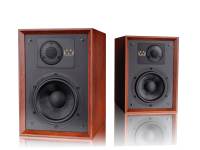
WHARFEDALE DENTON 2 (85TH ANNIVERSARY) MAHOGANY
₱48,000.00₱57,600.00
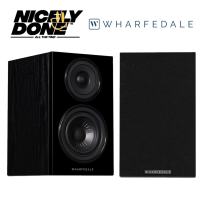
Wharfedale Diamond 12.2 Bookshelf Speaker
₱21,600.00
Buy on Lazada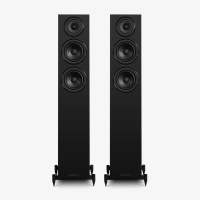
Wharfedale DIAMOND 12.4i
₱53,700.00
Buy on Lazada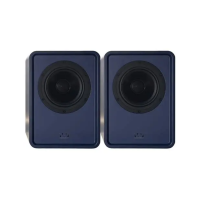
Wharfedale Denton 1S Bookshelf Speaker
₱41,500.00
Buy on Lazada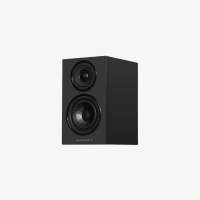
Wharfedale DIAMOND 12.2i
₱25,300.00
Buy on LazadaWharfedale DIAMOND 12.1i
₱19,500.00
Buy on Lazada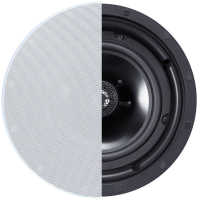
Wharfedale WCM-65 (Pair)
₱10,200.00₱12,300.00
About Wharfedale
Wharfedale is a historic British hi-fi loudspeaker brand established in 1932 by Gilbert Arthur Briggs in Yorkshire, England. Recognised as one of the oldest surviving names in high-fidelity audio, it is particularly associated with home loudspeakers, bookshelf speakers, floorstanding speakers, and classic British hi-fi design. Over more than nine decades, Wharfedale has evolved from a small Yorkshire workshop into an internationally distributed audio brand.1
Today, Wharfedale operates under the International Audio Group (IAG), an audio conglomerate whose portfolio also includes Audiolab, QUAD, Mission, Castle, and LEAK.
Basic information
| Brand | Wharfedale |
| Industry | Consumer audio / Hi-fi |
| Founded | 1932 |
| Founder | Gilbert Arthur Briggs |
| Origin | Ilkley / Yorkshire, England |
| Original company | Wharfedale Wireless Works |
| Best known for | Hi-fi loudspeakers |
| Parent group | International Audio Group (IAG) |
| Product types | Bookshelf, floorstanding, centre-channel, installation speakers, subwoofers and home-cinema speakers |
| Notable families | Diamond, Denton, Linton, Dovedale, Elysian, EVO and Heritage |
| Official positioning | British loudspeaker engineering and high-fidelity reproduction |
Wharfedale states that the company was founded in 1932 and that its products are designed and engineered in the UK.1
Origins
The history of Wharfedale begins with Gilbert Arthur Briggs, a British music enthusiast and experimenter dedicated to reproducing the sound of live music.
In 1932, Briggs constructed his first loudspeaker in the cellar of his home in Ilkley, Yorkshire. Ilkley is situated in the valley of the River Wharfe, a region known as Wharfedale. Briggs adopted this geographical name for his new loudspeaker enterprise.1
This origin is central to the brand’s identity: “Wharfedale” is not an invented electronics name but derives directly from the Yorkshire landscape where the company began.
In 1933, Briggs established a small factory near Bradford to manufacture loudspeaker drive units. His wife, Doris Edna Briggs, participated in early production tasks, including winding coils and assembling components.2
That same year, Briggs entered the Bradford Radio Society competition with his loudspeakers, winning both first and second prize. This success secured Wharfedale’s first major order and helped establish the company commercially.1
The early Wharfedale Wireless Works
The original business operated under the name Wharfedale Wireless Works.
The 1930s were a pivotal period for radio. As domestic radio ownership expanded, demand for better loudspeaker drive units increased, allowing Wharfedale to grow from a small workshop into a significant British manufacturer.
According to company records, production reached approximately 9,000 units per year before the Second World War.1
During the war, Wharfedale undertook manufacturing work for the British electronics industry, including transformer production for Marconi. Historical accounts indicate that approximately 40,000 transformers were produced by a staff of around 20 during this period.2
This wartime work helped Wharfedale develop manufacturing capabilities beyond its original loudspeaker business.
Gilbert Briggs and the philosophy of “real” sound
A defining aspect of Wharfedale’s history is Briggs’ focus on making reproduced music sound more like live music, rather than simply increasing volume.
Briggs was an avid listener to live musical performances and regarded them as the primary reference point for judging audio reproduction. His approach therefore combined engineering with critical listening.
He also became an author and educator. In 1948, he published Loudspeakers: The Why and How of Good Reproduction, followed by other writings on sound reproduction. These publications helped communicate loudspeaker engineering concepts to the growing community of hi-fi enthusiasts.1
Briggs was not merely a manufacturer; he was among the early British figures who helped develop the culture and technical understanding of hi-fi itself.
The two-way loudspeaker
One of Wharfedale’s most significant historical contributions was the development of the two-way loudspeaker concept.
In the 1940s, Wharfedale developed a system using separate drivers for different portions of the frequency spectrum, with a crossover network directing frequencies to the appropriate driver. Wharfedale dates this development to 1945.1
The basic principle remains standard today:
- A woofer/mid-bass driver handles lower and middle frequencies.
- A tweeter handles higher frequencies.
- A crossover network divides the audio signal between them.
Modern two-way bookshelf speakers are descendants of this approach. While the original Wharfedale implementation was large by modern standards, it established an architecture fundamental to domestic loudspeaker design.
Sand-filled cabinets and resonance control
Wharfedale also experimented with cabinet construction in its pursuit of better sound.
During the post-war period, the company tested sand-filled loudspeaker cabinets, using mass to control unwanted vibration and resonance.3
This illustrates a key characteristic of classic British hi-fi engineering: the loudspeaker cabinet is not treated merely as a box containing drivers, as its mechanical behaviour directly affects sound quality.
Wharfedale’s history includes experimentation with:
- Driver design
- Cabinet construction
- Damping
- Resonance control
- Crossover design
- Acoustic measurement
- Materials engineering
The Wharfedale–QUAD demonstrations
A notable episode in Wharfedale’s history occurred during the 1950s, when Gilbert Briggs collaborated with Peter Walker, founder of QUAD.
Wharfedale supplied the loudspeakers while QUAD provided amplification. Together, they organised demonstrations comparing live music with recorded/reproduced music.
The premise was simple: could an audience distinguish a live performance from the same performance reproduced through a hi-fi system?
These demonstrations became famous and were staged at major venues in Britain and the United States, including Royal Festival Hall in London and Carnegie Hall in New York.
They promoted a fundamental tenet of high fidelity: the goal of a hi-fi system is not merely to produce impressive sound, but to reproduce music convincingly enough to approach the experience of the original performance. This philosophy remains strongly associated with British hi-fi.
The 1958 sale
Wharfedale’s independent era under Gilbert Briggs ended in 1958, when Wharfedale Wireless Works was sold to The Rank Organisation. Briggs remained involved in the company and managed day-to-day operations until his retirement in 1965.2
The acquisition enabled Wharfedale to expand beyond loudspeakers into broader electronics, marking the beginning of a series of corporate changes that would eventually integrate the brand into the international audio industry.
The 1960s
The 1960s were a period of significant expansion. The company invested in larger manufacturing facilities and continued developing loudspeaker technology. Historical records describe a 170,000-square-foot production facility built during the decade to meet rising demand.2
This era also saw the emergence of new technologies, including developments related to acoustic suspension. By this time, Wharfedale was increasingly recognised as an international hi-fi brand rather than solely a British manufacturer.
The 1970s and scientific loudspeaker development
During the 1970s, Wharfedale continued to invest in acoustic research. A notable development was the use of laser interferometry, an advanced measurement technique used to analyse the movement and behaviour of loudspeaker cones. IAG describes this as part of Wharfedale’s efforts to improve accuracy and neutrality in design.
This marked a transition from traditional craftsmanship toward sophisticated measurement-based engineering. Consequently, Wharfedale’s identity developed around a combination of British acoustic tradition, engineering research, and practical manufacturing.
The Diamond series
The Diamond series is arguably the product family that transformed Wharfedale’s modern reputation.
The concept was significant because Wharfedale applied its engineering expertise to relatively affordable loudspeakers rather than focusing exclusively on expensive high-end products. This resulted in a reputation for offering serious hi-fi performance at accessible prices.
This value-oriented philosophy is central to understanding Wharfedale, which has historically operated across multiple market levels rather than functioning exclusively as a luxury manufacturer.
The Denton and Linton legacy
Two names are particularly important to Wharfedale’s heritage: Denton and Linton.
Both began as classic designs and have been revived in modernised forms. The original concept was strongly associated with the classic British bookshelf/standmount loudspeaker: substantial cabinets, traditional wood finishes, and an emphasis on natural, balanced musical reproduction.
Modern Wharfedale Heritage models retain the visual inspiration of the originals while utilising contemporary drivers, materials, and engineering. Wharfedale explicitly describes its Heritage Series as re-engineered recreations of famous historical models.1
Current Heritage products include:
- Denton 80
- Denton 85
- Denton 1S
- Super Denton
- Linton
- Super Linton
- Dovedale
- Aston
- Heritage Centre1
Wharfedale today
Wharfedale is currently part of the International Audio Group (IAG), whose portfolio includes several historically important audio brands such as Audiolab, QUAD, Mission, Castle, and LEAK. This places Wharfedale within a larger ecosystem of British-origin hi-fi brands.
The current product range is considerably broader than the company’s early drive units. Categories listed on the official website include:
- Bookshelf speakers
- Floorstanding speakers
- Centre-channel speakers
- Subwoofers
- Installation speakers
- Home-cinema products
- Speaker stands1
Current product families include Diamond 12i, Elysian, EVO, Heritage, Aura, and DX, among others.1
Major current product families
Diamond
The Diamond family represents Wharfedale’s long-running approach to affordable hi-fi. Aimed at listeners seeking conventional high-fidelity stereo without entering premium price brackets, the series has been instrumental in establishing Wharfedale as a strong price-to-performance brand.
Heritage
The Heritage line provides the most visible connection between modern Wharfedale and its past. Models such as the Linton, Denton, Super Denton, and Dovedale use traditional cabinet aesthetics and proportions while incorporating modern acoustic engineering.1 The result is deliberately distinct from the minimalist appearance of many contemporary speakers.
Elysian
Elysian sits towards the premium end of Wharfedale’s traditional hi-fi range. It represents an attempt to combine advanced driver and cabinet engineering with luxury-oriented physical design.
EVO
The EVO range occupies a key position in the contemporary portfolio, combining modern cabinet styling with advanced loudspeaker technology.
Distinctive characteristics
Wharfedale’s identity can be summarised through several key characteristics.
British heritage
The company has a continuous history stretching back to 1932, making it one of the oldest names in consumer hi-fi.1
Value for money
Wharfedale has historically emphasised the relationship between sound quality, engineering, and price, rather than positioning every product as ultra-luxury. The company cites Gilbert Briggs’ philosophy regarding quality and value for money as a continuing influence.3
Musical presentation
Wharfedale has traditionally prioritised natural and convincing musical reproduction over spectacular specifications.
Cabinet design
The company has historically paid considerable attention to cabinets, damping, and resonance control.
Heritage-inspired products
Few modern speaker companies feature their historical designs so prominently. Modern Linton, Denton, and Dovedale products deliberately connect contemporary engineering with classic British hi-fi aesthetics.
Place in British hi-fi history
Wharfedale belongs to a generation of British audio companies that established the international reputation of British hi-fi. It emerged during the same broad historical period as QUAD, Bowers & Wilkins, KEF, Celestion, Rogers, Mission, Spendor, and Harbeth.
Wharfedale is unusual for its longevity. It began before the modern hi-fi industry was fully established, survived major technological transitions—including the shift from radio to records, stereo, transistor electronics, home cinema, and digital audio—and continues to manufacture loudspeakers in the 21st century.
Wharfedale and the “British sound”
The phrase “British sound” is frequently used in hi-fi discussions, though it lacks a precise technical definition. Historically, many British manufacturers emphasised:
- Natural midrange reproduction
- Balanced tonal presentation
- Controlled rather than exaggerated bass
- Good vocal reproduction
- Accurate musical timbre
- Compact but acoustically sophisticated cabinets
Wharfedale has often occupied this philosophical territory. However, it would be inaccurate to suggest all Wharfedale speakers sound identical; the Diamond, Heritage, EVO, and Elysian families have distinct engineering objectives and designs.
Significance of the Linton
The Linton merits special mention as it exemplifies Wharfedale’s approach to heritage. The classic Linton was a substantial domestic loudspeaker designed for music lovers rather than laboratory monitoring.
The modern Linton combines this visual and conceptual heritage with contemporary driver technology and cabinet engineering. Its popularity stems from offering a system that merges vintage appearance with modern hi-fi performance. Wharfedale explicitly positions modern Linton and Denton models as historically inspired but re-engineered using contemporary techniques and materials.1
Relationship with audiophiles
Wharfedale occupies a distinct position in the audiophile world. It is not exclusively an ultra-high-end brand; instead, it has historically appealed to:
- Beginners entering serious hi-fi
- Enthusiasts building affordable stereo systems
- Audiophiles seeking strong price/performance
- Owners of vintage hi-fi
- Fans of classic British industrial design
- Home-theatre users
- Collectors of heritage-inspired equipment
This broad appeal is a key factor in the brand’s enduring relevance.
Brand philosophy
Wharfedale’s philosophy can be summarised as: using engineering to make recorded music sound natural and convincing without making high-quality audio unnecessarily inaccessible.
This concept traces back to Gilbert Briggs’ original interest in reproducing live music and the company’s historical emphasis on both performance and value.1
Timeline
| Year | Event |
|---|---|
| 1932 | Gilbert Arthur Briggs builds his first loudspeaker in Ilkley, Yorkshire |
| 1933 | Wharfedale Wireless Works begins commercial production |
| 1933 | Wharfedale wins first and second prize at the Bradford Radio Society competition |
| 1930s | Production expands toward thousands of units annually |
| 1940s | Wharfedale contributes to wartime electronics manufacturing |
| 1945 | Development of an early two-way loudspeaker design |
| 1948 | Briggs publishes Loudspeakers: The Why and How of Good Reproduction |
| 1950s | Wharfedale and QUAD conduct famous live-vs-recorded demonstrations |
| 1958 | Wharfedale sold to The Rank Organisation |
| 1960s | Major manufacturing expansion and continued acoustic development |
| 1970s | Further research into loudspeaker behaviour, including laser interferometry |
| Later decades | Wharfedale develops its Diamond and other major speaker families |
| Modern era | Heritage models such as Linton, Denton and Dovedale revive classic Wharfedale designs |
| Today | Wharfedale operates within International Audio Group and sells a broad range of hi-fi/home-audio loudspeakers |
Corporate identity distinction
It is important to distinguish between Wharfedale and Wharfedale Pro.
Wharfedale is the traditional hi-fi and home-audio loudspeaker brand described above. Wharfedale Pro is a separate professional-audio brand focused on PA loudspeakers and sound reinforcement.
While they share the Wharfedale name and historical roots, they serve substantially different markets. Consumers considering a Linton, Denton, Diamond, EVO, or Elysian are engaging with the traditional Wharfedale hi-fi brand.
Overall assessment
Wharfedale’s historical importance lies in its presence during the formative years of high-fidelity audio. From Gilbert Briggs building a speaker in a Yorkshire cellar in 1932, the company progressed through early radio loudspeakers, two-way speaker technology, cabinet experimentation, famous live-vs-recorded demonstrations with QUAD, international expansion, and the modern era of affordable and high-end hi-fi.1
Its modern identity combines three elements:
- British hi-fi heritage: A history spanning more than 90 years.
- Engineering and acoustic research: From early drive-unit experimentation to modern measurement, materials, and cabinet design.
- Value and musicality: A long-standing commitment to making convincing high-fidelity reproduction available across various price points.
This combination explains why Wharfedale remains a recognisable name among both mainstream music listeners and serious hi-fi enthusiasts.