Shop on Lazada
WTB products

WTB Tubeless Tire Sealant for bicycles
₱1,512.00
Buy on Lazada
PAIR WTB Tubeless Ready Rims with Eyelet 32holes 27.5 29 700c
₱1,900.00
Buy on Lazada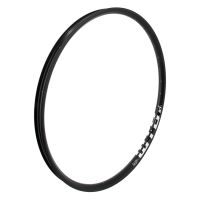
Rim 29er WTB w/ Eyelet Tubeless Ready 32H Disc Brake Sold Per Piece
₱950.00
Buy on Lazada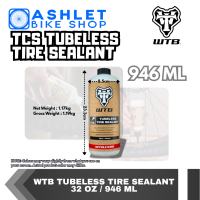
WTB TCS TUBELESS TIRE SEALANT FOR BIKE TIRES 118ML / 237ML / 473ML / 946ML
₱1,368.00₱1,440.00
WTB TCS Tubeless Tire Sealant
₱990.00
Buy on Lazada
WTB STP i25 RIMS TUBELESS READY
₱1,888.00₱2,200.00

WTB Handle Grip MTB Pair Single Clamp Alloy New
₱399.00₱499.00
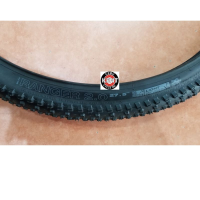
WTB RANGER 26X3.0 / 27.5X2.0 / 27.5X2.25 / 29X2.0 TIRE WIRED (EACH)
₱795.00
Buy on LazadaAbout WTB
WTB, short for Wilderness Trail Bikes, is an American bicycle-component brand best known for its tires, saddles, rims, wheels, grips, hubs, and other cycling components. Founded in 1982 in Marin County, California, WTB emerged from the early American mountain-bike movement and has become one of the longest-running specialist component brands in the mountain-bike industry 1.
WTB’s identity is closely tied to the development of mountain biking itself. The company was created by pioneering Marin County builders Steve Potts, Charlie Cunningham, Mark Slate, and Lance Wyeth, with the original goal of creating better equipment for the rapidly developing sport of mountain biking.
Quick facts
| Category | Information |
|---|---|
| Full name | Wilderness Trail Bikes |
| Abbreviation | WTB |
| Founded | 1982 |
| Origin | Marin County / Mill Valley, California, USA |
| Industry | Bicycle components |
| Specialty | Tires, saddles, rims, wheels and cycling components |
| Primary markets | Mountain biking, gravel, road and adventure cycling |
| Company type | Privately held |
| Official website | wtb.com |
| Brand positioning | Performance-oriented, durable cycling components |
Origins: the birth of WTB
WTB was founded in 1982, during the formative years of mountain biking in Marin County, California. The region around Mount Tamalpais is widely associated with the early development of the sport, and WTB’s founders were among the engineers, frame builders and riders experimenting with equipment specifically designed for off-road riding 1.
Rather than simply adapting conventional road-bike components, the founders wanted to develop equipment capable of handling rough terrain, steep descents and the demands of early mountain bikes.
WTB initially concentrated on components such as brakes, hubs, fork components and small accessories. Production began in 1983.
The company’s philosophy was essentially:
Build something because the existing solution isn’t good enough, then keep improving it.
That attitude remains central to WTB’s identity today. The company describes its philosophy as “We make things better, and we make better things.”
Early innovations
WTB became particularly influential because it wasn’t merely a component supplier; it was involved in developing technologies and concepts that helped shape mountain-bike equipment.
During its early years, WTB worked on components and technologies that were subsequently used more broadly throughout the bicycle industry. The company also licensed some of its technology to larger manufacturers 2.
One notable example was WTB’s contribution to the development of 29-inch mountain-bike tires. In 1999, WTB introduced a 29-inch tire designed specifically around the larger wheel format, helping establish the category that would eventually become mainstream in mountain biking.
This is an important part of WTB’s historical significance: the company was willing to experiment with formats that were not yet conventional.
From niche mountain-bike company to global component brand
Throughout the 1990s and 2000s, WTB expanded from its original experimental roots into a broader component manufacturer.
The company supplied components to bicycle manufacturers and developed relationships with major bicycle brands. Its products eventually appeared on bikes from manufacturers such as Trek, GT, Cannondale and Marin, among others 2.
WTB also experimented with complete frames during this period, including models such as the Phoenix and Bon Tempe. However, frames were never the company’s main long-term business. WTB ultimately became much more strongly associated with components than complete bicycles 3.
Major milestones
WTB’s official history highlights several important developments:
- 1982 — WTB founded: The company is established in Marin County, California.
- 1983 — Production begins: WTB begins producing brakes, hubs, fork crowns and other components.
- 1991 — Phoenix: WTB begins producing its Phoenix steel frame.
- 1997 — Bon Tempe: WTB develops the Bon Tempe full-suspension frame.
- 1999 — 29-inch tire: WTB introduces an early purpose-designed 29-inch mountain-bike tire.
- 2001 — Laser V: WTB introduces the Laser V saddle.
- 2011 — TCS: WTB introduces its TCS (Tubeless Compatible System) technology 1.
- 2014 — 27.5+: WTB expands into the emerging 27.5+ category.
- 2016 — Road Plus: WTB develops the Road Plus tire/rim category.
- 2019 — Fit Right: WTB introduces a personalized saddle-fitting system.
- 2020 — SG2 TCS: WTB introduces SG2-equipped TCS gravel tires.
- 2021 — Proterra: WTB launches its Proterra wheel range, hand-built in California.
What does WTB make?
Today, WTB’s product portfolio is centered around several major categories.
Tires
Tires are one of WTB’s most recognizable product categories.
The company produces tires for:
- Mountain biking
- Trail riding
- Enduro
- Cross-country
- Gravel
- Road
- Adventure riding
Some recognizable WTB tire families include Vigilante, Trail Boss, Ranger, Riddler, Raddler, Resolute, Byway, and Gravelier.
WTB’s tire philosophy tends to emphasize balancing traction, rolling efficiency, durability and ride feel, rather than simply maximizing one characteristic.
Saddles
Saddles are another major part of the WTB brand.
Its range includes models such as:
- Volt
- Silverado
- Koda
- Rocket
- Speed
- Comfort
WTB has put considerable emphasis on saddle ergonomics and rider fit. Its Fit Right System is designed to recommend saddles based on an individual’s anatomy and riding style 1.
Rims and wheels
WTB also produces bicycle rims and complete wheel systems.
Its wheel technology is particularly associated with:
- Tubeless compatibility
- Lightweight construction
- Trail durability
- Mountain-bike applications
- Gravel and adventure applications
The Proterra line represents WTB’s move into complete wheel systems, while TCS remains an important part of its tubeless technology 1.
Grips and accessories
WTB also produces various smaller bicycle components and accessories, allowing the company to provide more than just tires and saddles.
Its current product lineup includes grips, accessories and other wheel-related products alongside its core categories.
TCS — Tubeless Compatible System
One of WTB’s most important technologies is TCS, or Tubeless Compatible System.
WTB introduced TCS in 2011 as a system covering components such as tires, rims, valves, tape and sealant 1.
The idea is to treat tubeless compatibility as a complete system rather than simply making a tire or rim individually tubeless-ready.
This became particularly relevant as mountain biking increasingly moved toward tubeless setups, which can provide benefits such as:
- Reduced risk of pinch flats
- Lower tire pressures
- Improved traction
- Potentially better ride comfort
- Greater control on rough terrain
WTB currently describes TCS as a major part of its technology portfolio.
WTB and mountain biking
WTB’s biggest historical contribution is arguably its connection to the evolution of mountain biking.
The brand originated when mountain biking was still a relatively young discipline. Its founders were not simply marketing an existing bicycle category—they were actively designing the components that early mountain bikers needed.
This gives WTB a different heritage from companies that entered mountain biking after the sport had already become commercially established.
WTB’s history includes work on:
- Early mountain-bike components
- Mountain-bike tires
- Wheel standards
- Saddles
- Tubeless systems
- Plus-size tires
- Gravel equipment
The company continues to describe itself as having been involved in cycling for more than four decades 1.
WTB’s design philosophy
WTB’s philosophy can be summarized around several ideas.
1. Function before fashion
WTB has historically been an engineering-oriented brand. Its products tend to focus on practical riding performance rather than lifestyle branding alone.
2. Real-world testing
WTB emphasizes testing products in actual riding environments and highlights professional athletes and riders who use its products.
3. Continuous development
The company’s history demonstrates a willingness to experiment with emerging categories—from 29-inch tires to tubeless systems, plus tires and Road Plus.
4. Rider comfort
This is particularly apparent in WTB’s saddle business. The company’s Fit Right System shows its focus on matching equipment to individual riders rather than assuming one product works equally well for everyone.
Brand positioning
WTB generally occupies the performance cycling component segment.
It is not primarily a fashion or lifestyle bicycle brand. Instead, its reputation is built around engineering and components that cyclists actually use on their bikes.
The brand’s strongest associations are:
Mountain biking → tires → saddles → tubeless technology → wheels → gravel/adventure cycling
Its history gives it particularly strong credibility among mountain-bike enthusiasts because WTB was involved in the sport from its earliest American development.
WTB today
As of 2026, WTB remains an established global cycling-component company. Its current product portfolio spans saddles, tires, wheels, rims, grips and accessories, serving mountain, gravel and road cyclists.
WTB’s U.S. headquarters is listed at 475 Miller Avenue, Mill Valley, California. The company also maintains a European operation in Plzeň, Czech Republic.
The company continues to work with professional athletes and cycling communities. Its sponsorship program supports racers, events and cycling initiatives, ranging from grassroots racing to bike-park development.
WTB also publishes an impact program covering areas including advocacy, sustainability, community and diversity/equity/inclusion.
Reputation and significance
WTB is significant in the bicycle industry for three main reasons.
First, its age. Established in 1982, it has been involved in cycling for more than 40 years.
Second, its origins. WTB emerged directly from the pioneering Marin County mountain-bike scene rather than entering the category after it became mainstream.
Third, its technical influence. The company has contributed to developments involving tires, wheel sizes, tubeless systems, saddles and other components that have become important parts of modern cycling 1.
In other words, WTB isn’t simply a company that makes mountain-bike parts. It is one of the companies whose history is intertwined with the development of the modern mountain bike itself.
In one sentence
WTB (Wilderness Trail Bikes) is a California-founded bicycle-component company established in 1982 by pioneers of the early Marin County mountain-bike scene, now known internationally for performance tires, saddles, rims, wheels, grips and cycling technologies such as TCS 1.