Shop on Lazada
Xerjoff products
Original Xerjoff Soprano V Muse Opera 100ML EDP
₱2,760.00₱10,000.00
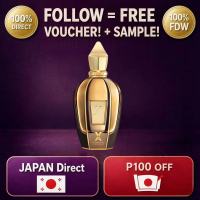
Xerjoff Alexandria ll Anniversary For UNISEX EDP 100ML Japan Direct FOLLOW for FREE ₱100 VOUCHER 100% Authentic
₱3,221.00₱8,774.00
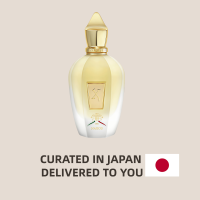
DIRECT FROM JP Xerjoff XJ 1861 Naxos for UNISEX EDP 100ML
₱3,102.00₱8,956.00
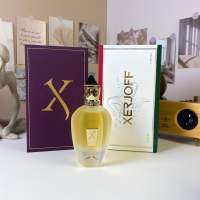
【Official Flagship Store】Xerjoff XJ 1861 Naxos EDP 100ML For Unisex Citrus Gourmand Fragrance
₱1,796.05₱5,633.00
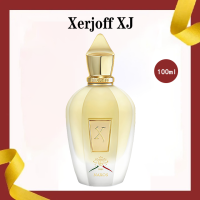
【100% Original】 Xerjoff XJ 1861 Naxos For Unisex 100ML EDP Citrus Aromatic Scent Long Lasting
₱1,832.10₱14,800.00
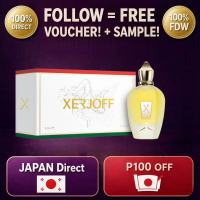
Xerjoff XJ 1861 Naxos For UNISEX EDP 100ML Japan Direct FOLLOW for FREE ₱100 VOUCHER 100% Authentic
₱3,552.00₱8,869.00
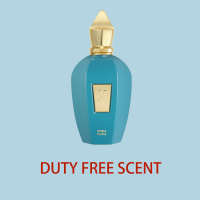
New Xerjoff Erba Pura for unisex Eau De Parfum 100ML
₱3,112.00₱7,994.00
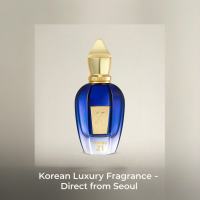
100% ORI Direct From Seoul Xerjoff Torino 21 EDP 50ML For UNISEX
₱3,460.00₱8,610.00
About Xerjoff
Overview
Xerjoff is an Italian luxury fragrance house established in Turin, Italy, in 2007 by Sergio Momo and Dominique Salvo. The brand occupies the luxury to ultra-luxury segment of the niche perfume market, distinguishing itself through elaborate bottle designs, precious materials, and complex fragrance compositions.1 Unlike mainstream fashion-led fragrance brands, Xerjoff centres its identity on perfumery as an art form, treating each release as a collectible object rather than a standard cosmetic product.1
As of its latest reporting, the house maintains a portfolio of over 180 original scents distributed across more than 125 countries, supported by 13 boutiques worldwide.1
History and origins
The conceptual foundation of Xerjoff predates its formal incorporation. Founder Sergio Momo, who possesses an artistic background, initially developed the concept of fragrance as an art object. Early prototypes included vessels hand-sculpted from polished quartz. According to company history, a client in Moscow commissioned additional pieces after encountering one of these early creations, catalysing the brand’s commercial development.1
Momo subsequently partnered with Dominique Salvo to formally establish Xerjoff in Turin in 2007.12 The brand’s name derives from “Joff,” a nickname associated with Momo, which was stylised into Xerjoff. Despite visual cues suggesting historical antiquity, the company is a 21st-century creation.2
In 2009, Xerjoff revived Casamorati, a historic Italian perfume house originally founded by Claudio Casamorati in Bologna in 1888. Having disappeared from the market for over six decades, Casamorati was reintroduced under Xerjoff’s stewardship with modern fragrances that retain elements of the original logo and bottle aesthetics.1
Design philosophy
Xerjoff operates on a philosophy of maximalist luxury, contrasting with the minimalist trends prevalent in contemporary high-end branding. The house emphasises craftsmanship, natural ingredients, and narrative storytelling, positioning fragrance as a multisensory artistic experience.1
Bottle design is integral to this identity. The signature cap draws inspiration from the Deshret, the ancient Egyptian Red Crown, a motif designed by Dominique Salvo with reference to the Egyptian Museum in Turin.1 A secondary flacon style introduced in 2016 features curved surfaces, ridges, and a substantial glass base, allowing the liquid’s colour and movement to contribute to the visual presentation.1 Across all collections, the vessel is intended to communicate luxury independently of the scent.
Collections
Xerjoff structures its offerings as distinct olfactory worlds rather than a single homogeneous line. Key collections include:
17/17 Stone Label
Launched in 2007, this inaugural collection established the brand’s core aesthetic of rare perfume presented in vessels incorporating semi-precious stones. It remains the purest expression of the house’s original luxury-art philosophy.1
Shooting Stars
Introduced in 2009, this collection draws inspiration from meteorites and celestial phenomena. Bottles feature meteorite fragments and gold-plated elements. Notable fragrances include Naxos, Alexandria II, Uden, La Capitale, and Erba Pura.1
1861 Collection
Created to mark the 150th anniversary of Italian unification, this line references the year 1861 and the formation of the Kingdom of Italy. Fragrances such as Naxos, Renaissance, Zefiro, and Decas celebrate Sicilian and broader Italian cultural heritage through citrus, aromatic, and warm accords.1
Join the Club (JTC)
This concept-driven series eschews ingredient-based naming in favour of fictional clubs and lifestyles. Releases including 40 Knots, More Than Words, Ivory Route, Torino21, and Torino22 are designed to evoke specific experiences and identities rather than describe scent profiles.1
Oud Stars
Focusing on oud and Middle Eastern perfumery traditions, this collection explores combinations of oud with rose, saffron, leather, amber, woods, spices, and florals. It has been particularly significant in establishing the brand’s presence in Middle Eastern markets.1
K Collection
Representing the upper tier of the house’s luxury positioning, the K Collection features exotic woods, spices, and oud in elaborate presentations aimed at serious collectors.1
Casamorati
Operating as a distinct sub-brand within the Xerjoff universe, Casamorati embraces 19th-century Italian perfumery, Art Nouveau aesthetics, and vintage design. Key fragrances include Lira, Italica, Dama Bianca, Mefisto, Gran Ballo, Dolce Amalfi, La Tosca, and 1888.1
Additional lines in the current portfolio include Blends, Coffee Break, Sketchbook, Spotlight, Spray to Help, Amphorae, XJ Oud, and Vibe.1
Olfactory profile
Xerjoff does not adhere to a single house scent but exhibits recurring characteristics across its portfolio:
- Richness: Compositions tend toward dense, luxurious textures rather than minimalist skin scents.
- Projection and longevity: Many releases are formulated for notable sillage and endurance.
- Sweetness: Popular fragrances frequently employ honey, vanilla, caramel, fruits, and amber.
- Oud and woods: A substantial portion of the catalogue features oud-heavy and woody structures.
- Citrus: Mediterranean citrus profiles appear alongside opulent oriental compositions.
- Texture: Scents often present creamy, syrupy, smoky, balsamic, or velvety qualities.
Raw materials are selected with emphasis on quality, including oud, rose, jasmine, iris, vanilla, tobacco, amber, sandalwood, citrus, spices, and precious woods. As with all modern fine perfumery, formulations combine natural and synthetic materials; the brand’s distinction lies in composition, concentration, and presentation rather than exclusive reliance on rare naturals.1
Notable fragrances
The following fragrances are among the house’s most recognised releases:
- Naxos – Honey, tobacco, lavender, and citrus; a signature of the 1861 collection.
- Erba Pura – Fruity, musky, and sweet.
- Alexandria II – Woody, oud-oriented, and luxurious.
- Torino21 – Fresh, green, and aromatic.
- Torino22 – Aromatic continuation of the Torino series.
- 40 Knots – Marine, woody, and amber-like.
- More Than Words – Rich, fruity, woody, and oud-oriented.
- Uden – Citrus, aromatic, and creamy.
- Renaissance – Bright Mediterranean citrus and herbs.
- Italica – Creamy, gourmand, and almond-oriented (Casamorati).
- Lira – Citrus, caramel, vanilla, and pastry-like gourmand (Casamorati).
- Dama Bianca – Soft, powdery, and floral (Casamorati).
- Mefisto – Fresh citrus, floral, and aromatic (Casamorati).
- La Capitale – Sweet, fruity, and gourmand.
- Zefiro – Spicy, resinous, and incense-like.
Portfolio availability may change as new releases are introduced and others retired.1
Market position and pricing
Xerjoff sits between traditional designer fragrance houses and independent niche perfumers. While rooted in the niche sector, its international distribution and boutique network exceed those of many artisanal counterparts.1
Pricing reflects multiple factors: high-end positioning, expensive raw materials, complex compositions, elevated concentrations, elaborate bottles, specialised packaging, limited editions, and luxury retail distribution. Purchasers acquire both a fragrance and a luxury object, particularly within collections such as 17/17 Stone Label and Shooting Stars.1
| Attribute | Xerjoff | Mainstream designer fragrance |
|---|---|---|
| Primary identity | Perfumery as art | Fashion/beauty brand extension |
| Distribution | Selective/luxury retail | Broad mass-market availability |
| Bottle design | Highly elaborate, collectible | Typically standardised |
| Fragrance style | Often experimental and rich | Generally broadly accessible |
| Price point | High to ultra-high | Low to high |
| Exclusivity | High | Moderate |
| Performance | Often strong projection and longevity | Variable |
| Narrative approach | Collection-driven storytelling | Campaign-driven marketing |
| Target audience | Enthusiasts, collectors, luxury buyers | Mass luxury consumer |
Global expansion and special projects
Xerjoff opened its first monobrand boutique in Dubai Mall in 2010, followed by expansion into major luxury destinations including Harrods in London. The Middle East remains a strategically important market due to regional alignment with the brand’s rich, oud-oriented compositions.1
Beyond core perfume releases, the house undertakes special projects including Spray to Help (a charitable fundraising initiative), Coffee Break, collaborations with the Nitto ATP Finals, location-exclusive fragrances, and limited editions.1
Cultural identity and audience
Xerjoff combines Italian design, French-style fine perfumery traditions, Middle Eastern luxury influences, and contemporary niche culture. Founded in Turin, the brand repeatedly incorporates Italian history and aesthetics, notably through the 1861 collection and the Casamorati revival.12
The brand appeals primarily to fragrance enthusiasts, niche collectors, oud and gourmand aficionados, and consumers seeking alternatives to mainstream designer offerings. Its opulent, extraverted character may be less suited to those preferring subtle scents, minimalist packaging, or budget-friendly options. For newcomers, discovery sets provide a practical introduction before investing in full bottles.1