Shop on Lazada
Yadea products
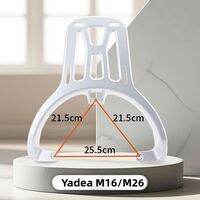
Yadea | Multiple Models Trunk Mounting Bracket
₱2,130.23₱2,295.13
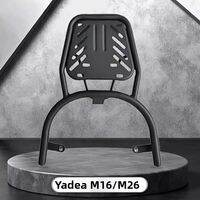
Yadea | Universal Thickening Rear Rack for Yadea Electric Bikes
₱2,596.77
Buy on Lazada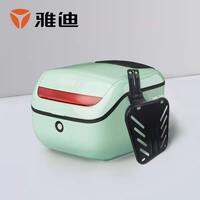
Yadea | Universal Electric Scooter Rear Box
₱3,393.80
Buy on Lazada
Yadea | Large Capacity Storage Box For E-bike
₱5,644.57
Buy on Lazada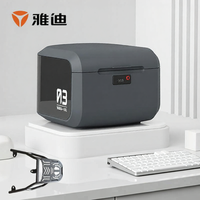
Yadea | Rear Box for Motorcycle and E-Bike Large Capacity
₱5,017.68
Buy on Lazada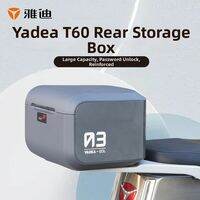
Yadea | Rear Trunk With Lock For Electric Bikes
₱5,183.43
Buy on Lazada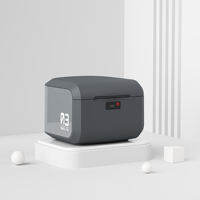
Yadea | High Capacity Trunk for Electric Scooters
₱5,583.91
Buy on Lazada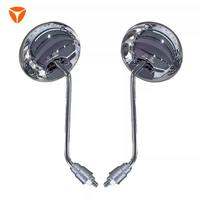
Yadea | Durable E-bike Mirror Chrome
₱727.19
Buy on LazadaAbout Yadea
Overview
Yadea Group Holdings Ltd., commonly referred to as Yadea, is a Chinese manufacturer and global brand specialising in electric two-wheelers, including electric scooters, motorcycles, mopeds, and bicycles. Headquartered in Wuxi, Jiangsu, China, the company has evolved from a domestic manufacturer into one of the world’s largest producers in this sector 1. Its corporate identity is anchored by the slogan “Electrify Your Life”, reflecting a strategic focus on replacing conventional gasoline-powered short-distance transport with electric mobility solutions.
As of its latest reporting, Yadea states it has served more than 100 million users through a global network exceeding 40,000 retailers 1. The company is listed on the Main Board of the Hong Kong Stock Exchange under the stock code 1585.HK 2.
| Category | Information |
|---|---|
| Brand | Yadea |
| Company | Yadea Group Holdings Ltd. |
| Chinese name | 雅迪 |
| Industry | Electric mobility / automotive |
| Main products | Electric motorcycles, scooters, mopeds, e-bikes |
| Founded | 2001 as Yadea Group |
| Origins | China |
| Headquarters | Wuxi, Jiangsu, China |
| Stock listing | Hong Kong Stock Exchange |
| Stock code | 1585.HK |
| International expansion | Began in 2007 |
| Brand slogan | “Electrify Your Life” |
| Current stated users | 100+ million |
| Retail network | 40,000+ retailers worldwide |
| Countries/regions | 100+ |
| 2024 milestone | More than 100 million electric two-wheelers sold cumulatively |
Business Profile
Yadea operates primarily as an electric two-wheeler mobility company. Unlike automotive manufacturers focused on electric cars, Yadea concentrates on smaller, more affordable personal transportation categories:
- Electric bicycles
- Electric scooters
- Electric mopeds
- Electric motorcycles
- Battery systems
- Electric-mobility components and accessories
This product mix is particularly relevant in markets where two-wheelers are essential for daily commuting. The company’s stated mission involves developing core electric vehicle technologies while adhering to international safety and quality standards.
History and Development
Early Beginnings
While Yadea’s corporate history traces back to the late 1990s, Yadea Group was formally established in 2001 1. Initially involved in motorcycles and components, the company strategically pivoted toward electric vehicles as China’s massive two-wheeler market began shifting away from gasoline engines.
International Expansion
Yadea commenced international exports in 2007, marking its transition from a domestic manufacturer to a global brand. By 2015, its products had reached 66 countries, including major markets such as the United States, Germany, the United Kingdom, France, Japan, and South Korea.
Public Listing
On 19 May 2016, Yadea Group Holdings Limited was listed on the Main Board of the Hong Kong Stock Exchange with stock code 1585 2. Yadea describes itself as the first Chinese electric vehicle enterprise to list on this exchange, a milestone that provided access to capital markets and transformed the company into a publicly accountable corporation.
Growth Milestones
Sales volume accelerated significantly in the late 2010s and early 2020s:
- 2017: Over 4 million units sold globally
- 2018: Over 5.03 million units
- 2020: Over 10 million units
- 2022: Over 14 million units
Citing Frost & Sullivan data, Yadea reports ranking No. 1 globally in annual electric two-wheeler sales for six consecutive years through 2022. By 2024, cumulative sales exceeded 100 million units.
Manufacturing Footprint
Yadea maintains a substantial production network rather than relying solely on finished goods imports. As of its 2023 annual report, the company operated seven self-owned production facilities with an annual capacity of approximately 20 million units and employed over 12,000 people 4. Production bases have included:
- Wuxi
- Tianjin
- Cixi
- Qingyuan
- Anhui
- Chongqing
- Vietnam
The Vietnam facility is notable as Yadea’s first overseas factory 3. Expanding further, the company announced in 2025 that manufacturing bases in Mexico and Thailand had officially commenced operations.
Product Portfolio
Yadea’s offerings are categorised into four primary segments:
Electric Motorcycles
These performance-oriented models include the Kemper, Keeness, Velax, and Vekoo. The K Series targets the higher-performance segment, with models like the Kemper positioning Yadea as a serious competitor in the electric motorcycle category beyond basic scooters.
Electric Scooters
Scooters remain a core business, ranging from affordable urban commuters to advanced connected models. The 2022 annual report listed 58 electric scooter models alongside 88 electric bicycle models 4.
Electric Mopeds
Occupying the middle ground between bicycles and motorcycles, mopeds cater to urban riders seeking speed, low operating costs, and ease of parking without gasoline engines. This category is significant in both Asian and European markets.
Electric Bicycles
Yadea offers pedal-assist e-bikes such as the Trooper 01 and Fat Boy through its international online store 5. This strategy allows entry into North American and European markets where pedal-assist regulations differ from those for scooters.
Product Families
The global portfolio is organised into several distinct series:
- K Series: Performance-oriented motorcycles (e.g., Kemper, Keeness).
- V Series: Modern, premium-positioned electric motorcycles and scooters.
- O Series: Practical urban mobility solutions.
- G Series: Major scooter family including GT80, GS80, and GS70.
- Electric Bicycle: Dedicated pedal-assist and e-bike products.
Technology and R&D
Yadea differentiates itself through investment in proprietary technology covering motors, batteries, controllers, vehicle electronics, charging systems, and intelligent connectivity. The 2023 annual report cited six R&D centres, one design centre, and two CNAS laboratories, supported by over 1,000 R&D experts and 1,900 patents 4.
Battery Innovation
Battery technology is a critical focus area. In 2019, Yadea announced the development of graphene-based batteries to enhance charging speeds and range. The company also launched battery-swapping systems in 2021, allowing users to replace depleted batteries instantly—a feature beneficial for delivery riders, commercial fleets, and those lacking home charging infrastructure.
Smart Features
Modern Yadea vehicles increasingly integrate digital displays, smartphone connectivity, GPS tracking, remote functions, and intelligent battery management. This aligns with industry trends treating electric two-wheelers as software-enabled connected devices. Current global strategy explicitly emphasises smart technology alongside local market adaptation.
Design and Brand Positioning
Yadea seeks to establish itself as a premium international brand rather than competing solely on price. Collaborations with external design agencies underscore this shift; for example, the C1S model was designed in partnership with Austrian agency KISKA, and the company has pursued collaborations linked to Porsche Design 6. This approach aims to associate the brand with technology, lifestyle, and performance rather than just utilitarian transport.
Global Presence
Yadea currently claims presence in over 100 countries and regions, supported by 4,000+ distributors and 40,000+ retailers 5. Key markets span Europe, Southeast Asia, Central Asia, North America, South America, Central America, and Africa. The 2023 annual report specifically noted distribution channels in more than 90 countries 4.
Focus on Southeast Asia
Southeast Asia is strategically vital due to high existing two-wheeler adoption. In countries like Vietnam, Thailand, Indonesia, the Philippines, and Malaysia, Yadea targets current gasoline vehicle owners for conversion to electric. Manufacturing expansions in Vietnam, Indonesia, and Thailand reflect this regional priority 3.
Yadea in the Philippines
In the Philippines, Yadea participates in the growing electric mobility sector, addressing urban commuting and delivery needs driven by traffic congestion and high fuel costs. The local operation positions the brand around smart electric motorcycles and broader EV ecosystem integration 3.
Environmental Impact
Yadea markets itself as a green mobility provider, arguing that electric two-wheelers reduce tailpipe emissions compared to gasoline equivalents. While actual environmental benefits depend on electricity generation mix and battery lifecycle factors, the company reports reducing CO₂ emissions by over 44.9 million tonnes based on internal methodology 5. These figures represent corporate sustainability estimates rather than independently verified global statistics.
Marketing Strategy
To build global brand recognition, Yadea has sponsored major sporting events:
- Official Supporter of the 2018 FIFA World Cup
- Official Asia-Pacific Supporter of the 2022 FIFA World Cup
- Official Asia-Pacific Supporter of the 2023 FIFA Women’s World Cup
These partnerships aim to elevate Yadea above anonymous local competitors in the eyes of global consumers.
Competitive Landscape
Domestic Competition
In China, Yadea competes with large manufacturers such as Aima, TAILG, Luyuan, Sunra, and Niu.
International Competition
Global competition is fragmented, involving local motorcycle makers, traditional OEMs entering the EV space, European e-bike brands, specialised scooter startups, and other Chinese exporters. Yadea’s primary advantage lies in scale, which allows it to amortise R&D, manufacturing, and marketing costs across millions of units annually.
Business Model
Yadea operates across the full value chain: R&D → components → batteries → vehicle manufacturing → distribution → retail → after-sales service. Given the relatively low unit cost of electric two-wheelers compared to automobiles, achieving economies of scale is essential. The extensive dealer network of over 40,000 retailers serves as a critical competitive asset 5.
Strategic Direction
As of 2026, Yadea is aggressively pursuing internationalisation. Its roadmap emphasises global flagship products, smart technology, localised manufacturing, and premium positioning. At the 2025 Global Retail Summit, the company outlined plans for 10 manufacturing bases and deeper integration of online and offline retail channels. New models highlighted for international markets include the GS80, GS70, GT80, OVA, OSTA, OMEE, VEKOO, and VELAX.
Comparison with Traditional Manufacturers
| Feature | Yadea | Traditional Motorcycle Manufacturer |
|---|---|---|
| Primary Technology | Electric | Gasoline |
| Energy Source | Battery/Electricity | Petrol |
| Powertrain | Electric Motor | Internal Combustion Engine |
| Core Products | E-scooters, E-motorcycles, E-bikes | Motorcycles/Scooters |
| Software Role | Increasingly Central | Historically Secondary |
| Battery Expertise | Core Competency | Traditionally Secondary |
| Operating Costs | Lower Energy/Maintenance Potential | Higher Fuel/Engine Maintenance |
| Noise Levels | Very Low | Higher |
| Tailpipe Emissions | Zero | Present |
| Market Strength | Electric Two-Wheelers | Conventional Motorcycles |
Ownership economics vary significantly based on local electricity and fuel prices, maintenance costs, and vehicle pricing.
Corporate Identity
Yadea is a Chinese-origin brand headquartered in Wuxi, Jiangsu, though it now operates as a global entity with international manufacturing and distribution 24. It is best described as an electric two-wheeler company covering the spectrum from e-bikes to high-performance electric motorcycles. This breadth allows it to serve diverse regulatory environments and consumer preferences within a single corporate ecosystem.
As of 2026, Yadea represents a large-scale manufacturer transitioning from volume-driven production toward a technology and lifestyle-focused global brand, serving over 100 million users across 100+ countries 15.