Shop on Lazada
Yuasa products
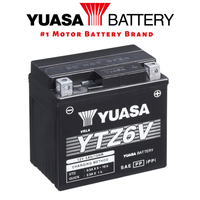
YUASA YTZ6V Motorcycle Battery for Honda Click 125/150 Nmax V2 Raider R150 MF5L-B (12V-5Ah) Fully Sealed
₱2,242.37₱2,365.00
Yuasa YTZ10S Maintenance Free Motorcycle Battery ( Made in Japan )
₱6,173.04₱6,283.00
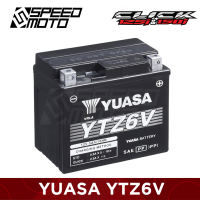
ORIGINAL YUASA YTZ6V HIGH PERFORMANCE FACTORY ACTIVATED NON-SPILLABLE MOTORCYCLE BATTERY FOR HONDA CLICK SPEEDMOTO
₱2,136.55₱4,999.00
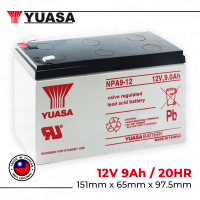
Yuasa UPS Battery 12V 9Ah 20hr NPA9-12 12 Volts 9 Ampere Rechargeable Valve Regulated Lead Acid VRLA
₱2,550.00₱5,100.00
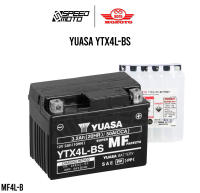
ORIGINAL YUASA BATTERY YTX4L-BS MOTORCYCLE BATTERY (MF4L-B) SPEEDMOTO
₱1,281.55₱2,999.00
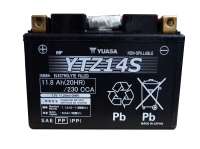
Yuasa YTZ14S Maintenance Free Motorcycle Battery ( Made in Japan )
₱6,770.11₱6,890.70
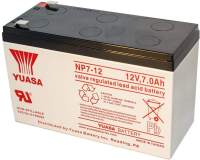
Yuasa UPS Battery 12V 7Ah 20hr NP7-12 12 Volts 7 Ampere Rechargeable Valve Regulated Lead Acid (VRLA) Battery replaces 12v 7.2Ah 12 volts 7.2 Ampere
₱1,600.00₱3,200.00
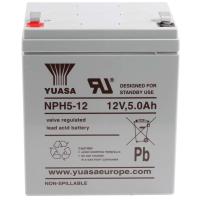
Yuasa 12V 5Ah 20hr NPH5-12 Battery 12 Volts 5 Ampere UPS replaces 12V 4.5Ah 4.5A Battery NP5-12
₱1,775.00₱4,180.00
About Yuasa
Yuasa (Japanese: ユアサ, often styled YUASA) is a prominent Japanese battery brand with over a century of history. Today, the Yuasa brand operates as part of GS Yuasa, one of Japan’s major battery and energy-storage companies. The name is particularly associated with automotive, motorcycle, industrial, and standby batteries. While the wider GS Yuasa group also develops lithium-ion batteries, power-supply systems, traction batteries, and specialized batteries for aerospace and marine applications, Yuasa remains distinct in its heritage. 1
It is important to note that Yuasa and GS Yuasa are not identical entities: Yuasa refers to the historic brand and corporate lineage, while GS Yuasa Corporation is the modern group formed through the integration of the former GS (Japan Storage Battery) and Yuasa businesses in 2004.
Quick Facts
| Category | Information |
|---|---|
| Brand | YUASA / Yuasa |
| Country of Origin | Japan |
| Industry | Batteries & Energy Technology |
| Founded / Origins | 1913–1918 |
| Original Founder | Shichizaemon Yuasa |
| Original Company | Yuasa Storage Battery Co., Ltd. |
| Modern Parent Group | GS Yuasa Corporation |
| Modern Group Established | April 1, 2004 |
| Headquarters | Kyoto, Japan |
| Main Products | Automotive, motorcycle, and industrial batteries |
| Battery Technologies | Lead-acid, lithium-ion, Ni-Cd, and others |
| Major Markets | Japan, Asia, Europe, North America, Australia, and other regions |
| Corporate Philosophy | “Innovation and Growth” |
GS Yuasa Corporation is headquartered in Kyoto and listed on the Prime Market of the Tokyo Stock Exchange. As of March 31, 2026, the company reported 12,562 consolidated employees.
Origins of Yuasa
The history of Yuasa begins with Shichizaemon Yuasa, who came from a long-established family business in Japan. In 1913, he began researching metal electrolysis. Two years later, in 1915, a battery-manufacturing operation called Yuasa Battery Manufacturing was established inside the Yuasa Iron Works in what is now Sakai, Osaka. 1
In 1918, the business was formally established as Yuasa Storage Battery Co., Ltd. This event is generally regarded as the foundation of the Yuasa battery business. The company quickly concentrated on rechargeable storage batteries, particularly lead-acid technology.
Early Milestones
- 1913 — Shichizaemon Yuasa begins research into metal electrolysis.
- 1915 — Yuasa begins manufacturing storage batteries.
- 1918 — Yuasa Storage Battery Co., Ltd. established.
- 1920 — Production of automotive batteries begins.
- 1924 — Research into dry-cell batteries begins.
- 1925 — Dry-cell battery production and sales begin.
- 1930 — Yuasa supplies batteries for the first domestically produced Japanese electric bus, the YKN.
- 1941 — Yuasa begins production of alkaline batteries.
- 1954 — Yuasa Storage Battery and Yuasa Dry Battery merge to form Yuasa Battery Co., Ltd.
This early development highlights that Yuasa did not begin solely as an automotive-battery manufacturer. Its technology portfolio gradually expanded from storage batteries into dry cells, alkaline batteries, and electrical equipment.
Expansion Outside Japan
Yuasa began international expansion relatively early. Its first overseas subsidiary was Yuasa Battery (Thailand) Pub. Co., Ltd., established in 1963. A U.S. operation followed in 1965, and the company subsequently expanded into Taiwan, Indonesia, the United Kingdom, Australia, and China.
One particularly important milestone for Southeast Asia was 1975, when Yuasa Battery (Indonesia) was established, now known as PT. Yuasa Battery Indonesia. This expansion helped make Yuasa a familiar battery name throughout Asian automotive and motorcycle markets.
Yuasa and the “GS” Brand
A key aspect of Yuasa’s history is that the modern company originates from two separate Japanese battery traditions.
Yuasa Lineage
The Yuasa lineage began in 1913–1918 with Shichizaemon Yuasa and Yuasa Storage Battery.
GS / Japan Storage Battery Lineage
The other lineage began with Genzo Shimadzu, who manufactured Japan’s first lead-acid storage battery in 1895. The GS trademark was first used in 1908, and Japan Storage Battery Co., Ltd. was established in 1917. 3
Both companies became major Japanese battery manufacturers. In 2004, their managements were integrated to establish GS Yuasa Corporation. Thus, the modern name represents the combination of two historic Japanese battery companies.
Current Brand Identity
Today, YUASA remains an active brand owned by GS Yuasa Corporation. GS Yuasa has explained that the global group uses three major brand identities depending on the market and product: GS, YUASA, and GS YUASA.
Consumers may encounter batteries carrying different markings such as:
- YUASA
- GS
- GS YUASA
These brands are connected through the same corporate group, but their usage varies by country, market, and product line. GS Yuasa has explicitly stated that the YUASA brand is owned by GS Yuasa Corporation.
Main Products
Yuasa is internationally recognized for rechargeable batteries, especially lead-acid batteries.
Automotive Batteries
Automotive batteries are one of the company’s core businesses. Traditional 12-volt lead-acid batteries are used for starting engines and powering vehicle electrical systems. GS Yuasa also develops batteries for vehicles equipped with start-stop/idling-stop systems, as well as batteries supporting electrified vehicles.
Typical applications include:
- Passenger cars
- Commercial vehicles
- Trucks
- Buses
- Hybrid vehicles
- Vehicles with start-stop systems
- Auxiliary electrical systems in EVs
An important distinction is that electric vehicles do not necessarily eliminate the conventional 12-volt battery. GS Yuasa notes that 12-volt batteries continue to be used for auxiliary equipment and electrical systems across different vehicle types.
Motorcycle Batteries
Motorcycle batteries are another significant part of Yuasa’s reputation. The company has decades of experience designing batteries for the demanding environment of motorcycles, including resistance to vibration and requirements for reliable engine starting.
Yuasa batteries are widely associated with:
- Motorcycles
- Scooters
- ATVs
- Powersports vehicles
- Other small-engine applications
Southeast Asia is especially important to this business. GS Yuasa identifies Indonesia as a core site for motorcycle batteries, while Thailand is particularly important for automotive batteries. 2
Industrial Batteries
The Yuasa/GS Yuasa business extends considerably beyond automotive batteries. Industrial products include batteries for:
- Telecommunications
- Data centers
- Emergency power
- UPS systems
- Power plants
- Railways
- Factories
- Renewable-energy systems
- Material-handling equipment
- Backup power systems
The group produces lead-acid, alkaline Ni-Cd, and lithium-ion batteries for industrial applications, together with power-supply systems. These batteries are often designed not for starting an engine but for providing reliable backup or stored energy when the primary power source fails.
Lithium-Ion Technology
Although Yuasa is historically associated with lead-acid batteries, the wider GS Yuasa group has invested heavily in lithium-ion technology. The company’s history records the development of prismatic lithium-ion batteries in 1993 and ultra-thin lithium-ion polymer secondary batteries in the late 1990s.
GS Yuasa is involved in lithium-ion batteries for:
- Hybrid vehicles
- Plug-in hybrid vehicles
- Battery-electric vehicles
- Automotive auxiliary systems
- Industrial equipment
- Energy-storage systems
- Satellites
- Aircraft
- Deep-sea vessels
The group has also established joint ventures with companies including Mitsubishi Motors, Mitsubishi Corporation, Honda, and Robert Bosch in different areas of battery technology.
Automotive and EV History
Yuasa’s involvement with electric mobility predates the modern EV boom. In 1930, a Yuasa battery was installed in the YKN, described by GS Yuasa as Japan’s first domestically produced electric bus.
Much later, GS Yuasa supplied lithium-ion batteries for the Mitsubishi i-MiEV, which the company describes as the world’s first mass-produced EV. This illustrates the company’s participation in both traditional lead-acid battery technology and the development of newer rechargeable-battery technologies.
Aerospace and Space
GS Yuasa’s technology extends beyond cars and motorcycles. The group produces specialized lithium-ion batteries for satellites, aircraft, and deep-sea vessels. GS Yuasa reports that its lithium-ion batteries have been installed on the International Space Station, demonstrating involvement in high-reliability energy systems where weight, safety, durability, and reliability are critical.
Manufacturing and Global Presence
Yuasa is no longer simply a Japanese domestic brand. The GS Yuasa group has built a broad international manufacturing and sales network. Historical expansion includes operations in:
- Thailand
- Indonesia
- United States
- United Kingdom
- Australia
- China
- Vietnam
- India
- Turkey
- Hungary
- Other markets
GS Yuasa states that its automotive-battery business has particularly strong exposure to ASEAN, with manufacturing and sales operations adapted to local market requirements. The company’s global strategy addresses varying battery requirements between markets; for example, motorcycle batteries are especially important in Southeast Asia, while automotive replacement batteries represent a major business in other regions.
Yuasa in Indonesia
Indonesia is particularly significant to the Yuasa story. Yuasa Battery (Indonesia) was established in 1975, making it one of Yuasa’s long-standing overseas markets. The company is now known as PT. Yuasa Battery Indonesia.
The Indonesian market is important due to its enormous motorcycle population and substantial automotive industry. GS Yuasa specifically identifies Indonesia as a core production and business location for motorcycle batteries. 2 The wider GS Yuasa group also established PT. YUASA INDUSTRIAL BATTERY INDONESIA in 2021 for industrial-battery activities. Thus, in Indonesia, the Yuasa name covers more than consumer replacement batteries; it is connected with both automotive/motorcycle batteries and industrial energy-storage applications.
Brand Reputation
Yuasa’s reputation is built primarily around several characteristics:
Reliability
Battery failure can immobilize a vehicle or interrupt critical equipment, so reliability is central to the brand’s positioning.
Long History
The company has been involved in battery manufacturing since the early 20th century and traces its broader GS/Yuasa corporate heritage back even further.
OEM and Industrial Experience
GS Yuasa supplies batteries not only to replacement markets but also to automotive manufacturers and industrial customers.
Engineering Expertise
The company has worked across lead-acid, Ni-Cd, lithium-ion, and specialized battery technologies.
Global Network
Its international manufacturing and distribution network allows the company to adapt products to different markets.
GS Yuasa describes its accumulated experience as more than 100 years of “Innovation and Growth” and emphasizes safety, quality, and customer trust as central to its business.
Major Battery Technologies
| Technology | Typical Yuasa/GS Yuasa Applications |
|---|---|
| Flooded lead-acid | Cars, motorcycles, trucks, industrial applications |
| VRLA / sealed lead-acid | UPS, telecommunications, backup power |
| AGM / advanced lead-acid | Start-stop and automotive applications |
| Ni-Cd | Industrial and specialized applications |
| Lithium-ion | EVs, HEVs, PHEVs, industrial systems, space |
| Lithium-ion polymer | Specialized rechargeable applications |
| Traction batteries | Forklifts and electric industrial vehicles |
GS Yuasa’s current product portfolio covers automotive/motorcycle lead-acid batteries, automotive lithium-ion batteries, traction batteries and chargers, industrial batteries and power systems, and specialized lithium-ion batteries for aerospace and marine applications.
Major Milestones
A simplified timeline of key events includes:
- 1895 — Genzo Shimadzu produces Japan’s first lead-acid storage battery, establishing the historical GS lineage. 3
- 1913 — Shichizaemon Yuasa begins research into metal electrolysis.
- 1918 — Yuasa Storage Battery Co., Ltd. is established.
- 1920 — Yuasa begins automotive-battery production.
- 1930 — Yuasa battery supplied for Japan’s first domestically produced electric bus.
- 1954 — Yuasa Storage Battery and Yuasa Dry Battery merge.
- 1963 — Yuasa establishes its first overseas subsidiary in Thailand.
- 1975 — Yuasa Battery (Indonesia) is established.
- 1993 — Prismatic lithium-ion battery development.
- 1998 — Ultra-thin lithium-ion polymer secondary batteries launched.
- 2004 — GS and Yuasa integrate their managements and establish GS Yuasa Corporation.
- 2007 — Lithium Energy Japan established with Mitsubishi Corporation and Mitsubishi Motors.
- 2009 — Blue Energy established with Honda.
- 2017 — GS Yuasa Hungary established as its first overseas lithium-ion production affiliate.
- 2021 — GS Yuasa takes over Sanken Electric’s infrastructure business; PT. YUASA INDUSTRIAL BATTERY INDONESIA is established.
- 2023 — Honda・GS Yuasa EV Battery R&D Co., Ltd. established with Honda.
Corporate Structure Today
It is useful to distinguish three names within the organization:
YUASA
The historic battery brand. It remains a major commercial brand within the GS Yuasa group.
GS
The brand inherited from Japan Storage Battery, whose history dates to Genzo Shimadzu’s work in the late 19th and early 20th centuries.
GS YUASA
The modern corporate/group identity created in 2004 through the integration of the two businesses.
A battery marked YUASA should not be interpreted as belonging to an independent company called “Yuasa Corporation” today. The former Yuasa Corporation was integrated into the modern GS Yuasa organization. GS Yuasa has warned about unauthorized entities using names such as “Yuasa Corporation Japan.”
Why Yuasa is Well Known for Motorcycles
Among consumers, Yuasa is arguably most recognizable for motorcycle batteries. Several factors contribute to this reputation:
- Long Experience — Yuasa has been manufacturing rechargeable batteries for more than a century.
- Motorcycle Specialization — The company developed products specifically for motorcycle operating conditions.
- Strong Asian Presence — Southeast Asia is one of the world’s largest motorcycle markets.
- OEM Relationships — GS Yuasa supplies batteries for automotive and powersports applications.
- Replacement-Market Presence — Yuasa batteries are widely distributed through replacement channels.
GS Yuasa specifically highlights motorcycle requirements such as vibration resistance and engine-starting performance as areas of its technical expertise.
Distinction from Generic Brands
The biggest difference is that Yuasa is fundamentally an engineering and manufacturing company, rather than simply a label applied to batteries made by unrelated suppliers. Its history covers the complete development of rechargeable-battery technology, from early lead-acid batteries through modern lithium-ion systems. The group also operates across automotive, industrial, infrastructure, aerospace, and marine applications.
This gives the brand a unique position: YUASA is simultaneously a consumer-facing replacement-battery brand and part of a large industrial battery-technology group.
Current Direction
GS Yuasa’s current strategy is not to abandon conventional batteries in favor of lithium-ion alone. Instead, the company describes its strength as a “multi-battery” approach.
Lead-acid batteries are expected to remain important because 12-volt auxiliary and starting batteries continue to be used even as vehicles become increasingly electrified. At the same time, GS Yuasa is expanding lithium-ion applications for EVs, hybrids, industrial equipment, and energy storage.
The company operates across two major technological directions:
Traditional Energy Storage
→ Lead-acid, VRLA, motorcycle, and automotive batteries
Next-Generation Energy Storage
→ Lithium-ion, EV batteries, industrial energy storage, and specialized high-performance batteries
This aligns with GS Yuasa’s stated ambition to develop from a battery manufacturer toward a broader energy-management company supporting mobility and social infrastructure.
Overall Assessment
Yuasa is one of Japan’s historic battery brands and a well-known name in automotive and motorcycle batteries globally. Its roots go back to Shichizaemon Yuasa’s battery work in the 1910s, while its broader corporate heritage connects to Genzo Shimadzu and Japan Storage Battery’s pioneering work in the 1890s.
The most significant historical event was the 2004 integration of GS and Yuasa, which created the modern GS Yuasa Corporation. Today, the company operates globally and manufactures everything from conventional motorcycle and car batteries to industrial backup systems, lithium-ion EV batteries, and specialized batteries for space and marine applications.
In simple terms:
Yuasa = a century-old Japanese battery brand; GS Yuasa = the modern Japanese battery and energy-technology group behind it.
For someone encountering the brand on a car, motorcycle, UPS, industrial battery, or other rechargeable battery, Yuasa’s name represents a lineage stretching back over 100 years, now part of a much larger global battery-technology organization.