Shop on Lazada
Zuru products
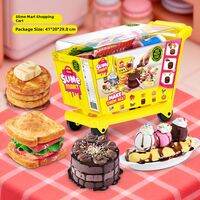
Zuru | DIY Slime Shopping House Play Baking Birthday Gift Children Toy
₱3,310.00
Buy on Lazada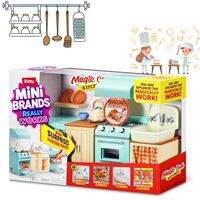
Mini Cooking Simulation Toys
₱4,933.00
Buy on Lazada
Zuru | Electric Bath Toy
₱3,954.00
Buy on Lazada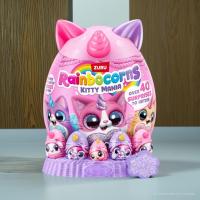
Zuru Rainbocorn Eggzania Series 2- KittyMania Mystery Egg Plush Toy Collectible For Girls Ages 3+
₱1,999.00
Buy on Lazada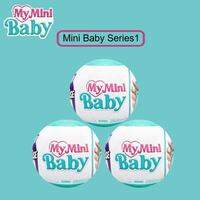
My Mini Baby Surprise Doll Zuru 5 Surprise Mini Brands Toys Cute Gift Miniature Toys Mystery Blind Boxes Baby Toy
₱1,989.73₱3,089.73
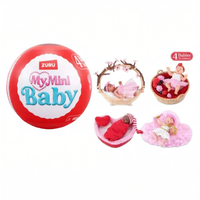
Zuru | Mini Silicon Blind Box Baby Ball
₱4,958.00
Buy on Lazada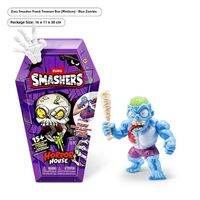
Zuru | Zombie Excavation Blind Box Treasure Hunt Prank Toy
₱1,440.98₱2,294.53
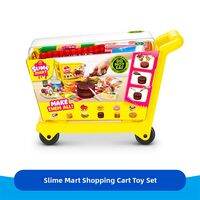
Zuru | DIY Food Simulation Slime Clay
₱3,871.00
Buy on LazadaAbout Zuru
ZURU (stylized as ZURU) is a privately held multinational consumer-products company founded in 2003 by New Zealand-born siblings Mat Mowbray, Nick Mowbray, and Anna Mowbray. While best known for its extensive portfolio of toy and play brands, the group has expanded significantly into consumer packaged goods and construction technology. ZURU describes its overarching mission as “Tomorrow Reimagined.”1
From its origins as a small manufacturing operation in China, ZURU has grown into a global enterprise with thousands of employees and automated production facilities. As of 2026, the company reports having 6,000 employees, 34 offices, more than 100 acres of automated manufacturing space, and operations in over 120 markets.2
Overview
| Item | Information |
|---|---|
| Company name | ZURU |
| Founded | 2003 |
| Founders | Mat Mowbray, Nick Mowbray, Anna Mowbray |
| Founding background | New Zealand entrepreneurs who established their manufacturing operation in China |
| Ownership | Privately held; controlled by the Mowbray family |
| Main industries | Toys, consumer goods, construction technology |
| Major divisions | ZURU Toys, ZURU Edge, ZURU Tech |
| Major markets | 120+ countries/markets |
| Employees | About 6,000 according to ZURU’s 2026 company account |
| Manufacturing | Highly automated production facilities |
| Major toy brands | XSHOT, Mini Brands, Rainbocorns, Bunch O Balloons, Pets Alive, Robo Alive, Smashers, 5 Surprise |
| Notable consumer brands | MONDAY Haircare, Millie Moon, Rascals and others |
| Company slogan | “Tomorrow Reimagined” |
History
Early beginnings
The origins of ZURU trace back to Cambridge, New Zealand, where brothers Mat and Nick Mowbray began experimenting with product development. Before the company was formally established, Mat created a model hot-air-balloon kit for a school science project at age 12. After the project won a science fair, the brothers began manufacturing and selling the kits themselves from a makeshift factory on their family’s dairy farm, personally handling deliveries to customers.4
This early experience fostered an interest in product development, manufacturing, and entrepreneurship. In 2003, Mat and Nick relocated to China using a NZ$20,000 loan from their parents. They set up operations in the Shantou manufacturing region despite having limited manufacturing experience, few local contacts, and minimal knowledge of the Chinese language or market.5
Unlike many young toy companies that simply design products and outsource production, the founders focused on developing proprietary production systems, automation, and manufacturing capabilities. This strategy of vertical integration eventually became a defining characteristic of the ZURU business model.
The Mowbray family
Mat Mowbray
Mat Mowbray is a co-founder of ZURU and is closely associated with the company’s manufacturing and technological ambitions. He developed the original hot-air-balloon project that launched the brothers’ first business venture and later took a leading role in ZURU Tech, the division focused on construction technology.6
Nick Mowbray
Nick Mowbray, Mat’s younger brother and co-founder, serves as one of the company’s principal commercial leaders. He has frequently articulated ZURU’s competitive advantage as stemming from speed, automation, innovation, and vertical integration rather than reliance on traditional outsourced manufacturing.7
Anna Mowbray
Anna Mowbray joined the company during its formative years and became integral to its management and operations. Company accounts credit her with bringing operational expertise that helped transform the initial manufacturing setup into a scalable international business.8 Together, the three siblings have served as the central figures behind ZURU’s expansion.
From small manufacturer to global toy company
While ZURU initially concentrated on general toy manufacturing, its significant growth stemmed from products capable of achieving mass international retail distribution. An early success was Robo Fish, an electronic toy simulating the movement of a real fish, which helped establish relationships with major international retailers.9
The company achieved a major commercial breakthrough with Bunch O Balloons, a system designed to fill and tie multiple water balloons simultaneously. ZURU acted as the commercial partner and exclusive licensee for inventor Josh Malone/Tinnus Enterprises. The product’s success established ZURU as a significant player in the global toy industry, though it also led to extensive patent litigation against Telebrands regarding competing products. U.S. court records identify ZURU and Tinnus as plaintiffs and ZURU as the exclusive licensee of the relevant patent rights.10
Bunch O Balloons exemplified the recurring ZURU business model: identifying an existing category, developing a more convenient or entertaining product, manufacturing it at scale through automation, and distributing it aggressively through major retailers.
ZURU Toys
ZURU Toys remains the company’s most prominent division. ZURU positions itself as one of the world’s largest toy companies, with distribution networks spanning more than 120 countries.11 Its portfolio encompasses several key categories:
XSHOT
XSHOT is ZURU’s line of foam-dart blasters and accessories. Competing in the toy blaster market, the brand emphasizes high firing performance, extensive product ranges, and competitive retail pricing. ZURU states that XSHOT dart blasters ship approximately 39 million units annually.12
Mini Brands
Mini Brands is among ZURU’s most recognizable modern brands, featuring miniature replicas of real-world consumer products typically packaged in surprise capsules. Collectors open these capsules without knowing which specific miniature they will receive. The portfolio includes miniatures based on licensed consumer brands and has expanded to include shopping environments, kitchens, and other playsets.
The brand’s success lies in combining collectible toys, unboxing mechanics, brand licensing, and social-media-friendly content, allowing ZURU to capitalize on the broader collectibles and unboxing trend.
Other toy lines
- Rainbocorns: A plush and collectible brand featuring colorful fantasy animals, particularly unicorn-inspired characters, combining traditional plush toys with surprise elements.
- Pets Alive: Interactive toy animals utilizing electronic and mechanical features to simulate pet behavior for children interested in robotic pets.
- Robo Alive: Robotic and electronic animal toys designed to mimic realistic movement, continuing the technological approach pioneered by Robo Fish.
- Smashers: A collectible line built around mechanics involving surprise, destruction, and discovery.
- 5 Surprise: A major collectible line based on capsules containing multiple small items, supporting a strategy of combining low-cost collectibles with repeat purchases.
- Fuggler: A plush character brand known for its distinctive teeth and intentionally comedic appearance, which ZURU distributes as part of its broader character portfolio.13
Major ZURU Toys brands
The current toy portfolio includes:
- XSHOT
- Mini Brands
- Rainbocorns
- Bunch O Balloons
- Pets Alive
- Robo Alive
- Smashers
- 5 Surprise
- Fuggler
- Ballers
- MAX
ZURU also collaborates with major entertainment properties through partnerships involving Disney, Nickelodeon, Universal, and DreamWorks.
Business model and automation
ZURU distinguishes itself from traditional toy design companies through a heavy emphasis on manufacturing and automation. Rather than outsourcing production entirely, the company invested in building proprietary capabilities, including automated production lines, manufacturing software, engineering processes, and supply-chain systems. This infrastructure enables ZURU to move rapidly from product concept to engineering, manufacturing, and retail shelf.14
Automation is a central technological theme for the group. With more than 100 acres of fully automated manufacturing capacity, ZURU aims to reduce production costs, increase volume, minimize labor-intensive processes, improve consistency, and accelerate time-to-market. This allows the company to compete not only through product innovation but through superior manufacturing efficiency.
The corporate philosophy can be summarized as designing quickly, manufacturing efficiently, automating aggressively, and selling globally. ZURU seeks out categories it views as inefficient or stagnant and applies automation and technology to disrupt established norms, consistent with its motto to “reimagine tomorrow.”25
Expansion beyond toys
After establishing its toy business, ZURU applied its manufacturing-led philosophy to other consumer sectors through ZURU Edge.
ZURU Edge
ZURU Edge is the group’s consumer-goods division, focusing on everyday categories such as baby care, home products, pet care, health, beauty, and confectionery. The division uses innovation, speed, automation, and modern branding to challenge incumbent companies in established categories.15
Key brands under ZURU Edge include:
- MONDAY Haircare: A hair-care brand positioned around accessible, visually distinctive products. ZURU states it became one of the fastest-growing haircare brands in the United States within two years of launch.16
- Millie Moon: A premium baby-care brand known for diapers and related products.17
- Rascals: A baby-care brand focused on delivering value alongside product quality in the diaper category.18
ZURU Tech
ZURU Tech represents the company’s entry into construction technology and automated home manufacturing. The division aims to fundamentally alter residential construction through a system called Dreamcatcher, part of a broader Unified Building System. This platform connects software, architectural design, engineering, automated factory production, and on-site construction into a single workflow rather than treating them as separate manual processes.19
Dreamcatcher allows users to customize house designs digitally while the system automatically accounts for building codes, structural requirements, and site conditions. The long-term vision is the mass customization of houses, producing varied home designs through an automated industrial manufacturing system rather than traditional on-site construction methods.20
Marketing strategy
ZURU employs modern, highly visual marketing strategies across platforms such as YouTube, TikTok, and Instagram. Tactics include influencer marketing, unboxing content, licensed characters, bright packaging, and direct-to-consumer digital campaigns.
The Mini Brands concept exemplifies this approach, as the act of opening a capsule serves as entertainment suited for video and social media content. Unlike traditional toys where play occurs after purchase, ZURU’s newer products often make the process of discovery and display an integral part of the entertainment value.
Global scale and financials
ZURU operates as a multinational group with significant global reach. According to its latest published accounts, the ZURU Group maintains:
- Approximately 6,000 employees
- 34 offices worldwide
- Operations in 120+ markets
- More than 100 acres of automated manufacturing
- Multiple global research and development centers21
As a privately held entity, ZURU does not publish audited financial results comparable to public corporations. In 2024, Radio New Zealand reported that the National Business Review estimated Nick and Mat Mowbray’s collective worth at NZ$20 billion, citing Nick’s statement that ZURU was targeting approximately US$3 billion in revenue for that year.22 ZURU’s own 2026 account describes the group as a $2.6 billion company, although the precise accounting basis for this figure is not detailed in public sources.23
Corporate structure
ZURU operates through three core divisions:24
- ZURU Toys: The original division focused on toys, collectibles, and children’s entertainment.
- ZURU Edge: The consumer-products division covering baby, beauty, home, pet, and health categories.
- ZURU Tech: The technology division focused on software, automation, and industrialized home construction.
Intellectual property disputes
Like many major toy manufacturers, ZURU has been involved in intellectual-property disputes. The most prominent historical case involved Bunch O Balloons, where ZURU and Tinnus Enterprises pursued patent litigation against Telebrands over competing water-balloon products, resulting in multiple U.S. court cases.
The company has also engaged in trademark and IP litigation concerning other brands and products. Court records document disputes between ZURU and other toy companies regarding trademarks and branding.26 These legal matters highlight the importance of intellectual property in the toy industry, where successful products are frequently subject to rapid imitation.
Significance and evolution
ZURU’s significance lies not in a single blockbuster product but in the development of a repeatable product-development and manufacturing system. Its evolution spans several decades:
- 1990s: Mowbray brothers experiment with toy and model products in New Zealand.
- 2003: Mat and Nick relocate to China and establish ZURU’s foundations.
- 2000s: Manufacturing and international toy operations expand.
- 2010s: Products like Robo Fish establish ZURU internationally.
- 2015 onward: Bunch O Balloons achieves major global success.
- Late 2010s–2020s: Portfolio expands with Mini Brands, Rainbocorns, XSHOT, and Pets Alive.
- 2017 onward: ZURU Edge enters consumer goods.
- 2020s: ZURU Tech develops automated construction technology.
- 2026: ZURU describes itself as a roughly $2.6 billion global group with 6,000 employees, 34 offices, and operations in 120+ markets.27
Unlike traditional toy giants such as Mattel or Hasbro, ZURU functions essentially as a technology-and-manufacturing company that gained prominence through toys. Its core competency is building systems capable of inventing, engineering, automating, manufacturing, marketing, and distributing products at scale. This capability now extends from miniature collectibles like Mini Brands to automated factories intended to manufacture full-size houses.28
References
- Tomorrow Reimagined | ZURU
- Built Different: The ZURU Story | ZURU®
- Zuru (company)
- REDACTED VERSION OF 719 SEALED MEMORANDUM AND OPINION for Tinnus Enterprises, LLC et al v. Telebrands Corporation :: Justia Dockets & Filings
- Tinnus Enterprises, LLC v. Telebrands Corp., No. 16-1410 (Fed. Cir. 2017) :: Justia
- ZURU Toys | Reimagining Play, Every Day.
- Mini Brands | ZURU Toys
- ZURU Toys | Play Reimagined.
- Zuru owners top 2024 Rich List, beating out magnate Graeme Hart | RNZ News
- The ZURU Pitch | ZURU®
- Zuru Inc. v. The Individuals, Partnerships and Unincorporated Associations Identified in Schedule A 1:2024cv12537 | U.S. District Court for the Northern District of Illinois | Justia
- Zuru, LLC v. Moose Creative Management Pty Ltd et al 2:2024cv07693 | U.S. District Court for the Central District of California | Justia
- Une conception unique : l’histoire de ZURU | ZURU®
- Le pitch de ZURU | ZURU®
- State of the Industry Q&A 2026: Brittany Oliver, ZURU – The Toy Book
- Zuru Inc. et al v. Cronus Global, LLC et al 2:2025cv07954 | U.S. District Court for the Central District of California | Justia
- Zuru Inc. v. Bytor, 1:25-cv-22127
- Featured Rich Listers: Nick and Mat Mowbray
- Lego A/S v. Zuru Inc., 3:18-cv-02045
- Lego A/S v. Zuru Inc., 3:18-cv-02045
- What’s Zuru’s Next Move After Selling Millions Of Cheap Toys? Take On Procter & Gamble, Of Course
- Zuru Inc. et al v. 1616 Holdings Inc. 1:2025cv21115 | U.S. District Court for the Southern District of Florida | Justia
- Zuru Inc. v. JD E-Commerce America Limited et al 1:2025cv20354 | U.S. District Court for the Southern District of Florida | Justia
- Mowbray Brother’s Toy Giant Zuru: Subject to Multiple Misleading Conduct Claims With Watchdog
- Zuru Group’s Mowbrays named visionary leaders of the year at Deloitte Top 200 Awards – NZ Herald
- Kelly Toys Holdings, LLC v. Zuru, LLC, 2:23-cv-09255
- Cronus Global, LLC v. Zuru, Inc. 2:2024cv05372 | U.S. District Court for the Central District of California | Justia
- Who are New Zealand’s richest siblings, Zuru owners Mat and Nick Mowbray? | RNZ News