Shop on Lazada
3M Littmann products
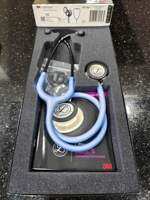
FREE Engraving Legit 3M Littmann Stethoscope Classic III (MONEY BACK GUARANTEE)
₱8,900.00₱10,000.00
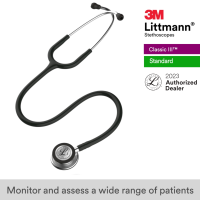
3M Black Tube Standard-Finish Chestpiece Classic III 5620 3M Littmann Stethoscope
₱8,400.00₱9,600.00
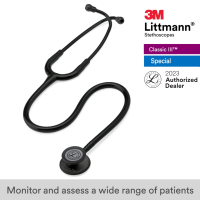
3M Black Tube Black-Finish Chestpiece Full Black Classic III 5803 3M Littmann Stethoscope
₱11,200.00
Buy on Lazada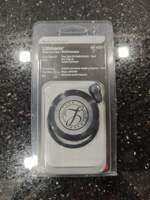
3M™ Littmann® Stethoscope Spare Parts Kit Classic II Pediatric Lightweight II S.E. Classic III™ and Cardiology IV™ Black 40016
₱2,200.00₱2,600.00
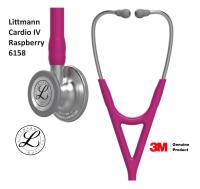
Littmann Cardio IV Stethoscope Navy Blue Tube Black Finish 6168 (AUTHENTIC LITTMANN)
₱25,985.00₱39,990.00
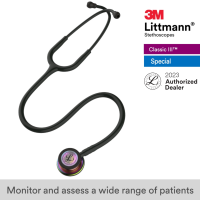
3M Black Tube Rainbow Chestpiece Black Stem and Headset Classic III 5870 3M Littmann Stethoscope
₱11,200.00
Buy on Lazada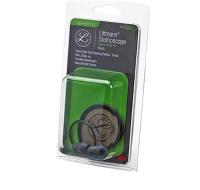
3M Littmann Stethoscope Spare Parts for Classic II Classic II SE Lightweight Classic II SE Classic II Pedia Classic III Cardio IV and Master Cardio (Original 3M Littmann Stethoscope Parts)
₱2,195.00₱5,500.00

3M Master Cardiology 40011 Black 3M Littmann Spare Parts Kit
₱2,600.00
Buy on LazadaAbout 3M Littmann
3M Littmann, commonly referred to simply as Littmann, is a medical device brand best known for its stethoscopes. Historically associated with 3M, the brand became one of the most recognizable names in premium auscultation following 3M’s acquisition of Dr. David Littmann’s business in 1967. Since April 2024, however, the healthcare division that owns Littmann has operated as an independent public company named Solventum Corporation. While current products fall under the Solventum corporate umbrella, the name 3M Littmann remains widely used due to the brand’s extensive history.23
Overview
| Category | Information |
|---|---|
| Brand | Littmann® |
| Common historical name | 3M Littmann® |
| Industry | Medical devices / Healthcare |
| Best known for | Stethoscopes |
| Founder/inventor | Dr. David Littmann |
| Key acquisition | 3M acquired Cardiosonics in 1967 |
| Original field | Medical auscultation |
| Major products | Acoustic and electronic/digital stethoscopes |
| Notable series | Classic, Cardiology, Lightweight, Electronic/Digital |
| Current corporate home | Solventum (since 2024) |
| Primary users | Physicians, nurses, medical students, veterinarians |
Product focus and design
Littmann is primarily a stethoscope brand designed for auscultation, the clinical practice of listening to internal body sounds such as those from the heart, lungs, and blood vessels. Although a stethoscope may appear simple, its acoustic engineering is critical for transmitting faint physiological signals while minimizing environmental and mechanical noise.
The brand built its reputation on optimizing these acoustic characteristics. Products are designed to emphasize acoustic performance, ergonomic design, durability, and clinician comfort.4 The current portfolio includes both traditional mechanical stethoscopes and electronically enhanced digital models.1
History
Early stethoscope development
The origins of the stethoscope predate the Littmann brand by over a century. In 1816, French physician René Laënnec developed the first stethoscope, essentially a tube that transmitted chest sounds to the ear.7 Approximately 25 years later, George P. Cammann introduced a binaural design with an earpiece for each ear, establishing the basic configuration still used today.
Dr. David Littmann and Cardiosonics
The modern Littmann brand traces its direct lineage to Dr. David Littmann (1906–1981), a Harvard Medical School professor, cardiologist, and expert in electrocardiography. In the early 1960s, he patented a stethoscope design intended to be lighter, easier to use, and acoustically superior to existing instruments.4
In April 1967, 3M acquired Cardiosonics, Dr. Littmann’s company. This acquisition established the foundation for the 3M Littmann brand, with Dr. Littmann continuing to serve as an adviser to further develop the technology.23
Corporate transition to Solventum
For decades, Littmann operated as part of 3M’s healthcare business. In April 2024, 3M spun off this division into a new independent publicly traded company, Solventum. Consequently, Littmann is now part of Solventum’s medical device portfolio.2 Despite this corporate separation, the historical association with 3M persists in common usage.
Key technologies and features
Several technological innovations distinguish Littmann stethoscopes from standard alternatives.
Acoustic performance
Sound quality is the central design focus. Clinicians rely on stethoscopes to distinguish subtle differences between normal and abnormal heart sounds, murmurs, lung sounds, wheezing, crackles, and vascular sounds. Littmann’s engineering prioritizes acoustic sensitivity and effective sound transmission to support these diagnostic tasks.4
Dual-sided chestpieces
Many models feature dual-sided chestpieces offering different listening functions, such as a diaphragm, a bell, or a tunable diaphragm. This versatility allows clinicians to perform various types of auscultation with a single instrument.
Tunable diaphragm technology
Introduced in the 1980s, tunable diaphragm technology allows clinicians to assess different frequency ranges by varying pressure on the chestpiece rather than flipping it over. Historical records identify 1984 as a significant milestone for this innovation.6
Major product families
Littmann produces several distinct product lines tailored to specific clinical needs.
Littmann Classic
The Classic series is designed for general physical assessment and routine clinical use. A notable model is the Littmann Classic III, launched in 2015, which features tubing resistant to skin oils and alcohol.11 This series is widely used by medical and nursing students, nurses, physicians, and general clinicians, offering a balance of price, portability, and acoustic performance.
Littmann Cardiology
The Cardiology line targets clinicians requiring higher acoustic performance. The original cardiology stethoscope was introduced in 1979,9 evolving over time into models like the Master Cardiology and Cardiology IV. The Cardiology IV, released in 2016 during the brand’s 50th anniversary period, represents a later generation of premium acoustic stethoscopes.12 These models are commonly used by cardiologists, critical-care clinicians, emergency physicians, and advanced practitioners. It should be noted that “Cardiology” is a product-series designation and not a claim of autonomous diagnostic capability.
Littmann Lightweight
Lightweight models cater to users prioritizing portability. For example, the Littmann Lightweight II S.E. features a teardrop-shaped chestpiece for easier positioning under blood-pressure cuffs, with some versions weighing approximately 118 grams.10
Electronic and digital stethoscopes
Beginning in the early 2000s, Littmann expanded into electronic stethoscopes. Models like the Littmann 3100 and 3200 introduced electronic amplification, ambient-noise reduction, and Bluetooth connectivity.11 These devices shift the signal path from purely mechanical transmission to electronic processing, enabling recording, visualization, and digital analysis.
More recently, the Littmann CORE Digital Stethoscope offers up to 40× amplification at peak frequency compared to analog mode, active noise cancellation, and compatibility with the Eko application. It operates in both analog and amplified electronic modes, bridging traditional acoustics with digital diagnostics.1
Users and professional adoption
Littmann stethoscopes are used by a broad spectrum of healthcare professionals, including:
- Physicians: General practitioners, internists, cardiologists, pediatricians, emergency physicians, anesthesiologists, and critical-care specialists.
- Nurses: Widely adopted in both nursing practice and education.
- Medical students: The Classic series is frequently selected for its advanced acoustics relative to entry-level alternatives.
- Veterinarians: Used extensively in veterinary medicine.
- Other clinicians: Utilized for assessment and monitoring across various scopes of practice.
Company materials state that millions of physicians, nurses, veterinarians, and other medical professionals use Littmann stethoscopes globally.3
Brand identity and reputation
Littmann is positioned as a premium brand defined by four core attributes: acoustic performance, professionalism, reliability, and innovation.4 Historical marketing materials have described the products as a “gold standard” in stethoscopes, reflecting the brand’s market positioning.5
Visually, the brand is recognized by the signature Littmann “L” logo and the availability of numerous tubing colors and chestpiece finishes, allowing for personalization while maintaining professional recognition.6
Culturally, the stethoscope is a primary symbol of medicine. For many medical students, purchasing a Littmann stethoscope marks the transition from theoretical study to clinical practice.
Comparison with basic stethoscopes
While basic stethoscopes can transmit body sounds, Littmann models generally offer distinct advantages:
| Feature | Basic stethoscope | Littmann |
|---|---|---|
| Basic auscultation | ✓ | ✓ |
| Acoustic refinement | Variable | Major design focus |
| Tunable diaphragm | Usually no | Available on many models |
| Premium construction | Variable | Strong emphasis |
| Model specialization | Limited | Extensive |
| Cardiology-oriented models | Limited | ✓ |
| Electronic models | Usually no | ✓ |
| Digital integration | Rare | Available on selected models |
| Personalization | Limited | Many colors/finishes |
| Price | Usually lower | Generally higher |
It is important to note that a premium stethoscope does not replace clinical knowledge, auscultation technique, or experience.
Historical milestones
- 1816: René Laënnec develops the first stethoscope.7
- Early 1960s: Dr. David Littmann patents a lighter, acoustically improved stethoscope.4
- 1967: 3M acquires Cardiosonics.2
- 1970s: Introduction of specialized infant, pediatric, and cardiology stethoscopes.8
- 1979: Launch of the Littmann cardiology stethoscope.9
- 1984: Tunable diaphragm technology becomes a key innovation.6
- 2000s: Development of electronic stethoscope technology and digital sound analysis.10
- 2009: Highlighting of the Bluetooth-enabled Littmann Electronic Stethoscope Model 3200.11
- 2015: Launch of the Littmann Classic III.11
- 2016: Launch of the Cardiology IV during the brand’s 50th anniversary.12
- 2020s: Expansion into digitally enhanced auscultation with the CORE Digital Stethoscope.1
- April 2024: 3M healthcare business spins off as Solventum.2
Current status
As of 2026, Littmann remains primarily a stethoscope brand, though its technology now spans conventional acoustic instruments and digitally enhanced devices. The portfolio covers everyday assessment (Classic), high-performance acoustics (Cardiology), portability (Lightweight), and digital capabilities (Electronic/CORE). The brand continues to evolve from a passive acoustic instrument toward an integrated platform combining acoustics, electronics, software, and data.1
References
- Why Choose a 3M™ Littmann® Stethoscope | 3M Singapore
- Historia: Stetoskopy 3M Littmann | 3M Polska
- L’histoire du stéthoscope moderne | 3M Littmann | 3M Suisse
- Dr. Littmann’s Legacy | 3M™ Littmann® Stethoscope | 3M New Zealand
- Stetoscopi 3M Littmann®: storia di Innovazione 3M in azione
- Gescheidenis van de moderne stethoscoop | 3M Littmann | 3M België
- Medical solutions and areas of expertise | Solventum
- Global Landing Page | Littmann Stethoscopes | 3M US
- Stethoscope Registration – Official 3M™ Littmann® Stethoscopes Website
- Breast cancer awareness.
- Removing phthalates while improving performance.
- Stethoscope Registration – Official 3M™ Littmann® Stethoscopes Website