Shop on Lazada
Akebono products
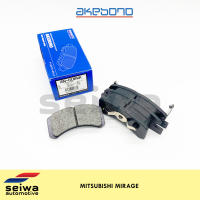
Mitsubishi Mirage Brake Pads Front - Akebono Brand Auto Parts
₱2,090.00
Buy on Lazada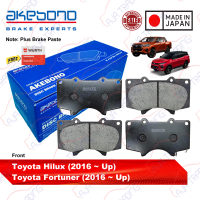
Genuine Akebono Front Brake Pads for Toyota Hilux (2016 - Up) Toyota Fortuner (2016 - Up)
₱2,849.00₱3,700.00
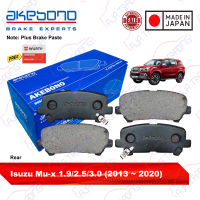
Genuine Akebono Front Brake Pads for Isuzu D-Max (2007-2020) Isuzu Mu-X 1.9/2.5/3.0 (2007-2020)
₱2,949.00₱3,900.00
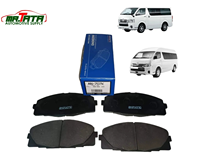
Akebono Brake Pads FRONT for Toyota HiAce 2005 to 2025 OLD FACE (Commuter GL and Super Grandia) (AN-707k)
₱5,750.00₱5,950.00
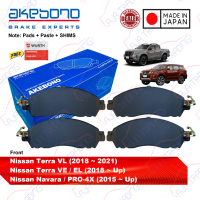
Genuine Akebono Front Brake Pads for Nissan Navara & PRO-4X (2015 - Up) Nissan Terra VL (2018-2021) EL/VE (2018 - Up)
₱4,499.00₱5,700.00
![[G4] Mitsubishi Mirage Brake Shoe - Akebono Auto Parts - NN3069](https://ph-live.slatic.net/p/eda606261d0edd66f7a61f408a29c15a.jpg_200x200q80.jpg)
[G4] Mitsubishi Mirage Brake Shoe - Akebono Auto Parts - NN3069
₱2,490.00
Buy on Lazada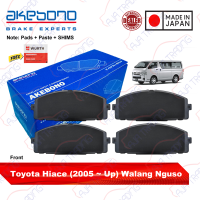
Genuine Akebono Front Brake Pads for Toyota Hiace (2005 - Up) Walang Nguso
₱2,599.00₱3,300.00
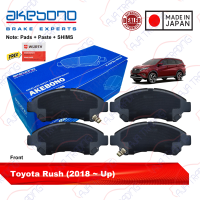
Genuine Akebono Front Brake Pads for Toyota Rush (2018 - Up)
₱2,949.00₱3,700.00
About Akebono
Akebono is a Japanese brake-system manufacturer and automotive brand best known for its brake pads, brake calipers, disc brakes, drum brakes, friction materials, and other braking technologies. The company behind the brand is Akebono Brake Industry Co., Ltd. (曙ブレーキ工業株式会社), headquartered in Tokyo, Japan, with its main operational base in Hanyu, Saitama. It was founded in 1929 by Sanji Osame and has developed from a Japanese brake-lining manufacturer into a global specialist in braking systems.1
Akebono is particularly notable in the automotive industry because it operates not merely as an aftermarket brake-pad brand, but as an OEM brake-system supplier whose technology is used by major vehicle manufacturers. Its products cover passenger cars, commercial vehicles, motorcycles, railway vehicles, and industrial machinery.2
Quick facts
| Category | Information |
|---|---|
| Official name | Akebono Brake Industry Co., Ltd. |
| Japanese name | 曙ブレーキ工業株式会社 |
| Brand | Akebono |
| Founded | January 27, 1929 |
| Founder | Sanji Osame |
| Country | Japan |
| Global headquarters | Nihonbashi, Chuo-ku, Tokyo |
| Main operational base | Hanyu, Saitama, Japan |
| Industry | Automotive / braking systems |
| Main products | Brake pads, brake linings, disc brakes, drum brakes, brake calipers, electric parking-brake systems |
| Other markets | Motorcycles, railways, industrial machinery, sensors |
| Corporate listing | Tokyo Stock Exchange, Prime Market |
| FY2026 net sales | ¥160.1 billion |
| Employees | 5,096 consolidated, as of March 2026 |
| Brand slogan | “Absolute safety; Unparalleled control” |
The latest company profile reports ¥160.1 billion in consolidated net sales for the fiscal year ended March 31, 2026, with 5,096 consolidated employees.3
Origin of the name
The word “Akebono” (曙) means “dawn” in Japanese.
According to the company, founder Sanji Osame chose the name because he enjoyed watching the dawn over the Seto Inland Sea from Mushiage Bay near his hometown in Okayama Prefecture. The name therefore carries an association with a new beginning, the rising sun, and the start of a new era.4
The company’s branding is generally written as akebono in lowercase in its corporate identity.
History
Foundation — 1929
Akebono was founded on January 27, 1929, originally as Akebono Sekimen Kogyosho.
Its initial business centered on manufacturing woven brake linings and clutch facings. This was an important period in Japan’s early motorization, when the country’s automobile industry was still relatively small.5
The company reorganized as Akebono Sekimen Kogyo Co., Ltd. in 1936 and subsequently expanded its manufacturing operations.
In 1939, its Hanyu plant began operations, establishing what would become one of the important centers of the company’s Japanese manufacturing activities.6
Post-war development
After World War II, the company expanded beyond basic brake-lining production.
In 1952, Akebono began producing wear-resistant resins for railway vehicles. This was significant because it demonstrated that the company’s friction-material expertise could be applied beyond automobiles.7
One of the notable milestones came in 1958, when Akebono resin brake shoes and disc-brake linings were used on the Kodama express trains of Japanese National Railways.8
Akebono became a publicly traded company in 1957.
Transformation into a brake-system company
A major turning point occurred in 1960.
The company changed its name to Akebono Brake Industry Co., Ltd. and signed a technical-assistance agreement with Bendix Corporation of the United States. Akebono began producing drum-brake assemblies using technology covered by Bendix patents.9
This helped transform Akebono from primarily a friction-material manufacturer into a more comprehensive brake-system manufacturer.
The company subsequently expanded its capabilities into:
- Drum brakes
- Disc brakes
- Brake linings
- Brake pads
- Hydraulic braking components
- Anti-lock braking systems
- Brake calipers
- Brake-system electronics
This transition is one of the central themes of Akebono’s corporate history.
Development of disc brakes
During the 1970s, Akebono continued expanding its manufacturing and engineering capabilities.
In 1979, the company began production of its internally developed AD Type disc brake. The technology subsequently received a Japan Society of Mechanical Engineers Award in 1982.10
The AD Type became particularly important in Akebono’s history. In 2011, the technology was included in Japan’s Registry of Essential Historical Materials for Science and Technology, recognizing its historical technological significance.11
International expansion
Akebono began establishing a significant international presence during the 1980s.
In 1980, it established Akebono America, Inc., initially with a sales office in Chicago and subsequently R&D facilities in Detroit.12
In 1986, Akebono established Ambrake Corporation, a joint venture with General Motors in the United States. This relationship helped establish a substantial North American manufacturing presence.13
The company also expanded into Europe, France, and other international markets.
During the 1990s, Akebono established or expanded operations in:
- United States
- France
- Indonesia
- Europe
- Japan
In 1996, it acquired an equity interest in Indonesia’s PT. Tri Dharma Wisesa, which eventually became PT. Akebono Brake Astra Indonesia.14
Expansion throughout Asia
Akebono’s Asian expansion accelerated during the 2000s.
The company established operations in:
- China
- Thailand
- Indonesia
- Vietnam
- Other Asian markets
For example, Akebono Brake (Thailand) Co., Ltd. was established in 2006, while the company expanded its Chinese operations through facilities in Guangzhou and Suzhou.15
This expansion was important because Japanese automobile manufacturers were increasingly building vehicles throughout Asia, creating demand for localized OEM brake production.
Formula One and motorsport
Akebono has also used motorsport as a technology-development environment.
In 2007, Akebono entered Formula One by supplying brake components to the Vodafone McLaren Mercedes team.16
Motorsport has been relevant to Akebono because braking systems operate under extreme temperatures, loads, and repeated high-energy stops.
The company states that knowledge developed through motorsport is applied to its high-performance and passenger-car brake technologies.17
Akebono has also developed brake products for endurance racing and high-performance road vehicles.
Product portfolio
Although many consumers primarily associate Akebono with brake pads, the company is much broader than an aftermarket brake-pad manufacturer.
Its major product areas include:
Automotive brakes
Akebono develops and manufactures:
- Disc brakes
- Drum brakes
- Brake calipers
- Brake pads
- Brake linings
- Friction materials
- Commercial-vehicle braking systems
- Electric parking-brake systems
- Other brake-related components
Automotive products are the company’s primary business. Akebono states that automotive products, including motorcycle products, account for more than 95% of total sales.18
Motorcycle brakes
Akebono has manufactured braking products for motorcycles and scooters since 1974.
These include:
- Brake calipers
- Master cylinders
- Disc brakes
- Motorcycle brake pads
The company emphasizes controllability, braking stability, weight reduction, and durability in this area.19
Railway brakes
Akebono also produces braking products for railway applications.
Its history includes brake materials used on Japanese railway vehicles, including the Shinkansen.
Railway applications require friction materials capable of operating under extremely high loads and temperatures.20
Industrial machinery
Akebono produces braking systems and components for applications such as industrial equipment, including machinery and heavy equipment.21
Sensors
The company has also developed sensor products using technologies derived from its experience with friction and vibration analysis.22
Brake pads and friction-material technology
Friction material formulation is arguably the heart of Akebono’s expertise.
A brake pad isn’t simply a piece of material that presses against a rotor. Its friction characteristics have to remain predictable across changes in:
- Temperature
- Vehicle speed
- Vehicle weight
- Humidity
- Water
- Mud
- Braking frequency
- Rotor condition
Akebono explains that its friction materials can contain 10–20 or more different raw materials, with materials serving roles such as bonding, reinforcement, and friction adjustment.23
The company therefore treats friction-material formulation as a major engineering discipline.
Its engineers work on balancing:
Stopping performance + durability + noise + vibration + rotor wear + temperature resistance + environmental requirements.
Ceramic brake technology
Akebono is particularly well known in the aftermarket for ceramic brake-pad technology.
Its North American aftermarket business describes Akebono as a pioneer of ceramic friction technology and markets several ultra-premium ceramic brake-pad lines.24
One of the best-known product families is:
Akebono ProACT®
ProACT is an ultra-premium ceramic brake-pad line primarily targeted at domestic and Asian vehicles.
Akebono promotes the product around characteristics including:
- Low noise
- Low dust
- Consistent braking
- Fade resistance
- Long pad life
- Reduced rotor wear
- Smooth pedal feel
The “ACT” in ProACT refers to Akebono Ceramic Technology.25
Akebono EURO®
EURO is the company’s ceramic brake-pad range designed specifically around European vehicles.
It emphasizes:
- Low noise
- Low dust
- Smooth braking
- Vehicle-specific friction formulations
- Rotor friendliness
- Low-copper formulations
OEM vs aftermarket
This distinction is important when discussing Akebono.
There are essentially two sides of the brand.
OEM Akebono
Akebono supplies braking technology directly to vehicle manufacturers.
Its stated OEM customers include major manufacturers such as:
- Toyota
- Nissan
- Honda
- Mitsubishi Motors
- Isuzu
- General Motors
- Ford
- Porsche
- Mercedes-Benz
- and others
This means Akebono isn’t simply an aftermarket replacement-parts company. It participates in the engineering and production of braking systems for new vehicles.
Aftermarket Akebono
The company also sells replacement brake products to consumers and repair shops.
This is where names such as:
- ProACT
- EURO
- Performance
are particularly recognizable.
The aftermarket business is especially prominent in North America.
Environmental technology
Akebono has spent considerable effort reducing the environmental impact of friction materials.
One major historical development was the move away from asbestos.
The company says it began developing non-asbestos products in response to health concerns and had switched all passenger-car OEM products to non-asbestos materials by 1992. Commercial-vehicle OEM products followed in 1994, and production of asbestos-containing products was terminated in 2000.28
Akebono has also developed copper-free friction materials.
It began supplying copper-free replacement parts in 2007 and OEM friction materials in 2014. The company is also researching materials using botanical/biomass resources and technologies intended to reduce brake dust.29
Electric vehicles and next-generation braking
The transition toward electric vehicles has changed the requirements for braking systems.
Akebono is therefore developing electric brake systems, including technologies related to electric parking brakes and electronically controlled braking.
The company says these technologies are intended to support:
- Vehicle electrification
- Reduced environmental impact
- Improved safety
- Reduced accidents
- Greater integration with electronic vehicle controls
This is an important part of Akebono’s future because the company is attempting to remain relevant as conventional internal-combustion vehicles increasingly coexist with hybrids and EVs.
Engineering philosophy
Akebono’s corporate mission is built around the concept of:
“Friction and Vibration, their Control and Analysis”
The company says this concept represents its determination to protect, grow and support individual lives.31
That philosophy makes sense when looking at modern braking engineering.
A brake manufacturer isn’t only trying to maximize stopping power. It also has to control:
- Brake noise
- Vibration
- Judder
- Pedal feel
- Friction consistency
- Heat
- Wear
- Dust
Akebono therefore places significant emphasis on NVH — Noise, Vibration and Harshness — control.
Corporate philosophy
Akebono’s corporate philosophy is known as “SEIWAKON.”
The three elements are:
- SEI — sincerity in relationships
- WA — harmony in actions
- KON — spirit in accomplishments
The philosophy was established in 1964 and continues to form part of the company’s corporate identity.32
Its current brand statement is:
“Absolute safety; Unparalleled control.”
The company associates this statement with its long-term emphasis on safety, engineering, innovation, and customer satisfaction.33
Global operations
Akebono has evolved into a multinational manufacturer with development, manufacturing, and sales operations across several regions.
Its major regional areas include:
Japan → North America → Europe → Asia
The company currently describes its operations as spanning nine countries, with regional headquarters in Japan, North America, Europe, and Asia.34
This international structure allows Akebono to develop brake systems according to different vehicle manufacturers, markets, regulations, and driving conditions.
Position in the automotive industry
The company’s position is somewhat unusual.
Many brake brands encountered by consumers are primarily aftermarket brands. Akebono, by contrast, operates across the entire brake-development ecosystem:
Research → friction-material development → brake-system engineering → testing → OEM production → aftermarket replacement parts
This is one reason Akebono has a strong reputation among people interested in automotive braking technology.
The company describes itself as an independent comprehensive brake manufacturer, rather than simply a brake-pad company.35
Major historical milestones
| Year | Milestone |
|---|---|
| 1929 | Akebono founded |
| 1936 | Reorganized as Akebono Sekimen Kogyo |
| 1939 | Hanyu plant begins operation |
| 1952 | Begins railway wear-resistant resin production |
| 1957 | Becomes publicly traded |
| 1958 | Brake materials used on Kodama express trains |
| 1960 | Becomes Akebono Brake Industry; Bendix agreement |
| 1974 | Begins motorcycle-brake production |
| 1979 | AD Type disc-brake production begins |
| 1980 | Akebono America established |
| 1982 | AD Type receives JSME award |
| 1986 | Ambrake joint venture with General Motors |
| 1987 | Akebono ABS adopted by automakers |
| 1996 | Expansion into Indonesia |
| 2000 | Asbestos-product production ends |
| 2004 | Chinese operations established |
| 2006 | Thailand operations established |
| 2007 | Enters Formula One with McLaren |
| 2009 | Acquires Bosch’s North American brake business |
| 2011 | AD Type recognized as historical technology |
| 2014 | Slovakia operation established; copper-free OEM friction materials |
| 2016 | Receives JSME Medal for high-performance brakes |
| 2022 | Listed on Tokyo Stock Exchange Prime Market |
| 2024 | Receives JSME Medal for electric parking-brake motor gear-unit technology |
| 2026 | Reports ¥160.1 billion FY2026 consolidated net sales |
Key differentiators
The simplest way to understand Akebono is:
Akebono is not just a brake-pad brand. It is a Japanese brake-engineering company whose aftermarket brake pads are one visible part of a much larger business.
Its major differentiators are:
1. Long history
Nearly a century of brake manufacturing, beginning in 1929.
2. OEM experience
Akebono develops braking systems for major automobile manufacturers rather than focusing exclusively on replacement parts.
3. Friction-material expertise
Brake-pad formulation is one of the company’s core areas of engineering expertise.
4. Ceramic technology
Akebono became particularly recognized for ceramic friction materials in the aftermarket.
5. Motorsport experience
The company has used high-performance and racing applications to develop braking technology.
6. Broad applications
Its technology extends from passenger cars to motorcycles, trains and industrial machinery.
7. NVH specialization
Noise, vibration and braking smoothness are major areas of focus.
8. Electrification
The company is developing electric and electronically controlled braking technologies for the changing automotive industry.
Overall reputation
In automotive terms, Akebono is generally positioned as a premium/OE-oriented brake manufacturer rather than a low-cost generic replacement-parts brand.
Its reputation is particularly strong around quiet, smooth, consistent braking and ceramic brake-pad technology, especially in the aftermarket. Its OEM engineering background is an important part of that reputation.37
However, the exact quality and characteristics of an Akebono product depend on the specific product line, vehicle application, and market. “Akebono” on a box doesn’t mean every product is identical; OEM components, aftermarket ProACT pads, EURO pads, performance products, and complete brake assemblies serve different purposes.
Summary
Akebono Brake Industry Co., Ltd. is a Japanese global brake manufacturer founded in 1929 by Sanji Osame. Originally a producer of brake linings and friction materials, the company evolved into an independent comprehensive brake-system manufacturer producing brake pads, linings, disc brakes, drum brakes, calipers and electric-braking technologies. Akebono supplies OEM braking technology to major vehicle manufacturers while also selling premium aftermarket products, particularly its ceramic ProACT and EURO brake-pad lines. The company has expanded into motorcycle, railway and industrial braking and has participated in motorsport, including Formula One. With almost a century of experience in friction-material engineering, Akebono’s modern identity is centered on safety, braking control, NVH reduction, advanced materials and next-generation electric braking systems.38
References
- Corporate Profile | Corporate Information | Akebono Brake Industry Co., Ltd.
- Akebono History 1920 – 1969 | Corporate Information | Akebono Brake Industry Co., Ltd.
- Brakes for Automobiles|Product|Products and Technologies | Akebono Brake Industry Co., Ltd.
- Products and Technologies | Akebono Brake Industry Co., Ltd.
- Corporate Brand | Corporate Mission | Corporate Information | Akebono Brake Industry Co., Ltd.
- Akebono History – Akebono Brake Experts
- Akebono History 1970 – 1989 | Corporate Information | Akebono Brake Industry Co., Ltd.
- Akebono History 2000 – | Corporate Information | Akebono Brake Industry Co., Ltd.
- Akebono History 1990 – 1999 | Corporate Information | Akebono Brake Industry Co., Ltd.
- Friction Materials|Brakes for Automobiles|Product|Products and Technologies | Akebono Brake Industry Co., Ltd.
- Products|Products and Technologies | Akebono Brake Industry Co., Ltd.
- Brakes for Motorcycles|Product|Products and Technologies | Akebono Brake Industry Co., Ltd.
- Akebono Corporate Profile
- Home – Akebono Brake Experts
- ProACT – Akebono Brake Experts
- EURO – Akebono Brake Experts
- European Vehicles – Akebono Brake Experts
- Friction Materials|Brakes for Automobiles|Product|Products and Technologies | Akebono Brake Industry Co., Ltd.
- Electric Brakes|Product Technologies|Products and Technologies | Akebono Brake Industry Co., Ltd.
- Akebono Corporate Profile Website
- Akebono Brake Industry Co., Ltd.
- AKEBONO EXPANDS PROACT, EURO AND SEVERE DUTY PRODUCT LINES INCREASING COVERAGE FOR OVER 7 MILLION VEHICLES – Akebono Brake Experts
- AKEBONO INTRODUCES NEW FLEET FOCUSED PRODUCT LINE: AKEBONO SEVERE DUTY BRAKE PADS – Akebono Brake Experts
- Akebono Adds Four New Ultra-premium Disc Brake Pad Kits, In The ProACT And EURO Line; Coverage Increases By 1.2 Million Vehicles. – Akebono Brake Experts
- Akebono adds 16 part numbers, expanding coverage by 4.6 million vehicles – Akebono Brake Experts
- Akebono Brake Corporation Launches New Website to Support North American Business – Akebono Brake Experts
- Akebono Continues to Set Industry Benchmark for Friction Technology – Akebono Brake Experts
- Corporate Information | Akebono Brake Industry Co., Ltd.
- Akebono Brake Industry Co., Ltd.
- Products|Products and Technologies | Akebono Brake Industry Co., Ltd.
- Origin of the Akebono Name and Logo | Corporate Information | Akebono Brake Industry Co., Ltd.
- Brakes for Automobiles|Product|Products and Technologies | Akebono Brake Industry Co., Ltd.
- Product Technologies|Products and Technologies | Akebono Brake Industry Co., Ltd.
- Product Technologies|Products and Technologies | Akebono Brake Industry Co., Ltd.
- Business Contents | Business Contents | Corporate Information | Akebono Brake Industry Co., Ltd.
- Corporate Mission | Corporate Mission | Corporate Information | Akebono Brake Industry Co., Ltd.
- Next Generation Friction Material (Brake pads that reduce CO<sub>2</sub> emissions by 50%)|technology|Products and Technologies | Akebono Brake Industry Co., Ltd.
- Brakes for High-Performance Cars|Product|Products and Technologies | Akebono Brake Industry Co., Ltd.