Shop on Lazada
ALODERMA products
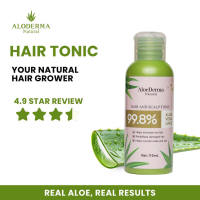
ALOEDERMA Hair & Scalp Tonic Hair Grower 99.8% Pure Aloe Vera (110ml) All Natural Hair Grower
₱345.00
Buy on Lazada
ALODERMA Hair Rescue Bundle(Nourishing Shampoo 70% Pure Aloe Vera for Hair Growth and Nourishing Conditioner 86% Pure Aloe Vera for Hair Hydration
₱710.00
Buy on Lazada
ALODERMA Nourishing Shampoo 70% Pure Aloe Vera 210ml - Hair Growth & Hydration Formula
₱355.00
Buy on Lazada
ALODERMA Hair Growth Bundle - Nourishing Shampoo 70% Pure Aloe Vera Hair Tonic 99.8% Pure Aloe Vera
₱700.00
Buy on Lazada
ALODERMA Ultimate Hair Rescue (Shampoo 70% Pure Aloe Vera Conditioner 86% Pure Aloe Vera Hair Tonic 99.8% Pure Aloe Vera)for Falling Hair and Dry Damaged Hair
₱1,055.00
Buy on Lazada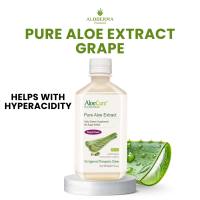
AloeCure Pure Aloe Extract Grape Flavor 500ml (Oct 14 2027 Expiry)
₱580.00
Buy on Lazada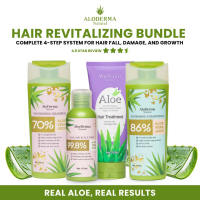
ALODERMA Aloe Vera Hair Revitalization Set - Scalp & Hair Care Kit with Shampoo 70% Pure Aloe Vera Conditioner 86% Pure Ale Vera Tonic99.8% Pure Aloe Vera & Hair Treatment 80% Pure Aloe Vera for Damaged and Color Treated Hair
₱1,410.00
Buy on Lazada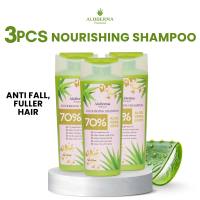
ALODERMA Hair Growing Nourishing Shampoo 70% Pure Aloe Vera Gentle Cleanser Hair Build Up and Scalp Cleansing 210ml 3pcs Set
₱1,065.00
Buy on LazadaAbout ALODERMA
ALODERMA is an American-founded skincare and personal-care brand centred on fresh, organically grown aloe vera. Its core proposition distinguishes it from brands relying on dehydrated powders or concentrates by using aloe vera as a fresh botanical ingredient. The brand is owned by American Global Health Group, LLC (AGHG), a US company with aloe cultivation and manufacturing operations in China.1
In the Philippines, ALODERMA maintains a dedicated online presence with a particular emphasis on haircare and aloe-based treatments, retailing through platforms such as Shopee, Lazada and TikTok.2
Overview
| Field | Information |
|---|---|
| Brand | ALODERMA® |
| Category | Skincare, haircare, body care |
| Core ingredient | Organic Aloe vera |
| Parent company | American Global Health Group, LLC (AGHG) |
| Parent company founded | 1999 |
| Founder associated with AGHG | Doug Jewett |
| ALODERMA launched | 2012 |
| Original corporate connection | United States / China |
| Brand positioning | Fresh aloe-based, natural/organic skincare |
| Key technology | SATT processing technology |
| Main proposition | Fresh organic aloe processed shortly after harvest |
| Major product formats | Aloe gels, cleansers, toners, serums, creams, masks, moisturizers, shampoos, conditioners and body products |
Historical information regarding the brand is derived primarily from ALODERMA’s own corporate materials.1
History
1999: American Global Health Group
The brand’s origins trace back to American Global Health Group (AGHG), established in Seattle, Washington, in 1999 by Doug Jewett. According to the company, Jewett sought to combine American technical expertise with Chinese agricultural culture and the region’s potential for cultivating aloe vera. This vision led to the creation of an American-owned enterprise producing organic aloe products in China.1
2000: Aloe cultivation in Southern China
In 2000, AGHG established its first aloe vera plantation in Southern China. The company adopted a vertically integrated strategy, seeking to control the entire process from cultivation and harvesting through to processing and finished product manufacturing, rather than purchasing extracts from external suppliers.1 This vertical integration later became a central element of the ALODERMA marketing narrative.
Pre-ALODERMA: Nutritional products
Before entering the skincare market, AGHG focused on organic aloe juice and nutritional supplements. It developed several brands during this period, including:
- AloeCure®: Nutritional supplements
- ALODERMA®: Fresh aloe skincare
- ALOFAB™: Hair and body care
2012: Launch of ALODERMA
ALODERMA was launched in 2012 as AGHG expanded from nutritional products into skincare. The objective was to create products using fresh organic aloe vera juice directly from the company’s plantations, distinguishing the line from conventional skincare that typically uses aloe extract.1 The defining concept of the brand remains the use of fresh aloe rather than standard extracts.
Brand name and philosophy
The name ALODERMA combines “Aloe” with “Derma”, the scientific term for skin, directly communicating the brand’s identity as an aloe-focused skincare company.
The central philosophy differentiates ALODERMA through its treatment of aloe vera. While many conventional products utilise aloe powder, concentrate, reconstituted aloe, or small quantities of aloe in water-based formulas, ALODERMA emphasises fresh organic aloe vera juice. The company states that its products contain approximately 64–65% fresh organic aloe vera, depending on the specific item, and that the aloe is processed within 12 hours of harvest without the use of concentrates or powders.1 This “12-hour” freshness claim is a primary element of the brand’s positioning.
Technology and manufacturing
SATT processing technology
A key technological claim is the proprietary SATT processing technology, which the company states allows for the rapid processing of freshly harvested aloe while preserving naturally occurring components. The described production sequence moves from the aloe plantation to harvest, rapid processing, SATT processing, and finally to finished skincare, all purportedly completed within 12 hours of harvesting.1
This model supports the brand’s differentiation based on freshness, vertical integration, high aloe concentration, and proprietary processing.
Vertical integration
AGHG states that it controls much of the aloe supply chain, encompassing farming, harvesting, processing, manufacturing, and finished products. This vertical integration is intended to ensure greater control over aloe quality and freshness compared to the typical cosmetics model of sourcing standardised ingredients from external suppliers.1 For ALODERMA, the aloe farm is integral to the brand story.
Manufacturing descriptions highlight this integrated approach. Materials describe the use of cold-pressed aloe vera juice and emphasise rapid post-harvest processing.2 The US site further specifies that products are produced using aloe from the company’s organic farms and processed within 12 hours of harvesting.1
Ingredients and formulation
Aloe vera is the central ingredient and identity of ALODERMA. The brand describes its aloe as USDA/EU organic and ECOCERT certified, stating that organic aloe vera is the primary ingredient across its range.1 The formulation philosophy centres on using aloe vera as the foundation of skincare rather than a supplementary additive.
While current product pages describe aloe as containing numerous naturally occurring vitamins, minerals, enzymes and other compounds, these assertions represent brand claims rather than independent clinical evidence of specific skincare effects.1
The broader formulation approach combines fresh aloe with naturally derived ingredients while minimising unnecessary additives. The company states that ingredients are at least 95% naturally sourced and indicates a shift away from artificial fragrances toward plant-based essential oils.1 Most finished products contain additional ingredients for cleansing, preservation, texture, fragrance, stabilisation, or specific skincare functions; therefore, “natural” does not imply that products consist solely of aloe vera.
Product portfolio
ALODERMA has expanded significantly beyond basic aloe gel into a comprehensive beauty ecosystem.1
Skincare
The skincare catalogue includes:
- Cleansers
- Toners
- Serums
- Moisturizers
- Creams
- Eye creams
- Facial masks
- Facial mists
- Hand creams
- Clearing treatments
Aloe gels and hydrators
This category is strongly associated with the brand and includes:
- Pure Aloe Vera Gel
- Aloe Vera Gel + Tea Tree Oil
- Aloe Flower Essence Gel
- Pure Aloe Vera Skin Hydrator
- Aloe Clearing Gel1
Haircare
Haircare offerings include:
- Aloe shampoos
- Conditioners
- Hair treatments
- Hair tonics
- Volumizing shampoo
- Oil-controlling shampoo
In the Philippine market specifically, haircare is emphasised as a major category.2
Body care
Body care products include body washes, hand care items, and bath/shower products.1
Lines by skin concern
Products are also segmented by skincare goals, allowing the brand to function as a complete system rather than a single-ingredient line. Current lines target:
- Hydrating
- Soothing
- Brightening
- Firming & rejuvenating
- Oil controlling
- Skin clearing1
Dedicated routines combining cleanser, toner, serum, moisturiser/cream, and mask are available for several of these concerns.
Signature product: Pure Aloe Vera Gel
The Pure Aloe Vera Gel is one of the brand’s most recognisable products. The US catalogue offers sizes including approximately 114 g, 200 g, 300 g and 500 g. The 500 g version is described as containing 99% organic Aloe Barbadensis Leaf Juice. The company states the gel contains no added water, aloe powder concentrate, parabens, mineral oil, GMO ingredients or hormones, and is vegan and cruelty-free.1 These statements are manufacturer claims rather than independent performance certifications.
Market presence
Geographic development
ALODERMA has roots in both the United States and China. The parent company was founded in Seattle, while cultivation and manufacturing began in Southern China.1 The brand gained significant consumer recognition in China, where it operated hundreds of branded stores at various points; historical pages cite figures ranging from more than 200 to more than 250 stores, reflecting different reporting periods.1
The brand has since expanded internationally, including into the United States and the Philippines.2
ALODERMA in the Philippines
ALODERMA maintains a dedicated Philippine online presence that places particular emphasis on haircare and aloe-based hair treatments. The Philippine site lists shampoos, conditioners, hair treatments and hair tonics alongside skincare products.2 Distribution channels in the country include Shopee, Lazada and TikTok.2
Brand positioning and differentiation
ALODERMA occupies a distinct position between conventional mass-market skincare and traditional herbal brands. Its identity is tied to organic agriculture, aloe cultivation, fresh botanical ingredients, vertical integration, proprietary processing, and natural/clean beauty, combined with modern cosmetic formulations.1
According to the company, five key factors differentiate ALODERMA:
- Fresh aloe: Emphasis on freshly harvested aloe rather than dried ingredients.1
- Speed: Processing within 12 hours of harvest.1
- High aloe content: Products generally use around 64–65% or more fresh organic aloe juice, with some containing substantially higher percentages.1
- Vertical integration: Control from farming through manufacturing.1
- Aloe specialization: Identity concentrated around a single botanical ingredient.
The brand philosophy posits that nature provides the ingredient while technology preserves its potential, combining organic farming and fresh aloe with proprietary processing.2
Sustainability and ethics
ALODERMA markets itself around environmental responsibility, stating commitments to sustainable organic farming, reduced ecological impact, environmentally responsible business practices, natural ingredients, and vegan and cruelty-free products.1 These represent brand commitments documented on company websites rather than independently verified environmental performance metrics.
Comparison with typical aloe products
| Feature | Typical aloe product | ALODERMA’s positioning |
|---|---|---|
| Main ingredient | Aloe extract/juice | Fresh organic aloe |
| Supply chain | Often externally sourced | Vertically integrated |
| Aloe processing | Varies | Within 12 hours of harvest, according to brand |
| Powder/concentrate | May be used | Brand says its core products avoid them |
| Product range | Often basic gel | Full skincare + haircare |
| Brand identity | Aloe as an ingredient | Aloe as the central brand philosophy |
| Organic positioning | Varies | Major part of brand identity |
| Proprietary processing | Usually not a major selling point | SATT technology |
Analysis
Strengths
From a brand-analysis perspective, ALODERMA demonstrates several strengths. Consumers immediately associate the brand with aloe vera, and the “fresh aloe within 12 hours” claim offers clear differentiation against generic “natural skincare” assertions. Vertical integration provides a compelling supply-chain narrative, and the expansion from basic gel to full skincare and haircare routines creates a broad product ecosystem.1 The US–China origin story and focus on organic farming further distinguish the corporate narrative.
Limitations
A balanced assessment acknowledges certain caveats. The aloe-centric positioning may appear repetitive to consumers seeking specialised actives such as retinoids, peptides, exfoliating acids, or advanced vitamin-C systems. Additionally, natural ingredients can cause irritation or allergies, and product effectiveness depends on complete formulation, concentration and stability rather than natural origin alone.
Statements regarding potency, nutrient counts, freshness advantages or bioactivity are marketing and technical claims unless supported by independent comparative clinical evidence. Official websites serve as primary sources for the brand’s self-description but should not be treated as neutral scientific literature.1