Shop on Lazada
Anessa products
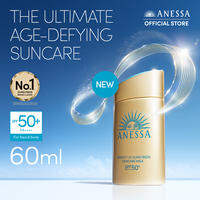
Anessa Perfect UV Sunscreen Skincare Gold Milk 60ml 50 SPF
₱1,990.00
Buy on Lazada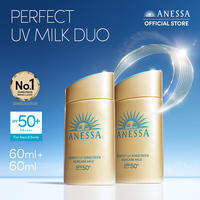
Anessa Gold Milk 60ml Duo 50 SPF with Hyaluronic Acid & Collagen
₱3,980.00
Buy on Lazada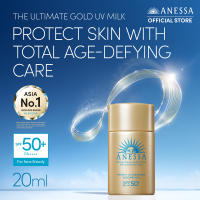
Anessa Perfect UV Sunscreen Skincare Milk 20ml 50 SPF
₱749.00
Buy on Lazada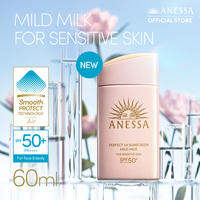
Anessa Perfect UV Sunscreen Mild Milk 60ml 50 SPF
₱1,990.00
Buy on Lazada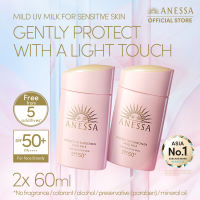
Anessa Mild Milk 60ml Duo 50 SPF for sensitive skin
₱3,980.00
Buy on Lazada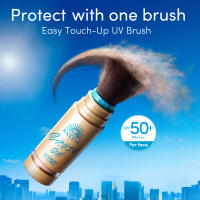
Anessa Perfect UV Brush On Powder 3G
₱2,190.00
Buy on Lazada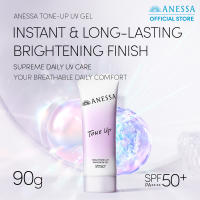
Anessa Perfect UV Brightening Sunscreen Skincare Tone-Up UV Gel 90g 50 SPF
₱1,490.00
Buy on Lazada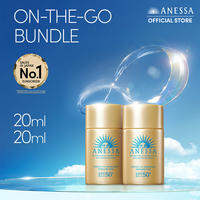
Anessa On-the-Go Bundle 2pcs Gold Milk 20ml 50 SPF with Hyaluronic Acid & Collagen
₱1,498.00
Buy on LazadaAbout Anessa
Brand Overview
Anessa (アネッサ) is a Japanese sun-care and UV-protection brand owned by Shiseido, best known for high-performance sunscreens designed to protect skin from UVA and UVB rays while providing skincare benefits. Launched in 1992, the brand has grown from a specialist sunscreen line into one of Shiseido’s major global sun-care brands 1.
The central concept behind Anessa is “protection that lets people enjoy life under the sun.” Its products are particularly associated with strong resistance to water, sweat, heat, and friction, as well as lightweight textures and technologies intended to maintain an even UV-protective film on the skin 2.
| Category | Information |
|---|---|
| Brand name | Anessa / アネッサ |
| Parent company | Shiseido Company, Limited |
| Origin | Japan |
| Founded | 1992 |
| Industry | Beauty & personal care |
| Category | Suncare, sunscreen, skincare |
| Core specialization | UV protection |
| Main products | Sunscreen milk, gel, spray, powder and related UV products |
| Key positioning | High-performance UV protection + skincare |
| Major markets | Japan and Asian markets, with wider international presence |
| Core audience | Consumers who want reliable daily or outdoor UV protection |
| Brand concept | Helping people enjoy life and “shine” under the sun |
Shiseido describes Anessa as a Japanese suncare expert brand established in 1992. In 2024, Shiseido stated that Anessa was available in 12 Asian countries and regions and held the No. 1 position in Asia by sales according to Euromonitor’s cited 2023 data 2.
Name Origin and Philosophy
The name Anessa is derived from the Japanese word “nessa” (熱砂), meaning “hot sand” or “heated sand.” This evokes hot sand under strong sunlight and connects directly with the brand’s original association with intense sun exposure 2. The concept behind the name extends beyond simply blocking the sun; Anessa’s broader philosophy is that people should be able to live actively and beautifully under sunlight while keeping their skin protected. This idea later evolved into the brand’s Free to Shine philosophy.
Relationship with Shiseido
Anessa’s primary competitive advantage is its connection with Shiseido’s long history of UV research. Shiseido traces its UV research back to 1915. In 1923, it introduced Uviolin, one of its earliest dedicated sun-protection products. Shiseido subsequently played a role in the development and adoption of SPF and UVA-related measurement and labeling in Japan 2.
The historical progression of Shiseido’s UV research includes:
- 1915: UV research begins
- 1923: Uviolin sunscreen launched
- 1980: SPF labeling introduced on a Shiseido sunscreen
- 1986: UVA protection measurement (PFA) used
- 1992: Anessa launches
- 2004: SPF/PA standards evolve
- 2010s–2020s: Water, heat, and friction-responsive technologies developed
- Present: Sunscreen combined with skincare positioning
This history distinguishes Anessa as a brand built specifically around accumulated UV-protection research rather than a general cosmetics company that also sells sunscreen 2.
Founding and Early History
Anessa officially launched in March 1992. At the time, sunscreen products were often associated with outdoor activities and functional protection rather than sophisticated beauty products. Shiseido aimed to combine strong UV protection, sweat and water resistance, comfortable application, attractive cosmetic design, and suitability for active lifestyles.
The first Anessa positioned itself as an all-season outdoor sun-care product rather than merely a summer beach sunscreen. Early advertising famously used the slogan “Anessa isn’t in the room,” emphasizing outdoor life 2. Notably, Shiseido states that an Anessa prototype was used in connection with a Japanese Antarctic expedition in 1990, prior to the commercial launch, illustrating the brand’s emphasis on demanding UV environments 1.
Brand Evolution
Anessa has undergone several major positioning stages since its inception.
1990s: Strong Sunscreen
The original Anessa focused heavily on preventing tanning, high UV protection, sweat and water resistance, and outdoor activities. The brand’s identity was strongly connected with summer, sports, beaches, and resorts 2.
Late 1990s–2000s: Protection and Cosmetic Comfort
Anessa increasingly addressed the issue that high protection often came with an unpleasant texture. The brand began emphasizing concepts such as transparent, smooth, comfortable, lightweight, and non-sticky finishes. This helped transition sunscreen from a tolerated necessity to a part of a daily beauty routine 2.
2010s: Advanced UV Technology
Anessa differentiated itself through proprietary technologies designed to keep the sunscreen film stable under real-world conditions. Notable technologies included SuperVeil-UV 360, WetForce, HeatForce, Aqua Booster, AutoRepair, and later Auto Booster. Shiseido’s historical account describes WetForce as technology activated by contact with water, while HeatForce was designed around heat exposure.
2020s: Sunscreen as Skincare
The brand shifted its messaging from “Protect your skin from the sun” toward “Protect your skin while caring for it.” Current products incorporate skincare-oriented ingredients and claims involving hydration, skin conditioning, antioxidant care, and prevention of concerns associated with UV exposure 12.
Free to Shine Philosophy
Anessa’s modern brand philosophy is “Free to Shine.” This concept posits that sunscreen should not make people afraid of sunlight or restrict their lifestyles. Instead, effective sun protection should provide the confidence to travel, exercise, go outdoors, enjoy beaches, participate in sports, spend time with friends and family, and enjoy everyday life while caring for one’s skin.
This represents a significant change in marketing approaches. Rather than treating UV exposure purely as a problem, Anessa presents protection as an enabler of an active lifestyle. Shiseido explicitly describes the brand’s goal as changing the relationship between people and the sun in a positive direction 2.
Key Differentiators
Anessa’s market differentiation rests on four pillars.
Strong UV Protection
Many flagship products are rated SPF 50+ / PA++++, the highest commonly used Japanese labeling levels for broad UVA/UVB protection. Current Japanese products include SPF50+ PA++++ milk and gel formulations. SPF primarily indicates protection against UVB-related sunburn, while PA indicates UVA protection 2.
Real-World Durability
A core tenet of Anessa’s technology philosophy is that sunscreen must perform outside laboratory conditions. Skin experiences sweat, water, heat, humidity, rubbing, facial movement, and physical activity. Anessa develops technologies intended to maintain or reinforce the UV-protective film under these specific conditions 2.
Skincare Benefits
Modern Anessa products are formulated as suncare and skincare hybrids. For example, the current Japanese Perfect UV Skincare Gel incorporates Auto Moist Balance Technology alongside its UV-protection technology. This positions Anessa closer to premium skincare than to commodity sunscreen 2.
Texture and Usability
Anessa places considerable attention on the sensory experience of wearing sunscreen. Depending on the product, the brand emphasizes lightweight texture, smooth application, non-sticky finish, makeup compatibility, easy reapplication, water resistance, friction resistance, and easy cleansing. The objective is to encourage correct and consistent use through a positive user experience.
Proprietary Technologies
Aqua Booster
One of Anessa’s best-known technologies, Aqua Booster strengthens the UV-protective film when exposed to water or sweat rather than losing effectiveness immediately. Current products use newer generations such as Aqua Booster EX 2.
Thermo Booster
Thermo Booster technology utilizes heat to help UV-protection components form a more uniform protective film, reducing gaps through which UV radiation could penetrate 2.
Auto Booster
Auto Booster extends the responsive philosophy to broader environmental conditions. The Vietnamese Perfect UV Skincare Milk, for example, describes Auto Booster as helping the UV-protective film become stronger in response to high temperature, humidity, water, and sweat 1.
Auto Veil
Auto Veil helps prevent disruption of the UV-protective film caused by movement of facial skin and expressions 1.
Friction Resistance
Recognizing that sunscreen can be physically removed by touching the face, clothing, towels, bags, and movement, Anessa uses proprietary powders designed to create a smoother, more uniform film that is less easily removed by rubbing 2.
Super WaterProof
Some Anessa products are designed for demanding outdoor use. Flagship products are described as having 80-minute water-bath test performance for water resistance, although exact performance and labeling depend on the individual product. This durability makes Anessa popular among consumers participating in swimming, beach activities, running, hiking, sports, and travel 2.
Product Portfolio
Anessa offers a diverse portfolio beyond its signature gold bottle.
Perfect UV Skincare Milk
This product is most strongly associated with the brand. The current Japanese lineup includes Perfect UV Skincare Milk SPF50+ PA++++, positioned for strong protection during outdoor and leisure activities. The milk format is associated with high UV protection, water, sweat, and friction resistance, a lightweight finish, and outdoor use 2.
Perfect UV Skincare Gel
Designed for consumers preferring a moisturizing, everyday texture, the gel combines SPF50+ PA++++ protection with skincare-oriented moisturizing technology. The 2026 Japanese version was renewed on February 21, 2026, with 90 g and new 40 g formats. This exemplifies Anessa’s movement toward daily skincare rather than purely outdoor sunscreen 2.
Brightening UV Gel
This UV gel focuses on brightening and tone-up effects. The current Japanese version was renewed in February 2026 and carries SPF50+ PA++++, combining UV protection with a cosmetic brightening effect 2.
Perfect UV Skincare Spray
The spray format is intended primarily for convenient reapplication and can also be used on hair in the Japanese lineup. This addresses the practical difficulty of reapplying sunscreen during the day when wearing makeup or outdoors 2.
UV Brush-On Powder
Anessa sells a powder sunscreen providing SPF50+ PA++++ that can be applied over makeup. It is designed for convenient touch-ups while controlling shine 2.
Mild Milk
Perfect UV Mild Milk targets sensitive skin and children. The current Japanese product is SPF50+ PA++++ and is described as suitable from infancy (other than newborns), featuring a mild formulation and skincare ingredients. The Vietnamese version similarly positions the product for sensitive skin and children and highlights a five-free formulation 12.
Mild Gel
Mineral UV Mild Gel is a gentler option. The current Japanese version is SPF35 PA+++, uses a non-chemical sunscreen formulation without UV absorbers, and is positioned for sensitive skin and children 2.
Target Consumers
While historically targeting those needing very strong outdoor sun protection, Anessa now serves a broader demographic.
- Outdoor Enthusiasts: People engaged in sports, hiking, swimming, running, beach activities, and travel remain a core audience.
- Everyday Users: The brand increasingly targets individuals seeking premium daily sunscreen for commuting, shopping, school, work, and general outdoor exposure.
- Beauty-Conscious Consumers: Skincare benefits, lightweight textures, makeup compatibility, and tone-up products attract consumers viewing sunscreen as part of their beauty routine.
- Sensitive-Skin Consumers: The Mild range expands the brand to those seeking gentler formulas, including children and people concerned about skin comfort 2.
Market Positioning
In the context of the sunscreen market, Anessa occupies a distinct space:
- Mass Sunscreen: Inexpensive, basic protection
- Beauty Sunscreen: Skincare + cosmetics + UV protection
- High-Performance Sunscreen: Strong UV protection + outdoor durability
- Anessa: High-performance UV protection + skincare + cosmetic usability
This combination defines its positioning. Rather than competing solely on “SPF 50+,” Anessa differentiates through a total system comprising UV technology, durability, texture, skincare benefits, and Japanese R&D heritage.
Brand Image and Recognition
Anessa’s visual identity is strongly associated with gold packaging, which has become synonymous with its flagship products. This visual language communicates premium quality, strength, advanced technology, Japanese beauty, outdoor energy, and reliability. By elevating a functional category to resemble a premium beauty product, Anessa distinguishes itself visually.
In 2019, Shiseido reported that Anessa had been Japan’s best-selling sunscreen brand for 19 consecutive years according to cited market data. More recently, Shiseido described Anessa as the No. 1 suncare brand in Asia by sales based on Euromonitor’s 2023 retail-sales data 2. This reputation is built on decades of product reformulation, performance credibility, consumer familiarity, distinctive packaging, extensive Asian distribution, and the successful integration of sunscreen and skincare.
Regional Presence
Although Japanese in origin, Anessa has become significant across the Asia-Pacific region. This aligns strategically with markets characterized by high UV exposure, hot and humid climates, strong sunscreen usage, large beauty markets, and increasing awareness of photoaging. Shiseido reported in 2024 that Anessa was available in 12 Asian countries and regions 2. Vietnam is noted as one of its important markets, with an official local product and brand presence 1.
Sustainability and Social Initiatives
Anessa’s development increasingly addresses the relationship between sunscreen and the environment. Shiseido has discussed developing sunscreens that combine high functionality with consideration for the natural environment, including ocean-friendly formulations. Current Japanese Mild products explicitly list an “ocean-friendly formulation” among their features. The brand attempts to balance human skin protection, high-performance sunscreen efficacy, and environmental consideration 2.
In 2024, Shiseido announced the Anessa Sunshine Project, designed to support children’s holistic well-being through experiences and activities under the sun across Asian markets. This initiative reflects the brand’s philosophy that sunlight should be experienced positively rather than feared, consistent with the Free to Shine concept 3.
Competitive Advantages and Limitations
Advantages
- Scientific Credibility: Connection to Shiseido provides a strong R&D narrative and over a century of UV-research heritage 2.
- Product Specialization: Identity is built specifically around UV protection rather than general skincare.
- Technology Storytelling: Proprietary technologies like Aqua Booster and Thermo Booster provide tangible reasons for consumer preference 2.
- Brand Recognition: The gold bottle is highly recognizable in Japan and Asian markets.
- Premium-but-Accessible Positioning: Perceived technological sophistication exceeds basic drugstore sunscreen while remaining more accessible than ultra-luxury skincare.
Limitations
- Price: Anessa generally costs more than basic sunscreen products, particularly flagship lines.
- Formula Suitability: Products designed for outdoor durability may not be ideal for those seeking ultra-minimalist or ultra-gentle daily options.
- Market Variation: Formulas, names, sizes, claims, and availability differ between markets such as Japan and Vietnam; versions should not be assumed identical.
- Application Requirements: Water or sweat resistance does not eliminate the need for reapplication. Anessa advises reapplication after substantial water exposure or towel drying 1.
Corporate Structure
Anessa and Shiseido are not separate unrelated entities. Shiseido Group is the parent company and research foundation, while Anessa operates as a specialized sun-care brand within the group. This structure allows Shiseido to operate specialized brands with distinct identities and target consumers.
Comparative Characteristics
The following qualitative assessment summarizes Anessa’s proposition relative to other sunscreen brands:
| Brand characteristic | Anessa |
|---|---|
| Japanese heritage | ★★★★★ |
| UV specialization | ★★★★★ |
| Outdoor performance | ★★★★★ |
| Water/sweat resistance | ★★★★★ |
| Skincare positioning | ★★★★☆ |
| Cosmetic usability | ★★★★☆ |
| Technology storytelling | ★★★★★ |
| Brand recognition in Asia | ★★★★★ |
| Price accessibility | ★★★☆☆ |
| Luxury positioning | ★★★☆☆ |
Strategic Summary
Anessa’s brand strategy transforms sunscreen from a basic UV-blocking product into a high-performance beauty technology designed to let people enjoy an active life under the sun. Essentially Shiseido’s flagship specialist sunscreen brand, its success stems from combining Japanese UV-science heritage, high-performance sunscreen technology, and modern skincare sensibility.
From its 1992 origins as a powerful outdoor sunscreen, Anessa has evolved into a broader sun-care ecosystem encompassing strong outdoor protection, everyday UV care, skincare, makeup-compatible products, sensitive-skin options, and convenient reapplication formats. Its primary asset is the credibility of Anessa as a “UV expert,” supported by Shiseido’s research history and translated into consumer benefits through proprietary technologies 2.