Shop on Lazada
Anko products
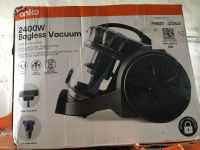
AuSurplus Anko Bagless Vacuums PROMO!! *MAY NOT INCLUDE COMPLETE ACCESSORIES* 2ND HAND SURPLUS
₱1,320.00
Buy on Lazada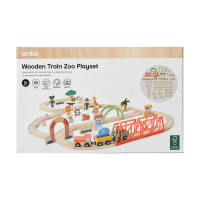
Wooden Train Zoo 55 Piece Playset - Anko
₱2,250.00₱2,500.00

Bubble Blaster Gun with Bubble Solution
₱349.00
Buy on Lazada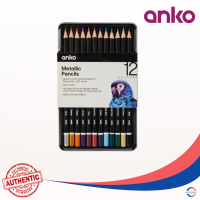
ANKO Metallic Coloured Pencils
₱250.00
Buy on Lazada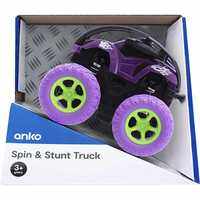
ANKO Spin and Stunt Trunk Toy
₱240.00
Buy on Lazada
Bubble Wand Bubble Stick
₱99.00
Buy on LazadaAbout Anko
Overview
Anko is an Australian home and lifestyle brand owned by Kmart Australia Ltd, a subsidiary of the conglomerate Wesfarmers. While originally established as a private label for Kmart stores in Australia and New Zealand, Anko has evolved into a comprehensive product development, sourcing, and retail business with international ambitions.1 In the Philippines, the brand operates as a standalone retailer rather than through Kmart department stores, marking a distinct strategy for the local market.
The brand offers a wide range of affordable, contemporary products across categories including homewares, kitchenware, storage, beauty, toys, pets, fitness, and lifestyle accessories.1 Anko describes its philosophy as making good design and useful products accessible at affordable prices, combining modern aesthetics with practical functionality.1
| Category | Information |
|---|---|
| Brand | Anko |
| Origin | Australia |
| Parent company | Kmart Australia Ltd |
| Ultimate parent | Wesfarmers Ltd |
| Industry | Retail / consumer goods |
| Positioning | Affordable, on-trend everyday products |
| Core markets | Australia and New Zealand |
| International expansion | Philippines, Canada, India and other markets |
| Major categories | Home, kitchen, dining, bathroom, bedroom, storage, toys, beauty, pets, arts & crafts, nursery, fitness and travel |
| Primary retail association | Kmart Australia |
| Brand launched as unified identity | 2018–2019 |
| Products sold annually | More than 1 billion, according to Anko |
| Official website | anko.com |
History
Origins within Kmart Australia
Anko’s history is rooted in Kmart Australia, which opened its first store in Burwood East, Victoria, in 1969. Over subsequent decades, Kmart shifted its strategy toward developing proprietary products rather than relying on external brands. This approach allowed the retailer to design products internally and source them in large volumes to offer lower prices. Today, Kmart states that its internal teams develop more than 80% of the products sold through its channels.1
Creation of the Anko identity
Prior to 2018, Kmart utilized various private-label names for different departments, such as Home&Co, Kids&Co, Clothing&Co, and Active&Co. In 2018, the company announced it would consolidate these labels under the single master brand Anko, with the unified branding implemented between 2018 and 2019.1
The name Anko stands for “A New Kind Of” and reflects the consolidation of the previous “&Co” brands, while the letter “k” maintains a connection to Kmart.1 This rebranding transformed the private label system into a recognizable consumer brand across a significant portion of the company’s merchandise.
Ownership structure
Anko is not an independent company but is wholly owned within the Wesfarmers group structure:
- Wesfarmers Ltd (ASX-listed parent company)
- Kmart Group
- Kmart Australia Ltd
- Anko1
Wesfarmers is one of Australia’s largest listed companies, with diverse interests spanning home improvement, general merchandise, apparel, office products, and health and beauty.
Product range
Anko’s assortment is deliberately broad, covering many aspects of daily life rather than specializing in a single niche. Major categories include:
- Homewares
- Kitchen and dining
- Storage and organization
- Bathroom and bedroom
- Furniture
- Toys and games
- Beauty
- Pets
- Arts and crafts
- Nursery and baby
- Fitness
- Travel
- Seasonal products
- Lifestyle accessories1
The brand emphasizes contemporary design and versatility, allowing customers to furnish homes, organize spaces, and purchase personal items within a single brand ecosystem. Products are positioned as stylish yet affordable, often featuring modern aesthetics that differ from traditional discount retail offerings.1
Business model
Anko operates on a business model centered on high-volume product development, direct global sourcing, and low pricing. Rather than functioning solely as a manufacturer, it collaborates with product designers, merchandise teams, and sourcing specialists to develop products that are then manufactured by partners worldwide.1
According to Anko Global, the brand represents more than 85% of products sold in Kmart Australia’s network of over 300 stores.2 The company reports selling more than one billion products annually and describes itself as the largest direct-sourcing business by volume and value among retailers in the Southern Hemisphere.1
This scale provides significant control over:
- Product design and specifications
- Sourcing and supply chain efficiency
- Pricing and packaging
- Merchandising and product ranges
Brand philosophy and positioning
Anko’s core philosophy asserts that good design and useful products should be accessible at affordable prices.1 The brand aims to combine contemporary trends with practicality, focusing on:
- Contemporary aesthetics
- Versatility and functionality
- Accessible design standards
- Responsible sourcing
- Affordability
The “Kmart aesthetic” and dupe culture
In Australia, Anko is closely associated with the “Kmart aesthetic,” characterized by minimalist home décor, functional kitchenware, and affordable furniture. This combination of modern design and low prices has fostered a consumer culture known as “Kmart hacks,” where buyers modify or customize inexpensive products.
The brand also participates in the “dupe” phenomenon, offering products that resemble higher-end or prestigious items at significantly lower price points. Media reports have highlighted Anko’s growth through this strategy, noting that it competes on design relevance and functionality alongside affordability rather than price alone.
Presence in the Philippines
The Philippines represents a key market for Anko’s international expansion because the brand operates standalone retail stores there, unlike in Australia where it is primarily sold within Kmart department stores. This allows Anko to function as an independent consumer-facing brand in the country.1
The first Philippine store opened at Glorietta 2 in Makati. As of June 30, 2025, Kmart Group’s sustainability reporting recorded five Anko stores in the Philippines.1 Current locations listed on the official Philippine website include:
- Glorietta 2, Makati
- Alabang Town Center, Muntinlupa
- TriNoma, Quezon City
- Ayala Malls Manila Bay, Pasay
- Ayala Malls Feliz, Pasig1
This standalone retail model distinguishes the Philippine market from other international territories where Anko may be distributed through wholesale partnerships or online marketplaces.
International expansion
Beyond Australia, New Zealand, and the Philippines, Wesfarmers has identified international distribution as a key growth avenue for Anko.3 The brand has established operations or offices in several countries, including China, India, Canada, the United Kingdom, and France.2
International strategies vary by market and include:
- Standalone Anko stores (e.g., Philippines)
- Store-in-store partnerships (e.g., Hudson’s Bay’s Zellers concept in Canada)
- Online marketplaces
- Wholesale and distribution arrangements
This flexibility allows the brand to test new markets without necessarily building extensive physical retail networks everywhere.
Manufacturing and sourcing
Anko does not manufacture all its products directly but manages an extensive global sourcing network. Anko Sourcing serves as the exclusive direct-sourcing arm of Kmart Group, with operations spanning major Asian manufacturing hubs including China, India, Bangladesh, Cambodia, Indonesia, and Vietnam.4
The economic model relies on leveraging large volumes to secure efficient supply chains and lower unit costs, which enables affordable retail pricing. Simultaneously, the company emphasizes ethical standards and supplier relationships within its sourcing operations.2
Sustainability and ethics
Ethical and sustainable sourcing is stated as part of Anko’s operating philosophy. Given the enormous volume of products sold, sustainability considerations are integrated into the broader Kmart Group framework. Key focus areas include:
- Responsible sourcing and supplier standards
- Product materials and packaging
- Animal welfare
- Human rights
- Supply chain practices2
The brand aims to maintain quality and affordability while adhering to these ethical objectives.
Relationship with Kmart and Target
While consumers often equate Anko with Kmart, the corporate relationship is multifaceted. Kmart acts as the primary retailer, while Anko functions as a product development and sourcing platform. Additionally, selected Anko general merchandise ranges have been introduced into Target Australia stores, another brand within the Kmart Group. This strategy leverages Anko’s development capabilities while allowing Target to maintain its distinct positioning in apparel and soft home categories.
Competitive positioning
Anko occupies a unique position in the retail landscape by combining attributes typically found in separate business models:
| Competitor type | Comparison point |
|---|---|
| Discount retailers | Low price and convenience |
| Department stores | Breadth of product range |
| Homewares chains | Design and functionality |
| Premium lifestyle brands | Contemporary aesthetics |
| Online marketplaces | Variety and value |
Its competitive advantage lies in merging department-store breadth with discount pricing and contemporary design. This differentiation has made the brand prominent in its core markets and supports its expansion into new territories like the Philippines.
Scale and significance
Anko describes itself as Australia’s leading home and lifestyle brand.1 As of June 30, 2025, Kmart and Target together operated 447 stores in Australia and New Zealand, providing a massive foundation for Anko’s product development and sourcing operations.
Unlike typical private labels that simply apply a retailer’s name to third-party goods, Anko operates as a vertically coordinated platform involved in design, development, merchandising, sourcing, and international distribution.2 This evolution from a store brand to an independent international retail entity represents a significant shift in modern discount retailing, challenging the assumption that affordable products must compromise on design or quality.