Shop on Lazada
APO FLOORS products
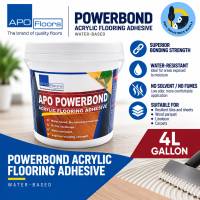
APO Powerbond Acrylic Flooring Adhesive 1.25kg or 5kg Water-Based Water-Resistant No Tile Shrinkage
₱1,710.00₱1,929.00
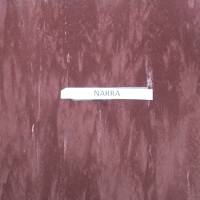
Apo Floors Vinyl Tiles 300mm x 300mm (Available in different Colors)
₱81.60
Buy on Lazada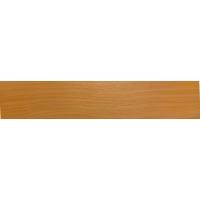
Apo Crown Wood Design Vinyl Plank Flooring Tiles 1.3mm x 4″ x 36″
₱61.20
Buy on Lazada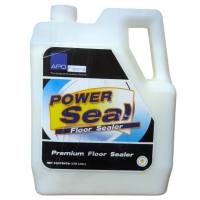
Apo Power Seal Floor Sealer Powerseal - 1 Gallon
₱1,420.00
Buy on Lazada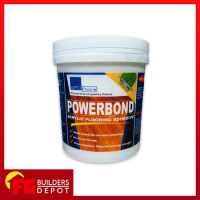
APO POWERBOND Acrylic Flooring Adhesive 1 Liter | Water-Based Safe & Durable
₱500.00
Buy on LazadaAbout APO FLOORS
Overview
APO FLOORS is a Filipino flooring brand owned and manufactured by Puyat Flooring Products, Inc. (PFPI). The brand specializes primarily in resilient flooring, including vinyl tiles, planks, and sheet flooring, as well as engineered wood and complementary installation and maintenance products. Positioned as a locally manufactured alternative to imported options, APO FLOORS focuses on durability, design variety, affordability, and suitability for Philippine residential, commercial, and property development projects.1
Company and Ownership
| Item | Information |
|---|---|
| Brand | APO FLOORS |
| Parent/manufacturer | Puyat Flooring Products, Inc. (PFPI) |
| Parent group | Gonzalo Puyat and Sons, Inc. |
| Country of origin | Philippines |
| Industry | Flooring / building materials |
| Established | 1991 |
| Main manufacturing facility | Bataan, Philippines |
| Primary market | Philippines |
| Major product categories | Resilient/vinyl flooring, engineered wood, adhesives, floor-care products, subfloor preparation |
| Official website | apofloors.com |
PFPI is a wholly owned subsidiary of Gonzalo Puyat and Sons, Inc., a long-established Philippine industrial group with business interests spanning steel products, mining, flour milling, real estate, and other industrial activities.1
History
1991: Origins
The company’s history began in October 1991 when it operated as Puyat Vinyl Products, Inc. (PVPI). It acquired the former Marcelo Vinyl Products Philippines, Inc. plant in Mariveles, Bataan, from the government’s Asset Privatization Trust. Its inaugural flooring product was the AVQT APO Vinyl Quartz Tile, which established the foundation for what would eventually become APO FLOORS.1
1993: Establishing Presence in Vinyl Flooring
Within two years of its founding, the company had become a leading Philippine manufacturer of vinyl tiles, sheets, and related resilient flooring products.
1997: Flooring Adhesives
PVPI introduced APO Powerbond Acrylic Flooring Adhesive, described by the company as the first Philippine-made water-based acrylic flooring adhesive in Southeast Asia.1
1999: Floor Care Products
The company expanded beyond flooring materials with the launch of APO Floor Care, which included APO Power Clean, APO Power Strip, APO Power Seal, APO Power Buff, and APO Power Shine. This move established a broader product ecosystem covering installation, maintenance, and floor finishing.1
2001: Laminated Vinyl and Crown Vinyl
PFPI introduced APO Platinum Laminated Vinyl in planks and tiles. Designs included the Designer Series, Wood Selection, and MGS Selection, offering customers more decorative choices through printed laminated films. The company also introduced APO Crown Vinyl, a lower-cost flooring product aimed particularly at the housing market.1
2003: ISO Certification
PFPI became certified under the ISO 9001:2008 Quality Management System, reflecting the company’s adoption of internationally benchmarked quality management processes.1
2004: Engineered Wood
The company entered the engineered wood flooring segment with APO Realwood. It also introduced APROTECH, a UV-cured polyurethane ceramic finish for its laminated vinyl plank products.1
2005: Corporate Renaming
In September 2005, the company changed its name to Puyat Flooring Products, Inc. (PFPI) as it expanded beyond its original PVC and vinyl tile business into engineered hardwood and other flooring categories.1
2006: APO FLOORS Brand Launch
The APO FLOORS brand was formally introduced to the market in 2006, marking a significant transition from a company primarily associated with vinyl products to a comprehensive flooring brand.1
2009: Brand Identity and Mimicri
In 2009, PFPI updated its corporate logo to a tile-and-plank design and introduced Mimicri, a luxury resilient flooring range designed to reproduce the visual appearance of materials such as wood, carpet, and stone.1
2010: APO Anti-Bac
PFPI developed APO Anti-Bac roll-form flooring aimed at applications such as hospitals, clinics, and gyms where antibacterial characteristics are desirable.1
2013–2018: Product Expansion
The company continued expanding APO Realwood designs and introduced products such as Moderna homogeneous vinyl tiles, Mimicri Embossed, APO Power Primer, APO Power Self Leveling Compound (SLC), and Mimicri Rollform.1
Products
The APO FLOORS portfolio covers multiple components of the flooring system, extending beyond standard vinyl tiles.
Resilient and Vinyl Flooring
Resilient flooring forms the core of the APO FLOORS identity. The portfolio includes tiles, planks, and sheet or roll-form products with designs intended to reproduce natural materials while retaining the practical characteristics of resilient flooring.1 Applications include residential homes, condominiums, offices, commercial establishments, institutional buildings, property development projects, and specialized healthcare environments.
APO Mimicri
Mimicri is one of the brand’s most recognizable product families. The concept centers on mimicking the appearance of other materials; depending on the collection, the flooring reproduces the look of wood, stone, carpet, or other decorative surfaces. The line is marketed for its combination of aesthetics, durability, ease of maintenance, and installation.2 DMCI Homes, for example, has used Mimicri products in themed developments including Tivoli Garden, Cedar Crest, Redwoods, and Flair Tower.2
APO Realwood
APO Realwood represents the company’s engineered wood segment. According to Green Building Philippines, APO Realwood uses a three-ply engineered wood construction based on cross-grained layers intended to provide greater dimensional stability than conventional multi-ply structures. The product has also been presented with environmental and indoor air quality attributes regarding formaldehyde and emissions, though these claims should be evaluated against specific current product documentation during project specification.
Homogeneous Vinyl
APO FLOORS offers homogeneous resilient flooring, including the Moderna line. Unlike decorative wood-look vinyl, homogeneous flooring is oriented toward functional commercial and institutional environments where durability and consistent material composition are critical.
APO Powerbond
APO Powerbond is the company’s water-based acrylic flooring adhesive. Designed for resilient tiles and sheets, wood parquet, linoleum, carpets, and engineered wood, it can be applied over substrates including concrete, plywood, hardboard, and chipboard.1 Key characteristics include a water-based formulation, absence of solvent fumes, no fire or explosion risk during application, plasticizer resistance, and aging resistance.
APO Power Floor Care
The brand manufactures products intended to maintain finished floors:1
- Power Clean: Neutral cleaner for dirt and stains
- Power Strip: Removes accumulated sealers and floor polish buildup
- Power Seal: Floor sealer and base coat
- Power Shine: Acrylic floor polish
- Power Buff: Maintenance and recoating product
This vertical integration allows APO FLOORS to supply not only floor coverings but also products for installation and ongoing maintenance.
Subfloor Preparation
For subfloor preparation, the company offers APO Power Primer, a water-based acrylic primer designed to improve adhesion of APO Power SLC and help seal pores in concrete substrates. APO Power SLC is a self-leveling compound designed to correct minor irregularities in concrete subfloors prior to installation.1
Manufacturing
APO FLOORS distinguishes itself as a Philippine manufacturer rather than solely an importer or distributor. PFPI’s principal manufacturing facility is located in Bataan, where the company produces floor coverings, adhesives, and floor care products. Additional facilities include a Taguig site for finishing Realwood products, a central warehouse in Malacañang, and management and back-office operations in Makati.1
The Bataan facility has a reported production capacity of approximately 4.5 million square meters per year. Local production enables the company to supply large projects and customize products according to specific requirements and budgets.1
Distribution
APO FLOORS maintains a nationwide Philippine distribution network. Historically, this network expanded from 26 outlets to roughly 500 outlets, comprising major depots, DIY stores, finishing stores, and hardware stores. The company subsequently described its network as consisting of hundreds of dealers and professional sales personnel.1 This extensive distribution strategy supports the brand’s project-driven nature, ensuring availability, dealer support, samples, and installation assistance.
Market Position
APO FLOORS positions itself as a major local resilient flooring manufacturer. The company describes PFPI as the leading resilient flooring manufacturer in the Philippines, claiming a 69% market share in the resilient segment. As this is a company-reported figure, it is treated as an internal claim rather than an independently verified statistic.1
Media reports have historically described APO FLOORS as a dominant local brand. In 2013, The Philippine Star reported that APO Floors accounted for more than 50% of demand for resilient flooring at that time.2
Developer and Project Relationships
APO FLOORS maintains a significant presence in Philippine property development. Sources identify developers such as DMCI Homes, Ayala Land, Filinvest, Federal Land, Megaworld/Empire East, Cityland, Phinma Properties, SM, Vista Land, and SOC Land as users of APO FLOORS products.2 This underscores the brand’s substantial B2B and project-market presence, serving property developers, contractors, architects, designers, and institutional customers alongside individual consumers.
Quality and Standards
The company emphasizes internationally oriented quality standards. PFPI obtained ISO certification, and its products have been developed to conform to international benchmarks.1 A 2009 Philippine Star feature reported that APO FLOORS products were associated with ASTM, British Standards (BS), and Japanese Industrial Standards (JIS). Similarly, a 2020 DMCI article stated that locally manufactured APO products underwent quality testing against American, British, and Japanese standards.2 However, distinctions should be made between products tested to a standard versus those certified by the publishing organization; exact status varies by product and should be verified against current technical datasheets.
Brand Philosophy
APO FLOORS’ market positioning is defined by five key themes:
- Local Manufacturing: Differentiation as a Philippine-made flooring brand backed by domestic manufacturing capacity.
- Design Accessibility: Making the visual appearance of premium materials like wood and stone accessible at lower costs through products like Mimicri and laminated resilient flooring.
- Practicality: Marketing vinyl and resilient products based on ease of installation, durability, and maintenance.2
- Project Capability: Maintaining the manufacturing scale and sales infrastructure necessary to serve large-scale residential, commercial, and institutional projects.
- Product Development: Continuous expansion into adhesives, floor care, engineered wood, antibacterial flooring, and subfloor preparation rather than focusing on a single product category.
Distinctive Characteristics
From a brand analysis perspective, APO FLOORS possesses several notable differentiators. First, it is an established local Philippine flooring manufacturer rather than merely a retail label. Second, it exhibits broad vertical integration covering flooring materials, adhesives, subfloor preparation, and maintenance. Third, the company bridges aesthetic design and functional flooring; Mimicri, for example, reproduces the appearance of natural materials using resilient technology.2 Fourth, the brand maintains a substantial property development and B2B history, distinguishing it from brands focused primarily on individual homeowners.
Timeline
| Year | Milestone |
|---|---|
| 1991 | Puyat Vinyl Products, Inc. established; AVQT APO Vinyl Quartz Tile introduced |
| 1993 | Becomes a leading Philippine vinyl-tile manufacturer |
| 1997 | APO Powerbond flooring adhesive introduced |
| 1999 | APO Floor Care product line introduced |
| 2001 | APO Platinum Laminated Vinyl and APO Crown Vinyl introduced |
| 2003 | ISO 9001:2008 quality-management certification |
| 2004 | APO Realwood engineered flooring introduced |
| 2005 | Company renamed Puyat Flooring Products, Inc. |
| 2006 | APO FLOORS brand introduced |
| 2009 | New tile-and-plank brand identity; Mimicri introduced |
| 2010 | APO Anti-Bac introduced |
| 2013 | New APO Realwood designs |
| 2015 | Moderna homogeneous vinyl and Mimicri Embossed introduced |
| 2018 | APO Power Primer, Power SLC and Mimicri Rollform introduced |
Corporate Structure
The corporate hierarchy is structured as follows:
- Gonzalo Puyat and Sons, Inc. (Parent Group)
- Puyat Flooring Products, Inc. (PFPI) (Operating/Manufacturing Company)
- APO FLOORS (Consumer/Project-Facing Brand)
- Product Portfolio: Flooring, adhesives, floor preparation, and floor care
PFPI serves as the operating and manufacturing entity, while APO FLOORS functions as the consumer and project-facing brand.1
Current Product Ecosystem
The APO FLOORS website presents a portfolio extending beyond conventional vinyl flooring to include Powerbond, Power Primer, Power SLC, and Floor Care products. The catalog features a wide selection of colors and design names, reflecting the brand’s emphasis on decorative choice.1