Shop on Lazada
ARM & HAMMER products
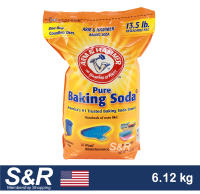
Arm & Hammer Pure Baking Soda 6.12kg
₱962.00₱968.00
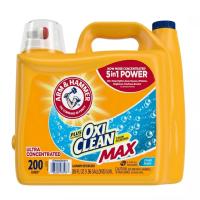
Arm & Hammer plus OxiClean Max Liquid Laundry Detergent 200 Loads 200 fl. oz 5.91L
₱1,979.00₱2,400.00
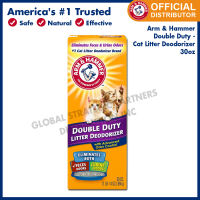
Arm & Hammer Double Duty -Cat Litter Deodorizer 30oz
₱385.00
Buy on Lazada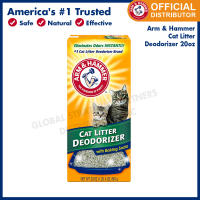
Arm & Hammer Cat Litter Deodorizer
₱290.00
Buy on Lazada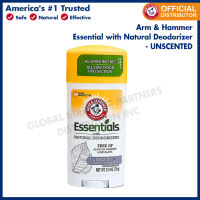
Arm & Hammer Deodorant ESSENTIALS - Unscented
₱300.00
Buy on Lazada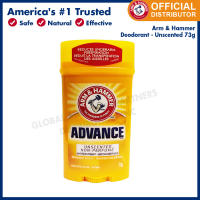
Arm and Hammer Deodorant - Unscented
₱300.00
Buy on Lazada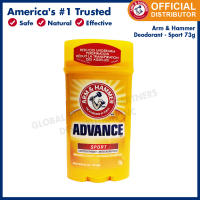
Arm and Hammer Deodorant - Sport
₱300.00
Buy on Lazada
Arm & Hammer in-Wash Scent Booster 24oz (not Downy) Purifying Waters Fresh Burst Maui Sunset
₱800.00
Buy on LazadaAbout ARM & HAMMER
ARM & HAMMER is an American consumer brand best known for its baking soda (sodium bicarbonate) and for extending that ingredient’s odor-control, cleaning, and household-care properties into a wide range of products. The brand is owned and marketed by Church & Dwight Co., Inc., an American consumer-products company founded in 1846.
Unlike many household brands that launched with a broad product line, ARM & HAMMER built its identity around a single chemical compound: sodium bicarbonate. For over a century, the company educated consumers on uses for baking soda far beyond baking. Today, the brand encompasses baking soda, laundry care, cat litter, oral care, deodorants, and other personal-care products.1
Brand profile
| Attribute | Information |
|---|---|
| Brand name | ARM & HAMMER™ |
| Industry | Consumer packaged goods |
| Primary association | Baking soda / sodium bicarbonate |
| Parent company | Church & Dwight Co., Inc. |
| Country of origin | United States |
| Origins | 1846 |
| ARM & HAMMER trademark/logo | 1867 |
| Major categories today | Baking soda, laundry, cat litter, oral care, personal care |
| Core brand idea | Versatile, affordable cleaning and deodorizing power |
| Famous symbol | Arm of Vulcan holding a hammer |
| Official website | ARM & HAMMER |
The underlying business traces its origins to 1846, when John Dwight and his brother-in-law, Dr. Austin Church, began commercially preparing and distributing bicarbonate of soda.2
Origins
The history of ARM & HAMMER begins with baking soda rather than the brand name itself. In 1846, John Dwight and Dr. Austin Church began producing bicarbonate of soda for commercial distribution. Their initial operation was modest; they packaged the material by hand in paper bags in Dwight’s kitchen. The product was valued for being inexpensive, versatile, and useful as a leavening agent in baking.3
The business became John Dwight & Company in 1847. For decades, Dwight’s business and Church’s later business operated separately while selling essentially the same fundamental product. Dwight’s baking soda was associated with the Cow Brand, while Church’s company eventually adopted the ARM & HAMMER trademark.
It is notable that ARM & HAMMER did not originally represent an entire household-products empire; it was a trademark associated specifically with baking soda.
The ARM & HAMMER symbol
The iconic ARM & HAMMER logo appeared in 1867. According to Church & Dwight’s historical account, Austin Church retired and his sons formed Church & Co. The ARM & HAMMER trademark was brought over from James Church’s business, Vulcan Spice Mills.13
The image depicts the arm of Vulcan, the Roman god associated with fire and metalworking, holding a hammer over an anvil. The symbolism was straightforward:
- Arm: Strength
- Hammer: Power and industry
- Vulcan: Fire, craftsmanship, and manufacturing
- Anvil: Durability and work
The symbol communicated strength and effectiveness while giving an ordinary chemical product a memorable visual identity. Church & Dwight states that the icon eventually became recognized as a symbol of quality.
Misconception regarding Armand Hammer
Despite the similarity of the names, ARM & HAMMER was not named after the businessman Armand Hammer. The trademark was already in use in the nineteenth century, decades before Armand Hammer was born. He later became associated with Church & Dwight through his investment in the company and service on its board, which helped perpetuate the confusion.45
Church & Dwight
In 1896, Church & Company and John Dwight & Company were consolidated, creating Church & Dwight Co., Inc.14 This merger formed the corporate foundation of the company that owns ARM & HAMMER today.
Church & Dwight has since developed into a major American consumer-products company with a portfolio extending well beyond ARM & HAMMER. Its other brands include OxiClean, Trojan, Nair, Orajel, First Response, and Batiste.25
ARM & HAMMER remains one of its most important brands. Church & Dwight describes ARM & HAMMER as one of its most trusted trademarks and notes that roughly 40% of its domestic consumer products are sold under ARM & HAMMER and related trademarks.6
From baking soda to a multi-use brand
A key aspect of ARM & HAMMER’s brand development was recognizing that baking soda was not merely a baking ingredient. For generations, consumers discovered uses for sodium bicarbonate in baking, cleaning, deodorizing, laundry, oral care, household maintenance, and personal care.
ARM & HAMMER actively encouraged this behavior. The company published instructional material and recipe books as early as the nineteenth century. Its “Valuable Recipes” publications eventually went through more than 137 editions, helping teach consumers how to use baking soda around the home.8
By the twentieth century, ARM & HAMMER was increasingly positioned not simply as a pantry staple, but as a versatile household problem-solver.
The baking soda philosophy
The fundamental ARM & HAMMER brand proposition can be summarized as taking a simple, familiar ingredient and finding more things it can do. This is why the yellow box of ARM & HAMMER Baking Soda became so important to the brand.
Rather than competing only on baking performance, the brand connected sodium bicarbonate with concepts such as freshness, odor control, cleanliness, versatility, affordability, and simplicity. The company’s current positioning continues this tradition, describing baking soda as a versatile household staple used for cooking, cleaning, deodorizing, pet care, and personal care.9
The refrigerator revolution
One of ARM & HAMMER’s most significant marketing initiatives occurred in 1972, when the company promoted placing an open box of baking soda inside the refrigerator and freezer to help control odors.10
This campaign transformed the meaning of the product. Before this initiative, consumers primarily associated ARM & HAMMER with baking. Afterward, the association increasingly shifted to freshness and odor control. The refrigerator box became one of the most recognizable examples of brand positioning in the household-products industry.
ARM & HAMMER still recommends replacing refrigerator baking soda regularly; its current FAQ advises changing it every 30 days for improved odor elimination.11
Expansion into laundry
ARM & HAMMER subsequently expanded from baking soda into laundry care. In 1970, the brand introduced what it describes as the first nationally distributed phosphate-free laundry detergent.12
During the 1980s and 1990s, the brand launched laundry detergents incorporating baking soda. The success of this strategy helped establish ARM & HAMMER as a major laundry brand rather than solely a baking-soda brand.13
Today, its laundry portfolio includes:
- Liquid detergents
- Powder detergents
- Laundry paks
- Sensitive-skin detergents
- Baby laundry products
- Scent boosters
- Dryer sheets
- Laundry sheets
- Fabric rinse
- Laundry additives
- Products incorporating OxiClean stain-fighting technology7
This expansion demonstrated that “baking soda power” could serve as a platform for an entire category of products.
Cat litter
ARM & HAMMER later moved into cat litter, where the brand’s traditional association with odor control made strategic sense. Its modern cat-litter portfolio includes:
- Clumping litter
- Premium litter
- Traditional litter
- Lightweight formulas
- Natural-ingredient formulas
- Unscented formulas
- Odor-control products
- Products designed for multi-cat households15
The brand’s baking-soda heritage is particularly relevant here because odor management is a primary concern for consumers. This reflects a recurring ARM & HAMMER strategy: identify a problem, connect it with odor control, and use baking soda as a recognizable technological or ingredient story.
Oral care
ARM & HAMMER also entered oral care, particularly toothpaste. The brand uses baking soda’s mild abrasive and acid-neutralizing properties as part of its oral-care proposition. Its current range includes toothpastes for whitening, sensitivity, enamel defense, and other needs.9
The company states that baking soda can help remove plaque, help remove surface stains, neutralize acids, and provide mild abrasive cleaning. For example, its Essentials line is explicitly built around baking soda as a core ingredient.8
This expansion represents another instance of ARM & HAMMER transferring its historical “clean + deodorize + neutralize” positioning into a different consumer category.
Personal care
The brand has also expanded into personal care, including deodorants and antiperspirants. Current ARM & HAMMER categories include men’s and women’s deodorants and antiperspirants as well as nasal and saline products.9
The connection with the original baking soda product follows a logical progression for consumers: baking soda leads to odor control, which leads to personal freshness. This makes the brand architecture unusually coherent despite the large number of categories.
Major product categories today
ARM & HAMMER’s modern portfolio is much broader than its famous yellow baking-soda box.
Baking soda
This remains the foundation of the brand. Products include pure baking soda, resealable baking soda bags, baking soda shakers, refrigerator and freezer odor absorbers, household deodorizers, carpet deodorizers, and pool-maintenance products.11
Laundry
A major category including detergents, boosters, dryer products, and other laundry-care items.7
Cat litter
One of the brand’s major non-food household categories, particularly emphasizing odor control.15
Oral care
Toothpaste, toothbrushes, rinses, and related products.8
Personal care
Deodorants, antiperspirants, and nasal or saline products.9
As of the current U.S. product catalog, the brand’s website lists hundreds of products and pieces of content across these categories, illustrating how far the brand has evolved from its nineteenth-century origins.10
The Statue of Liberty connection
A notable event in ARM & HAMMER history occurred in 1986. For the Statue of Liberty’s centennial restoration, more than 100 tons of sodium bicarbonate were used to clean its interior copper surfaces and remove accumulated coal tar. Church & Dwight states that the process removed 99 years of coal tar without damaging the delicate copper.16
This event provided a high-profile real-world demonstration of baking soda’s cleaning capabilities, effectively linking an ordinary household product to the preservation of a famous monument.
Environmental positioning
Environmental themes have appeared in ARM & HAMMER’s history for more than a century. The company introduced recycled paperboard packaging in 1907, promoted environmental education through materials such as its “Beautiful Birds of America” cards, and was the sole corporate sponsor of the first Earth Day in 1970, according to its historical timeline.17
More recently, Church & Dwight has promoted renewable-energy and carbon-offset initiatives associated with ARM & HAMMER products. The brand states that its baking soda became Carbon Neutral certified for certain emissions covered by its stated offset program, including 2022 emissions from raw-material production through U.S. retail delivery.18
This contributes to a modern brand identity centered on the idea that baking soda is a comparatively simple and versatile alternative for many household tasks.
Brand identity
ARM & HAMMER’s identity is built around several recurring themes.
Strength
The muscular arm and hammer visually communicate power.
Purity
The brand has historically emphasized the purity of its baking soda. Its current corporate messaging continues to describe baking soda as a “standard of purity.”19
Versatility
A single ingredient can be used in numerous contexts, and ARM & HAMMER has spent generations educating consumers about those uses.
Odor control
Odor elimination became particularly important after the refrigerator campaign and later became central to laundry, cat litter, carpet, and personal-care products.
Value
Baking soda is inexpensive, familiar, and widely available, giving ARM & HAMMER a strong value-oriented image.
Household trust
The brand’s extensive history provides a heritage advantage, allowing it to connect modern products with a tradition dating back to the nineteenth century.
Strategic distinction
Most consumer brands start with a specific product category (e.g., “We make laundry detergent”). ARM & HAMMER evolved differently, operating on the premise: “We have baking soda, and baking soda can solve many problems.”
The brand essentially turned an ingredient into a brand platform. The same underlying idea applies across baking, cleaning, deodorizing, laundry, pets, oral care, and personal care. This allows ARM & HAMMER to maintain a broad brand architecture without making individual categories seem unrelated.
ARM & HAMMER vs. Church & Dwight
It is useful to distinguish between the corporation and the brand. Church & Dwight is the corporation that owns and operates numerous brands across household and personal care. ARM & HAMMER is one of Church & Dwight’s principal consumer brands and is particularly important due to its connection to the company’s original sodium-bicarbonate heritage.20
In simplified form:
Church & Dwight
↓
ARM & HAMMER
↓
Baking Soda / Laundry / Cat Litter / Oral Care / Personal Care / Deodorizers
The famous yellow box
The yellow ARM & HAMMER baking-soda box is arguably the brand’s most recognizable physical asset. Its importance extends beyond packaging; the box communicates simplicity, familiarity, affordability, tradition, household utility, and ingredient-based functionality.
It has remained remarkably recognizable even as the company’s product portfolio has expanded dramatically. Consumers may encounter ARM & HAMMER as a laundry detergent, toothpaste, or cat litter, but the yellow baking-soda box provides the historical mental anchor for the entire brand.2122
Brand evolution timeline
1846
John Dwight and Dr. Austin Church begin commercially preparing and distributing bicarbonate of soda.2
1847
John Dwight & Company is formally established.
1867
The ARM & HAMMER trademark is adopted from James Church’s Vulcan Spice Mills business.13
1896
Church & Company and John Dwight & Company merge to form Church & Dwight Co., Inc.14
1907
The company begins using recycled paperboard for household-product packaging.17
1920s–1950s
ARM & HAMMER aggressively educates consumers about the many household and personal uses of baking soda, including recipe books, advertisements, and instructional “wheels.”16
1970
ARM & HAMMER introduces a nationally distributed phosphate-free laundry detergent and participates in the first Earth Day.23
1972
The refrigerator and freezer odor-control campaign helps establish baking soda as an everyday deodorizer.24
1980s–1990s
Baking-soda laundry detergents expand the brand into major new categories, including toothpaste, carpet deodorizer, and cat litter.
1986
More than 100 tons of sodium bicarbonate are used in cleaning the Statue of Liberty’s interior.16
1997
ARM & HAMMER launches its website, bringing its household-use education online.
2000s
The brand continues expanding laundry, cat litter, oral-care, and deodorizing products.
Today
ARM & HAMMER operates as a large multi-category consumer brand under Church & Dwight, with products spanning baking soda, laundry, cat litter, oral care, and personal care.25
Overall significance
ARM & HAMMER is a successful example of heritage-brand expansion. Its longevity stems from three factors:
- Ingredient versatility: Sodium bicarbonate can legitimately be associated with baking, cleaning, deodorizing, and numerous other applications.
- Consumer education: For generations, ARM & HAMMER taught people what they could do with baking soda through recipes, guides, advertisements, and demonstrations.16
- Visual identity: The arm-and-hammer symbol has remained recognizable since the nineteenth century, while the yellow baking-soda box serves as a powerful visual shorthand for the entire brand.
ARM & HAMMER is a historic American household and personal-care brand owned by Church & Dwight. Originating from the commercial production of baking soda in 1846 and adopting its famous arm-and-hammer trademark in 1867, the brand grew from a baking ingredient into a broad consumer-products platform. Its signature strategy has been to leverage the cleaning, deodorizing, and other properties associated with sodium bicarbonate across products such as laundry detergents, cat litter, toothpastes, deodorizers, and personal-care products. Its longevity, distinctive Vulcan-inspired logo, famous yellow baking-soda packaging, and association with household versatility have made ARM & HAMMER one of Church & Dwight’s most recognizable and strategically important brands.25
References
- ARM & HAMMER™ – About Us
- ARM & HAMMER™ Products | More Power to You™
- ARM & HAMMER™ Products | More Power to You™
- Arm & Hammer
- Armand Hammer
- Frequently Asked Questions | Arm & Hammer™
- ARM & HAMMER™ Laundry Products
- ARM & HAMMER™ Essentials Toothpastes
- Search Results | Arm & Hammer™
- ARM & HAMMER™ Where To Buy
- Pure Baking Soda Products | ARM & HAMMER™
- Company History – Church & Dwight – ARM & HAMMER™
- Arm & Hammer Logo, symbol, meaning, history, PNG, brand
- What is Brief History of Church & Dwight Company? – MatrixBCG.com
- Meet the Specialty Products Division (SPD) | Church & Dwight Careers
- The History of Arm & Hammer Baking Soda
- About Us | History of Baking Soda | Arm & Hammer
- About Us | History of Baking Soda | Arm & Hammer
- À notre sujet | Historique du bicarbonate de soude | Arm & Hammer
- ARM & HAMMER™ – About Us
- ARM & HAMMER™ Baking Soda Products
- ARM & HAMMER™ Baking Soda Products
- Mantén tu hogar impecable con Arm & Hammer
- About ARM & HAMMER™ Commercial & Professional
- Church & Dwight Brands | Home, Health, Fabric & Personal Care Products – Our Brands