Shop on Lazada
Baby Alive products
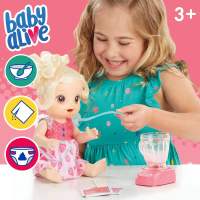
SALE Baby Alive Magical Mixer Baby Doll Strawberry Shake Doll with Toy Blender
₱3,999.00
Buy on Lazada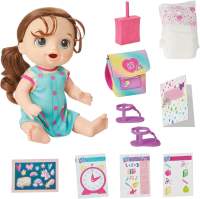
SALE RARE Baby Alive Time for School Baby Doll Set 12
₱3,999.00
Buy on Lazada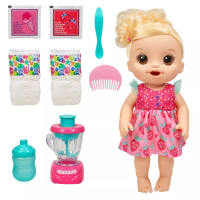
Baby Alive Magical Mixer Baby Strawberry Shake (Brown Box Packaging)
₱2,120.00₱2,418.00
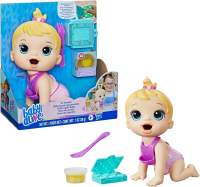
SALE Baby Alive Lil Snacks Doll Eats and Poops
₱3,500.00
Buy on LazadaAbout Baby Alive
Baby Alive is an American brand of interactive baby dolls currently owned by Hasbro, Inc. The line is best known for dolls designed to simulate the activities and routines associated with infant care. Depending on the specific model, Baby Alive dolls can eat, drink, wet or soil diapers, produce sounds, move, respond to interaction, and perform other simulated behaviours. The brand originated with Kenner Products in 1973 and became one of the most notable interactive doll lines of that decade.1
Today, Baby Alive is positioned around nurturing and caregiving play, combining traditional baby-doll concepts with mechanical, electronic, and interactive features. Hasbro continues to release new dolls, accessories, playsets, and related entertainment content under the brand.
Basic information
| Attribute | Details |
|---|---|
| Brand | Baby Alive |
| Product type | Interactive baby dolls and accessories |
| First introduced | 1973 |
| Original manufacturer | Kenner Products |
| Current owner | Hasbro |
| Country of origin | United States |
| Primary play concept | Nurturing, caregiving and pretend-parenting |
| Typical age range | 3 years and up, depending on product |
| Notable features | Feeding, drinking, diapering, sounds, movement and interactive responses |
History
Origins at Kenner
Baby Alive was introduced by Kenner Products in 1973. The original concept was unusual for its time; rather than being a passive baby-shaped doll, it was designed to imitate physical routines associated with caring for an infant.1
The original doll could be given specially prepared food and water. Its mechanical mouth simulated chewing, while the food eventually passed into the doll’s diaper. This created a play cycle in which children could feed the baby, give it something to drink, and then change its diaper.1
The concept was developed as a form of nurturing play. Contemporary reporting described Baby Alive as an unusually ambitious toy and noted that it became one of the industry’s major best sellers.
Popularity in the 1970s and 1980s
Baby Alive quickly became an important product for Kenner. Historical records identify 1973 as the year Baby Alive was introduced and describe it as the company’s number-one baby doll of that year.
The basic concept proved adaptable over time. Later versions incorporated different mechanisms, accessories, feeding systems, and increasingly sophisticated responses. By the 1980s, Baby Alive had become an established name in the interactive baby-doll category.
A key characteristic of the original line was its emphasis on realistic caregiving rather than appearance alone. Children could perform a sequence of activities resembling everyday infant care, giving the doll a sense of cause and effect.
The 1990s and Kenner’s transition to Hasbro
Kenner continued developing Baby Alive into the 1990s, eventually incorporating talking and more electronically interactive dolls into the line.
A major corporate change occurred in 1991, when Hasbro acquired Tonka Corporation, which included Kenner Products. Kenner subsequently became part of the Hasbro organisation, and the Baby Alive name became part of the larger Hasbro toy portfolio.
Hasbro revival
Hasbro reintroduced Baby Alive in the 2000s, with the modern line generally identified as beginning its major Hasbro-era revival in 2006. Newer dolls expanded beyond the original eat-and-wet concept, introducing greater electronic interaction, talking, sounds, movement, and character-oriented play.1
This period transformed Baby Alive from a primarily mechanical feeding-and-diaper doll into a broader interactive doll brand.
Product concept
The defining idea behind Baby Alive is pretend caregiving. Depending on the specific doll, play can include:
- Feeding the doll pretend food
- Giving the doll a bottle or water
- Changing diapers
- Giving the doll a pacifier
- Rocking or comforting the doll
- Putting the doll to sleep
- Dressing the doll
- Responding to crying, laughter, or other sounds
- Playing with accessories and feeding or caregiving stations
- Helping the doll progress through simulated developmental milestones
Not every Baby Alive doll performs all of these functions. Hasbro has produced many different configurations, ranging from relatively simple dolls that make baby sounds to highly interactive models with multiple sensors and programmed responses. For example, Hasbro’s Baby Lil Sounds can produce ten different baby sounds and respond to being put to bed, awakened, and given or removed a pacifier.2
Other models have been specifically designed around feeding and diaper-changing. Hasbro’s Baby Alive Whoopsie Doo, for instance, is designed to eat and produce a simulated messy diaper after feeding.3
Major types of Baby Alive dolls
Over the decades, Baby Alive has appeared in numerous product families. Examples include:
Feeding dolls
These are descended most directly from the original Baby Alive concept. Children can feed the doll using specially designed pretend food, bottles, or accessories.
Drink-and-wet dolls
These dolls emphasise drinking and subsequently wetting their diaper rather than necessarily processing solid pretend food.
Messy dolls
Some versions add simulated bowel movements or other “messy” functions, making diaper changing an important part of play.
Talking and sound-producing dolls
Later Baby Alive products incorporated electronics that allow dolls to cry, laugh, babble, speak phrases, yawn, or otherwise respond to play.
Sleeping and comforting dolls
These versions focus on bedtime and emotional-care routines, featuring pacifiers, sleeping sounds, rocking, and waking functions.
Developmental or “growing” dolls
Modern Baby Alive products can simulate stages of childhood development. Hasbro’s 2026 Baby Grows Up dolls, for example, begin as newborns and progress through simulated milestones such as getting a first tooth, standing, saying first words, and becoming a toddler.
Character and storytelling
As the brand evolved, Baby Alive became more than a collection of functional dolls. Hasbro increasingly presented the dolls as characters capable of participating in imaginative stories.
In 2021, Hasbro announced a Baby Alive animated entertainment series produced in partnership with eOne. The series followed a seven-year-old girl named Charlie as she imagined adventures involving her Baby Alive dolls. It was planned as a 20-episode series released on YouTube in multiple languages.4
This represented an expansion of the brand from physical toys into a broader fictional and entertainment-oriented world.
Diversity and representation
Representation has become an important part of Baby Alive’s modern brand identity. Hasbro states that the original 1973 Baby Alive range already included an African American Baby Alive doll, making representation part of the brand from its inception. For the brand’s 50th anniversary in 2023, Hasbro described a broader effort to expand representation through different skin tones, hairstyles, eye colours, abilities, and life circumstances.
This approach reflects a wider shift in the baby-doll market: instead of presenting one standardised appearance, modern Baby Alive products offer children more opportunities to choose dolls that resemble themselves, their families, or people in their communities.
The 50th anniversary
Baby Alive celebrated its 50th anniversary in 2023. The milestone marked five decades since Kenner introduced the original doll in 1973.
By this point, Hasbro described Baby Alive as having developed into a large and diverse family of dolls rather than a single iconic product. The company highlighted the brand’s continuing focus on nurturing play and inclusive representation.
Baby Alive in the 2020s
In the 2020s, Baby Alive has continued to combine traditional doll play with electronic interactivity. Contemporary products include dolls that make sounds, respond to specific actions, participate in simulated developmental milestones, and use accessories to create extended caregiving scenarios.
Hasbro’s 2026 product lineup includes new Baby Grows Up dolls such as Lala Goo Goo and Berry Boo. These dolls are designed around a progression from newborn to baby to toddler, with interactive milestones including feeding, a first tooth, standing, first words, and a pretend first haircut. Hasbro lists more than 75 sounds and phrases for these products.
Hasbro also announced new Baby Alive products in 2026 featuring bedtime-inspired dolls and a collaboration with Burt’s Bees Baby, extending the brand’s nurturing-play concept into softer, comfort-oriented products.
Design philosophy
Baby Alive’s central design philosophy can be summarised as “care for the baby and see the baby respond.” Traditional baby dolls primarily encourage imaginative role-play where the child pretends the doll is hungry, tired, sick, or in need of attention. Baby Alive attempts to make some of those fictional situations physically observable.
For example:
Child feeds doll → doll responds → doll needs care → child changes or comforts doll.
This creates a feedback loop that gives the child’s actions consequences within the toy’s play system. That mechanism has remained one of Baby Alive’s defining characteristics for more than 50 years, even though the technology behind it has changed substantially.
Cultural significance
Baby Alive is notable in toy history because it helped popularise the concept of an interactive baby doll decades before smartphones, sophisticated sensors, and modern connected toys became commonplace.
The original doll was technologically simple by today’s standards, but its combination of mechanical movement, feeding, simulated digestion, and diaper changing was unusual for a mass-market toy in the 1970s. Its popularity demonstrated that children could be interested not only in a doll’s appearance but in what the doll could do. Consequently, the brand occupies a distinct position between traditional dolls and modern interactive toys.
Brand identity
Baby Alive is generally associated with several recurring themes:
- Nurturing: Caring for and looking after a baby
- Imaginative play: Creating family and caregiving scenarios
- Interactivity: Dolls respond to what children do
- Realism: Simulated baby behaviours make play feel more lifelike
- Development: Some products imitate stages such as infancy and toddlerhood
- Representation: Modern dolls are offered with a broader range of appearances and circumstances
- Messy humour: Feeding, diaper changing, and simulated bodily functions are a distinctive part of some products
Ownership
Baby Alive began as a Kenner Products brand in 1973. Kenner subsequently became part of Hasbro following Hasbro’s acquisition of Tonka Corporation in 1991. The modern Baby Alive brand is therefore part of Hasbro’s portfolio of toy and entertainment brands.
Hasbro’s current product materials identify Baby Alive and its related properties as Hasbro trademarks.2
Legacy
More than five decades after its debut, Baby Alive remains recognisable for a concept that has changed surprisingly little at its core: a doll that behaves like a baby and requires care from its owner.
The original 1973 doll used mechanical systems to accomplish this. Contemporary Baby Alive dolls use electronics, sensors, programmed sounds, interactive responses, and staged developmental experiences. Yet both generations are based on the same fundamental play pattern—feeding, comforting, dressing, cleaning, and caring for a pretend baby.
Because of this continuity, Baby Alive is both a vintage toy brand with significant 1970s history and an active modern doll franchise. Its evolution from Kenner’s mechanical “eat, drink and wet” doll to today’s interactive, character-driven, and increasingly inclusive products illustrates how traditional doll play has adapted to changing technology and ideas about representation.
In brief
Baby Alive is a Hasbro-owned interactive baby-doll brand that originated at Kenner in 1973. It became famous for allowing children to feed a doll and subsequently care for it when it needed a diaper change. Over subsequent generations, the line expanded into talking, sound-producing, drinking, eating, sleeping, messy, developmental, and highly interactive dolls. Today, the brand continues to focus on nurturing imaginative play while incorporating modern electronics, diverse character designs, and broader storytelling experiences.