Shop on Lazada
Banpresto products
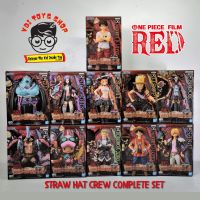
VDI Toys Shop | Banpresto | One Piece Red Film DXF Straw Hat Crew Set (11 Figures)
₱8,900.00
Buy on Lazada
【100% original From Japan 】 Banpresto Yu Yu Hakusho DXF Toguro (younger brother) 30th Anniversary Figure
₱2,054.61₱4,062.00
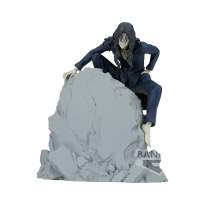
【100% original From Japan 】 Yu Yu Hakusho DXF Toguro (Brother) 30th Anniversary Figure
₱2,623.53₱5,187.00
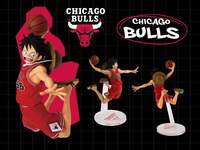
ONE PIECE X NBA MASTER STARS - Luffy
₱7,300.00
Buy on Lazada
【100% original From Japan 】 Lupine III Master Stars Piece Daisuke Jigen Jigen Daisuke
₱6,259.00₱11,892.00
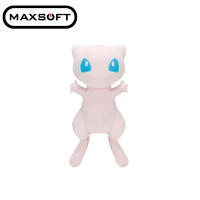
Pokémon SUPER BIG PLUSH COLOR SELECTION~Mew~(BP89008)
₱1,499.00
Buy on Lazada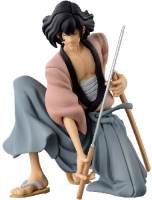
【100% original From Japan 】 Ishikawa Goemon (Lupin III CREATOR × CREATOR GOEMON ISHIKAWA LUPIN 3rd Ishikawa Goemon Anime Figure Goods Prize Banpresto)
₱4,373.60₱7,554.00
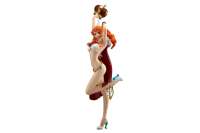
【100% original From Japan 】 Movie version ″ONE PIECE STAMPEDE″ FLAG DIAMOND SHIP NAMI Nami
₱4,423.48₱8,745.00
About Banpresto
Overview
Banpresto is a Japanese entertainment brand widely recognised in the Philippines and internationally for character figures, collectible merchandise, and amusement prize figures based on popular anime, manga, and video game franchises. While historically an independent company involved in video game development and arcade machines, Banpresto now operates primarily as a brand and product category within BANDAI SPIRITS. Its identity has evolved significantly over the decades, transitioning from a game publisher to a label strongly associated with affordable, high-quality prize figures and character goods.1
Collectors and fans should note that “Banpresto” refers to two distinct entities depending on the time period: the former Banpresto Co., Ltd., which existed as a corporate entity until 2019, and the continuing Banpresto brand used for amusement prizes and merchandise following its merger into BANDAI SPIRITS.
Basic Information
| Item | Information |
|---|---|
| Name | Banpresto (バンプレスト) |
| Japanese Name | 株式会社バンプレスト / バンプレスト |
| Country of Origin | Japan |
| Industry | Entertainment, character merchandise, collectibles, amusement prizes |
| Parent Group | Bandai Namco Group |
| Corporate Status | Merged into BANDAI SPIRITS in 2019 |
| Current Identity | Brand/category for amusement-prize products |
| Key Products | Prize figures, character goods, anime/manga/game merchandise |
| Major Franchises | Dragon Ball, One Piece, My Hero Academia, Naruto, Demon Slayer, Pokémon, Jujutsu Kaisen |
Origins and Business Model
Banpresto’s history is rooted in the late 20th-century Japanese amusement and character goods industries. The company distinguished itself by combining popular characters with amusement machines, creating a business model centred on merchandise obtained through arcade prize machines rather than traditional retail channels. In Japan, these are commonly known as UFO catchers or claw machines.
This approach became a defining characteristic of the brand. Instead of purchasing toys directly from shops, consumers won merchandise through gameplay, establishing a distribution network that included arcades, amusement centres, and eventually international collectible retailers and online platforms.
Integration with Bandai Namco
The brand’s trajectory has been closely linked with Bandai and the wider Bandai Namco Group. In 2006, NAMCO BANDAI Holdings made Banpresto a wholly owned subsidiary, integrating it into a corporate ecosystem that connected intellectual property creation with merchandise manufacturing and amusement facilities. This vertical integration allowed for a seamless flow from anime, manga, and games to character IP, merchandise, and prize products, proving particularly effective for franchises with large fanbases.
Video Game Legacy
Before specialising in prize figures, Banpresto was a notable video game publisher and developer. The company produced home console titles, arcade games, and licensed adaptations. It is perhaps best remembered in gaming circles for the Super Robot Wars (Super Robot Taisen) series, a franchise of crossover strategy RPGs featuring characters and mecha from numerous robot anime. This era remains a significant part of the company’s legacy, even though modern collectors associate the name primarily with figures.
2008 Restructuring
A pivotal shift occurred in 2008 when Banpresto’s home console software and arcade machine operations were transferred to NAMCO BANDAI Games. Following this transfer, Banpresto concentrated almost exclusively on prize operations and character merchandise. This restructuring explains why contemporary Banpresto products are predominantly figures rather than video games.1
Amusement Prize Figures
The core of Banpresto’s modern identity lies in amusement prize figures. These collectibles are designed specifically for distribution as arcade prizes rather than premium retail items, resulting in a distinct production philosophy. Typical Banpresto prize figures prioritise recognisable character likenesses, attractive posing, and visual impact while maintaining affordability and mass-market accessibility.
BANDAI SPIRITS records that Banpresto launched its first game prizes for amusement facilities in April 1990, a milestone that established the brand as synonymous with prize figures. This format allows fans to own representations of their favourite characters at a more accessible price point compared to high-end collector statues.
Product Characteristics
Prize figures differ from premium collectibles in several key areas. While they often feature excellent sculpting and dynamic poses, they typically have simpler paint applications, less articulation, and fewer accessories than expensive scale figures. They are best understood as accessible, prize-oriented collectibles rather than budget alternatives to premium lines.
Major Product Lines
Over the years, Banpresto has released numerous series and sub-brands. Collectors may encounter lines such as:
- World Collectable Figure (WCF)
- Grandista
- DXF
- Creator × Creator
- The Amazing Heroes
- Chronicle Figure Academy
- Glitter & Glamours
- EXQ
- Q posket
Notably, Q posket was launched as an amusement prize figure series in 2014 and became instantly recognisable for its stylised proportions and large eyes.2 Naming conventions and line availability have changed over time, and not all series are permanently tied to the Banpresto name.
Character Goods and Ichiban Kuji
Beyond standard prize figures, Banpresto produces a wide array of character merchandise including plush toys, keychains, accessories, stationery, and small collectibles. The specific categories vary considerably by franchise and release period.
The brand is also historically associated with Ichiban Kuji, a Japanese character lottery format where customers purchase tickets to win prizes ranging from large figures and plushes to acrylic goods and towels. However, as corporate structures within the Bandai Namco Group have evolved, the distinction between the Banpresto brand and the broader Ichiban Kuji business has shifted.
Licensed Franchises
Banpresto’s strength lies in converting popular intellectual properties into physical collectibles. The brand maintains an extensive licensing portfolio that changes continuously. Key franchises include:
- Dragon Ball: One of the most significant properties, with vast numbers of figures covering characters like Goku, Vegeta, Gohan, Piccolo, Frieza, Trunks, Broly, Beerus, and Jiren.
- One Piece: A major pillar of the figure business, featuring Monkey D. Luffy, Roronoa Zoro, Nami, Sanji, Trafalgar Law, Shanks, Kaido, and many others.
- My Hero Academia: Extensive releases of Izuku Midoriya, Katsuki Bakugo, Shoto Todoroki, Ochaco Uraraka, All Might, and Tomura Shigaraki.
- Naruto: Comprehensive coverage of characters from both Naruto and Naruto Shippuden.
- Demon Slayer: Recent merchandise includes Tanjiro Kamado, Nezuko Kamado, Zenitsu Agatsuma, Inosuke Hashibira, the Hashira, and major antagonists.
Other franchises represented across various periods include Pokémon, Jujutsu Kaisen, Sailor Moon, Gundam, JoJo’s Bizarre Adventure, Sword Art Online, Evangelion, The Idolmaster, Love Live!, Re:Zero, One-Punch Man, Haikyuu!!, Spy × Family, and various video game titles.
Corporate Transition and Current Status
Understanding the modern Banpresto brand requires recognising the corporate transitions of 2018–2019. In February 2018, BANDAI SPIRITS CO., LTD. was established to manage Bandai’s mature-fan business alongside lottery and new businesses previously handled by Banpresto. Subsequently, in April 2019, Banpresto Co., Ltd. merged into BANDAI SPIRITS, with the latter as the surviving company.1
Following this merger, Banpresto ceased to exist as an independent corporation but continued as a category brand for amusement prizes. Consequently, when collectors refer to a “Banpresto figure” today, they are describing a BANDAI SPIRITS product carrying the Banpresto brand, not an item from the standalone company of previous decades. The former corporate entity disappeared, but the consumer-facing brand identity remained commercially vital.
Market Position and Popularity
Banpresto occupies a unique position between mass-market toys and premium collectibles. Its popularity stems from several factors:
- Accessibility: Lower price points make entry easier for new collectors.
- Character Selection: Merchandise covers an enormous range of anime and game properties.
- Release Frequency: Popular franchises receive multiple releases throughout the year.
- Variety: Products frequently feature supporting characters, villains, and alternate costumes beyond main protagonists.
- Value: Figures are often physically substantial relative to their cost.
- Cultural Connection: The association with Japanese crane game culture provides a distinct identity absent from conventional retail figures.
This positioning creates a feedback loop where popular anime drives demand for desirable characters, which Banpresto supplies through arcade machines, sustaining continuous market interest as new seasons and films introduce fresh content.
Logo and Identification
The Banpresto logo is a familiar sight on packaging and figure bases. Older products may display the logo of Banpresto Co., Ltd., while newer items show Banpresto as a brand under BANDAI SPIRITS. Seeing the name on an older figure does not necessarily indicate manufacture by the same corporate entity that uses the brand today.
Timeline
| Year | Event |
|---|---|
| 1990 | Banpresto launches its first game prizes for amusement facilities. |
| 2006 | NAMCO BANDAI Holdings makes Banpresto a wholly owned subsidiary. |
| 2008 | Home console and arcade game operations transferred to NAMCO BANDAI Games; focus shifts to prize operations.1 |
| 2018 | BANDAI SPIRITS is established. |
| 2019 | Banpresto Co., Ltd. merges into BANDAI SPIRITS; Banpresto becomes a category brand for amusement prizes.1 |
| 2020s | Continues as a major name in anime and game amusement-prize merchandise. |
Distinctions Within the Group
Confusion sometimes arises between Bandai, Banpresto, and BANDAI SPIRITS. Bandai is the historic toy company known for Gunpla, Tamagotchi, and Chogokin. Banpresto, historically an independent game and prize company, now functions primarily as an amusement prize brand. BANDAI SPIRITS, established in 2018, handles collector-oriented activities including Gunpla, Ichiban Kuji, and prize figures. BANDAI SPIRITS explicitly identifies Banpresto as a category brand for amusement prizes following the 2019 merger.1