Shop on Lazada
Behringer products
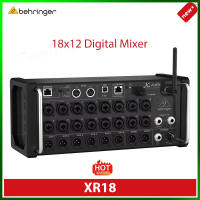
Behringer X Air XR18 XR16 XR12 Rackmount Digital Mixer for iPad/Android Tablet with Midas Preamps Wi-Fi and USB Audio Interface
₱31,588.00₱44,076.00
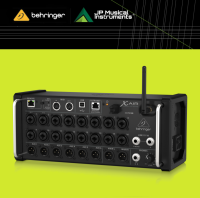
Behringer X AIR XR18 XR16 XR12 Digital Mixer
₱36,000.00
Buy on Lazada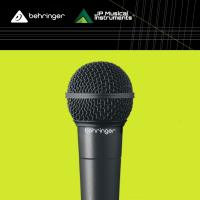
Behringer XM8500 Ultravoice Dynamic Microphone
₱2,000.00
Buy on Lazada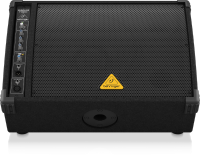
Behringer F1320D Active 300W 2- Way Monitor Speaker System with 12″ Woofer 1″ Compression Drive
₱41,000.00
Buy on Lazada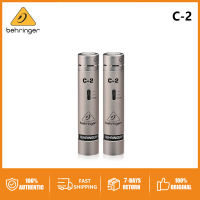
Behringer C-2 2 Matched Studio Condenser Microphones C2
₱5,490.00₱5,999.00
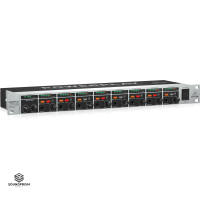
Behringer HA8000 V2 8-Channel High-Power Headphones Mixing and Distribution Amplifier
₱15,000.00
Buy on Lazada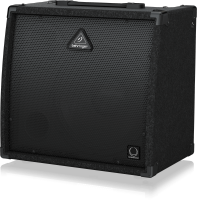
Behringer KXD15 KXD12 Keyboard Amplifier
₱29,000.00
Buy on Lazada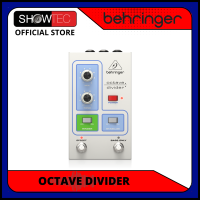
BEHRINGER OCTAVE DIVIDER
₱12,200.00
Buy on LazadaAbout Behringer
Overview
Behringer is a German-founded audio and musical-instrument brand best known for making mixers, synthesizers, microphones, loudspeakers, audio interfaces, effects, studio equipment, DJ gear, and other music-production hardware at relatively affordable prices. Founded in 1989 by Swiss engineer, musician, and sound engineer Uli Behringer, the company grew from a small studio-equipment operation into one of the most recognizable mass-market brands in pro and home audio. 1
Today, Behringer is part of Music Tribe, the larger group associated with brands including Midas, Klark Teknik, Tannoy, Turbosound, TC Electronic, TC Helicon, Lab Gruppen, Bugera, Aston Microphones, and Coolaudio. 1
Quick facts
| Behringer | |
|---|---|
| Industry | Professional audio, musical instruments, music technology |
| Founded | 1989 |
| Founder | Uli Behringer |
| Origins | Germany, founded in Willich |
| Parent group | Music Tribe |
| Major markets | Live sound, recording, music production, DJ, electronic music, broadcast |
| Best known for | Mixers, synthesizers, studio gear, microphones, PA equipment |
| Business philosophy | Professional/feature-rich equipment at accessible prices |
| Manufacturing strategy | Highly integrated, large-scale manufacturing, particularly in China |
| Current positioning | Music Tribe’s value-oriented audio brand |
The company’s own history says Behringer was founded in 1989 after Uli Behringer began building equipment because he could not afford the studio gear he needed himself. Behringer says its products are now used by more than 2 million active creators in 150+ countries.
The founder: Uli Behringer
Uli Behringer was born in 1961 in Baden, Switzerland, near Zürich, and grew up in a strongly musical environment. His mother taught him piano when he was four.
His interest wasn’t limited to playing music. He became fascinated with electronics and sound engineering.
One of the more remarkable early milestones was the construction of the UB-1 synthesizer when he was only 16. According to Behringer’s own account, his father, a nuclear physicist and church-organ builder, was also an important influence on his interest in engineering and music technology. 2
Uli later moved to Germany, where he studied piano and sound engineering. As a musician and aspiring sound engineer, he encountered a problem that would ultimately define his business:
Professional audio equipment was expensive.
Instead of simply accepting that, Behringer started building equipment himself.
Friends who heard his equipment began asking him to build units for them. Eventually the demand became large enough that his studio effectively turned into a production operation, leading to the establishment of Behringer Inc. in 1989.
This origin story explains much of Behringer’s identity today:
“Professional sound should be accessible to ordinary musicians.”
1989 — Behringer is founded
Behringer Inc. was established in Germany in 1989.
The company’s initial focus was on studio and signal-processing equipment, rather than musical instruments.
1990 — Manufacturing moves toward China
Behringer released the Exciter Type F, incorporating patented technology, and manufacturing began being transferred to China.
This was extremely important to Behringer’s eventual business model: combining engineering/product development with large-scale, cost-efficient manufacturing. 3
1992 — Composer MDX 2000
The Composer MDX 2000 expanded Behringer’s presence in professional audio processing.
Products such as compressors, exciters, equalizers and other rack processors became an important part of the company’s early identity.
1998 — Entry into DJ equipment
Behringer introduced the Pro Mixer DX1000, its first DJ product.
This expanded the company beyond traditional studio engineers and into DJs and electronic-music users. 4
2002 — Behringer City
The company established its own large manufacturing operation, known as Behringer City, further increasing its ability to manufacture products at scale.
This vertically integrated manufacturing strategy became one of the defining characteristics of the company.
From budget audio company to global group
During the 2000s and 2010s, Behringer increasingly became part of a much larger corporate ecosystem.
The company and its parent organization acquired or developed numerous other audio brands.
Some important milestones include:
-
2005: Bugera guitar amplifiers launched
-
2009: Midas and Klark Teknik joined the group
-
2011: Behringer launched the X32 digital mixer
-
2012: Turbosound joined
-
2015: TC Group joined
-
2017: Music Group was rebranded as Music Tribe
-
2021: Aston Microphones joined the group 5
So modern Behringer isn’t simply a standalone company making inexpensive mixers.
It is one part of a much larger vertically integrated audio-technology ecosystem.
Music Tribe
The corporate structure is important for understanding Behringer.
Music Tribe is the group behind Behringer and numerous other audio brands.
Its portfolio includes, among others:
-
Behringer — value-oriented audio and musical instruments
-
Midas — professional mixing consoles
-
Klark Teknik — professional signal processing
-
Turbosound — loudspeakers and PA systems
-
Tannoy — loudspeakers
-
TC Electronic — effects and signal processing
-
TC Helicon — vocal and performance equipment
-
Lab Gruppen — professional power amplifiers
-
Bugera — guitar and bass amplifiers
-
Aston Microphones — microphones
-
Coolaudio — audio semiconductors
Music Tribe describes Behringer specifically as its Germany-based “Value Brand.” 6
This is a significant distinction:
Behringer is generally the affordable/value side of the Music Tribe ecosystem, while brands such as Midas and Lab Gruppen occupy more professional/high-end segments.
What does Behringer make?
Behringer’s product range is enormous.
The current official catalog includes categories such as synthesizers and keyboards, loudspeakers, mixers, microphones, guitar and bass equipment, headphones, cables, effects and signal processors, audio interfaces, DJ equipment, drums, MIDI equipment, lighting, amplifiers and studio controllers.
Major categories
Mixers
Probably the category most closely associated with Behringer.
Products range from inexpensive analog mixers to sophisticated digital consoles.
Notable families include:
-
XENYX
-
X AIR
-
WING
-
X32
-
EURODESK
-
FLOW
The X32, introduced in 2011, was particularly important because it brought a large amount of digital-console functionality into a comparatively affordable product.
Synthesizers
This has become one of Behringer’s most prominent areas.
Behringer produces both:
-
original synthesizer designs, and
-
recreations/reinterpretations of classic synthesizers and electronic instruments.
The company’s modern synth portfolio includes instruments inspired by classic analog and digital designs.
Examples include:
-
DeepMind
-
Poly D
-
Model D
-
Monopoly
-
MS-1
-
Neutron
-
Crave
-
TD-3
-
UB-Xa
-
various Eurorack modules
This area has transformed Behringer’s reputation among electronic musicians.
Drum machines
Behringer also produces affordable drum machines and rhythm instruments.
The RD-series is particularly notable among electronic-music users.
Again, Behringer frequently draws inspiration from historically important electronic instruments.
Microphones
Behringer manufactures a broad range of microphones, from inexpensive vocal microphones to studio and measurement-oriented products.
This makes the brand common in:
-
home studios
-
rehearsal spaces
-
churches
-
karaoke
-
small venues
-
schools
-
podcasting
-
live sound
Audio interfaces
Behringer produces USB audio interfaces designed primarily for affordable home recording and project studios.
The idea is straightforward:
give musicians access to multiple inputs, microphone preamps and digital recording without requiring expensive professional hardware.
Effects and pedals
Behringer makes guitar effects, studio processors, compressors, equalizers, crossovers and other signal-processing equipment.
That subject is central to Behringer’s reputation and deserves its own discussion.
The “Behringer model”
If you wanted to summarize Behringer’s business strategy in one sentence:
Take professional or historically influential technology, engineer it for modern mass production, manufacture it efficiently, and sell it at a price accessible to a much larger audience.
There are several components to this.
1. Aggressive pricing
Behringer generally competes heavily on price.
A product that might historically have cost hundreds or thousands of dollars can sometimes be offered for a fraction of that price.
This has allowed:
-
beginners to enter music production
-
small venues to obtain digital mixers
-
musicians to own larger collections of synthesizers
-
schools to equip music rooms
-
home studios to acquire professional-style equipment
2. Vertical integration
Music Tribe has invested heavily in manufacturing and engineering infrastructure.
The company’s own materials describe an “highly-integrated and automated in-house manufacturing facility”, along with extensive R&D and supplier networks. 7
This is one of the reasons Behringer can operate differently from smaller boutique manufacturers.
3. Extremely broad product range
Instead of specializing in one product category, Behringer attempts to cover almost the entire signal chain.
For example, a small band could potentially buy:
microphones → mixer → speakers → amplifiers → headphones → cables → effects
all from Behringer.
A home electronic-music producer could similarly build an entire setup around:
synthesizers → drum machines → MIDI equipment → audio interface → headphones → monitors.
Behringer and synthesizers
This deserves special attention.
Before Behringer entered the modern synthesizer market, owning a collection of classic analog synthesizers could be extraordinarily expensive.
Vintage instruments from companies such as:
-
Moog
-
Roland
-
Sequential
-
ARP
-
Korg
-
Oberheim
can be expensive because of rarity and historical importance.
Behringer’s strategy changed the economics of this market.
It began producing inexpensive analog synthesizers inspired by classic machines.
For example, the Model D is strongly associated with the design philosophy of the Moog Minimoog, while the TD-3 is a low-cost recreation inspired by the Roland TB-303.
Likewise, Behringer has produced instruments associated with the sonic/design traditions of Sequential and Oberheim.
This led to a major debate:
Does inexpensive recreation preserve electronic-music history—or undermine the companies that created it?
There isn’t a simple answer.
Behringer and the X32
One of Behringer’s most important products is arguably the X32 digital mixing console.
Released in 2011, the X32 brought features associated with much more expensive digital mixing systems into a comparatively inexpensive package. Music Tribe itself describes it as a “game-changing” product.
Its importance goes beyond the product itself.
It demonstrated Behringer’s larger strategy:
Professional digital audio technology doesn’t necessarily have to be expensive.
The X32 became particularly popular in:
-
touring bands
-
churches
-
theaters
-
schools
-
clubs
-
small production companies
-
live-sound installations
It also helped establish Behringer as something more than a manufacturer of cheap analog mixers.
Behringer’s manufacturing philosophy
Manufacturing is arguably as important to Behringer as product design.
Traditional audio companies often develop products relatively slowly and outsource substantial portions of manufacturing.
Behringer/Music Tribe has instead pursued significant in-house manufacturing and automation.
Music Tribe says it operates a highly integrated manufacturing facility and has extensive R&D resources distributed across multiple locations. 8
The advantage is scale.
If you manufacture enormous quantities of equipment, you can potentially reduce the per-unit cost of:
-
components
-
PCB assembly
-
metalwork
-
plastic parts
-
displays
-
packaging
-
testing
-
logistics
That helps explain how Behringer can sell products with surprisingly large feature sets at low prices.
Quality: is Behringer actually good?
The answer is product-dependent.
The simplistic statement:
“Behringer = cheap and bad”
is no longer a very accurate description of the company.
Modern Behringer makes everything from extremely inexpensive entry-level equipment to fairly sophisticated professional systems.
Where Behringer tends to be particularly strong
-
Feature-per-dollar
-
Synthesizers
-
Digital mixers
-
Basic studio equipment
-
Entry-level microphones
-
Effects
-
Live-sound equipment
-
Electronic-music hardware
Where compromises can appear
Depending on the product, compromises may involve:
-
physical construction
-
switches and knobs
-
displays
-
power supplies
-
quality-control consistency
-
long-term durability
-
customer service
-
resale value
That doesn’t mean a Behringer product is necessarily unreliable. It means that the very low price sometimes requires compromises somewhere.
The appropriate comparison is therefore usually:
specific Behringer product vs. specific competing product
rather than simply “Behringer vs. everyone.”
Who uses Behringer?
Behringer’s customer base is extremely broad.
Beginners
For someone building their first home studio, Behringer can provide an inexpensive starting point.
Home producers
Electronic musicians and bedroom producers have particularly benefited from Behringer’s inexpensive synthesizers and drum machines.
Bands
Small bands can purchase microphones, mixers, monitors and PA equipment without spending enormous amounts of money.
Churches
Behringer digital mixers and wireless/live-sound equipment are widely suited to relatively complex multi-channel environments.
Schools
Low prices make it easier for educational institutions to purchase multiple pieces of equipment.
Professional users
Some Behringer equipment is also used professionally, particularly when the combination of features and cost is more important than brand prestige.
Behringer’s brand identity
Behringer’s philosophy is fundamentally different from a boutique audio company.
A boutique manufacturer might say:
“We make a small number of exceptional products.”
Behringer’s philosophy is closer to:
“We want as many people as possible to have access to sophisticated music technology.”
The company’s current official messaging emphasizes listening to customers and providing products at prices that allow people to pursue their musical ambitions.
This is why the brand can simultaneously be:
-
loved by beginners
-
respected by some professionals
-
disliked by boutique manufacturers
-
extremely popular among electronic musicians
Price
Probably Behringer’s greatest competitive advantage.
Features
Behringer frequently packs a lot of functionality into inexpensive products.
Synthesizer selection
Its modern synthesizer catalog is unusually large for a company at this price level.
Digital mixing
The X32 and subsequent products established Behringer as a serious player in digital live sound.
Manufacturing scale
Its manufacturing infrastructure allows it to produce products at volumes many boutique competitors cannot match.
Accessibility
The company has helped make music technology accessible to people who previously couldn’t afford it.
Behringer’s significance to music technology
Regardless of whether one likes the company, its influence is difficult to ignore.
Behringer helped push an important trend in music technology:
advanced equipment becoming dramatically cheaper.
Consider what a musician can potentially buy today for the price of one professional synthesizer or mixer from previous generations.
A modern producer can have:
-
multiple analog synthesizers
-
drum machines
-
a multi-channel mixer
-
audio interfaces
-
microphones
-
effects
-
MIDI equipment
-
monitoring equipment
without necessarily spending tens of thousands of dollars.
Behringer did not create this trend by itself—companies such as Korg, Yamaha, Roland, Mackie and many others also contributed—but it became one of its most aggressive proponents.
Behringer vs. other brands
A useful way to understand Behringer is by positioning it against different types of competitors.
| Brand type | Typical priority |
|---|---|
| Behringer | Features + affordability |
| Boutique manufacturers | Craftsmanship + originality |
| Premium pro-audio brands | Performance + reliability + professional workflow |
| Vintage manufacturers | Heritage + historical authenticity |
| Mass-market consumer brands | Convenience + accessibility |
The real question is often:
What do you get for the money?
And this is precisely where Behringer is strongest.
Behringer today
As of 2026, Behringer remains one of Music Tribe’s central brands.
Its current catalog spans hundreds of products across synthesizers, mixers, microphones, loudspeakers, guitar and bass equipment, headphones, audio interfaces, effects, DJ equipment, MIDI, lighting and other categories. 9
Music Tribe says its wider organization has:
-
a network of partners in more than 130 countries
-
hundreds of R&D engineers
-
thousands of employees/”Tribe” members
-
integrated manufacturing capabilities
-
multiple major audio brands 10
So Behringer has evolved dramatically from Uli Behringer’s original studio operation.
The simplest way to understand Behringer
If I had to reduce the entire history to five stages:
Stage 1 — The musician
Uli Behringer couldn’t afford the equipment he needed.
↓
Stage 2 — The inventor
He started building his own audio equipment.
↓
Stage 3 — The affordable-audio company
Behringer began producing studio and live-sound equipment at prices below many established competitors.
↓
Stage 4 — The global manufacturing company
Large-scale manufacturing and vertical integration allowed Behringer to produce an enormous variety of inexpensive equipment.
↓
Stage 5 — Music Tribe
Behringer became the value-oriented center of a much larger ecosystem containing professional audio, musical-instrument and technology brands.
In one paragraph, Behringer is a German-founded, Uli Behringer-created audio technology brand established in 1989, whose defining mission has been to make sophisticated music equipment affordable to a much wider audience. It began with studio processors and gradually expanded into mixers, PA equipment, microphones, recording gear, DJ equipment and musical instruments. As part of Music Tribe, Behringer now operates within a much larger audio-technology ecosystem, combining aggressive pricing, large-scale manufacturing and a huge product portfolio.
**The most important thing about Behringer isn’t simply that its products are cheap.
References
- Behringer
- Empower Tribe | Behringer
- Company:Behringer – HandWiki
- Behringer – Wikidata
- Behringer – Radiomuseum-bocket.de
- Category:Behringer – Wikimedia Commons
- Uli Behringer Foundation
- About Behringer Professional Audio – Professional loudspeakers for industry
- About: Behringer
- Английская Википедия:Behringer / Онлайн справочник – wikihandbk.com