Shop on Lazada
Bundaberg products
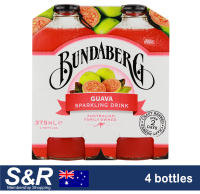
Bundaberg Guava Sparkling Drink 4 bottles
₱416.00
Buy on Lazada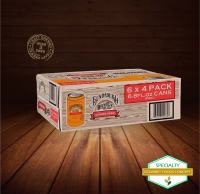
BUNDABERG GINGERBEER MINI CANS 200ML x 24s
₱1,575.00
Buy on Lazada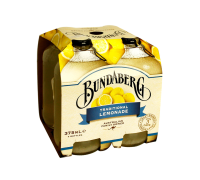
Bundaberg Traditional Lemonade 4pcs x 375mL
₱549.00₱749.00
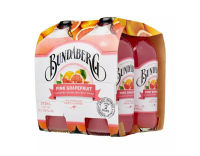
Bundaberg Pink Grapefruit Sparkling Drink 4x375mL
₱599.00₱699.00
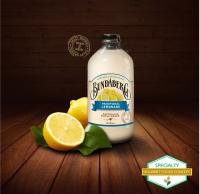
BUNDABERG TRADITIONAL LEMONADE 375ML x 4s
₱435.00
Buy on Lazada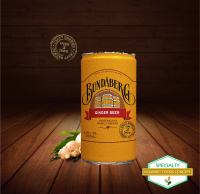
BUNDABERG GINGERBEER MINI CANS 200ML x 6s
₱435.00
Buy on Lazada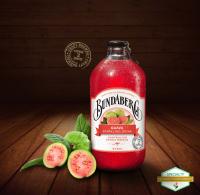
BUNDABERG GUAVA 375mL x 4s
₱435.00
Buy on Lazada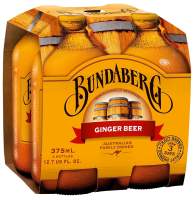
Bundaberg Ginger Beer 4 x 375mL
₱549.00₱749.00
About Bundaberg
Bundaberg Brewed Drinks is an Australian, family-owned beverage company best known internationally for its brewed ginger beer and other premium non-alcoholic soft drinks. The company is based in Bundaberg, Queensland, Australia, the regional city from which its name is taken. The Fleming family has owned and operated the business since 1968, and the company describes itself as a four-generation family business.1
Its central brand philosophy is built around traditional brewing, real ingredients, and taking time to develop flavour. Rather than positioning its drinks as ordinary carbonated soft drinks, Bundaberg markets them as craft-brewed beverages. Its well-known tagline and philosophy is “Brewed to Be Better.”1
Quick facts
| Category | Information |
|---|---|
| Brand | Bundaberg |
| Company | Bundaberg Brewed Drinks Pty Ltd |
| Industry | Non-alcoholic beverages / soft drinks |
| Origin | Bundaberg, Queensland, Australia |
| Established | Business roots date to the 1960s; Fleming family acquired the business in 1968 |
| Founding family | Fleming family |
| Best known for | Bundaberg Ginger Beer |
| Ownership | Privately held, family-owned |
| Core philosophy | Traditional brewing and real ingredients |
| Signature positioning | Premium, craft-brewed soft drinks |
| International presence | Exported internationally, with the company reporting distribution across numerous countries |
| Official website | bundaberg.com |
Origins
The story of Bundaberg begins in Bundaberg, Queensland, a city on Australia’s east coast. The company’s history goes back to the 1960s, when the business operated as a bottling and fermenting operation.
In 1968, Neville and Gladys Fleming, together with their son Cliff Fleming and daughter-in-law Lee Fleming, purchased Electra Breweries (Bundaberg) Pty Ltd. This acquisition established the Fleming family’s connection with the business and became the foundation of what would eventually become Bundaberg Brewed Drinks.1
In 1973, the company moved its operations to 147 Bargara Road, Bundaberg, a location that remained central to the business as it expanded. During the 1970s and 1980s, the company was primarily focused on the local market, producing and distributing beverages around Bundaberg and Maryborough.
The rise of Bundaberg Ginger Beer
Although Bundaberg now has a broad portfolio of flavours, its identity is inseparable from ginger beer.
During the 1980s, production and distribution of Bundaberg Ginger Beer expanded significantly. The drink moved beyond the local Queensland market and gained distribution through supermarkets in Australia and New Zealand.
Founder Cliff Fleming played a particularly important role in developing the ginger beer and establishing the company’s brewing philosophy. According to Bundaberg, he eventually began growing ginger in the Bundaberg region himself to help secure a reliable local supply. The company says its ginger beer is brewed using ginger sourced from Australian farmers and its own farming operations.1
This focus on ginger became one of the brand’s biggest competitive advantages: Bundaberg Ginger Beer is not simply a ginger-flavoured soda; the company emphasizes that it is actually brewed and fermented.
Becoming Bundaberg Brewed Drinks
A major branding milestone came in 1995, when the company changed its name to Bundaberg Brewed Drinks.
The change reinforced the connection between the product and its hometown while emphasizing the company’s distinctive manufacturing process. At approximately the same time, Bundaberg introduced the “Brewed to Be Better” promise, making brewing a central part of its brand identity.
This was an important strategic distinction. Many soft-drink brands compete primarily through flavour, packaging, celebrity marketing, or price. Bundaberg instead built much of its identity around:
- Brewing
- Fermentation
- Real ingredients
- Family recipes
- Australian provenance
- Traditional production methods
- Glass bottles
- Premium positioning
International expansion
Bundaberg’s international expansion began in earnest during the late 1980s, when the company started exporting its premium non-alcoholic drinks.
By 2006, the company reported exporting to more than 30 countries, including markets such as New Zealand, the United Kingdom, the United States and Singapore.
The brand subsequently developed a strong international following, particularly among consumers interested in Australian products and distinctive ginger beverages. Today, Bundaberg is sold internationally, while the company continues to emphasize that its manufacturing heritage remains tied to Bundaberg, Queensland.
What makes Bundaberg different?
Brewing rather than simply mixing
The defining characteristic of Bundaberg is its insistence on brewing. For its Ginger Beer, the process begins with ginger that is dried and ground. The ginger is then combined with Queensland cane sugar and water to create a ginger “wort.” Yeast is added, allowing fermentation to occur. The resulting brew is subsequently matured, filtered and prepared for carbonation and bottling.
Bundaberg states that its Ginger Beer takes three days of brewing to produce, while its broader craft philosophy emphasizes that some beverages can take considerably longer when necessary to achieve the desired flavour.1
Real ingredients
Bundaberg heavily emphasizes the use of recognizable ingredients such as:
- Ginger
- Cane sugar
- Fruit
- Herbs
- Spices
The company’s philosophy is that the ingredients themselves should contribute authentic flavour rather than simply being simulated through artificial flavouring.
The famous bottle
One of Bundaberg’s most recognizable visual characteristics is its brown glass “stubbie” bottle. The packaging contributes heavily to the brand’s premium and traditional image. Bundaberg itself says that it prefers glass because it believes it helps preserve the integrity of its brewed drinks.
Another unusual feature is the instruction to invert the bottle before drinking. The company’s beverages can contain visible pieces of fruit, herbs or spices, so turning the bottle helps redistribute them throughout the drink. That small ritual has become part of the Bundaberg experience.
Product range
Although Ginger Beer is the flagship, Bundaberg has developed a much broader portfolio. Its traditional range includes beverages such as:
- Ginger Beer
- Diet Ginger Beer
- Sarsaparilla
- Lemon, Lime & Bitters
- Traditional Lemonade
- Burgundee Creaming Soda
- Guava
- Blood Orange
- Pink Grapefruit
- Passionfruit
- Peach
- Tropical Mango
- Pineapple & Coconut
- Dekopon Mandarin
The company has also developed its Refreshingly Light range, including flavours such as Raspberry + Pomegranate, Apple + Lychee, and Lemon + Watermelon.1 The exact product lineup can vary by market.
Bundaberg Ginger Beer
If one product represents the brand, it is undoubtedly Bundaberg Ginger Beer. Its taste profile is substantially different from many mainstream ginger ales. It tends to have a stronger ginger character, noticeable sweetness, carbonation, and the visual presence of ginger particles.
The company describes the drink as being made with real ginger and Queensland cane sugar, followed by a fermentation and maturation process.1 This has allowed Bundaberg to occupy an interesting position between soft drink, craft beverage, and Australian specialty product. That positioning is a major reason the brand has developed a strong identity outside Australia.
Brand identity
Bundaberg’s branding is strongly connected to Australian identity. Its visual and verbal language frequently emphasizes:
- Australia
- Queensland
- Family
- Heritage
- Craft
- Authenticity
- Local ingredients
- Tradition
- Outdoor/social occasions
The company deliberately presents itself as an authentic Australian family business rather than a multinational beverage corporation. It says that the Fleming family has remained involved for four generations.1 This gives Bundaberg a distinctive personality compared with brands owned by enormous global beverage conglomerates.
The Fleming family
The Fleming family is central to the Bundaberg story. Cliff Fleming, together with his wife Lee and parents Neville and Gladys, was part of the family group that acquired the business in 1968. Cliff subsequently became particularly associated with the development of the company’s brewing philosophy and Ginger Beer.
The company’s philosophy is summarized by a family principle: “If it’s worth brewing, it’s worth brewing well.” That idea effectively functions as a statement of Bundaberg’s brand philosophy: quality and flavour are supposed to take priority over simply producing beverages as quickly and cheaply as possible.
The Bundaberg Barrel
In 2005, Bundaberg opened the Bundaberg Barrel, a tourism attraction located alongside its brewery. The attraction was designed to give visitors an opportunity to learn about the brewing process and experience Bundaberg’s different flavours. It became an important extension of the brand because visitors could experience the manufacturing story rather than merely buying a bottle in a supermarket.1 This is particularly effective branding because the brewery itself becomes part of the product’s story.
Modern expansion
Bundaberg continued expanding throughout the 2000s and 2010s. Some notable milestones include:
- 2005: Bundaberg Barrel tourism attraction opens.
- 2006: Exports expand to more than 30 countries.
- 2010: Cafe/Sparkling range introduced.
- 2012: Bundaberg secures its first sales with Costco in the United States.
- 2014: Bundaberg Ginger Beer begins appearing in smaller cans on Qantas flights.
- 2015: Drinks become available in the company’s distinctive stubbie bottles across the range.
- 2017: Tropical Mango launches.
- 2019: Limited-edition Ginger Beer & Lemon Myrtle is released for the company’s 50-year Fleming-family milestone.
- 2020: 200 ml Ginger Beer Mini Can launches.
- 2021: Additional Mini Can flavours are introduced.
- 2022: Bundaberg Brewed Drinks wins Queensland Exporter of the Year.
- 2023: The company’s new Master Brewery opens in Bundaberg.
- 2024: Cliff Fleming receives an AM (Member of the Order of Australia).
- 2025: Bundaberg launches its Refreshingly Light range.
The new Master Brewery
One of the company’s most important recent developments was the opening of its Master Brewery in Bundaberg in 2023. The facility was built to increase production capacity and accommodate continued domestic and international growth while keeping the company’s manufacturing operations in the town that gave the brand its name.
This is significant from a brand perspective because Bundaberg’s identity depends heavily on place of origin. The message is essentially that Bundaberg is not an Australian-themed beverage made somewhere else, but a beverage company that actually comes from Bundaberg, Queensland.
Relationship with PepsiCo
Bundaberg should not be confused with a brand owned by PepsiCo. The two companies have had a distribution relationship in the United States, but Bundaberg Brewed Drinks remains a separate, family-owned Australian company.2 This distinction is important because Bundaberg’s independent family ownership is a major component of its brand positioning.
Awards and recognition
Bundaberg has received recognition both in Australia and internationally. A notable achievement came in 2022, when Bundaberg Brewed Drinks was named Queensland Exporter of the Year at the Premier of Queensland’s Export Awards.
The company’s products have also received various beverage-industry awards, while the brand itself has become one of Australia’s recognizable premium soft-drink exports.2
Brand positioning
From a marketing perspective, Bundaberg occupies an interesting niche.
Mainstream soft drinks
Examples include Coca-Cola, Pepsi and Sprite. These brands generally emphasize mass appeal, refreshment, familiarity and global cultural recognition.
Craft beverages
Craft beverage brands tend to emphasize small-batch or specialized production, ingredients, authenticity, flavour, production techniques, and local identity.
Bundaberg
Bundaberg combines elements of both. It has large-scale international distribution, but markets itself through the language of craft, family heritage and traditional brewing. That creates a distinctive proposition: a globally available beverage that still presents itself as a genuine Australian family craft product.
Why the brand is memorable
Bundaberg’s success is not just about ginger beer. The company has created a recognizable brand ritual around its products: see the brown bottle, turn it upside down, watch the ingredients move, open it, smell the ginger or fruit, and drink.
That is powerful branding because the consumer is doing something physically associated with Bundaberg rather than simply opening another soft-drink bottle. The combination of packaging, brewing story, ingredients, Australian identity, and family history makes the brand relatively easy to recognize.
Cultural image
Bundaberg is strongly associated with a relaxed Australian lifestyle: barbecues, summer, outdoor gatherings, casual meals and social occasions. The brand’s marketing also positions its drinks as suitable for mixing into cocktails and other beverages, particularly Ginger Beer. The company provides recipes for drinks such as Moscow Mules and other ginger-based cocktails.
Importantly, Bundaberg itself is fundamentally a non-alcoholic beverage company, despite some of its products being used as mixers.
Brand philosophy
Bundaberg’s philosophy can be summarized in five ideas:
- Brew it, don’t just mix it.
- Use real ingredients.
- Take time to develop flavour.
- Maintain Australian and family ownership.
- Keep the connection to Bundaberg, Queensland.
These principles have remained remarkably consistent as the company expanded internationally.1
Timeline
- 1960s: Business established in Bundaberg as a bottling and fermenting operation.
- 1968: Fleming family acquires Electra Breweries.
- 1973: Operations move to Bargara Road.
- 1970s–80s: Focus remains largely on the local market.
- 1980s: Ginger Beer expands into Australian and New Zealand supermarkets.
- 1987: International exports begin.
- 1995: Company becomes Bundaberg Brewed Drinks.
- 2005: Bundaberg Barrel opens.
- 2006: Exports reach more than 30 countries.
- 2010: Cafe/Sparkling range introduced.
- 2012: First Costco sales in the US.
- 2017: Tropical Mango introduced.
- 2019: 50-year Fleming-family milestone celebrated with limited-edition Ginger Beer & Lemon Myrtle.
- 2020: Mini Can range begins.
- 2022: Queensland Exporter of the Year.
- 2023: New Master Brewery opens in Bundaberg.
- 2024: Cliff Fleming receives an AM.
- 2025: Refreshingly Light range launches.