Shop on Lazada
HARIBO products
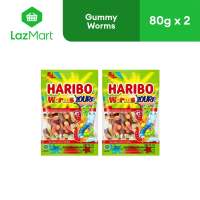
Haribo Worms Zourr 80g - Pack of 2
₱122.40
Buy on Lazada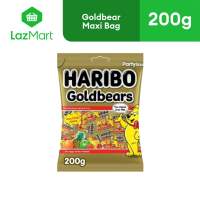
Haribo Goldbear Maxi Bag 200g
₱138.75₱150.90
HARIBO | Gummy Bears Fruits Flavor Children Wedding Candy
₱553.00₱672.00
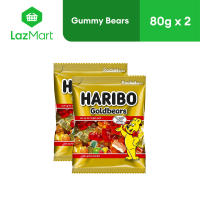
Haribo Goldbear 160g - Pack of 2
₱200.70₱213.70
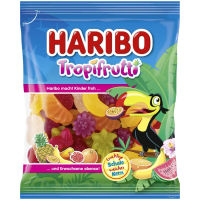
Haribo Tropi Frutti 175g / Tropical Fruit Gummy Candies
₱210.00
Buy on Lazada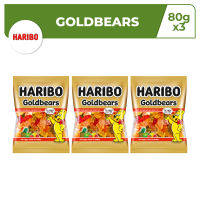
HARIBO Goldbear 80g - Set of 3
₱200.00
Buy on Lazada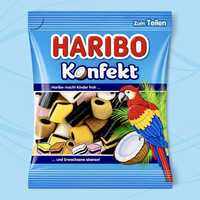
Haribo Liquorice Confectionery Mixed Flavors 175 g
₱199.00
Buy on Lazada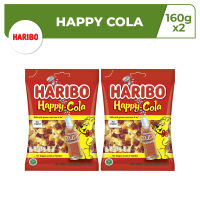
HARIBO Happy Cola 160g - Set of 2
₱235.00
Buy on LazadaAbout HARIBO
HARIBO is a German confectionery company internationally recognised for its fruit gummies, gummy bears, liquorice, and other chewy sweets. Founded in Bonn, Germany, on 13 December 1920 by Hans Riegel, the business expanded from a small home-based operation into one of the world’s most prominent manufacturers of gummy candy. The name HARIBO is an acronym derived from HAns RIegel BOnn.1
HARIBO currently positions itself as a global leader in the fruit-gummy and liquorice categories. Its products are distributed in nearly 200 countries, and the company employs approximately 8,500 people worldwide. It remains a family-owned enterprise and has reached its third generation of ownership.2
Company profile
| Item | Information |
|---|---|
| Company name | HARIBO |
| Legal name | HARIBO GmbH & Co. KG |
| Founded | 13 December 1920 |
| Founder | Hans Riegel |
| Place of origin | Bonn, Germany |
| Name meaning | HAns RIegel BOnn |
| Industry | Confectionery / food |
| Main products | Fruit gummies, gummy bears, liquorice, fruit chews, marshmallow/foam sweets |
| Best-known product | HARIBO Goldbears |
| Major group brand | MAOAM |
| Headquarters | Grafschaft, Germany |
| Ownership | Family-owned |
| Employees | Approximately 8,500 |
| Global presence | Nearly 200 countries |
| Production | 15 sites in 10 countries according to HARIBO’s latest German corporate history page |
The number of production sites varies across HARIBO’s regional webpages because the company updates its international network at different times. Its latest German history page states there are 15 production locations in 10 countries, while some older English-language pages still list 16 locations in 11 countries.3
History
1920: The beginning
HARIBO was established by Hans Riegel Sr. on 13 December 1920 in Bonn. Riegel, who had trained as a confectioner and previously worked with the confectionery firm Heinen & Riegel, started the business with minimal resources. According to the company’s own records, his initial equipment consisted of a sack of sugar, a marble slab, a stool, a stove, a copper pot, and a rolling pin. His wife, Gertrud Riegel, joined the business as its first employee in 1921.4 The name HARIBO was formed from the syllables HAns RIegel BOnn, a naming convention that became one of the most recognisable corporate identities in the confectionery industry.5
1922: The Dancing Bear
A pivotal moment in the company’s history occurred in 1922 when Hans Riegel created the DANCING BEAR, a fruit-gummy bear. This original version was larger and slimmer than modern iterations and eventually evolved into the famous HARIBO Goldbears, which became the company’s signature product and one of the most iconic shapes in confectionery.6 Consequently, HARIBO’s history is intrinsically linked to the development of the modern gummy bear.
1923–1930s: Early expansion
As demand grew, HARIBO purchased its first company car in 1923, decorated with advertising. Prior to this, Gertrud Riegel had delivered daily production by bicycle, marking a swift transition from a small family operation to a more organised distribution business.7 In 1925, the company expanded beyond fruit gummies to produce liquorice, which became a second pillar of the business alongside early products like liquorice sticks and wheels.8 This combination of fruit gummies and liquorice remained central to HARIBO’s identity for decades.
During the 1930s, HARIBO developed a nationwide distribution network in Germany. By 1933, the workforce had grown to approximately 400 employees, and the main building of the Bonn production facility was completed. This era also saw the introduction of the famous German slogan “Haribo macht Kinder froh” (“HARIBO makes children happy”), which was later expanded to include adults.9
World War II and rebuilding
The Second World War caused significant difficulties for HARIBO, primarily due to raw material shortages. Founder Hans Riegel died in 1945 at the age of 52, and his wife Gertrud temporarily managed the company during the post-war period. In 1946, their sons Hans Riegel Jr. and Paul Riegel assumed management, dividing responsibilities between commercial activities (Hans) and production (Paul). Although HARIBO restarted after the war with only about 30 employees, it recovered rapidly, reaching approximately 1,000 employees by 1950.10
The birth of the Goldbears
While the original Dancing Bear dates to 1922, the modern HARIBO Goldbears were introduced in 1960. They quickly became the flagship product and were officially recognised as a registered trademark by the German Patent Office in 1967.11 The shape of the Goldbear has also evolved; in 1978, HARIBO shortened the bear’s protruding feet to create the compact, stylised form familiar today.12
International expansion
HARIBO gradually transformed from a domestic German manufacturer into an international brand. The company entered the United States in the early 1980s, initially establishing a small office in Baltimore, Maryland.13 The U.S. subsequently became one of its most important markets. In France, Hans Riegel Jr. played a key role in developing the brand and was later awarded the Legion of Honour.14 Today, HARIBO products are available in nearly 200 countries, with production and distribution operations spanning the globe. The company also adapts specific products and flavours to suit local consumer preferences.15
MAOAM
Beyond gummy bears, HARIBO owns several associated brands, most notably MAOAM. This fruit-chew brand traces its roots to German confectionery manufacturer Edmund Münster, who introduced the MAOAM chew in Germany around 1930–1931. HARIBO acquired the Edmund Münster company in 1986, integrating MAOAM into the group.16 MAOAM provides HARIBO with a distinct product category centred on fruit-flavoured chewy candy, complementing its traditional gummies and liquorice.
Major products
HARIBO offers a wide variety of shapes, textures, and flavours, though availability differs by country.
- Goldbears: The flagship product consisting of small fruit-flavoured gummy bears descended from the 1922 Dancing Bear. Flavour lineups vary by market; European versions currently list six flavours, while the U.S. version uses five.17
- Happy-Cola: Small gummy bottles inspired by cola bottles, dating back to 1965.18
- Starmix: A mixed assortment combining iconic shapes such as Goldbears, cola bottles, rings, and foam sweets.19
- Sour Goldbears: A sour variant of the classic Goldbears featuring an acidic coating.20
- Pico-Balla: A colourful combination of gummy and confectionery textures. HARIBO celebrated 25 years of Pico-Balla in 2025, introducing a sour variant in Germany.21
- Chamallows: HARIBO’s marshmallow and foam-sugar range. The company entered this category through the acquisition of Belgian confectioner Dulcia in 1996, later marketing the products under the HARIBO Chamallows name.22
Other notable products include Happy Cherries, Happy Peaches, and Twin Snakes.
Product categories
HARIBO’s portfolio is broadly divided into the following categories, though exact offerings vary significantly between countries due to local market adaptation:23
- Fruit gummies: Goldbears, Happy Cherries, Happy Peaches, Twin Snakes, Worms, Tropifrutti, Starmix
- Sour sweets: Sour Goldbears and various sour gummy products
- Liquorice: Liquorice wheels, sticks, and other shapes
- Fruit chews: MAOAM
- Foam and marshmallow sweets: Chamallows, foam hearts, foam eggs, and mixed gummy/foam products
Brand identity
HARIBO’s brand identity is built on several core concepts. The company deliberately positions its products as sources of joy, fun, and childlike happiness. Visually, the use of recognisable shapes—such as bears, bottles, cherries, snakes, worms, and hearts—and bright colours makes the sweets playful rather than generic. Many products are sold in assorted bags containing multiple shapes and flavours, encouraging sharing. Furthermore, having existed since 1920, the brand carries strong nostalgic associations for multiple generations.
The Goldbear as a brand icon
The Goldbear is arguably HARIBO’s most valuable asset, serving simultaneously as a representation of the company, an identifier for its flagship product, a recognisable mascot, and a link to its 1922 origins. HARIBO estimates that annual Goldbear production, if lined up end-to-end, could wrap around the Earth ten times.24 A 2026 corporate press release further states that approximately 200 million Goldbears are produced daily worldwide.25
Advertising
Advertising has historically been a primary tool for brand building. The famous German slogan began as “Haribo macht Kinder froh” and was expanded in the 1960s to “Haribo macht Kinder froh und Erwachsene ebenso” (“HARIBO makes children happy — and adults too”). Television advertising in Germany commenced in 1962.26 Another significant chapter was the partnership with German entertainer Thomas Gottschalk, which ran from 1991 to 2015. HARIBO states that this 24-year collaboration entered the Guinness World Records.27 These strategies helped transform HARIBO from a manufacturer into a strong consumer brand.
Manufacturing and quality
HARIBO places considerable emphasis on consistency, employing internal flavour experts to test taste, aroma, texture, and overall sensory quality to ensure products maintain their recognisable characteristics over time.28 However, recipes are not identical globally; ingredients, flavours, and formulations may vary between countries due to local regulations and consumer preferences.29 For example, the U.S. Goldbears ingredient list currently includes gelatin, whereas formulations in other markets may differ.30
Corporate structure and headquarters
Unlike many major food companies, HARIBO retains its identity as a family business, now in its third generation of ownership.31 Historically tied to Bonn, the company moved its German and international headquarters to Grafschaft, Rhineland-Palatinate, in 2018. Despite the move, HARIBO emphasises that Bonn remains integral to its history and identity.32
Global presence
HARIBO operates as a genuinely international confectionery company. Current corporate information indicates it sells products in nearly 200 countries, employs approximately 8,500 people, and maintains an international production and distribution network.33 Localisation is a key strategic element; products successful in Germany do not necessarily have the same recipe, flavours, or packaging in other regions such as the United States or Asia.
Cultural significance
HARIBO occupies a unique position in popular culture, associating simultaneously with its German origins, the gummy bear category, childhood nostalgia, and globalisation. The Goldbear has become so synonymous with gummy candy that the terms HARIBO and gummy bears are often culturally linked, even though HARIBO is just one manufacturer within the broader category.
Timeline
| Year | Event |
|---|---|
| 1920 | Hans Riegel founds HARIBO in Bonn |
| 1921 | Gertrud Riegel becomes the company’s first employee |
| 1922 | DANCING BEAR is introduced |
| 1923 | HARIBO acquires its first company car |
| 1925 | HARIBO begins producing liquorice |
| 1933 | Company reaches about 400 employees |
| 1945 | Founder Hans Riegel dies |
| 1946 | Hans and Paul Riegel take over management |
| 1950 | HARIBO reaches roughly 1,000 employees |
| 1960 | Goldbears are introduced |
| 1962 | HARIBO begins television advertising |
| 1965 | Happy-Cola is introduced |
| 1967 | Goldbears receive trademark recognition in Germany |
| 1978 | Goldbear shape is redesigned |
| 1982 | HARIBO expands into the U.S. |
| 1986 | HARIBO acquires MAOAM |
| 1991 | Thomas Gottschalk advertising partnership begins |
| 1996 | HARIBO acquires Dulcia |
| 2007 | Dulcia foam products become HARIBO Chamallows |
| 2015 | Thomas Gottschalk partnership ends |
| 2018 | International headquarters move to Grafschaft |
| 2020 | HARIBO celebrates its 100th anniversary |
| 2022 | Goldbears reach their 100th anniversary |
| 2025 | HARIBO celebrates 25 years of Pico-Balla |
| 2026 | HARIBO continues operating as a major global gummy and liquorice manufacturer |
Factors in success
HARIBO’s success is attributed to several factors. The Goldbear serves as a highly recognisable hero product and visual symbol, supported by strong brand consistency in its yellow-and-red identity and playful packaging. The company does not rely solely on gummy bears but offers a diverse portfolio including sour sweets, liquorice, foam products, and fruit chews. Internationally, HARIBO adapts flavours and products to local preferences rather than applying a uniform global approach.34 Long-term investment in memorable advertising has created strong emotional associations, while remaining family-owned allows for a long-term strategic perspective over short-term market expectations.
Industry position
HARIBO holds a distinctive position in the confectionery industry, specialising specifically in gummy and chewy sweets rather than chocolate or chewing gum. Its territory encompasses fruit gummies, gummy bears, liquorice, and chewy sweets. This specialisation is a primary reason the Goldbear has become so strongly associated with the entire gummy-bear category.
Key facts
- HARIBO is over 100 years old, having been founded in 1920.35
- The name is derived from Hans Riegel and Bonn.36
- The original gummy bear, the Dancing Bear, appeared in 1922.37
- Modern Goldbears were introduced in 1960.38
- Goldbears received registered trademark status in Germany in 1967.39
- HARIBO acquired MAOAM in 1986.40
- The company entered the U.S. market in the early 1980s.41
- There are approximately 8,500 employees globally.
- Products are available in nearly 200 countries.
- Annual Goldbear production could stretch around the Earth ten times if placed end-to-end.
- HARIBO remains a family business in its third generation.
References
- HARIBO History: The Sweet Journey Since 1920
- Frequently Asked Questions About HARIBO
- Values
- HARIBO Geschichte – Der Süßwarenkonzern seit 1920 | HARIBO
- Milestones throughout HARIBO’s unique success story
- MAOAM
- Gummy bears – The original Goldbears since 1922 | HARIBO
- HARIBO Goldbears
- Happy-Cola
- Starmix
- HARIBO Sour Goldbears
- HARIBO variety: cheerful, colourful and delicious
- PRESSEMITTEILUNG
- HARIBO: High quality is our top priority
- HARIBO Goldbears
- HARIBO history – making sweets since 1920 | HARIBO
- Employees
- Runder Geburtstag einer Kultmarke: HARIBO wird 100 Jahre… – – HARIBO
- Find out about our HARIBO history.
- HARIBO history – making sweets since 1920 | HARIBO
- HARIBO History – Making sweets since 1920
- Working at HARIBO
- Working with HARIBO
- Corporate responsibility
- HARIBO careers – at 16 locations worldwide
- Employees
- HARIBO international: no. 1 in fruit gummies worldwide
- Frequently asked questions about HARIBO.
- HARIBO Geschichte – Der Süßwarenkonzern seit 1920
- HARIBO – colourful variety for everyone, big or small
- HARIBO Global Top 10
- HARIBO Starmix
- Goldbears – the original gummy bears since 1922
- Red, White & Blue Goldbears
- HARIBO Goldbears Wild Berry
- Frequently asked questions about HARIBO
- HARIBO of America, Inc.
- Frequently asked questions about HARIBO
- HARIBO Values
- Milestones throughout HARIBO’s unique success story
- Values