Shop on Lazada
Campbell’s products
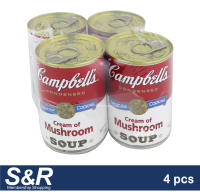
Campbells Cream of Mushroom 4pcs
₱438.00
Buy on Lazada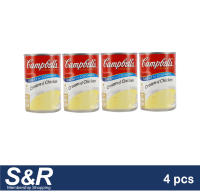
Campbell’s Condensed Soup Cream of Chicken 4pcs
₱416.00
Buy on Lazada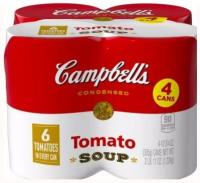
Campbells Condensed Tomato Soup 10.75 oz / 305 g Campbells Soup Campbell’s USA Bundle of 4
₱788.00
Buy on Lazada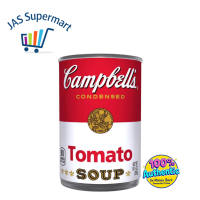
Campbell’s Condensed Tomato Soup 305g – Classic Creamy Tomato Soup
₱199.00
Buy on Lazada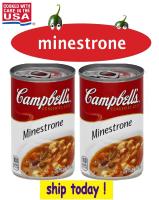
Campbells Minestrone Soup 10.5 oz / 298 g Campbells Soup Campbell’s USA Bundle of 2
₱448.00
Buy on Lazada
Campbell’s Condensed Chicken Noodle Soup 4 cans
₱416.00
Buy on Lazada
Campbells Chicken Noodle Soup 10.5 oz / 298 g Campbells Soup Bundle of 4
₱668.00
Buy on Lazada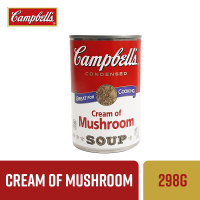
Campbells Cream of Mushroom 298g (AU)
₱112.00
Buy on LazadaAbout Campbell’s
Campbell’s is an American food brand best known for its iconic condensed and ready-to-serve soups, particularly its red-and-white cans of tomato soup. It stands as one of the oldest and most recognizable names in packaged food in the United States. Although the name “Campbell’s” is strongly associated with soup, the brand and its parent company have expanded far beyond this category into sauces, pasta, beverages, snacks, and other convenient foods.
The brand traces its origins to 1869, when fruit merchant Joseph Campbell and commercial canner Abraham Anderson established a food-preservation business in Camden, New Jersey. The company eventually became Campbell Soup Company and, since November 2024, its corporate name has been The Campbell’s Company.1
Overview
| Category | Information |
|---|---|
| Brand name | Campbell’s |
| Founded | 1869 |
| Origin | Camden, New Jersey, United States |
| Founders | Joseph A. Campbell and Abraham Anderson |
| Parent company | The Campbell’s Company |
| Best known for | Canned and condensed soup |
| Signature product | Campbell’s Tomato Soup |
| Famous packaging | Red-and-white soup can |
| Famous slogan | “M’m! M’m! Good!” |
| Major cultural association | Andy Warhol’s Campbell’s Soup Cans |
| Current corporate headquarters | Camden, New Jersey |
| Corporate name since 2024 | The Campbell’s Company |
| Stock ticker of parent company | NYSE: CPB |
The parent company reported $10.3 billion in fiscal 2025 net sales and currently operates through two divisions, Meals & Beverages and Snacks.2
History
1869: The beginning
Campbell’s history began in Camden, New Jersey, in 1869. Joseph Campbell, a fruit merchant, partnered with Abraham Anderson, a commercial canner, to establish Anderson & Campbell. The business originally concentrated on preserved foods rather than exclusively soup. Its products included canned fruits and vegetables, tomatoes, jellies, condiments, and other preserved foods.3 At this stage, it was essentially a nineteenth-century food-preservation business; its eventual transformation into a global soup brand occurred decades later.
1890s: The invention that changed Campbell’s
A crucial figure in the company’s history was Dr. John T. Dorrance, a chemist and nephew of company president Arthur Dorrance. In 1897, Dorrance developed a commercially successful method of producing condensed soup. By removing much of the water from soup before packaging, Campbell could make cans smaller, lighter, easier to transport, and less expensive. Consumers could then add water at home before heating the soup.4 This innovation became the foundation of Campbell’s modern business.
In 1895, the company had already introduced its first ready-to-eat soup, Beefsteak Tomato Soup. However, the condensed-soup process two years later was the breakthrough that made Campbell’s soup commercially distinctive.5
The famous red-and-white can
One of Campbell’s most recognizable characteristics is its packaging. The first condensed-soup labels were not the familiar red and white; in 1897, Campbell used an orange-and-black design. In 1898, the company introduced the famous red-and-white color scheme after a company executive was impressed by the red-and-white uniforms of Cornell University’s football team.6 The Campbell’s script was also incorporated into the design, based on the signature of founder Joseph Campbell.
In 1900, Campbell received a bronze medal for product excellence at the Paris Exposition. The company subsequently incorporated an image of the medal into its packaging, where the medallion became another enduring feature of the Campbell’s can.7 The result was a package that remained remarkably recognizable for generations.
Key visual elements
- Red-and-white color scheme
- Campbell’s cursive/script logo
- Gold/bronze medal emblem
- Condensed soup illustration
- Tall cylindrical metal can
The packaging became so recognizable that the can itself eventually became an icon of American visual culture.
Campbell’s becomes “Campbell Soup Company”
The popularity of soup eventually became central to the identity of the entire business. In 1922, the company formally adopted the name Campbell Soup Company, putting “Soup” into its corporate name.8 This illustrates how strongly soup had come to define the company. Over the following decades, Campbell expanded its product range and acquired or developed numerous other food brands.
Expansion beyond soup
Although soup remains Campbell’s signature product, the company gradually became a much broader packaged-food business. Important milestones include:
- 1931 — Campbell began radio advertising and introduced the famous “M’m! M’m! Good!” advertising identity.9
- 1934 — Chicken Noodle and Cream of Mushroom soups were introduced.10
- 1948 — Campbell acquired V8, expanding into vegetable-based beverages.11
- 1965 — SpaghettiOs was introduced.12
- 1970 — Chunky soup was launched.
- 1981 — Prego pasta sauce was introduced.13
Over time, Campbell became less a “soup company” in the narrow sense and more a diversified consumer packaged-food company.
Campbell’s and Andy Warhol
Perhaps no food brand has been connected to modern art as strongly as Campbell’s. In 1962, American pop artist Andy Warhol exhibited his famous series Campbell’s Soup Cans. Warhol depicted Campbell’s soup cans as repeated, almost mass-produced objects. The choice was significant because Campbell’s cans were already extremely familiar to ordinary Americans. Rather than treating an everyday supermarket product as something mundane, Warhol turned it into the subject of fine art. Campbell’s own historical records identify 1962 as the year Warhol debuted the Campbell’s Soup Cans paintings at the Ferus Gallery in Los Angeles.14 The association fundamentally changed the cultural meaning of the brand.
Campbell’s became more than food
The soup can came to represent:
American consumer culture → mass production → advertising → popular culture → Pop Art
This is one reason Campbell’s packaging is often described as an example of American design and cultural iconography, rather than simply food packaging.
Campbell Kids
Another important part of Campbell’s identity is the Campbell Kids. The characters originated in advertising in the early twentieth century. Artist Grace Dayton sketched the Campbell Kids in 1904 for streetcar advertisements.15 The characters were subsequently portrayed in many different roles and became an important part of Campbell’s advertising history, helping transform Campbell’s from simply a food manufacturer into a recognizable family-oriented consumer brand.
Campbell’s product portfolio
Today, the name Campbell’s can refer specifically to the Campbell’s brand, while the parent company owns a much larger collection of brands. The company’s current portfolio includes brands such as:
Meals & Beverages
- Campbell’s
- Chunky
- Swanson
- Pacific Foods
- Prego
- Pace
- V8
- Rao’s
The company’s current leadership-brand portfolio includes Campbell’s condensed and ready-to-serve soups, Chunky soups, Swanson broths and stocks, Pacific Foods products, Prego sauces, Pace sauces, V8 beverages, and Rao’s foods.16
Snacks
The broader company also owns major snack brands including:
- Goldfish
- Pepperidge Farm
- Snyder’s of Hanover
- Lance
- Cape Cod
- Kettle Brand
- Late July
- Snack Factory
These brands mean that today’s Campbell’s corporate portfolio extends from soup and broth to crackers, pretzels, cookies and potato chips.17 It is important to note that Goldfish, Pepperidge Farm, Prego, V8, and others are not simply different Campbell’s products; they are individual brands within the larger Campbell’s corporate portfolio.
Campbell’s soup
Despite the company’s diversification, soup remains the heart of the Campbell’s brand. Its major soup categories include:
- Tomato soup
- Chicken noodle soup
- Cream of mushroom soup
- Vegetable soups
- Cream-based soups
- Chunky soups
- Ready-to-serve soups
- Condensed soups
- Specialty and premium soups
Campbell’s Tomato Soup is probably the single product most closely associated with the brand. The company’s own historical material describes tomato soup, introduced in 1897, as its first soup and notes its enduring association with the iconic red-and-white label.18
Condensed vs. ready-to-serve soup
One of Campbell’s most important innovations is the condensed soup format.
Condensed soup
A condensed soup contains less water than a typical ready-to-eat soup. Traditionally, consumers add water or another liquid before heating. This allowed Campbell’s to reduce transportation weight, reduce packaging volume, lower distribution costs, make soup relatively inexpensive, give the product a long shelf life, and make storage easier in the home.
Ready-to-serve soup
Ready-to-serve varieties are designed to be heated and eaten without the traditional dilution step. The two formats allow Campbell’s to serve different consumer needs while maintaining the recognizable soup brand.
Branding and advertising
Campbell’s has historically relied heavily on visual consistency and emotional familiarity. Its branding has emphasized family, comfort, warmth, convenience, affordability, home cooking, nostalgia, and American culture. The famous “M’m! M’m! Good!” slogan became particularly important to the brand’s identity after its radio advertising campaign in the 1930s.19 Rather than positioning soup as an exotic or luxurious food, Campbell’s generally presented it as something ordinary families could keep in their pantry and quickly prepare.
Campbell’s as an American cultural icon
Campbell’s is unusual because its packaging is arguably as recognizable as its products. The red-and-white can has appeared in advertising, television, movies, art, fashion, collectibles, kitchen décor, and popular culture. The strongest example is undoubtedly Andy Warhol. Campbell’s even produced a “Souper Dress” in 1967 featuring the company’s famous red-and-white label pattern, demonstrating how deeply the package had entered popular culture.20 Consequently, the Campbell’s can has become a visual shorthand for American mass-market food.
Corporate identity today
A major modern development occurred in 2024. On November 19, 2024, shareholders approved changing the corporate name from Campbell Soup Company to The Campbell’s Company. The change became effective that same day after the necessary corporate filing in New Jersey.21 The reason was straightforward: the company had become much more than a soup manufacturer. The new name was intended to preserve the historic Campbell’s identity while better representing its broader portfolio of food brands.22
There is an important distinction between the entities:
Campbell’s = the consumer brand famous for soup and related foods.
The Campbell’s Company = the corporation that owns Campbell’s and numerous other food brands.
The company in 2026
As of 2026, The Campbell’s Company describes itself as a North American-focused brand powerhouse organized into two divisions:
- Meals & Beverages
- Snacks
The company reported $10.3 billion in fiscal 2025 net sales. Its portfolio contains 16 designated “leadership brands.” Its corporate headquarters remain in Camden, New Jersey, where the company’s history began in 1869.23 The company continues to describe its purpose as “Connecting people through food they love.”24
Recent product and ingredient developments
Campbell’s has also been adapting to changing consumer expectations. For example, in 2025, the company announced plans to move away from FD&C colors, commonly known as artificial food dyes, across its portfolio. In June 2026, Campbell’s announced that its two remaining national brands requiring this transition, Lance crackers and V8 Splash, had also moved to colors from natural sources.25 This reflects a broader trend in the packaged-food industry toward ingredient changes responding to consumer preferences.
International presence
Campbell’s is fundamentally an American brand, but its products have been sold internationally for many decades. The brand has had particularly strong recognition in North America and has also appeared in markets outside the United States. For example, Campbell’s soup arrived in Canada in 1930.26 International availability and product formulas can differ substantially by country, so a Campbell’s product sold in the United States is not necessarily identical to one sold in Canada, the United Kingdom, or other markets.
Brand identity
Campbell’s can essentially be understood through five major ideas:
1. Soup
Soup remains the foundation of the brand.
2. Convenience
Campbell’s helped popularize shelf-stable, ready-to-prepare food for households.
3. Affordability
Condensed soup in particular was designed to reduce packaging and distribution costs and make soup accessible to ordinary consumers.
4. Nostalgia
The packaging, recipes and advertising have been familiar to multiple generations.
5. American pop culture
The red-and-white can became an icon partly because of Andy Warhol and its association with Pop Art.
Why Campbell’s became so successful
Several factors explain Campbell’s longevity. Innovation: The development of condensed soup solved a practical packaging and distribution problem.27 Strong visual branding: The red-and-white package has remained recognizable for more than a century. Mass distribution: Campbell’s transformed soup into an inexpensive pantry staple. Product familiarity: Products such as tomato, chicken noodle and cream of mushroom soup became household standards. Advertising: The company invested heavily in memorable advertising, characters and slogans. Adaptation: Campbell’s repeatedly expanded into new categories rather than remaining exclusively a soup company. Cultural relevance: The association with Andy Warhol gave the brand an unusual position at the intersection of food, advertising and fine art.
Campbell’s legacy
Campbell’s is much more than a canned-soup manufacturer. It represents one of the classic examples of how an industrial food product can become a cultural symbol. Its red-and-white can began as practical packaging but eventually became instantly recognizable worldwide. The company’s history also illustrates several major developments in modern food culture:
19th-century food preservation
↓
Industrial canning
↓
Condensed soup
↓
Mass-market packaged food
↓
National advertising
↓
Consumer brands
↓
Pop Art and popular culture
↓
Modern diversified food corporation
Today, Campbell’s continues to be most strongly associated with soup, while its parent company has evolved into a much broader food-and-snacking business. The corporate decision in 2024 to change its name from Campbell Soup Company to The Campbell’s Company essentially acknowledged that transformation.28
References
- Campbell’s History – The Campbell’s Company
- Shareholders Overwhelmingly Approve the Change in Company Name to The Campbell’s Company at Annual Meeting – Tue, 11/19/2024 – 09:57
- About Us – The Campbell’s Company
- Campbell’s Reports Third Quarter Fiscal 2026 Results – The Campbell’s Company
- How Campbell’s helped shape American food – The Campbell’s Company
- Our Story – Campbell Company of Canada
- The new Campbell’s Condensed Soup – The Campbell’s Company
- Campbell’s(R) Tomato Soup Now Has Less Salt, Same Famous Flavor – The Campbell’s Company
- Five surprising things in our archives – The Campbell’s Company
- cpb-20241119
- It’s official: We are The Campbell’s Company – The Campbell’s Company
- A key milestone in our FD&C colors transition – The Campbell’s Company
- Campbell’s Announces Leadership Transitions in Transformation Office and Communications – The Campbell’s Company
- sec.gov
- Investor Relations – The Campbell’s Company
- Investor Relations – The Campbell’s Company
- Campbell’s Reports Second Quarter Fiscal 2026 Results – The Campbell’s Company
- sec.gov
- Campbell’s Reports First Quarter Fiscal 2026 Results; Reaffirms Full-Year Fiscal 2026 Guidance – The Campbell’s Company
- Campbell’s Reports Fourth Quarter Fiscal 2025 Results; Provides Full-Year Fiscal 2026 Guidance – The Campbell’s Company
- cpb-20241027
- The Campbell’s Company Board of Directors Elects Mick Beekhuizen Chief Executive Officer to Succeed Mark Clouse – The Campbell’s Company
- Shareholders Overwhelmingly Approve the Change in Company Name to The Campbell’s Company at Annual Meeting – The Campbell’s Company
- Campbell Launches Next Chapter of Growth at Fiscal 2025 Investor Day – The Campbell’s Company
- Campbell Launches Next Chapter of Growth at Fiscal 2025 Investor Day – The Campbell’s Company
- Campbell to Transfer Stock Exchange Listing to Nasdaq – The Campbell’s Company
- 7 things you didn’t know about V8: The Original Plant-Powered Drink – The Campbell’s Company
- The History of Campbell’s Soup