Shop on Lazada
Celestron products
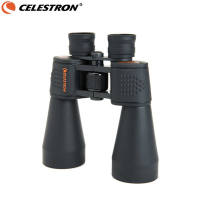
Original Genuine Celestron SkyMaster 25X70HD Pro High Power Astronomy Binoculars Bak4 Optics Low Night Vision Telescope for Birds Moon Observeren
₱6,476.78₱12,823.00
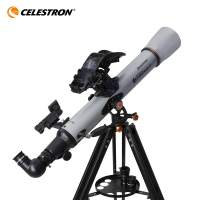
Celestron Professional StarSense Explorer LT80AZ Smartphone App-Enabled Refractor 80mm F/11 Astronomical Telescope Kit JEASON
₱12,499.45₱19,645.00
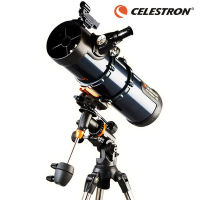
Celestron Astromaster 130 EQ
₱18,000.00
Buy on Lazada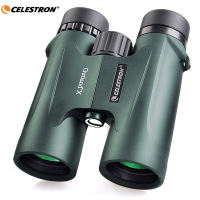
Celestron Outland X 10X42 Binocular Nitrogen-Filled Waterproof Anti-Fog Telescope Night Vision Binoculars Long Range Original
₱4,123.20₱6,142.00
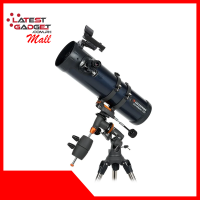
Celestron Astromaster 130EQ Telescope
₱14,950.00₱23,500.00
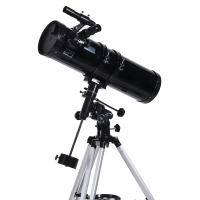
Celestron Powerseeker 114EQ
₱15,000.00
Buy on Lazada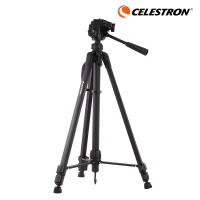
CELESTRON tripod Bird view Aluminum tripod for Binoculars Skymaster
₱2,501.56₱4,348.00
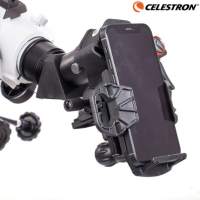
Celestron NexYZ 3-Axis Universal Smartphone Adapter Mobile Cell Phone Mount for Astronomical Telescope Original
₱2,174.43₱2,370.00
About Celestron
Overview
Celestron is an American-founded optical-instrument brand best known for its astronomical telescopes, particularly Schmidt–Cassegrain telescopes (SCTs), computerized GoTo telescopes, and more recently smartphone-assisted and automated observing systems. The company was founded by Tom Johnson in California and has been headquartered in Torrance, California for decades. Today, Celestron operates under SW Technology Corporation, an affiliate of Synta Technology Corporation of Taiwan, which acquired the company in 2005.
Celestron currently describes itself as a California-based telescope company with more than 65 years of history and says its Torrance operation includes more than 80 experts. 1
Quick Facts
| Attribute | Detail |
|---|---|
| Industry | Optical instruments / astronomy equipment |
| Founded | 1960 |
| Founder | Tom Johnson |
| Original organization | Celestron-Pacific, an astro-optical division of Valor Electronics |
| Headquarters | Torrance, California, USA |
| Parent/owner | Synta Technology Corporation of Taiwan, through SW Technology Corporation |
| Best known for | Telescopes, especially Schmidt–Cassegrain designs |
| Major product areas | Telescopes, astrophotography, binoculars, spotting scopes, microscopes, accessories |
| Major historical innovation | Making Schmidt–Cassegrain telescopes practical to manufacture at relatively large scale |
| Famous telescope | Celestron C8 |
| Notable modern technologies | StarSense Explorer, EdgeHD, RASA, computerized GoTo, Wi-Fi, Origin |
| Main U.S. base | Torrance, California |
What is Celestron?
Celestron is fundamentally an astronomy and optics company. Although the Celestron name is strongly associated with telescopes, its product portfolio is broader. Its current product categories include:
- Astronomical telescopes
- Astrophotography equipment
- Computerized telescope mounts
- Binoculars
- Spotting scopes
- Microscopes
- Solar-observing equipment
- Smartphone telescope accessories
- Telescope accessories, eyepieces, filters and power equipment
The telescope range spans beginner instruments through sophisticated astrophotography and observatory-oriented systems. Celestron’s current catalog includes refractors, Newtonian reflectors, Schmidt–Cassegrains, EdgeHD systems, RASA astrographs and Maksutov–Cassegrain designs. 2
So, although it is often described simply as a “telescope brand,” Celestron is more accurately an optical technology company centered on astronomy.
Origins: Tom Johnson
The story of Celestron begins with Tom Johnson, an electronics engineer and businessman. During the late 1950s, Johnson was working at Valor Electronics, an aerospace-electronics company in California. He wanted a telescope that he could use to introduce his young sons to astronomy. Unable to find one that satisfied him, he decided to build one himself.
Johnson initially constructed a 6-inch reflecting telescope. What began as a personal project gradually became an obsession with telescope design and optical engineering. He proceeded to build increasingly sophisticated telescopes.
By 1960, Johnson incorporated his telescope work into his business by creating Celestron-Pacific, an astro-optical division of Valor Electronics dedicated to telescope development. This is why Celestron’s history is often dated to 1960, even though the Celestron name itself emerged a few years later.
The Breakthrough: Schmidt–Cassegrain Telescopes
Before Celestron, Schmidt–Cassegrain telescopes already existed. They offered an attractive combination of relatively short physical length, large aperture, long effective focal length, good optical performance, and suitability for astronomy. The problem was manufacturing. A Schmidt corrector plate has a complicated optical shape and traditionally required highly skilled optical technicians to produce. As a result, large Schmidt–Cassegrain telescopes were expensive and relatively uncommon.
Johnson believed that the design could be manufactured much more efficiently. Celestron developed a technique involving extremely precise match plates to form Schmidt corrector lenses more consistently and at scale. That was a crucial innovation because it transformed the Schmidt–Cassegrain from something associated primarily with specialized or expensive instruments into a telescope design that could be offered to amateur astronomers at a much more accessible price.
This manufacturing approach became one of the foundations of Celestron’s identity.
The Birth of the Celestron Brand
In January 1964, Celestron-Pacific advertised the Celestronic 20, a 20-inch Schmidt–Cassegrain telescope, in Sky & Telescope. Later that year, the company produced a 22-inch SCT and dropped “Pacific” from its name. The brand simply became Celestron.
By 1969, the company had developed a family of Schmidt–Cassegrain telescopes ranging from approximately 6-inch to 22-inch apertures. These instruments became recognizable for their distinctive blue-and-white appearance.
The C8: The Telescope That Changed Celestron
If there is one product that defines Celestron’s history, it is the C8. The C8 is an 8-inch (203 mm) Schmidt–Cassegrain telescope. Its importance wasn’t simply that it was an 8-inch telescope. The key was the combination of large aperture + compact tube + relatively affordable price + mass production. That combination made serious astronomical observing substantially more accessible to amateurs.
The C8 became one of the most famous amateur astronomical telescopes ever produced and established Celestron as a major force in the telescope industry. Celestron itself identifies Tom Johnson’s C8 as a pivotal product in the company’s history. 3
The basic Celestron SCT concept subsequently expanded into families such as:
- C5
- C6
- C8
- C9.25
- C11
- C14
These names generally refer to the telescope’s approximate aperture in inches. For example:
- C8 → 8-inch aperture
- C9.25 → 9.25-inch aperture
- C11 → 11-inch aperture
- C14 → 14-inch aperture
Several of these designs remain important parts of Celestron’s product ecosystem.
Why Schmidt–Cassegrain Became Celestron’s Signature
A traditional refractor telescope uses lenses. A Newtonian reflector uses mirrors. A Schmidt–Cassegrain combines a primary mirror, secondary mirror, and Schmidt corrector plate. The result is a telescope with a relatively compact physical tube compared with its focal length.
For example, an SCT can provide a long focal length suitable for high magnification while remaining much shorter than a conventional refractor with the same focal length. This made SCTs particularly attractive for planetary observation, lunar observation, double stars, deep-sky astronomy, astrophotography, and general-purpose amateur astronomy. Celestron effectively made the SCT its signature technology.
1950s
Tom Johnson becomes interested in telescope construction while working in electronics.
1960
Celestron-Pacific is established as an astro-optical division of Valor Electronics.
1962
Johnson brings an 18¾-inch Cassegrain reflector to a star party at Mount Pinos. The telescope attracts considerable attention and helps bring his work to a wider audience. 4
1963
Johnson and his large telescope appear on the cover of Sky & Telescope.
1964
The Celestronic 20 is introduced. Celestron-Pacific subsequently becomes Celestron.
Late 1960s
Celestron develops a range of Schmidt–Cassegrain telescopes.
1970
The C8 era begins, establishing Celestron’s mass-market SCT concept. 5
1980
Tom Johnson sells Celestron.
1990s
Celestron expands its telescope and computerized-equipment offerings while competing heavily with Meade Instruments.
1998
Celestron is acquired by Tasco. 6
2001–2002
Tasco’s financial collapse puts Celestron’s future in question. Meade attempts to acquire the company, but U.S.
2005
Celestron is acquired by SW Technology Corporation, an affiliate of Taiwan-based Synta Technology Corporation.
2010s
Celestron increasingly combines optics with computerized mounts, GPS, GoTo systems, Wi-Fi and digital imaging.
2020s
The company moves further toward smartphone-assisted observing, computational astronomy and automated observing, including StarSense Explorer and Celestron Origin.
Celestron and Synta
This part can be confusing because Celestron is an American-founded brand but is now owned by a Taiwanese optics group. In April 2005, Celestron announced that SW Technology Corporation, a Delaware company affiliated with Synta Technology Corporation of Taiwan, had acquired the company. Synta had already been a long-term Celestron supplier, reportedly having worked with the company for more than 15 years before the acquisition.
So today’s Celestron is best understood as: Celestron → American-founded brand/company → owned by Synta group.
This distinction matters because “Celestron” doesn’t mean that every component or telescope is manufactured in the United States. Celestron maintains its headquarters and product-development presence in Torrance, California, while its modern supply chain is international.
A. Schmidt–Cassegrain
This is the technology most closely associated with Celestron. Typical families include C5, C6, C8, C9.25, C11, and C14. These are general-purpose optical tubes that can be used for visual astronomy, planetary observing and astrophotography depending on configuration.
B. EdgeHD
EdgeHD is Celestron’s more advanced optical design intended to provide a flatter image field than traditional SCT systems. This makes it particularly interesting for astrophotography, where stars toward the edges of a camera sensor can reveal optical field curvature more readily. EdgeHD systems are available in multiple apertures.
C. RASA
RASA stands for Rowe-Ackermann Schmidt Astrograph. It is designed specifically for fast astrophotography rather than conventional visual observing. The philosophy is basically: collect a lot of light quickly and produce a wide, well-corrected imaging field. RASA systems occupy a more specialized and expensive segment of Celestron’s range. Celestron currently lists RASA alongside its SCT, EdgeHD, refractor and Newtonian families.
NexStar
NexStar is one of Celestron’s most recognizable modern telescope families. The basic concept is a telescope mounted on a computerized GoTo mount. Instead of manually locating every object, the user can select an astronomical object from a database and allow the telescope to point toward it. Major NexStar families include NexStar SE, NexStar Evolution, NexStar SLT, and various earlier NexStar generations. The NexStar SE is particularly recognizable because of its distinctive orange telescope tube.
StarSense Explorer
One of Celestron’s more interesting recent innovations is StarSense Explorer. Instead of requiring a fully computerized GoTo mount, StarSense Explorer uses a smartphone to help users locate astronomical objects. The smartphone’s camera and sensors are used together with the application to determine where the telescope is pointed and guide the observer toward the desired object. This addresses one of the biggest problems for beginners: finding objects in the night sky. Celestron describes StarSense Explorer as a system that effectively turns a smartphone into a guide for the night sky. 7
Celestron Origin
A particularly important recent direction is Celestron Origin. Rather than thinking of the telescope as merely an optical tube mounted on a tripod, Origin is positioned as an intelligent, all-in-one home observatory. This represents a broader shift in astronomy equipment from traditional telescopes to modern smart telescopes featuring optics, cameras, computers, automated mounts, software, and smartphone/tablet interfaces. Celestron’s current catalog identifies Origin as its intelligent home observatory platform. 8
Astrophotography
Celestron is also a significant player in amateur astrophotography. Its equipment covers several levels:
- Beginner: Smartphone adapters, basic tracking/GoTo telescopes, simple planetary imaging.
- Intermediate: Computerized equatorial mounts, dedicated astronomy cameras, SCT/EdgeHD systems, guiding equipment.
- Advanced: CGX/CGX-L-class mounts, EdgeHD systems, RASA astrographs, dedicated astrophotography cameras.
The company currently maintains a dedicated imaging category covering astronomy cameras, adapters and filters.
Beyond Telescopes
Although telescopes dominate Celestron’s reputation, the company also sells other optical equipment.
Binoculars
Celestron produces astronomical and general-purpose binoculars. A well-known family is SkyMaster, which includes relatively large-aperture binoculars such as 15×70 and 25×70 models. It also sells solar-observing binoculars under EclipSmart.
Spotting Scopes
Celestron produces spotting scopes for terrestrial observation, including uses such as birdwatching, wildlife observation, landscape viewing, target observation, and general outdoor optics.
Microscopes
The company has a separate microscopy business, including compound microscopes, stereo microscopes, digital microscopes, LCD microscopes, and Wi-Fi-enabled microscopes. Celestron’s current site lists microscopy as one of its principal product areas.
Design Philosophy
The evolution of Celestron can be understood as a progression through several major ideas:
- Make large-aperture optics practical: Tom Johnson’s original achievement was figuring out how to manufacture SCTs efficiently.
- Make astronomy portable: The SCT architecture allowed relatively large apertures in compact tubes.
- Make astronomy computerized: GoTo mounts and computerized databases reduced the difficulty of locating objects.
- Make astronomy digital: Cameras, Wi-Fi and smartphone applications increasingly replaced the traditional eyepiece-only experience.
- Make astronomy automated: Products such as Origin move toward an automated observatory in which the user interacts primarily with software.
Celestron vs. Meade
Historically, Meade Instruments was Celestron’s most important American competitor. The two companies were particularly important in the development and commercialization of amateur Schmidt–Cassegrain telescopes and computerized astronomy equipment. Their rivalry became so significant that Meade attempted to acquire Celestron. The U.S. Federal Trade Commission intervened in 2002, citing concerns about competition in the performance-telescope market. This rivalry shaped the amateur telescope market for decades. Today, however, the landscape is different from the classic Celestron-vs-Meade era.
Market Position
Celestron covers an unusually wide range of users.
- Beginner: Products such as FirstScope, AstroMaster, StarSense Explorer, and entry-level refractors are aimed at people buying their first telescope.
- Enthusiast: Products such as NexStar, NexStar Evolution, C8, C9.25, and Advanced VX target more experienced amateur astronomers.
- Advanced astrophotographer: Products such as EdgeHD, CGX, RASA, and advanced imaging accessories target users who are interested in serious astronomical imaging.
- Automated-observatory user: Celestron Origin represents the newest end of this spectrum.
That breadth is one of Celestron’s biggest competitive advantages.
Manufacturing Identity
Celestron is historically an American company/brand, founded in California and headquartered in Torrance. However, after the 2005 acquisition by Synta, Celestron became part of a much larger international optical manufacturing ecosystem.
Therefore, Celestron is neither exclusively made in the USA nor simply a generic Chinese telescope brand. The more accurate description is: An American-founded astronomy brand with California-based engineering/business operations and an international manufacturing and supply chain under the Synta group.
Celestron and NASA
Celestron also highlights its involvement in two NASA missions as part of its corporate history. This demonstrates the company’s connection to professional aerospace/space applications in addition to its enormous amateur-astronomy market. However, Celestron is not primarily a NASA contractor; its core business remains consumer and enthusiast optical equipment.
Tom Johnson’s Legacy
Tom Johnson died in 2012, aged 89. His central idea was essentially: Good astronomical optics shouldn’t have to be limited to professional observatories or wealthy specialists. His work helped turn the Schmidt–Cassegrain into a commercially viable amateur telescope design. The C8 became an iconic expression of that philosophy. Celestron continues to explicitly frame its modern technology development as a continuation of Johnson’s legacy. 9
Current Status
As of 2026, Celestron presents itself as a long-established California astronomy company combining traditional optical engineering with increasingly sophisticated electronics and software. Its current catalog demonstrates this transition from precision optical engineering (1960s) to mass-market SCTs (1970s–1990s), to computerized/GoTo astronomy (1990s–2000s), to GPS/digital imaging (2000s–2010s), to smartphones/Wi-Fi/StarSense (2010s–2020s), and finally to automated and intelligent observing systems such as Origin (2020s).
The company’s current telescope catalog includes 167 telescope products/listings across numerous series and optical designs, illustrating how much the brand has expanded beyond its original SCT-focused identity.
Conclusion
Celestron is one of the defining brands in modern amateur astronomy. Its story starts with Tom Johnson building a telescope for his sons, progresses through the development of scalable Schmidt–Cassegrain manufacturing, reaches a landmark with the C8, survives several changes of ownership and a potential takeover by its major rival, and ultimately becomes part of the Synta group. Today, Celestron spans almost the entire amateur-astronomy spectrum—from inexpensive beginner telescopes to sophisticated EdgeHD/RASA astrophotography systems and automated Origin observatories. 10
References
- Telescope Manufacturer Acquired – Los Angeles Times
- Telescopes, Accessories, Outdoor and Scientific Products by Celestron
- Celestron
- Securities and Exchange Commission
- Celestron Sold (Again) – Sky & Telescope
- Optics Company Buys Celestron | light speed
- Spectrum Scientifics, LLC et al v. Celestron Acquisition, LLC et al, No. 5:2020cv03642 – Document 173 (N.D. Cal. 2021)…
- Celestron celebrates 60 years of crafting telescopes
- LATEST: CELESTRON HAS BEEN ACQUIRED BY SYNTA – SingAstro
- Celestron bought out by Synta Technologies – Cloudy Nights Announcements – Cloudy Nights