Shop on Lazada
Cerelac products
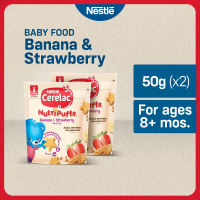
Cerelac Nutripuffs Banana & Strawberry Infant Snack Baby Food 50g - Pack of 2
₱260.00
Buy on Lazada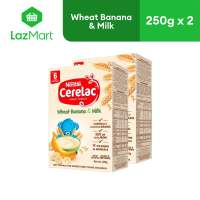
Cerelac Baby Food Wheat Banana & Milk 250g - Pack of 2
₱297.35₱313.00
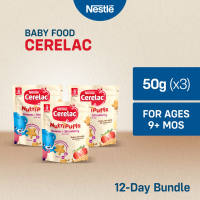
Cerelac Nutripuffs Banana & Strawberry Infant Snack Baby Food 50g - Pack of 3
₱389.00
Buy on Lazada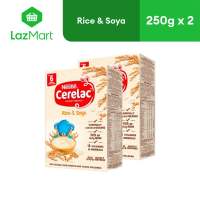
Cerelac Baby Food Rice & Soya 250g - Pack of 2
₱281.70₱313.00
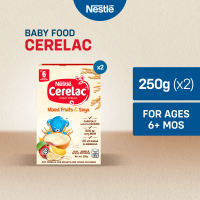
Cerelac Mixed Fruits & Soya Infant Cereals Baby Food 250g - Pack of 2
₱330.00
Buy on Lazada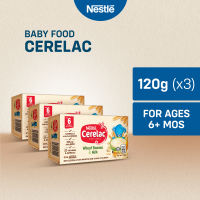
Cerelac Wheat Banana & Milk Infant Cereals Baby Food 120g - Pack of 3
₱246.00
Buy on LazadaCerelac Mixed Fruits & Soya Infant Cereals Baby Food 250g - Pack of 2
₱330.00
Buy on Lazada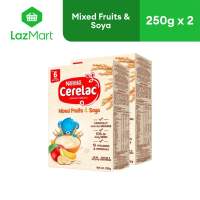
Cerelac Baby Food Mixed Fruits & Soya 250g - Pack of 2
₱281.70₱313.00
About Cerelac
Cerelac is a global brand of infant cereals and complementary baby foods owned by Nestlé. It is designed for infants and young children, typically from 6 months of age, when babies begin transitioning from exclusive milk feeding to solid foods. Cerelac products are fortified with essential vitamins and minerals to support healthy growth and development as part of a balanced diet. [1]
Overview
-
Brand: Cerelac
-
Owner: Nestlé
-
Product Type: Infant cereals and complementary baby foods
-
Introduced: 1954 (under the Cerelac brand name; Nestlé infant cereals date back to 1948) [2]
-
Headquarters: Vevey (Nestlé)
-
Markets: Available in more than 50 countries across Europe, Asia, Africa, Latin America, and the Middle East.
-
Target Age: Generally recommended for babies 6 months and older, alongside continued breastfeeding or infant formula. [3]
History
Cerelac’s origins are closely linked to Nestlé’s pioneering work in infant nutrition.
In 1867, Nestlé founder Henri Nestlé developed one of the world’s earliest infant cereals to help nourish babies who could not be breastfed. This innovation laid the foundation for Nestlé’s infant nutrition business. [4]
Nestlé launched powdered infant cereals commercially in 1948. In 1954, these cereals were rebranded as Cerelac, creating the global brand recognized today. Since then, Cerelac has expanded into numerous cereal-based meals and snack products tailored to regional dietary preferences. [5]
Today, Cerelac remains one of Nestlé’s flagship infant nutrition brands and is supported by ongoing research in pediatric nutrition and food science. [6]
Products
Cerelac offers a variety of complementary foods, including:
-
Rice cereal
-
Wheat cereal
-
Oat cereal
-
Multigrain cereals
-
Fruit-flavored cereals
-
Vegetable-based cereals
-
High-protein cereal meals
-
Ready-to-eat baby meals (in selected markets)
-
Baby snacks such as Nutripuffs (market dependent)
Common flavors vary by country and may include:
-
Rice
-
Wheat & Banana
-
Rice & Soya
-
Mixed Fruits
-
Mixed Vegetables
-
Honey & Wheat (where permitted by local regulations)
-
Rice & Chicken (selected markets) [7]
Nutrition
Cerelac products are typically fortified with nutrients important during infancy, including:
-
Iron
-
Calcium
-
Zinc
-
Vitamin A
-
Vitamin C
-
Vitamin D
-
B-complex vitamins
-
Protein
-
Essential carbohydrates
Many products also contain whole grains and are formulated to provide a significant portion of an infant’s daily iron needs. Exact nutritional composition varies by country and product. [8]
Manufacturing
Cerelac cereals are manufactured using carefully selected grains that undergo extensive quality testing before processing. According to Nestlé, ingredients are subjected to multiple quality and safety checks, and products are produced under strict food safety standards. Manufacturing locations vary by region to supply local markets efficiently. [9]
Global Presence
Cerelac is sold throughout:
-
Asia
-
Europe
-
Africa
-
Latin America
-
Middle East
The product lineup differs by country to meet local nutritional requirements, regulations, and consumer preferences.
In countries such as the Philippines, India, Nigeria, Pakistan, South Africa, Egypt, Indonesia, and Malaysia, Cerelac is among the best-known infant cereal brands. [10]
Recommended Use
Health authorities generally recommend introducing complementary foods at around 6 months of age, while continuing breastfeeding or formula feeding. Cerelac is intended to be one option within a varied diet and should be prepared according to the instructions on the package. [11]
Research and Development
Nestlé invests in research related to:
-
Early childhood nutrition
-
Infant digestive health
-
Micronutrient fortification
-
Food safety
-
Grain quality
-
Complementary feeding practices
The company states that Cerelac formulations are developed using nutritional science and are adapted to local dietary needs where appropriate. [12]
Criticism and Controversies
Cerelac has been the subject of public scrutiny in several countries regarding the amount of added sugar in some product formulations. Investigations and advocacy groups have reported that certain Cerelac products sold in lower-income markets contained added sugars, while similar products in some higher-income markets did not. [13]
Nestlé has responded that its products comply with local regulations and international standards, distinguishes between naturally occurring and added sugars, and has stated that it is working toward expanding no-added-sugar formulations across markets. [14]
Legacy
For more than 70 years under the Cerelac name—and with roots tracing back to Nestlé’s infant cereal innovations in the 19th century—Cerelac has become one of the world’s most recognized complementary baby food brands. Its products are widely used during the transition from milk feeding to solid foods and remain a significant part of Nestlé’s global infant nutrition portfolio. [15]