Shop on Lazada
CHANEL products
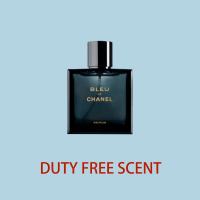
New Chanel BLEU PARFUM Eau De Parfum 100ML
₱3,356.00₱8,623.00
![[AUTHENTIC] CHANEL Les Beiges Healthy Glow Bronzing Cream | The Glow PH](https://ph-live.slatic.net/p/9bbfcc3ed2eba6f784ed0890e009cc63.png_200x200q80.jpg)
[AUTHENTIC] CHANEL Les Beiges Healthy Glow Bronzing Cream | The Glow PH
₱6,950.00
Buy on Lazada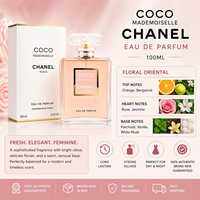
💯Authentic Coco CHNL Mademoiselle - 100ml
₱7,150.00₱10,500.00
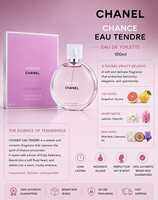
💯Authentic CHNL CHANCE EAU TENDRE for Women - 100mL
₱6,950.00₱10,199.00
Original Chαñel Coco Mademoiselle Warm Florals edp 100ml Floral and fruity fragrance lady perfume long-lasting fragrance perfume
₱1,975.00₱7,056.00
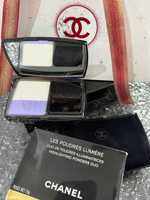
CHANEL Highlighting Powder Duo
₱2,450.00
Buy on Lazada
New CHANEL N°5 Eau De Parfum 100ML
₱3,265.00₱8,632.00
New CHANEL Eau Tendre Eau De Toilette 100ML
₱3,059.00₱8,695.00
About CHANEL
CHANEL is a French luxury fashion house and one of the most influential names in the global luxury industry. Founded by Gabrielle “Coco” Chanel in Paris in the early 20th century, the House began as a millinery shop before evolving into a diversified luxury enterprise encompassing Haute Couture, ready-to-wear, handbags and leather goods, fashion accessories, eyewear, fragrances, makeup, skincare, fine jewelry, and watches. 1 Beyond its commercial success, CHANEL is widely regarded as a cultural institution whose identity is anchored in modernity, independence, simplicity, craftsmanship, femininity, and the reinterpretation of classic codes. 3 4 5 6 7 8 9 10 11 12 13 14 15 16 17 18 19 20 21 22 23 24 25 26 27 28 29 30 31 32 33 34 35 36 37 38 39 40 41 42 43 44 45 46 47 48 49 50 51 52 53 54 55 56 57
Basic Information
| Category | Information |
|---|---|
| Brand | CHANEL |
| Founder | Gabrielle “Coco” Chanel |
| Founded | 1910 |
| Origin | Paris, France |
| Industry | Luxury goods / Fashion |
| Business type | Private company |
| Major categories | Fashion, Haute Couture, leather goods, beauty, fragrance, jewelry, watches |
| Historic headquarters / flagship | 31 Rue Cambon, Paris |
| Current Global CEO | Leena Nair |
| Global Executive Chairman | Alain Wertheimer |
| Fashion Artistic Director | Matthieu Blazy |
| Iconic fragrance | CHANEL N°5 |
| Iconic handbag | 2.55 / Classic Flap |
| Iconic watch | J12 |
| Signature visual codes | Camellia, interlocking CC, black & white, quilted leather, chain, pearls, tweed |
| 2025 revenue | US$19.3 billion |
| 2025 operating profit | US$4.712 billion |
For the fiscal year 2025, CHANEL reported revenue of US$19.3 billion, representing a 2% increase from 2024, with an operating profit of US$4.712 billion. 2
Gabrielle “Coco” Chanel
The history of CHANEL is inextricably linked to its founder, Gabrielle Chanel (1883–1971), universally known as Coco Chanel. Born in Saumur, France, she endured a difficult childhood marked by her mother’s death and time spent in an orphanage, where she learned to sew. These formative experiences of independence and exposure to varied social environments profoundly shaped the House’s aesthetic philosophy. CHANEL describes her as a woman defined by boldness, freedom, and an instinctive approach to creation. 1
Before establishing herself as a designer, Gabrielle worked as a seamstress and a singer, the latter profession being the source of her nickname “Coco.” Her significance to fashion history lies not merely in designing attractive garments but in fundamentally altering societal expectations of women’s dress.
Design Philosophy
Early 20th-century women’s fashion was characterized by corsets, restrictive silhouettes, elaborate decoration, heavy fabrics, and formality. Chanel rejected these conventions in favor of clothing that was simpler, more comfortable, practical, influenced by menswear, and suited to modern lifestyles while retaining a sense of understated luxury. The House articulates her philosophy as creating a wardrobe liberated from constraints and excess, integrating masculine elements without sacrificing feminine identity. This approach laid the groundwork for modern luxury fashion.
Foundation of the House
1910: The First Boutique
Gabrielle Chanel opened her first hat boutique in Paris in 1910. This millinery business served as the foundation for what would become the House of CHANEL.
1912: Deauville
Expansion followed in 1912 with a boutique in Deauville, a fashionable seaside resort. This location was strategically significant as it catered to wealthy women leading increasingly active outdoor lifestyles, for whom Chanel’s designs were ideally suited.
1915: Biarritz
In 1915, Chanel established a couture house in Biarritz. By this stage, the enterprise had evolved beyond millinery into a bona fide fashion house.
1918: 31 Rue Cambon
Chanel moved to 31 Rue Cambon in Paris in 1918. This address remains the historic heart of the brand and one of the most important locations in its history.
Revolution in Women’s Fashion
Chanel’s primary contribution was the transformation of the modern woman’s wardrobe. Rather than treating fashion as purely decorative, she designed for movement, independence, and daily life. Key innovations included:
Jersey Fabric
Chanel introduced jersey, previously associated with men’s underwear and sportswear, into women’s fashion. This challenged traditional notions of luxury materials.
Trousers
She helped popularize trousers and relaxed silhouettes for women at a time when such styles were unconventional.
Little Black Dress
In 1926, Chanel presented the little black dress. Transforming black from a color of mourning into a symbol of elegance and versatility, this design became a cornerstone of modern women’s fashion.
CHANEL N°5
N°5 is arguably the product most synonymous with the CHANEL brand.
Creation and Significance
Created in 1921 in collaboration with Russian-French perfumer Ernest Beaux, CHANEL N°5 was revolutionary for several reasons: it was associated with a couturier rather than a traditional perfumer; it bore a numerical name instead of a descriptive title; its scent was abstract and complex; its bottle was radically minimalist; and it positioned perfume as integral to personal style. CHANEL states that N°5 was the first perfume created by a couturier, named after the fifth sample presented to Gabrielle Chanel. The bottle’s clean geometric lines embodied the principle that luxury resides in the product itself, not in superfluous ornamentation.
Expansion into Beauty
In 1924, the Société des Parfums CHANEL was established to manage fragrances and cosmetics, marking the launch of the House’s first makeup collections. This signaled CHANEL’s evolution into a comprehensive luxury lifestyle brand. Today, CHANEL Beauty encompasses perfumes, makeup, skincare, body products, and specialized fragrance collections, including N°5, N°19, Coco, Coco Mademoiselle, Chance, Bleu de CHANEL, Gabrielle, and Les Exclusifs de CHANEL.
Fine Jewelry
CHANEL entered the fine jewelry sector in 1932 with the Bijoux de Diamants exhibition. Gabrielle Chanel approached jewelry with the same philosophy as fashion, challenging conventional luxury norms and emphasizing the relationship between adornment and the body. Contemporary collections continue to reinterpret her personal symbols: the camellia, stars, pearls, diamonds, the lion, the number 5, and the interlocking CC.
Visual Language
CHANEL’s recognizability stems from a consistent set of visual codes:
- Black and White: Reflecting a preference for contrast and simplicity.
- Camellia: A floral motif frequently used by Gabrielle Chanel in clothing, accessories, and jewelry.
- Pearls: Associated with Chanel’s personal style and her blending of genuine and costume jewelry.
- Tweed: Transformed from a menswear fabric into a sophisticated womenswear staple.
- Quilting: A signature pattern, particularly on handbags.
- Chain: Integrated into handbags, jewelry, and clothing.
- Interlocking CC: The double-C logo, globally recognized as the House’s graphic symbol.
The 2.55 Handbag
Introduced in February 1955, the 2.55 handbag revolutionized accessories by featuring a chain strap that allowed women to wear the bag over the shoulder. Its design incorporated quilted leather, a rectangular silhouette, and multiple compartments. The name references its creation date. It remains a foundational design in luxury handbags, alongside the later Classic Flap developed by Karl Lagerfeld.
The Karl Lagerfeld Era
Following Gabrielle Chanel’s death in 1971, the House underwent a significant transformation with the appointment of Karl Lagerfeld as Artistic Director in 1983. Lagerfeld revitalized the brand by restoring Haute Couture prestige, developing ready-to-wear and Cruise collections, establishing Métiers d’Art, modernizing classic codes, and connecting heritage with contemporary culture. He solved the challenge of preserving history without appearing dated by constantly reinterpreting Chanel’s vocabulary—camellias, tweed, chains, and the CC logo—in new proportions and contexts. This approach defined the CHANEL model of modern luxury.
Creative Leadership After Lagerfeld
Karl Lagerfeld passed away on 19 February 2019. He was succeeded by Virginie Viard, who had worked closely with him for decades. Her tenure emphasized a more understated interpretation of the House’s aesthetic until her departure in 2024.
In 2024, CHANEL appointed Matthieu Blazy as Artistic Director of Fashion Activities, responsible for Haute Couture, Ready-to-Wear, and Accessories. Joining in 2025, Blazy represents the latest chapter in the lineage of Gabrielle Chanel → Karl Lagerfeld → Virginie Viard → Matthieu Blazy. His approach combines the House’s heritage with innovation in creation, craftsmanship, and materials.
Current Business Structure
CHANEL operates as a vertically integrated luxury ecosystem comprising:
- Fashion: Haute Couture, Ready-to-Wear, Cruise, Métiers d’Art, and accessories.
- Leather Goods: Handbags, wallets, small leather goods, and travel items.
- Fragrance: Including N°5, Coco Mademoiselle, Bleu de CHANEL, Chance, Gabrielle, and Les Exclusifs.
- Beauty: Makeup, skincare, sun care, and accessories.
- Watches: Major collections include J12, Première, Boy·Friend, Code Coco, and Monsieur de CHANEL. The watch division launched in 1987 with the Première.
- Fine Jewelry: Collections such as Coco Crush, Comète, Camélia, Ultra, N°5, and 1932.
Métiers d’Art
A distinctive element of CHANEL’s strategy is its investment in traditional craftsmanship through the acquisition and support of specialized workshops in embroidery, feathers, flowers, pleating, buttons, shoemaking, millinery, goldsmithing, leatherwork, and textile decoration. Collectively known as the Métiers d’Art, these ateliers are preserved through direct investment rather than outsourcing. A key manifestation of this commitment is le 19M, a Parisian hub consolidating expertise from 11 artistic crafts out of approximately 40 associated with the House.
Business Model and Financial Scale
Unlike many luxury groups, CHANEL remains a private company. Its business model prioritizes brand control, product quality, scarcity, craftsmanship, and long-term equity over price competition. The brand sells heritage, design, exclusivity, and cultural relevance, with fragrance and beauty serving as accessible entry points.
Financial results for 2025 underscore its scale:
- Revenue: US$19.3 billion (+2% vs. 2024)
- Operating Profit: US$4.712 billion
- Investment: US$2.395 billion
- Capital Expenditure: US$1.449 billion
- Free Cash Flow: US$2.646 billion
Performance was driven by fashion, fragrance, beauty, watches, and handbags, including new launches like the CHANEL 25.
Brand Philosophy
CHANEL’s identity rests on several core tenets:
- Freedom: Enabling women to move freely and dress for modern life.
- Simplicity: Removing unnecessary decoration.
- Contrast: Balancing male/female, black/white, hard/soft, simple/luxurious, and classic/modern.
- Reinvention: Continuously reinterpreting original designs rather than reproducing them.
- Craftsmanship: Valuing specialist savoir-faire.
- Independence: Maintaining the unconventional spirit of Gabrielle Chanel.
Cultural Influence and Celebrity Associations
CHANEL maintains strong ties to cinema, photography, music, art, and cultural institutions. Gabrielle Chanel herself engaged with Hollywood in 1931 at the invitation of Samuel Goldwyn. Karl Lagerfeld later elevated advertising to the level of short films and art projects.
Celebrity partnerships have been central to the brand’s communication. Historic figures associated with CHANEL include Marilyn Monroe, Catherine Deneuve, Carole Bouquet, Inès de la Fressange, and Keira Knightley. Monroe’s association with N°5 remains one of the most powerful examples of celebrity culture reinforcing luxury mythology.
Key Products and Codes
| Product / Code | Significance |
|---|---|
| N°5 | World-renowned fragrance and landmark in perfumery |
| 2.55 | Foundational handbag design |
| Classic Flap | Iconic luxury handbag |
| Little Black Dress | Milestone in 20th-century fashion |
| Tweed jacket | Core expression of fashion identity |
| Camellia | Signature motif |
| Coco Mademoiselle | Major modern fragrance |
| Bleu de CHANEL | Leading men’s fragrance |
| J12 | Iconic modern watch |
| Première | First major watch design |
| Coco Crush | Key fine-jewelry collection |
Timeline
- 1883: Birth of Gabrielle Chanel.
- 1910: First hat boutique opens in Paris.
- 1912: Expansion to Deauville.
- 1915: Couture house opens in Biarritz.
- 1918: Establishment at 31 Rue Cambon.
- 1921: Launch of CHANEL N°5.
- 1924: Société des Parfums CHANEL established; first makeup collections.
- 1926: Introduction of the little black dress.
- 1932: Bijoux de Diamants exhibition.
- 1955: Introduction of the 2.55 handbag.
- 1971: Death of Gabrielle Chanel.
- 1983: Karl Lagerfeld appointed Artistic Director.
- 1987: Watch business launches with Première.
- 2000: Launch of J12 watch.
- 2019: Death of Karl Lagerfeld; Virginie Viard appointed Artistic Director.
- 2021: Centenary of N°5.
- 2025: Matthieu Blazy joins as Artistic Director of Fashion Activities.
- 2026: CHANEL operates as a global private luxury house across fashion, beauty, fragrance, watches, and jewelry.
Position in the Luxury Industry
CHANEL occupies the highest tier of global luxury alongside Hermès, Louis Vuitton, Dior, Gucci, Prada, Cartier, and Saint Laurent. Its distinct competitive advantage lies in integrating fashion, fragrance, beauty, handbags, jewelry, and watches under a coherent symbolic system. While Hermès is defined by leather craftsmanship, Louis Vuitton by travel, Dior by couture femininity, and Cartier by jewelry, CHANEL offers a unified aesthetic universe where codes like the camellia appear consistently across all categories.
Essence of the Brand
The history of CHANEL can be viewed as a succession of creative interpretations: Gabrielle Chanel created the codes → Karl Lagerfeld modernized them → Virginie Viard softened them → Matthieu Blazy reinterprets them. Throughout these eras, the fundamental idea persists: luxury does not require excess. Designs combining simplicity with exceptional materials and symbolism allow a black dress, quilted bag, or minimalist bottle to communicate “CHANEL” without visible branding. Ultimately, the brand’s greatest asset is the CHANEL aesthetic itself—a visual and cultural language that has endured and evolved for over a century.
References
- Gabrielle Chanel, nhà sáng lập CHANEL | CHANEL
- CLIMAT | E ST | | RATEGYMISSION 1.5°
- CHANEL LIMITED FINANCIAL RESULTS FOR THE YEAR ENDED 31 DECEMBER 2025
- Fragrance Beauty – FAQ | CHANEL
- REPORTTO SOCIETY2018
- Những năm 1920 | CHANEL
- Les années 1920 | CHANEL
- Gabrielle Chanel, fondatrice de la Maison CHANEL | CHANEL
- Những năm 1980 | CHANEL
- 2010s | CHANEL
- Matthieu Blazy – Fashion Artistic Director — Fashion | CHANEL
- The History of CHANEL Haute Couture | CHANEL
- CHANEL et le cinéma
- Le Grand Numéro de CHANEL
- REPORTTO SOCIETY2018
- Lịch sử Thương hiệu CHANEL | CHANEL
- The history of the House of CHANEL | CHANEL
- Legal Statement | CHANEL
- Legal Statement | CHANEL
- Rechtliche hinweise und allgemeine nutzungsbedingungen | CHANEL
- N°5 EAU DE PARFUM DẠNG XỊT – 50 ml | CHANEL
- N°5 EAU DE PARFUM DẠNG XỊT – 100 ml | CHANEL
- L’histoire de la Haute Couture de CHANEL | CHANEL
- 1920年代 | CHANEL シャネル
- Gabrielle Chanel, the founder of CHANEL | CHANEL
- 1920s | CHANEL
- 1980s | CHANEL
- La Maison Chanel – FAQ | CHANEL
- 1980 | CHANEL
- Gabrielle Chanel, fondatrice de la Maison CHANEL | CHANEL
- Bộ sưu tập CHANEL Métiers d’art 2026 — Savoir-Faire — Thời trang | CHANEL
- Financial Results | CHANEL
- Financial Results | CHANEL
- ประวัติศาสตร์แห่งโอต์กูตูร์ของ CHANEL | CHANEL
- Financial Results | CHANEL
- La storia della Haute Couture CHANEL | CHANEL
- Historien om CHANEL Haute Couture | CHANEL
- Die Geschichte der Haute Couture von CHANEL | CHANEL
- Financial Results | CHANEL
- La historia de la Alta Costura de CHANEL | CHANEL
- Nhà nghề thủ công Maisons d’art | CHANEL
- Historia CHANEL Haute Couture | CHANEL
- Financial Results | CHANEL シャネル
- The History of CHANEL Haute Couture | CHANEL
- Financial Results | CHANEL
- Financial Results | CHANEL
- Financial Results | CHANEL 샤넬
- Legal Statement | CHANEL
- Những năm 2010 | CHANEL
- Les années 2010 | CHANEL
- 1980s | CHANEL
- De jaren tien (2010-2019) | CHANEL
- 2010s | CHANEL
- Les années 1980 | CHANEL
- Década de 2010 | CHANEL
- 2010-talet | CHANEL
- 1980s | CHANEL